
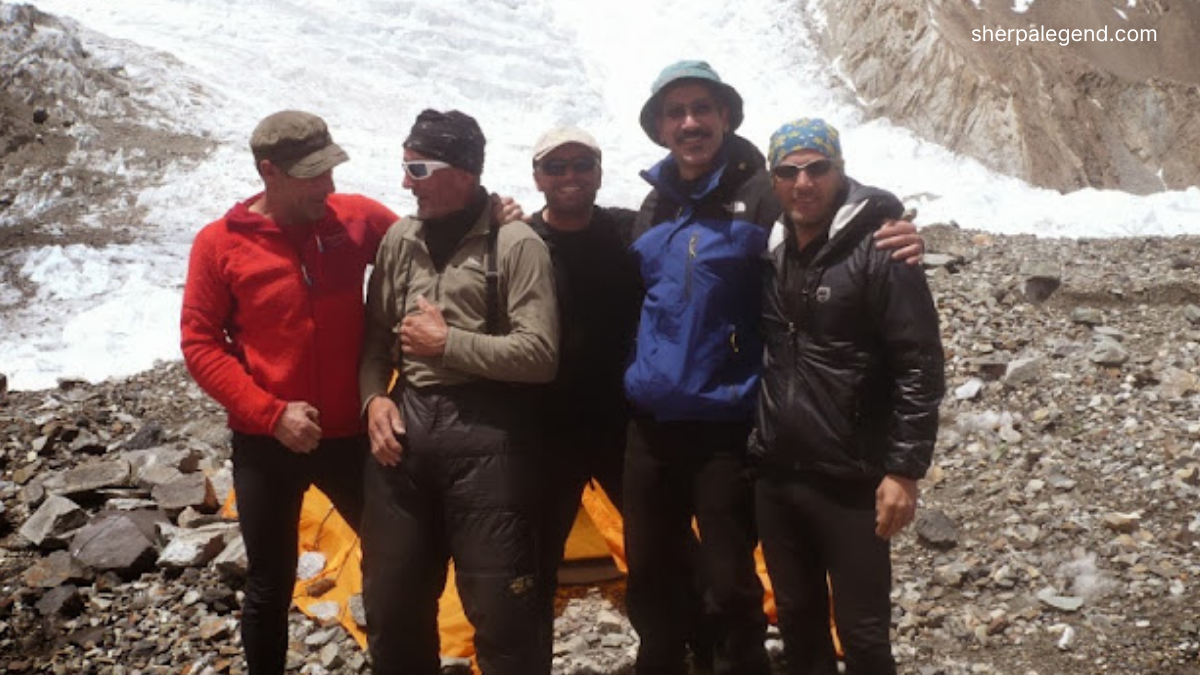

The last words anyone heard from Aidin Bozorgi came over a crackling Thuraya satellite line, somewhere above 7,500 metres on the west face of Broad Peak. He was 24 years old, from Tehran, and he was trying to tell his team where he was. He did not know.
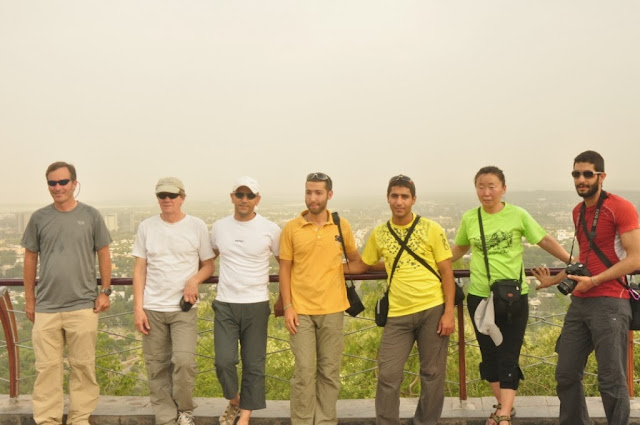
Behind him, roped or close to roped, were Pouya Keivan, also 24, and Mojtaba Jarahi, 28, who by then was in poor shape worn down by exhaustion, altitude, and possibly injury. Three days earlier, before dawn on 16 July 2013, the three of them had stood on the true summit of Broad Peak, the world’s twelfth-highest mountain, having just finished something no one had ever finished before
A new line up the mountain’s southwest and west face, climbed without bottled oxygen, in pure alpine style. Someone left an Iranian flag on top. It would later be found there and photographed, quiet proof that they had made it.
They never made it down.
A Dream That Started in the 1990s
The route that killed them was not a sudden idea. It began as a dream inside Iran’s Arash Mountaineering Club in the late 1990s a small, close community of Tehran climbers who wanted to put an Iranian name on the map of the world’s 8,000-metre peaks, not just by summiting a normal route, but by opening a new one.
Broad Peak, 8,047 metres, sits on the Pakistan-China border in the Karakoram, a range known for some of the hardest and most remote big-mountain climbing on Earth. Most people who summit it follow the same line every year: the West Spur, first climbed in 1957, a known and comparatively straightforward path with fixed camps and a well-worn track in good years.
The Iranians wanted something else a line up the southwest and west face that no one had climbed before.
It took more than a decade of attempts to get close. A larger Arash team made real progress on the lower section in 2009, pushing up to around 6,800 metres before joining the normal route, and returned again in 2011 for another attempt. Neither trip finished the job. In 2013, a smaller, five-person team went back to Broad Peak to try to complete what earlier climbers had started.
Three Names, Two Who Waited
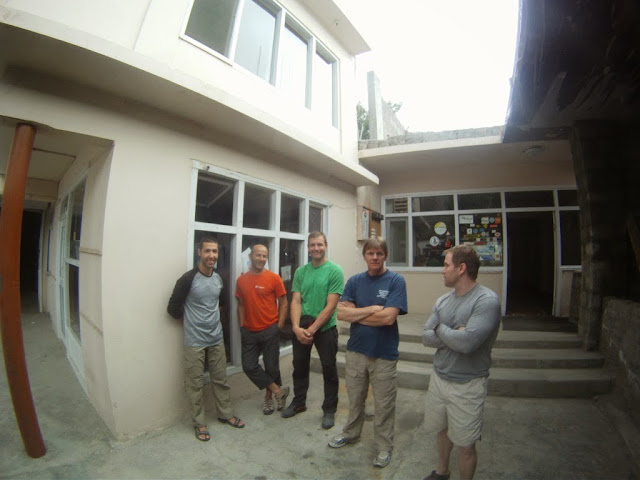
The 2013 expedition was led by Ramin Shojaei, 47, an experienced Arash climber who would later write the official account of what happened for the American Alpine Club. Afshin Saadi, 43, was the other senior member of the team.
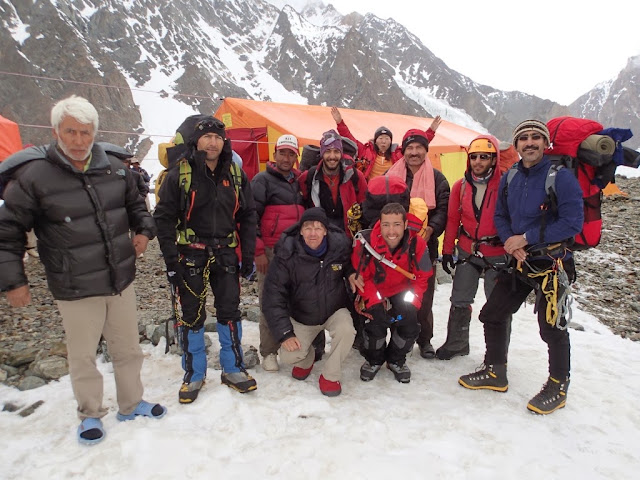
Bottom row: Ron, Aidin (Photo: Scott Powrie)
But it was the youngest three who would climb the new ground Aidin Bozorgi and Pouya Keivan, both 24 and close climbing partners from the same club, and Mojtaba Jarahi, 28. While Shojaei and Saadi held position lower on the mountain at Camp 3, ready to support if needed, it was Bozorgi, Keivan, and Jarahi who left camp on 13 July 2013 to try to finish the route the Arash club had been chasing since before some of them were teenagers.
Four Days of Climbing Into the Unknown
From Camp 3, at roughly 6,800 to 7,000 metres on the normal route, the three climbers traversed right, off the known path, onto new terrain on Broad Peak’s west face — a mix of rock, ice, and snow that no one had mapped from the ground up.
Their progress tells its own story of how hard the climbing was:
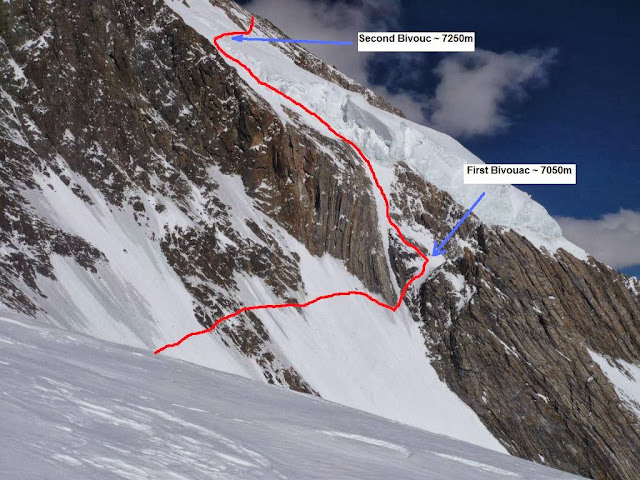
- 13 July — Left Camp 3, pushed onto new ground, and bivouacked around 7,350 metres.
- 14–15 July — Fought through difficult rock, gaining only about 100 metres in a full day, before reaching a second bivouac near 7,450 metres. Better ground followed, carrying them up to a third bivouac close to 8,000 metres.
- 16 July — In the early hours, they reached Broad Peak’s main summit, where their new line joined the upper section of the normal route.
They had done it without supplemental oxygen, carrying only what three climbers can carry in true alpine style no fixed camps above them, no rope already in place, no support waiting on the new ground. It was, by any measure, a serious and skilled piece of climbing, and it stood as one of the first major new routes put up by Iranian climbers on any 8,000-metre peak.
Success on the way up. Then the mountain took the descent from them.
Lost on the Way Down
The plan was simple: come down the normal route, the same well-known line hundreds of climbers had used before them. It should have been the easy part.
It was not. Somewhere below the summit, the three climbers became disoriented — most accounts point to a wrong turn onto a subsidiary ridge or spur branching off a rocky foresummit, rather than the correct line down the main ridge. At extreme altitude, exhausted after four days of hard new-route climbing, the mistake was costly. It forced them into extra, unplanned bivouacs on ground they hadn’t chosen and weren’t prepared for.
Their supplies ran out. Food and water were gone. At some point their tent was torn away by wind, leaving them exposed on the mountain’s upper slopes with almost nothing between them and the cold.
The last contact came around 18–19 July, days after their summit. Coordinates relayed through a Thuraya satellite call placed them off-route, somewhere above 7,500 metres, possibly near 7,800 to 7,900 metres or lower, on the wrong side of the mountain. One of them — reports point to Jarahi — was too weak to move on his own. They needed food, water, and rescue, and they needed it fast.
A Rescue That Could Not Reach Them
Word reached other teams on the mountain. Pakistani high-altitude porters and climbers from international expeditions tried to help, and there was limited helicopter support as well. But at that altitude, in that terrain, with the weather turning against them, none of it was enough.
The search continued for days before it was called off around 25 July 2013. Aidin Bozorgi, Pouya Keivan, and Mojtaba Jarahi were declared dead. Their bodies were never recovered. They remain on Broad Peak, somewhere on the new line they had just proven could be climbed.
What the Climb Meant
For Iranian mountaineering, the achievement itself was real and significant, even overshadowed by what followed. It was one of the first times Iranian climbers had put up a genuine new line on an 8,000-metre peak — done without oxygen, in lightweight alpine style, under real financial and logistical constraints, by climbers barely into their mid-twenties. It showed that ambition and technical skill from a small Tehran climbing club could stand alongside the biggest names in Karakoram climbing.
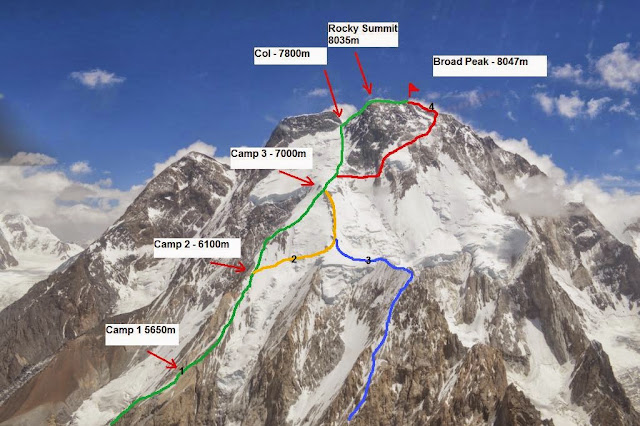
3: Iranian route 2009. 4: Iranian route 2013. (Photo: Usman from Helicopter crew)
And the tragedy that followed is, in its own dark way, familiar to anyone who has studied high-altitude climbing history. Disorientation on a complex ridge. The near impossibility of a real rescue above 7,500 metres. Exhaustion catching up after multiple high bivouacs. A summit that turns fatal within seventy-two hours, not because the climbers weren’t good enough to get up, but because coming down asks something different of a body that has almost nothing left to give.
Their deaths happened in the same year Broad Peak saw its first winter ascent — a climb that also claimed Polish lives. It was a hard year on the mountain.
A Route Almost No One Climbs
Today, more than a decade later, almost no one climbs the Iranian Route. It is documented in climbing literature — the American Alpine Club, Alpinist, the British Mountaineering Council — as both a bold pioneering effort and a cautionary tale. But it has never become a working route on Broad Peak.
Nearly every commercial and independent ascent of the mountain still follows the classic normal route, the West Spur line from 1957.
There is no widely reported case of anyone repeating the full 2013 Iranian variation in the years since, for the simple purpose of reaching the summit that way.
The reasons are practical as much as psychological. The line is more technical and more committing than the normal route, mixing rock with ice and snow in a way that demands real climbing skill, not just fitness and fixed ropes. It is slower the original team’s own bivouac-by-bivouac progress shows how much ground can cost on that face.
There are no fixed ropes, no established camps, no logistical support built into that line, unlike the normal route, where decades of traffic have left an infrastructure behind.
And there is the story itself. Three young climbers reached the top of a route that had taken their club more than ten years to finish — and then vanished on the way down. That is not the kind of history that draws climbers looking for a faster or more interesting way up. It sits instead as a marker, a name on the map, a line that exists because it was climbed once, by three people who never got the chance to climb anything again.
What Remains
Even now, the Iranian Route surfaces in climbing conversation most recently in 2026, amid claims of a new Pakistani variation above Camp 3, when experienced Karakoram voices such as Carsolio pointed to possible overlap with the old 2013 Iranian terrain.
The claims are debated. What isn’t debated is that the 2013 line is still treated as the historical benchmark, the reference point any new attempt on that face gets measured against.
The Iranian flag they left on the summit confirmed what they achieved. What happened after is why the route still carries their names, even if almost no one has followed their footsteps since.
The main sources for the Iranian route on Broad Peak story are Ramin Shojaei’s American Alpine Journal report (2014) and his 2013 expedition blog, along with contemporary coverage from Alpinist Magazine, the BMC report by Lindsay Griffin, ExplorersWeb/Altitude Pakistan, The Guardian (July 2013), and Wikipedia entries on Broad Peak and Aidin Bozorgi.
