
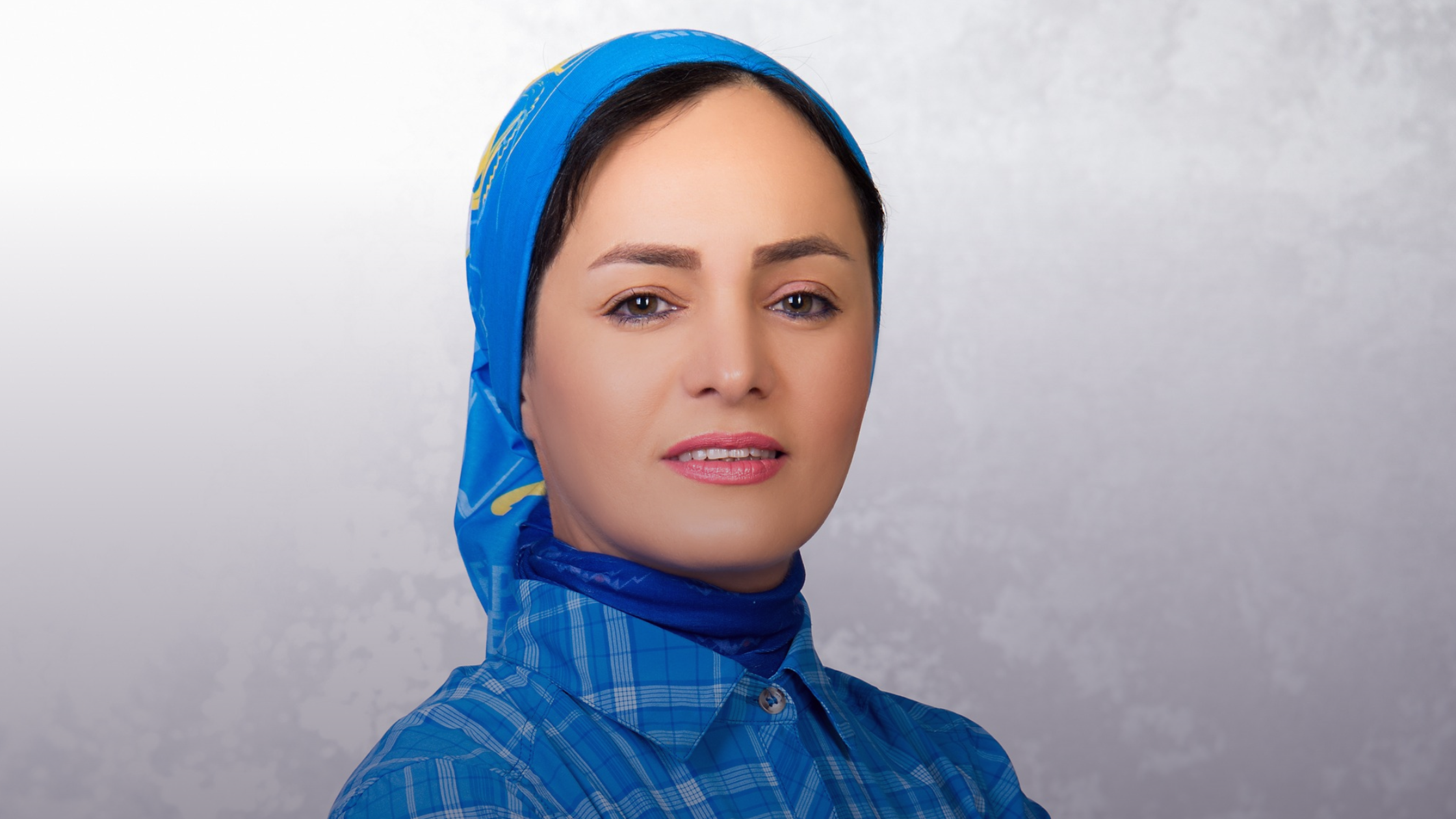

Afsaneh Hesamifard: Iranian Mountaineering Legend
Who Broke Barriers for Iranian Women in Extreme Sports
In the small city of Bojnord, North Khorasan, Iran, a legend was born on December 26, 1976. Afsaneh Hesamifard, whose name would later call across the world’s highest peaks, began her journey not as a mountaineer, but as a dedicated medical student.
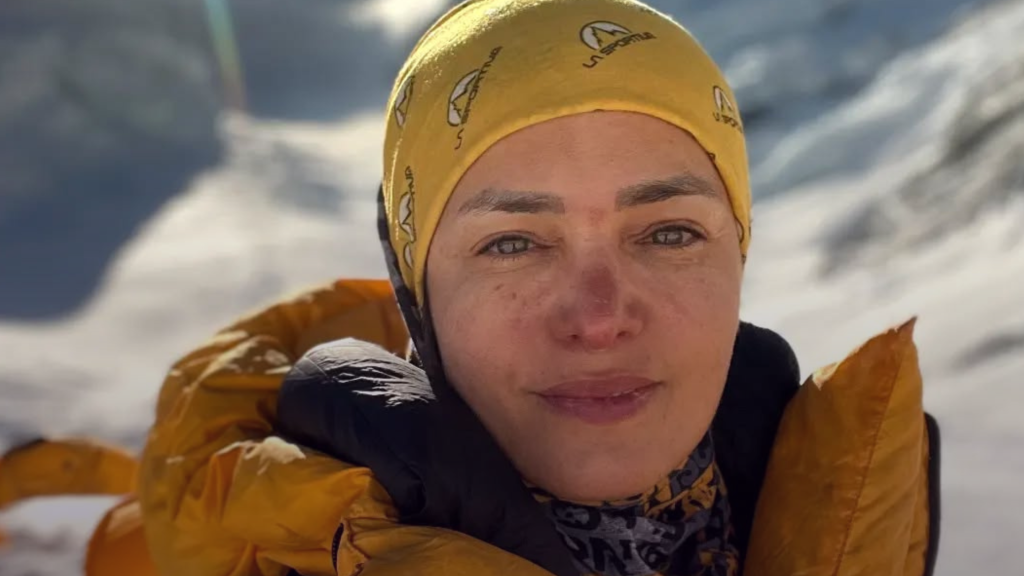
Born in Sabzevar and raised with dreams that seemed ordinary at the time, she had no idea that she would one day become the first Iranian woman to stand atop K2, the world’s most savage mountain.
Hesamifard’s path to greatness began in the halls of Mashhad University of Medical Sciences, where she was accepted into the medical doctorate program in 1997. Seven years later, in 2004, she graduated with her professional medical degree, ready to heal bodies and save lives.
But destiny had other plans for this young doctor –plans that would take her to places where the air is so thin that every breath becomes a battle for survival.
The Beginning of an Extraordinary Journey
At the age of 23, while establishing herself as a doctor, Hesamifard discovered mountaineering. What started as training climbs on Iran’s iconic Mount Damavand would eventually Transform into a mission to climb the world’s most formidable peaks.
Her early climbs and training camps in Iran provided the foundation for achievements that would place her name in mountaineering history.
Working as a sports team doctor, mountain medicine instructor, and mountaineering instructor, Hesamifard balanced her medical career with her growing passion for the mountains. She became the head of the North Khorasan Mountaineering and Sports Climbing Committee, slowly building the expertise and credentials that would serve her well in the death zone of the world’s highest peaks.
The Financial Struggle Behind the Dream
The path to Everest was not paved with sponsorship deals or easy funding. In a Instagram post from 2021-2022, Hesamifard shared the harsh reality of pursuing her dreams:
“It was a turbulent year for me. My mind and body were ready for the Everest ascent, but I hadn’t yet gathered the funds for the climb. I applied for a loan. A loan with heavy repayments and installments for someone who was going to Everest, with the possibility of not returning. Who would be willing to guarantee such a person?”
The psychological pressure was immense. Close acquaintances, being sensible people, refused to guarantee her loan. But in this moment of despair, hope emerged from an unexpected source. A colleague, Dr. Ammarloo, stepped forward with trust that would change everything.
“A friend dearer than any friend and closer than any kin accepted. Dear colleague, Dr. Ammarloo, on the 27th of this month, I will pay the last installment of Everest. I owe this ascent to your trust.”
This struggle with funding would be a recurring theme in her journey, making each summit not just a physical victory, but a victory over financial adversity.
Historic Achievements That Rewrote Iranian Mountaineering
The Everest Breakthrough
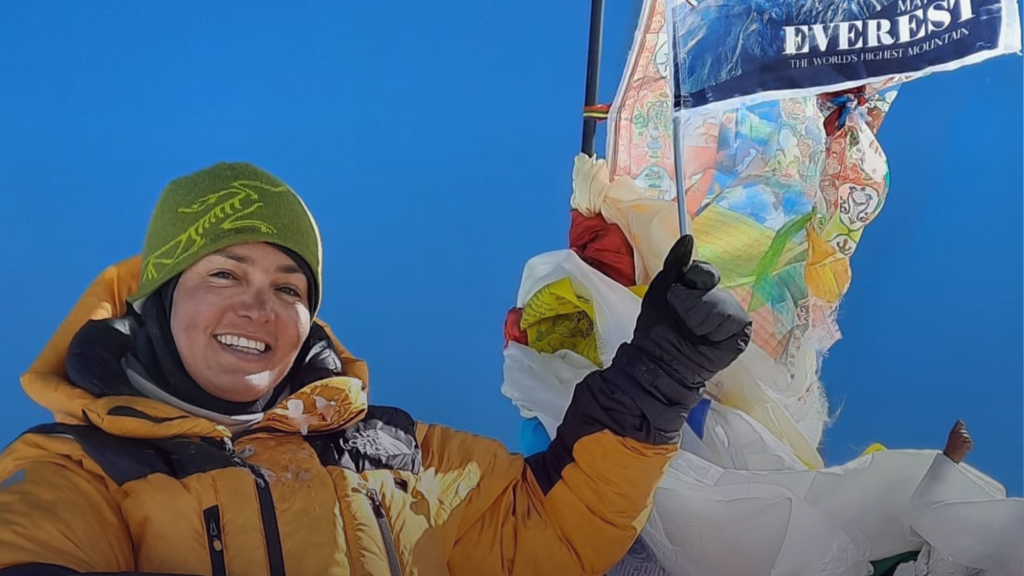
On May 14, 2022, Afsaneh Hesamifard became the fourth Iranian woman to reach the summit of Mount Everest. But this was no ordinary ascent. Through careful planning and exceptional acclimatization, she completed the climb in less than 30 days significantly faster than average. Standing at 8,848 meters above sea level, she later reflected:
“Standing on the top of Everest felt different. It feels great to be at the peak of the world; a feeling of lightness and freedom! Reaching the peak of Everest is different from other climbs.”
The K2 Victory That Made History
But it was July 22, 2022, that truly cemented her place in mountaineering legend. On this day, Hesamifard became the first Iranian woman to summit K2, the world’s second-highest peak and arguably its most dangerous. Known as the “Savage Mountain,” K2 has a reputation for technical difficulty and a high fatality rate that has claimed the lives of many experienced climbers.
Her summit alongside climbers from Pakistan, Lebanon, and Bangladesh was celebrated as a milestone not just for Iranian mountaineering, but for Muslim women worldwide.
The achievement was particularly significant given K2’s fearsome reputation and the technical skills required to survive its treacherous slopes.
The Relentless Pursuit of the Fourteen
Hesamifard has successfully climbed 13 out of the 14 mountains over 8,000 meters, known as “eight-thousanders.” This extraordinary feat places her among an elite group of global mountaineers, with only one peak remaining to complete the ultimate mountaineering challenge.
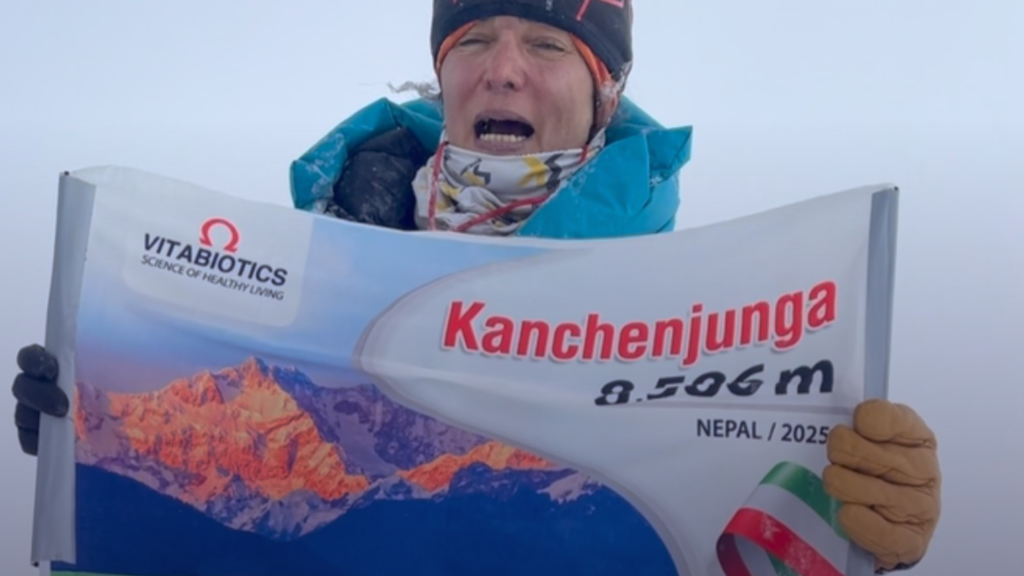
Her impressive list of conquests includes Manaslu (2021), Everest (May 14, 2022), K2 (2022), Broad Peak (2022),Annapurna I (2023), Lhotse (2023), Gasherbrum I (2023), Gasherbrum II (2023) – climbed in memory of Leila Esfandiari,Nanga Parbat (2024),Makalu (2024),Shishapangma (2024),Dhaulagiri (2025),Kanchenjunga (2025)
Each summit represents not just a personal victory, but a breakthrough for Iranian women in extreme sports.
The Philosophy of a Mountain Warrior
After her Everest ascent in 2022, Hesamifard shared profound insights that reveal the depth of her character and the spiritual journey that mountaineering represents for her:
“At the beginning, all paths are the same. Beliefs are close to each other. Motivations are hidden, yet the speed of the journey is the same. As the path ascends higher, the number of people decreases. What lifts you higher is not logic but faith. Faith in a summit you have wished for.”
She continued with words that capture the essence of pursuing extraordinary goals:
“To reach great goals, you must fling your imagination to a place no one has yet seen. When you take it there, you will see something no one has seen. From here on, you are a madman in the eyes of people. Because you speak of an experience no one has had, an ideal no one has held.”
Her philosophy extends beyond mountaineering to life itself:
“Madness is wearing the robe of the Simurgh. It means you no longer have to justify your behavior. Rather, you strive to act and it is the strength of your action that brings the image of your dream into reality.”
The Human Side of a Legend
Despite her extraordinary achievements, Hesamifard remains deeply connected to her humanity and the people who support her. She speaks with profound gratitude about the simple yet powerful words of encouragement she receives:
“Every time I call to say goodbye, he says, ‘Go, may your steps be steady.’ On the surface, it’s a simple sentence but for me, it’s full of hope, trust, and energy.”
These words sustained her during her most challenging moments, including the final ascent of Kanchenjunga: “In many parts of this long route, on that cold and snowy night, in the blizzard and freezing temperatures, this sentence echoed in my mind: ‘Go, may your steps be steady.'”
Her medical background brings a unique perspective to her reflections on human Strength:
“In medical terminology, there is a word called scar—the mark left by a wound and the place where an injury has healed. The wound area may look healed on the surface, but the tissue formed there is not like healthy tissue.”
She extends this medical metaphor to emotional healing: “I want to say this scar isn’t just for the body. Be careful about the wounds you inflict on people’s souls. Their scars last forever. And these wounds stay deep inside people’s being.”
Partnerships and Recognition
Hesamifard’s later expeditions received support from Vitabiotics, marking a significant partnership that enabled her continued pursuit of the remaining eight-thousanders. Her collaboration with Master Reza Shahlaei during the Dhaulagiri expedition highlighted the importance of mentorship and shared experience in extreme mountaineering.
The Inspiration Factor
Throughout her journey, Hesamifard has emphasized the importance of inspiration and representation. She notes that while she did not initially seek media attention, she appreciates the inspiration her achievements provide, especially to women and young athletes in Iran. The positive messages and sense of representing her country give her additional motivation to push beyond her limits.
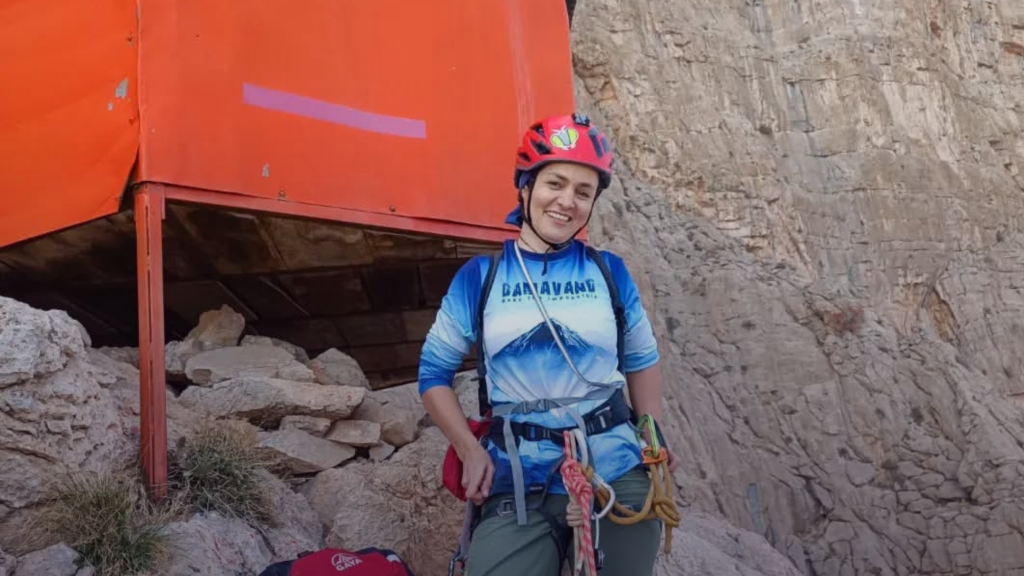
“Have you ever thought about the ‘why’ of your life? Have you found the answer? There are as many different answers as there are people. But it’s important to know what your answer is!”
For Hesamifard, the answer seems clear: to push the boundaries of what’s possible, to inspire others to chase their dreams, and to prove that with enough faith, determination, and support, even the highest peaks can be conquered.
A Legacy Written in Snow and Stone
As Afsaneh Hesamifard stands on the verge of joining the exclusive club of mountaineers who have climbed all 14 eight-thousanders, her legacy is already secure. She has redefined what it means to be an Iranian woman in sports, broken barriers that seemed insurmountable, and inspired countless others to reach for their own summits.
Her story is not just about climbing mountains; it’s about defeating doubt, financial hardship, social expectations, and the voice that tells us our dreams are too big. From a medical student in Mashhad to a legend whose name is spoken with reverence in mountaineering circles worldwide, Afsaneh Hesamifard has proven that sometimes, being called “mad” for your dreams is the highest compliment of all.
As she herself wrote: “Life is like mountain climbing.” And if her life is any indication, the climb is far from over.
