
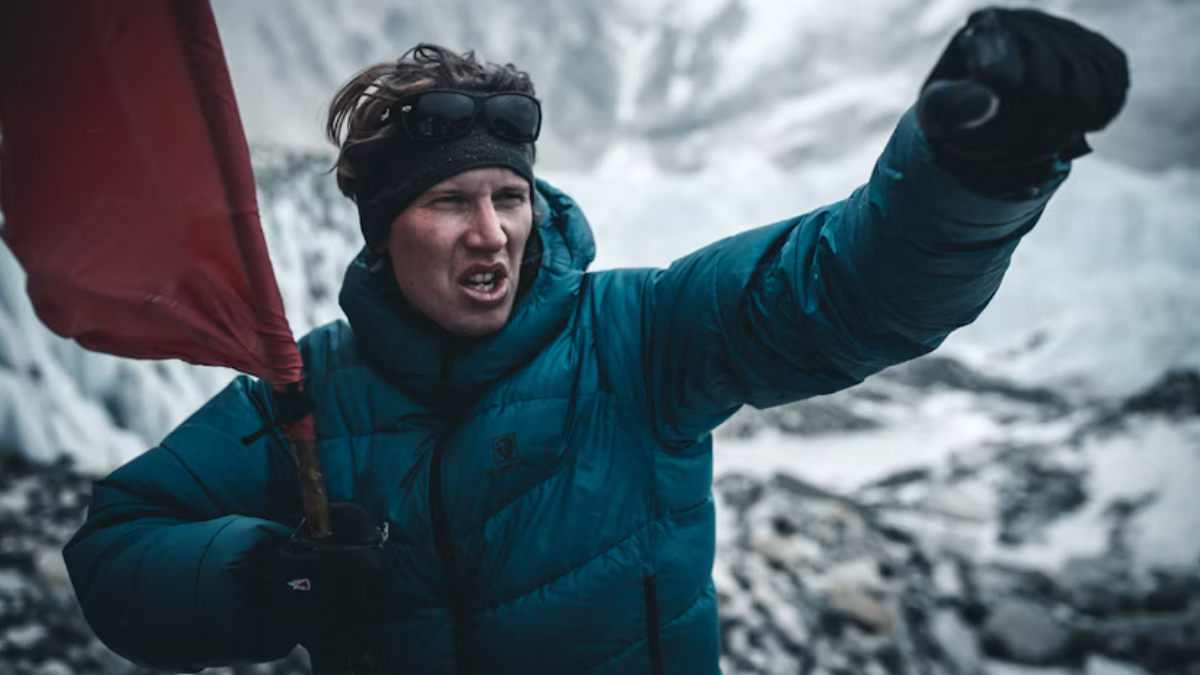

German alpinist Jost Kobusch plans to start a winter expedition on Everest in late December. He will climb alone. He will use no bottled oxygen. He will have no Sherpa support above Base Camp. And he will not take the normal South Col route. He will go by the West Ridge, a steep, technical line that no one has ever climbed to the summit in winter.
Everest has been summited by only a small number of climbers during winter, under varying definitions of the season. Ang Rita Sherpa achieved an extraordinary oxygen-free winter summit in December 1987. But no one has completed Kobusch’s proposed combination of a solo, self-supported, oxygen-free winter ascent via the West Ridge.
The West Ridge starts at the Lho La, a high pass between the Khumbu valley and Tibet, and ends in a steep ice gully below the summit. Kobusch has been preparing for this line for years. This will be his fourth winter trip to the mountain.
He says the summit is the goal, but not yet the only one. He sees each expedition as a stage of learning. “Everything I’ve done over the last few years, every expedition, every training block, every mistake and every lesson, has been building towards this next attempt,” he says.
Kobusch was born on August 3, 1992, in Bielefeld and grew up in Borgholzhausen, in the flatlands of north-east Germany. As a child he was afraid of heights. He never got his silver swimming badge at primary school, because it required a 3m jump into the pool and he could not do it.
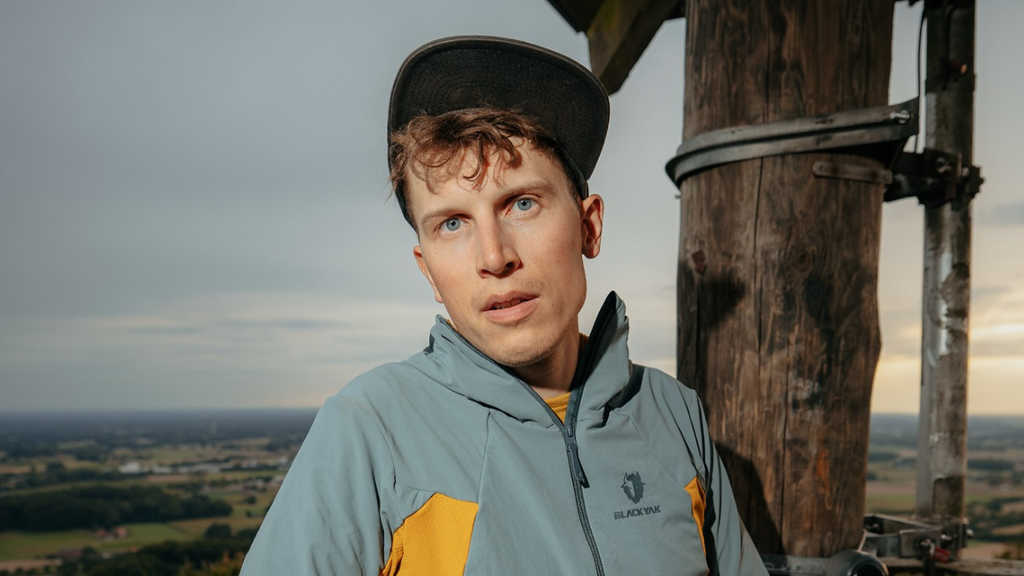
He did not accept that. He got curious. “Why could everybody else jump? Apparently they don’t die, they don’t hurt themselves,” he says. “I felt like there was so much more life behind that fear.” At 12 he joined a school climbing course. After finishing school he joined the German mountain troops, the Gebirgsjäger. He taught himself in the Alps from mountaineering books, and once climbed Mont Blanc alone in the off-season. He now says youth and overconfidence drove him, and that he was taking big risks.
Nepal came next. In spring 2014, aged 21, he climbed Ama Dablam (6,812m) solo and without bottled oxygen. He was the first person up that season, so there were no crowds and no reliable fixed lines. He filmed the climb himself, with a camera on a 3m telescopic pole fixed to his helmet. It brought him early recognition, but he later admitted it pushed him to his limit and that he was not quite ready for it. It nearly killed him. He developed high-altitude pulmonary edema, a build-up of fluid in the lungs, and thought he was just “extremely tired.” He walked two days to Lukla and then spent three days in a hospital in Kathmandu.
He kept coming back. In 2015 he was at Everest Base Camp, attempting Lhotse solo and without oxygen, when the earthquake struck and an avalanche blasted over the camp. The video he shot on his phone went viral within hours.
He climbed Annapurna I (8,091m) without oxygen in 2016. In 2017 he made the first ascent of Nangpai Gosum II (7,296m), near the Nepal-China border, which earned him a Piolet d’Or nomination. First ascents of Amotsang (6,393m) in 2019 and Purbung (6,465m) in 2021 followed. He has said Nepal became “another home.” It is not his only stage. In February 2023 he made a solo winter ascent of Denali in Alaska, by the steep Messner Couloir. He was the first to climb that route solo in winter.
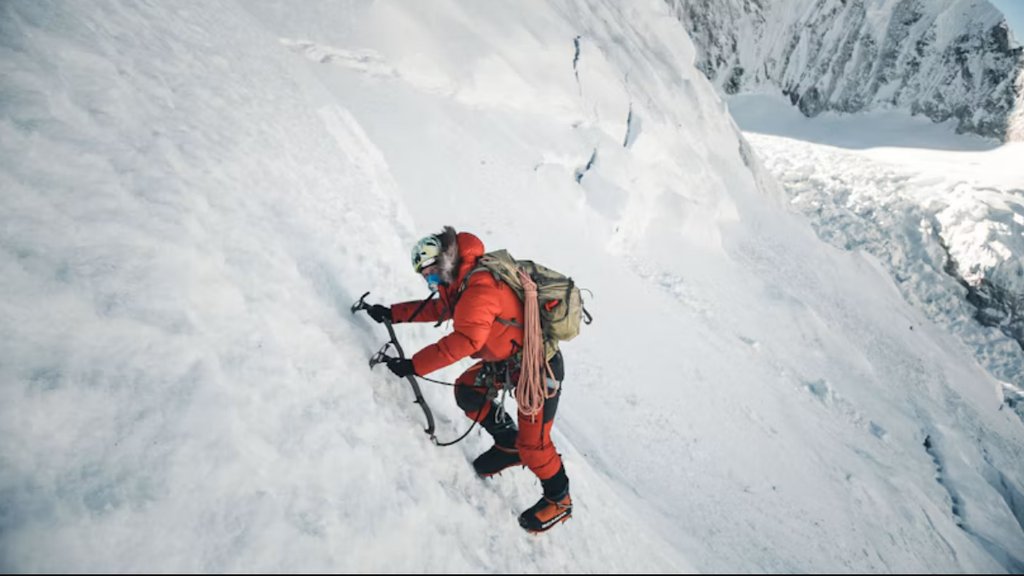
Kobusch did not climb Everest in the spring season before starting his winter project. He had planned a solo winter climb of Denali in 2019 as preparation, but a US government shutdown closed the park office and he could not get a permit.
So he went straight to Everest in winter, in late 2019. Even by the normal route, winter Everest is colder, windier and icier than at any other time. The low temperatures also lower the air pressure.
He cites a research paper that puts the winter summit at the equivalent of about 9,135m, not its true height of 8,848m. The jet stream arrives in November with hurricane-force winds. “You can camp until maybe 100kph,” he says, “but everything beyond that is not safe.” To climb to the summit, he says, a wind of 40kph might be workable, “but that’s already a lot.”
He also rejected the normal route. He judged the Khumbu Icefall too risky for a solo winter climb, and he wanted the unknown. “I want to know what’s up there,” he says. “There’s not much information. So that’s very fascinating.”
The West Ridge asks a lot. First he must climb an unstable wall of rock and ice to reach the Lho La, a 6,006m col, or high pass, between the Khumbu and Tibet. Then he crosses the windblown West Shoulder. Then he enters the Hornbein Couloir, a narrow gully of hard blue ice that steepens toward the summit. “From 8500m there is technical climbing up to UIAA Grade V,” he says. “That is very, very demanding for that altitude.” He calls the route “the biggest, baddest thing that I could imagine.”
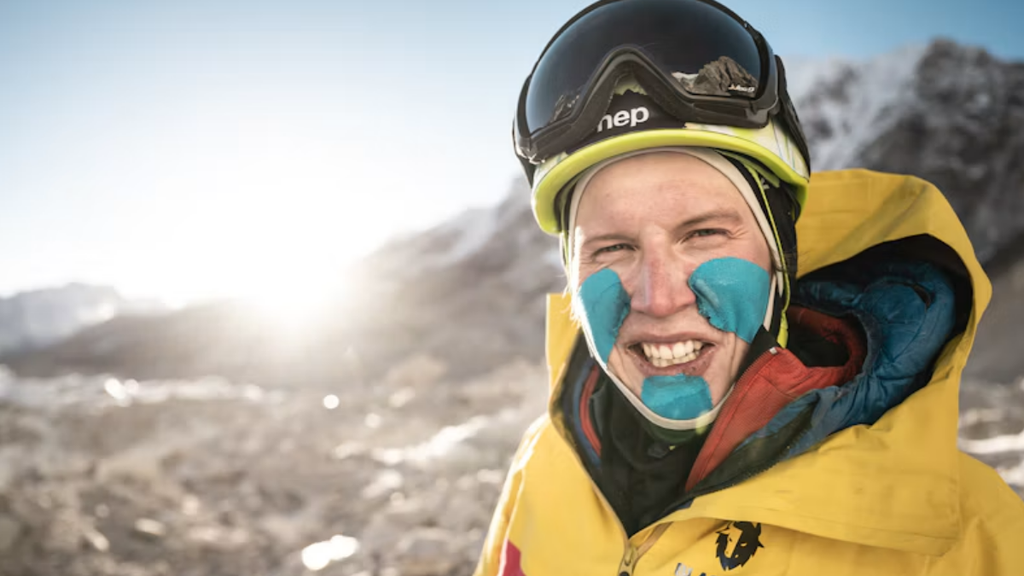
The ridge has a short history. In spring 1963, the Americans Tom Hornbein and Willi Unsoeld climbed it and finished up the couloir that now carries Hornbein’s name.
In 1979, a Yugoslav expedition pioneered the West Ridge Direct, climbing from the Lho La over the West Shoulder and following the ridge toward the summit. Kobusch plans to approach from the same side but eventually enter the Hornbein Couloir, linking elements of the historic 1979 and 1963 routes. Neither of those historic summit routes has been completed in winter.
Winter attempts have all turned back. A British team that included Joe Tasker and Alan Rouse left in early February 1981 after continuous bad weather, destroyed camps and failing morale. A French team reached about 7,500m in January 1984. A Korean team in 1985-86 stopped at about 7,100m. Kobusch’s high point is 7,537m, reached on December 27, 2024. It is the highest winter point on the route.
Winter Everest has been climbed, but rarely. On February 17, 1980, the Poles Krzysztof Wielicki and Leszek Cichy made the first winter ascent, using bottled oxygen. On December 22, 1987, Ang Rita Sherpa reached the summit without oxygen.
Purists count his climb as a “permit winter” ascent, because his team arrived and prepared the route in November. They say true winter starts on December 21. Fewer than 10 expeditions have climbed in true calendar winter. Alex Txikon made several, in 2017, 2018 and 2020, and was turned back by wind.
Kobusch has made three winter attempts so far. In 2019-20 he reached 7,329m, in cold so extreme that the glue on his tent failed. In 2021-22 the jet stream pinned him in a shredded tent for three days, and he got no higher than about 6,400m.
He planned a trip for 2023-24 but it did not happen, because of a back injury. In 2024-25 he started on December 22 and reached 7,537m five days later. He climbed in good snow, in a single alpine-style push from Camp 1, halfway to the Lho La. He carried his tent and supplies all the way, and left the tent at 6,800m for the final stretch in the dark. “It’s a few meters, but mentally, it was important for me,” he said from Base Camp.
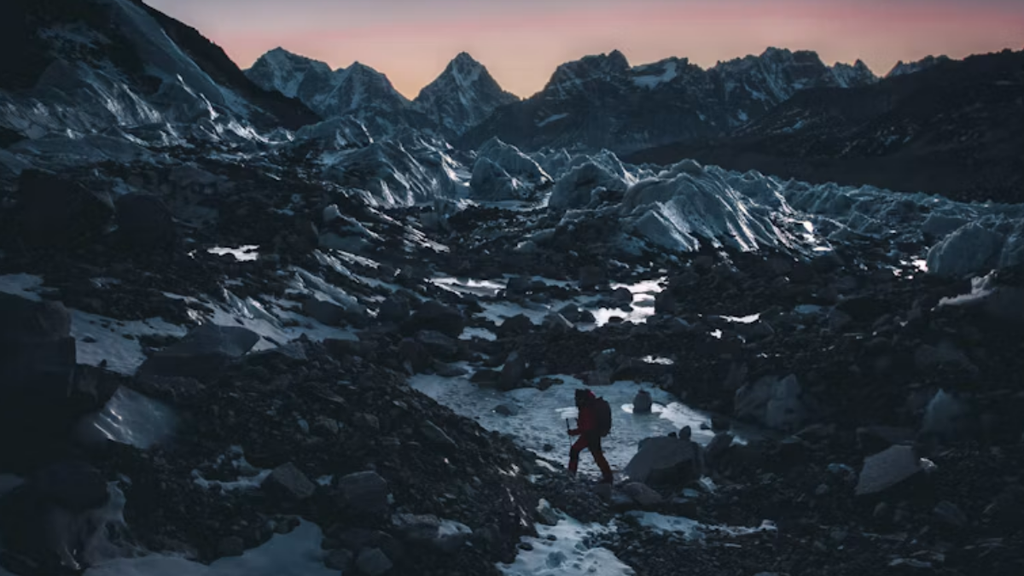
Kobusch separates sport from tourism. He says commercial climbing on Everest relies on fixed ropes, bottled oxygen and Sherpa support. He says using porters and fixed infrastructure is “cheating if you see it as a sport.” He adds that he respects those who climb for tourism. The line he draws between the two is his own, and it is one that climbers on the mountain, including those who fix its ropes and carry its loads, may see differently.
Mark the date in late December. That is when Jost Kobusch plans to start his fourth winter expedition on Everest. He will go alone, without bottled oxygen and with no Sherpa support above Base Camp, up the West Ridge, a route no one has climbed to the summit in winter.
