
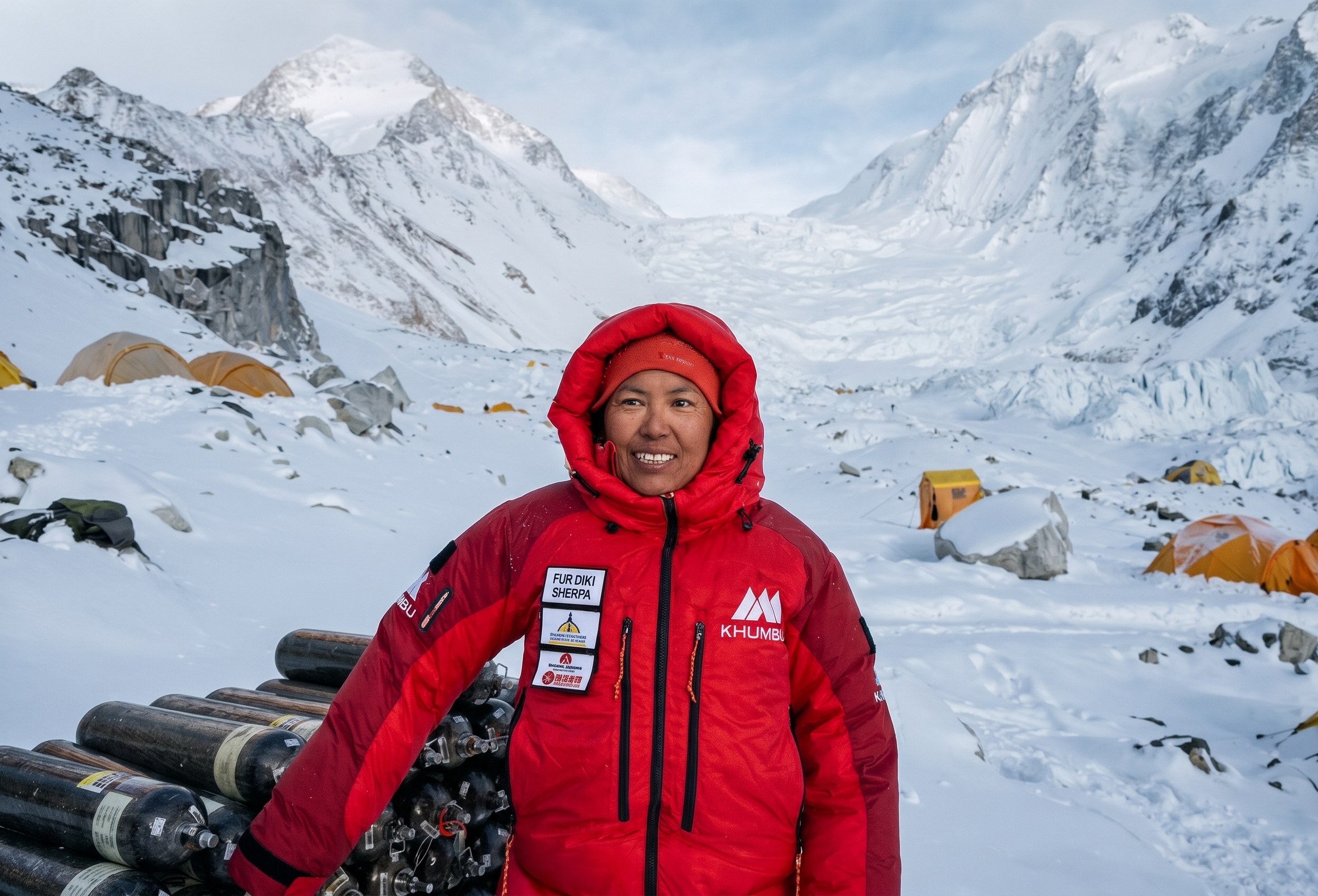

In May 2026, a 51-year-old woman left Everest Base Camp and climbed Lhotse (8,516 m) in a single continuous push. Lhotse is the world’s fourth-highest mountain. She reached the summit, finished her speed-record attempt within the 24-hour window she had set, and descended safely.
There was no PR team behind the climb and no daily updates from Base Camp. She does not advertise her grit the way many modern climbers do. The Himalayan climbing community praised it. Beyond that world, most people never heard of it.
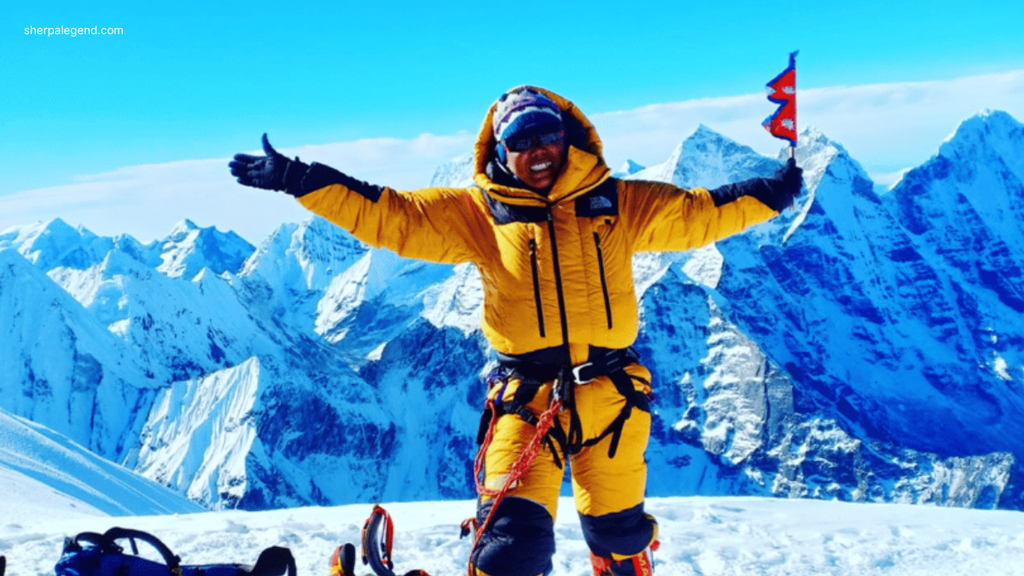
Who is she, and why does she climb this way?
In an era where mountaineering is so often measured by curated feeds, reels, and branded summit poses, chances are you have never heard the name Phur Diki Sherpa.
She does not hire a PR team. She is not tech-savvy, and she is not interested in turning her life into an online brand. But her life follows the 50-year story of women on Everest shut out, then slowly let in, and still a small minority. This story does two things. It tells you who she is. And it asks what her quiet climbing says about the mountains of Nepal.
Phur Diki was born and raised in the thin air of Dingboche, in Solukhumbu. There, the mountains were part of the horizon, not part of her life’s path.
In 2013 she was 37, raising three daughters in a small village, running a modest hotel and looking after a few yaks. Her husband, Mingma Sherpa, was an icefall doctor. Icefall doctors are the experienced Sherpas who fix and maintain the climbing route through the Khumbu Icefall so other climbers can use it.
“It was his lifelong ambition to stand on the summit of Everest,” she says. “But he was lost in an accident in the Khumbu Icefall. That dream remained unfinished.” He had once reached the South Col before turning back.
She refused to let grief or deep-rooted social stigma define her future. But the stigma was real. Grief was only part of what she faced. In traditional rural Sherpa and Nepali culture, a widow can be blamed for bad luck, judged for living on her own, and left without money of her own. Phur Diki has spoken openly about the harsh realities of widowhood, including being publicly shamed or restricted.
“Slowly, I started making a plan,” she says. “Two of us decided to climb Everest to give hope to widowed women, to show that even without husbands, we are still capable of building a life and achieving something on our own.”
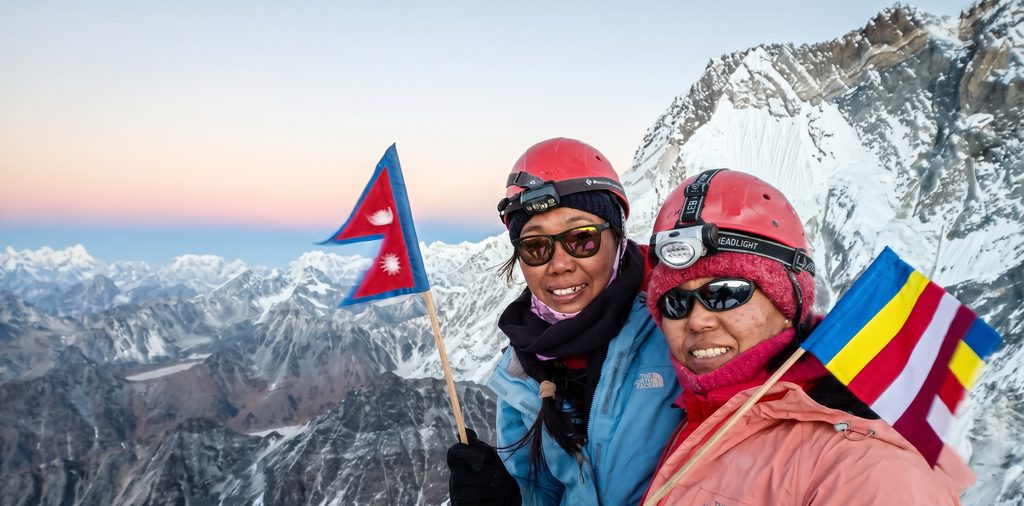
The other woman was Nima Doma Sherpa. Her husband, Tshering Ongchu Sherpa, was killed in the 2014 Khumbu Icefall avalanche.
The two met while dealing with shared grief and social isolation. They described their bond as “two bodies, one heart.” The idea to climb Everest came from them. They wanted to finish the journeys their husbands died pursuing. They wanted to challenge the belief that a widow’s life is defined by tragedy and by staying at home. And they wanted to inspire single mothers with their rallying cry.
Neither had much climbing experience. Mountaineer Ang Tshering Lama helped structure the project and oversaw their training and fundraising.
They climbed Island Peak, Chulu Far East and Ama Dablam to prepare. The expedition was run through Imagine Nepal, with Sherpa support on the mountain led by experienced climbers including Mingma Gyalje Sherpa. It was paid for by grassroots fundraising, international donations and private sponsorships in Nepal.
On May 23, 2019, at 5:25 a.m., Phur Diki and Nima Doma reached the summit of Everest together. At the top they held up a banner that read: Hami pani garna sakchhaun. “We can do it too.”
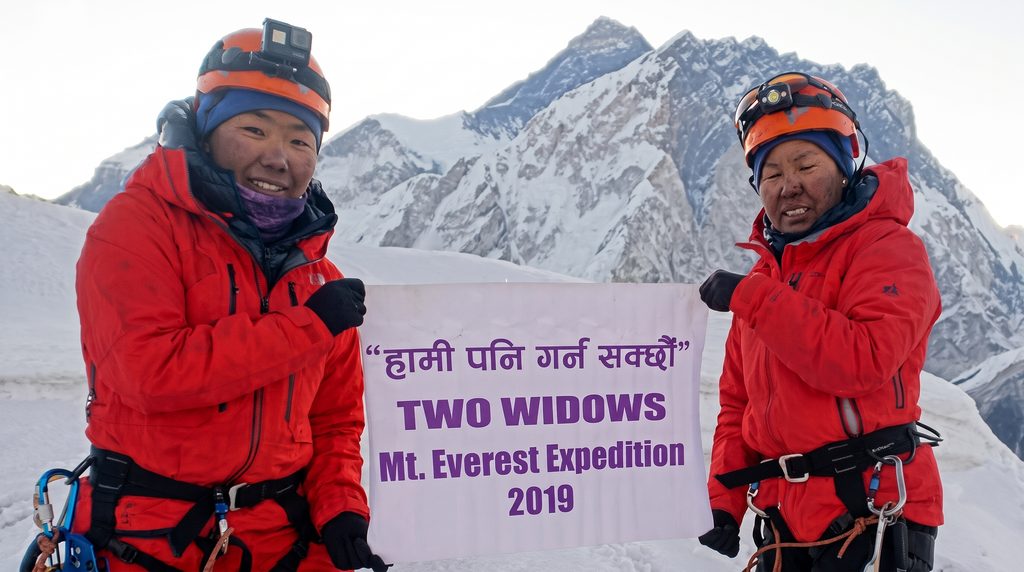
She had climbed to finish what her husband could not. She came down having started something of her own.
The banner spoke to a very long wait.
On May 29, 1953, Tenzing Norgay Sherpa and Edmund Hillary became the first to reach the summit of Everest. A woman would not stand there for another 22 years.
That wait ended on May 16, 1975, when Junko Tabei, a 35-year-old Japanese climber, reached the top. Two weeks earlier, her tent had collapsed under an avalanche and she had briefly lost consciousness. She recovered and kept going. Eleven days after Tabei, Chinese climber Phanthog reached the same point from the north. That year, 31 women attempted Everest and only two stood on top. The success rate was under 10 percent, less than half the rate for men that season.
For Nepali women, the summit stayed out of reach for nearly two more decades. Pasang Lhamu Sherpa, 30, needed three attempts just to obtain a permit. On April 22, 1993, she became the first Nepali woman to reach the top. She died on the descent the same day. Another Nepali woman would not summit for seven years.
On May 18, 2000, Lhakpa Sherpa reached the summit and came back alive, the first Nepali woman to do so. In the 25 years since Tabei, more than four dozen foreign women had climbed Everest and returned. Not one Nepali woman had. Pemba Doma Sherpa summited the next day.
The gap has narrowed since. But women are still only about one in every ten Everest climbers.
Phur Diki’s banner sits at the end of that long line.
After Everest, Phur Diki found few work opportunities, so she built her skills. She completed High Mountain Rescue Training and Rock Climbing Level 1 certification through the Nepal Mountaineering Association and the Khumbu Climbing Center. She trained as a guide and instructor. The certificates moved her from summit climber to lead guide and expedition organiser.
In October 2025 she led an all-women team up Himlung Himal (7,126 m), a remote peak near the Tibetan border that needs multi-camp rotations, fixed-rope management and glacier navigation. She organised the logistics and led the team to the summit and back.
In December 2025 she was head guide for a 16-member all-women team on Paldor Peak (5,896 m) in the Ganesh Himal range, in winter conditions. She oversaw acclimatization, rope fixing and cold-weather safety for the whole group. All 16 reached the summit.
She has also guided Lobuche Peak eight times and Island Peak twice, using those peaks to mentor newer women climbers. With Nima Doma, she supports other mountaineering widows in the Solukhumbu valley.
The woman who once ran a small hotel and looked after yaks is now the one setting the pace and managing the ropes for a team of women on ice.
That brings us back to May 2026. Phur Diki started from Everest Base Camp, climbed Lhotse in one continuous push, and descended safely. She was 51. The climbing community praised the effort for challenging age barriers. It showed that a veteran woman climber can make a fast-and-light push on an 8,000-metre peak.
She dedicated the climb to her late father, Ang Nima Sherpa, and her close friend, Iman Singh Gurung. Her father was also an icefall doctor. He had long wanted to climb Lhotse but died before he could try. “My father’s dream was to climb Lhotse,” she said before the climb. “This time, I will complete that too.”
Asked what comes after that, she answered without hesitation “Dreams of three daughters.” And her own? From Base Camp, there was a long silence.
She is now working toward certification as a licensed professional mountain guide. Beyond the record, she names three goals women’s empowerment, climate advocacy and tourism promotion. She also wants to raise awareness of glacial retreat in the Himalayas.
Her climbing sits inside a system that still favours men. Three figures show how much.
Women are only about 4 to 5 percent of Nepal’s licensed trekking guides. Only one Nepali woman holds full IFMGA certification through the Nepal National Mountain Guide Association Dawa Yangzum Sherpa, certified in December 2017. And by the end of the 2025 season, 348 people had died on Everest. Ninety-six of them, more than a quarter, were Sherpa workers on expeditions.
That last number points to who does the most dangerous work. Fixing ropes, carrying loads and preparing the route are still done almost entirely by men, and many are Sherpas. It is the work her husband was doing in the icefall.
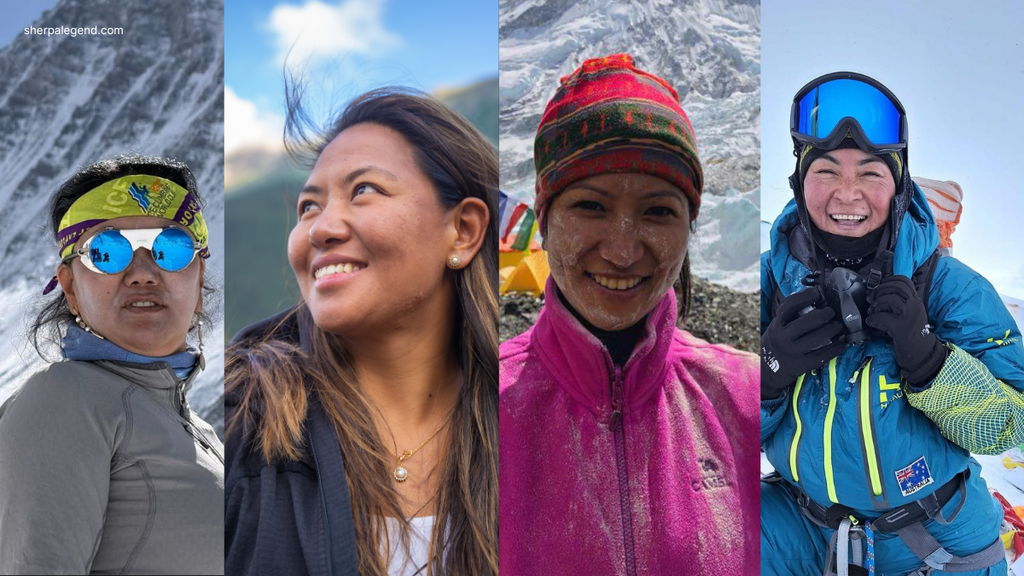
Phur Diki is not the only woman changing this landscape. Dawa Yangzum Sherpa runs alpine training clinics through her Didi Initiative, while Pasang Lhamu Sherpa Akita leads the Dawa Futi Foundation to train girls in remote districts. Lhakpa Sherpa holds the women’s record of ten Everest summits.
Purnima Shrestha, a mountaineer and photojournalist, became the first woman in the world to summit Everest three times in a single climbing season. Phunjo Jhangmu Lama is known for her record-breaking Everest speed climbs, while pioneering Nepali women guides continue to break barriers in mountain rescue. Phur Diki is part of a movement, not a lone exception.
Phur Diki does not climb for algorithms. She climbs for the Sherpa women who were told to stay home, for the single mothers dealing with loss in silence, and out of reverence for the high peaks.
Her path was not a safe one to choose. The trails of Nepal’s mountains were laid down by tradition to keep women at home. Her footprints in the snow are proof that courage and leadership belong on the highest ridges. Nima Doma Sherpa, who stood beside her on Everest, and the women she has guided carry the same message.
In 2019, on top of Everest, she held up a banner that said We can do it too. Since then she has kept doing it. She packs her gear, straps on her crampons, and steps out onto the ice.
No cameras follow her. The mountain does not care who is watching. Neither, it seems, does she.
