
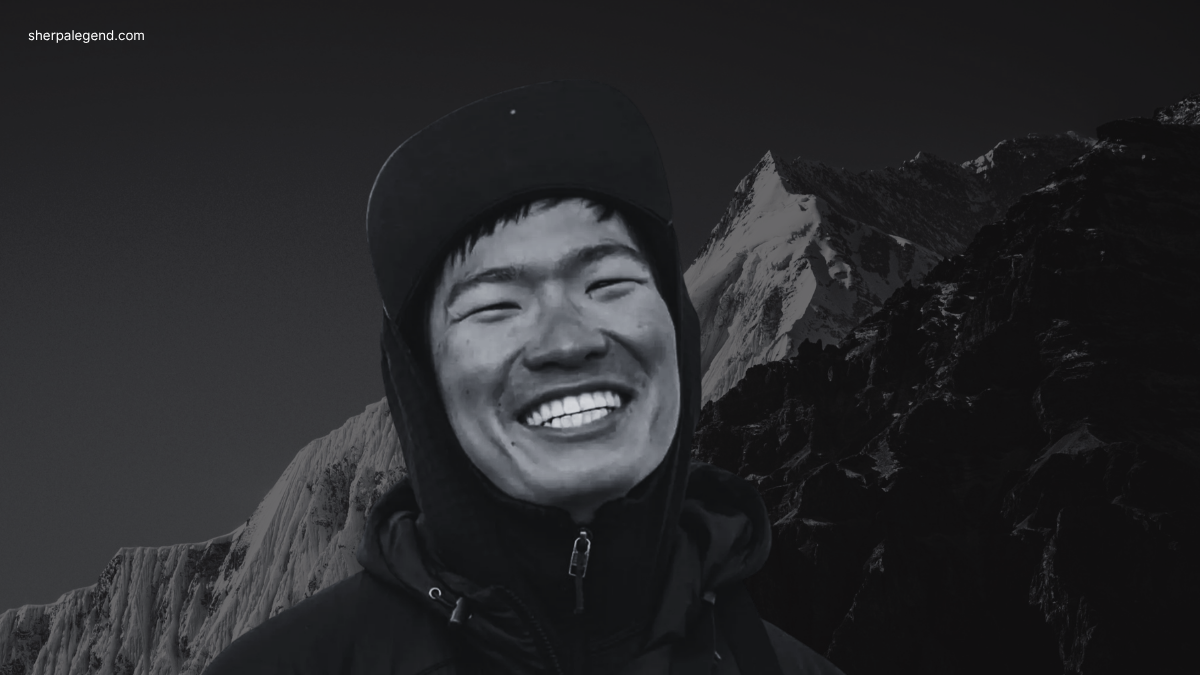

In his high school years in Tokyo, Tetsu Hashimoto kept asking himself one question. Why did he have to go to school just to study? “I want to spend my time climbing mountains!” he remembered thinking. So he chose a high school with an active mountaineering club.
He had owned a smartphone since middle school and he watched mountain videos on YouTube. One of them stopped him. It showed Ueli Steck setting a speed record on the north face of the Eiger. “What is this? This is incredibly cool!” he remembered thinking. He did not believe he could climb like that. He wanted to try anyway.
Years later, he was climbing real walls in Canada, the United States, Pakistan and Nepal. He was 25, and he never came home from Gangapurna West.
A boy from Tokyo
Hashimoto was born in Tokyo in 2001. He was a city boy, not a child of a mountain village. By his mid-twenties he was known for difficult, exploratory ascents in Japan and abroad. It began with something much smaller.
He started climbing in the fifth grade of elementary school. A family member took him into the hills, and from then on they went to nearby mountains about once a month. Once a year they made a longer trip to the Northern Japanese Alps.
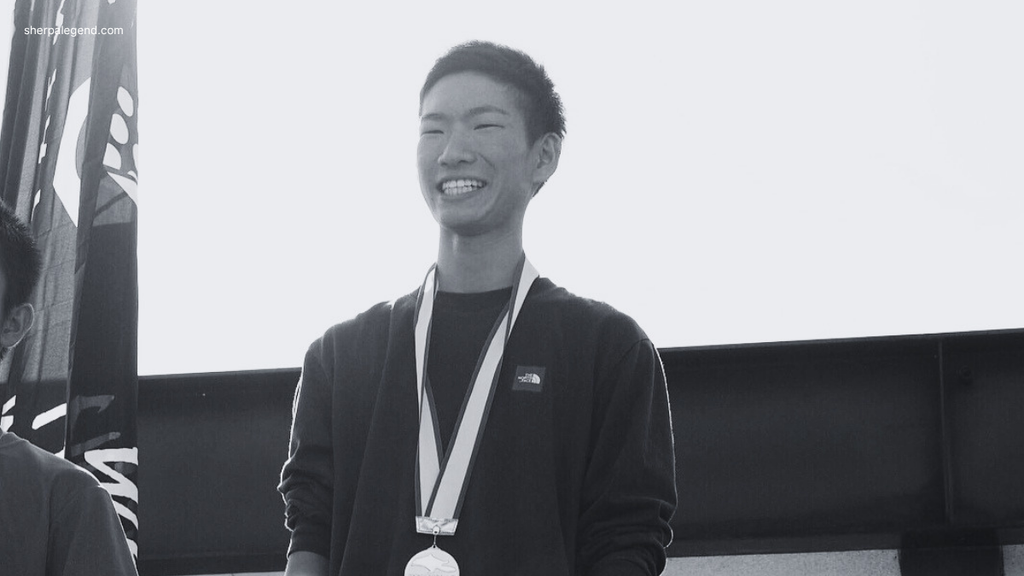
It was a simple routine, and it stayed with him. “As I continued climbing, I began to feel that mountains were incredibly enjoyable,” he said in an interview.
Notice what is missing from this picture. His first smartphone was still a few years away. A boy from a big city went to the mountains because he liked being there. The screens came later, and they gave that feeling a direction. In time they also gave him a goal: to see for himself the places he would later watch other climbers reach.
The screen generation
Hashimoto was born in 2001 and described himself as part of Generation Z. In a long interview about his generation, he looked back at what shaped him. A lot of it came through a screen.
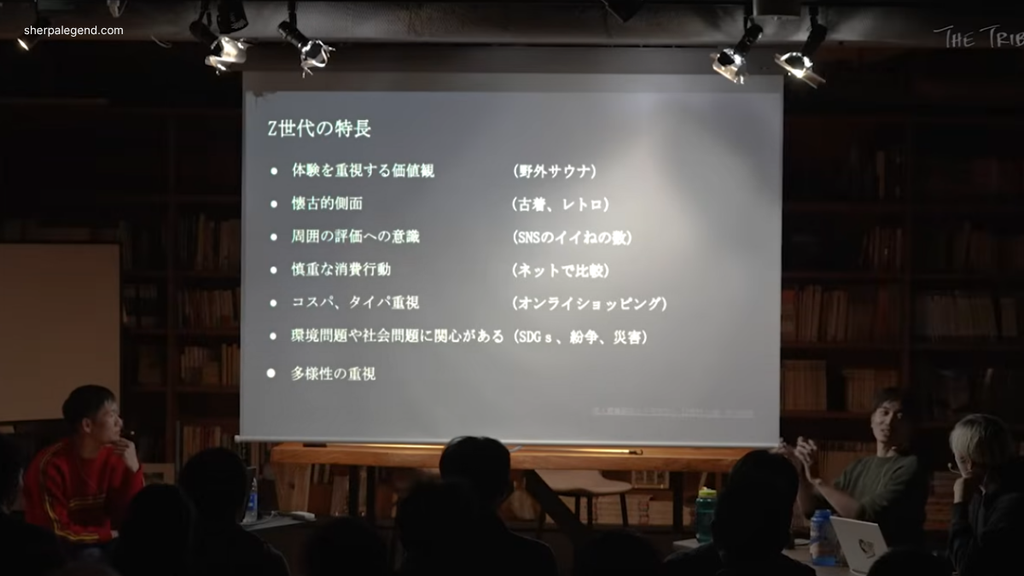
He got his first smartphone in the second year of middle school, around 2014, when YouTube was spreading fast. He was not a big reader, so the first mountain story he really took in was a manga. It was called Gaku. It showed him different kinds of mountaineering, and he admired the mountain rescuer in it. He began to think he might become a rescuer himself.
In high school, streaming services such as Netflix and Amazon Prime were becoming common. He read books by Naomi Uemura. He watched mountain videos on YouTube. Then he saw Ueli Steck on the Eiger. The climbing he was doing at the time was far from what he saw on screen. He said so himself. But he said the video gave him something to aspire to. His interest turned from rescue to his own climbing goals. He wanted to experience the Alps and the Himalayas.
At university he kept learning this way. He read Walter Bonatti and watched films such as The Alpinist and Free Solo. These, he said, added to what the books taught him.
That is the center of his story. He found his hero on a screen, and then he went to the real thing.
He never stopped being a viewer, and he became a storyteller too. He worked as a mountain creator, doing video production, photography and YouTube editing focused on mountain terrain. In his climbing team, he said, he was mainly responsible for producing videos. He watched the mountains on a screen. Later he filmed them for others to watch.
Choosing the mountains over the classroom
Hashimoto let the mountains decide where he studied. He picked his high school for its mountaineering club and spent three years in it. He chose his university, Tokyo University of Agriculture, the same way, and joined its club.
The COVID-19 pandemic interrupted his university years. He said he did not want to waste a year and fall behind. After three years he left the university club and joined an adult climbing group, the G Climbing Club. Older, more experienced climbers began inviting him on harder routes. Some were a little beyond his ability, he said, but he went with experienced climbers and learned from them.
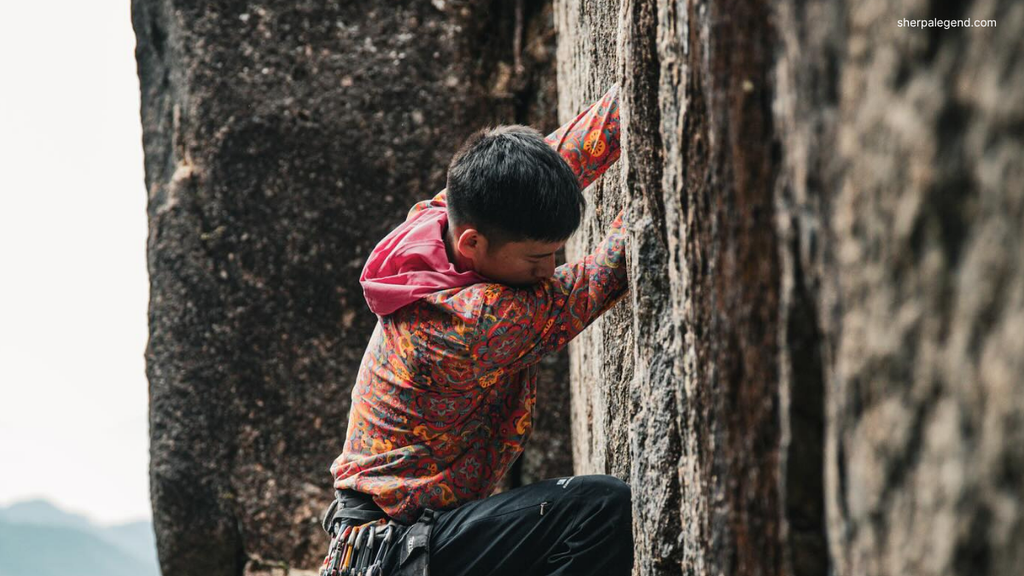
He did not rush. In high school he did not yet have the means or the confidence to go to serious climbing areas alone. So he trained in trail running to build a base of fitness, and in his second year he went to mountains such as Mount Tsurugi to build basic skills.
That same year he went to the Bugaboos in Canada, his first expedition abroad. From then on, he went on an expedition almost every year.
The screen had given him his heroes. The clubs gave him people to climb with, and a way to reach the places he had watched.
Learning the craft
Hashimoto built his skills in stages. Three steps stand out.
At home he climbed in winter, on routes such as the Kurobe traverse and Komado Ridge. By then, he said, he knew how to live in the mountains and how to use safety equipment.
In 2023, the year he graduated, he climbed El Capitan in Yosemite, on The Nose and Zodiac routes. He went to learn big-wall skills, which he thought he would need on steep alpine walls. The idea came from videos again, as it had before. He had watched climbers use those methods on big walls and decided he should learn them too.
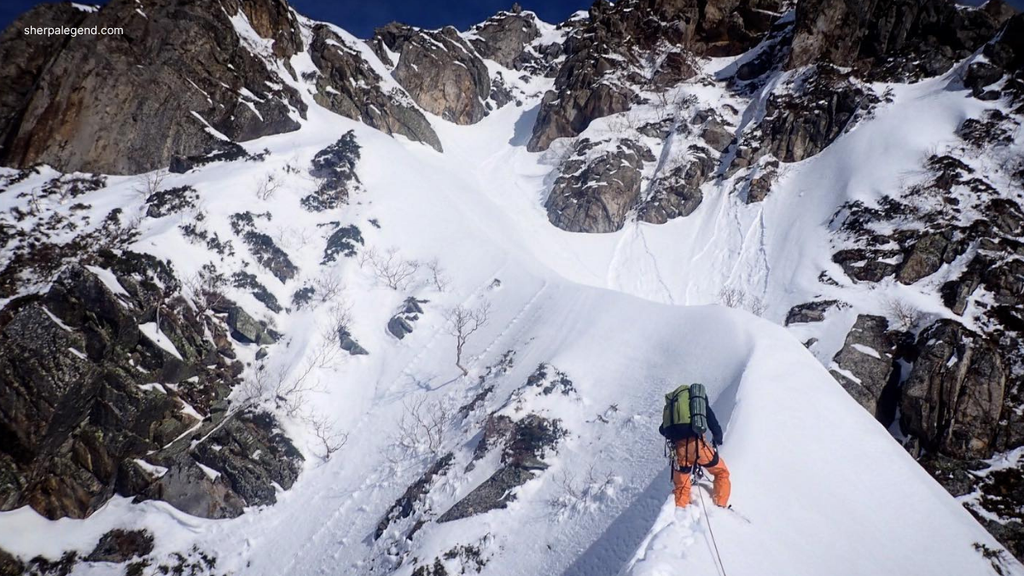
In 2024, he went to Pakistan with Mashu Kawasaki. They made first ascents: the west face of Rahman Zom (6,350 m) and the north face of Shiyko Zom (5,709 m). A first ascent is the first time anyone climbs a peak or a route. The team shared its climbs online, through a YouTube channel, a website and a blog, and Hashimoto was the one making the videos.
Throughout, he aimed to climb in alpine style. That means going fast, carrying little, and not building a chain of camps or fixing ropes up the mountain. He said the books, films and videos he took in almost always dealt with accidents and danger, and that made him aware of the risks. He described his approach as careful. “I wanted to improve gradually, step by step,” he said.
In the same interview, he said alpine climbing often rewards climbers in their thirties, when technical skill and experience come together. But he also noticed that more climbers in their twenties were heading to Alaska, Pakistan and the Himalayas. He felt the trend was returning. He was one of that new wave.
The partner and the peak
For Gangapurna West, Hashimoto teamed up with Hidesuke Taneishi, 40, who led the expedition. Taneishi had been nominated for a Piolet d’Or for the first ascent of 6,652 m Pholesobi Peak in Nepal. He climbed it with Hiroki Yamamoto, by a direct route up its steep north face.
So the pairing was a young climber beside a seasoned one. Hashimoto had said that one good thing about mountaineering is sharing it with people of different generations. A photo taken in Kathmandu earlier that week shows the two men with a member of their support team. On an earlier winter expedition, he said, the older climbers taught him techniques and shared their experience.

Gangapurna West is about 7,140 m high. It stands next to the Annapurna massif in Manang district, and its wall is roughly 1,700 m. It opened to foreign teams in 2014. Several teams have tried it since. None has reached the top.
That is why a first ascent matters to climbers. There is no map, no route and no one to follow. Every decision is made for the first time.
The last days
Hashimoto and Taneishi travelled to Nepal in September 2026 for an alpine-style attempt. They began the climb on October 10. A Nepali guide supported them from base camp.
Contact was lost on October 15, when they had reached about 7,000 to 7,050 m. A search began on October 19. No one knew where on the mountain they were, so it started at Manang village and found nothing. The team later included helicopter pilot Sobit Gauchan, climber and photographer Manish Maharjan, and IFMGA guide Pansang Rinzee Sherpa. The helicopter dropped Maharjan and Rinzee at 5,750 m, and they searched the upper slopes with a drone. They found the remains of the climbers’ higher camp.
On October 23, the bodies of both men were found at around 6,300 m on the south side of the mountain. The guide who found them said the terrain pointed to a slab avalanche.
What he leaves behind
Go back to the schoolboy who wanted to be on a mountain, and to the young man watching Ueli Steck on a phone.
Steck was Swiss. People called him the “Swiss Machine” for his speed, his solo climbs and his light, simple style. Hashimoto saw him set a speed record on the north face of the Eiger and thought it was incredibly cool. He did not think he could ever climb like that. He took it as something to aspire to.
Steck died on April 30, 2017, at the age of 40, after a fall of about 1,000 metres on Mount Nuptse in Nepal. Nine years later, a young climber who had grown up watching him died in the same country, on a mountain no one has climbed. Hashimoto was 25.
He did not stop at watching. He climbed, he filmed it, and he shared it. Ninety-five people backed his team’s Pakistan expedition after a year of videos and posts had shown them what he was doing.
He leaves behind a generation that can see a hero on a screen and then go and climb. Many of them will start the way he did, with a phone in their hand. He showed what can come after.
As a boy in Tokyo, he found the mountains incredibly enjoyable. He kept going back.
