


Paul Ramsden: The Most Decorated Mountaineer You’ve Never Heard Of
In the small ceremony hall in Briançon, France, a 54-year-old(now 56) Yorkshireman stepped forward to accept his fifth Piolet d’Or mountaineering’s equivalent of an Academy Award.
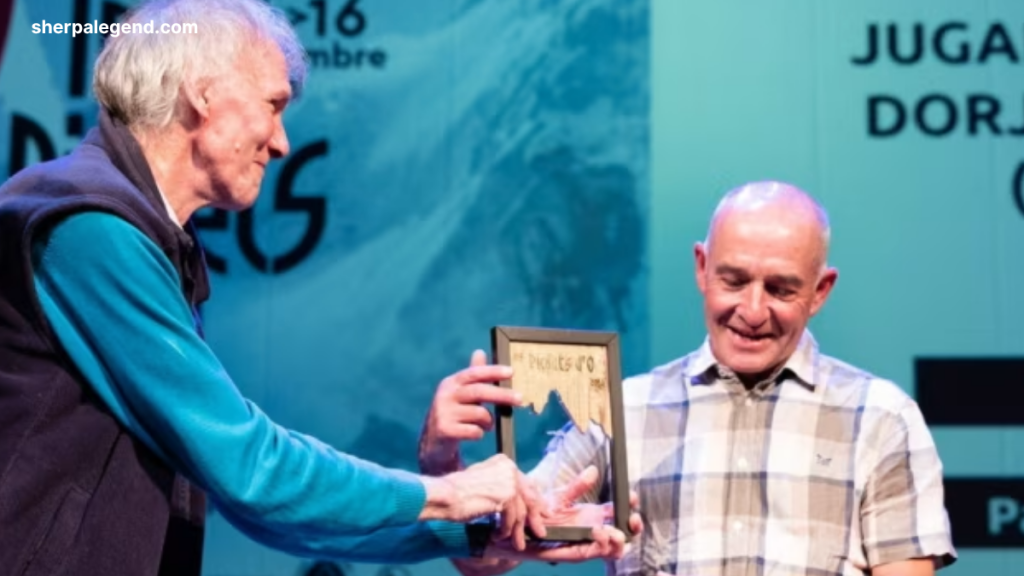
Paul Ramsden had become the most decorated mountaineer in the award’s history, yet most people wouldn’t recognize his name if they passed him on the street. That’s exactly how he likes it.
While Instagram-ready adventurers chase followers and sponsorship deals, Ramsden has spent over three decades quietly redefining what it means to be a mountaineer.
His trophies don’t hang proudly on his walls they’re stacked behind his office door, where his cleaner occasionally grumbles about having to dust around them. “She complains that they’re a bit of a dust trap,” he smiles, “but I’ve just never got round to putting them up.”
The Making of a Mountain Man
Born in Yorkshire in 1969, Ramsden’s relationship with the mountains began early, but it was tragedy that truly shaped his approach to climbing.
At just 17, he lost his first climbing partner and mentor, Roger Sutcliffe, in what seemed like a simple accident in Scotland. Sutcliffe had chosen not to take his ice axe off his pack while crossing a snowy col. When he slipped, he had nothing to stop the slide and fell into a gully. When his body was recovered, the ice axe was still strapped to his backpack.
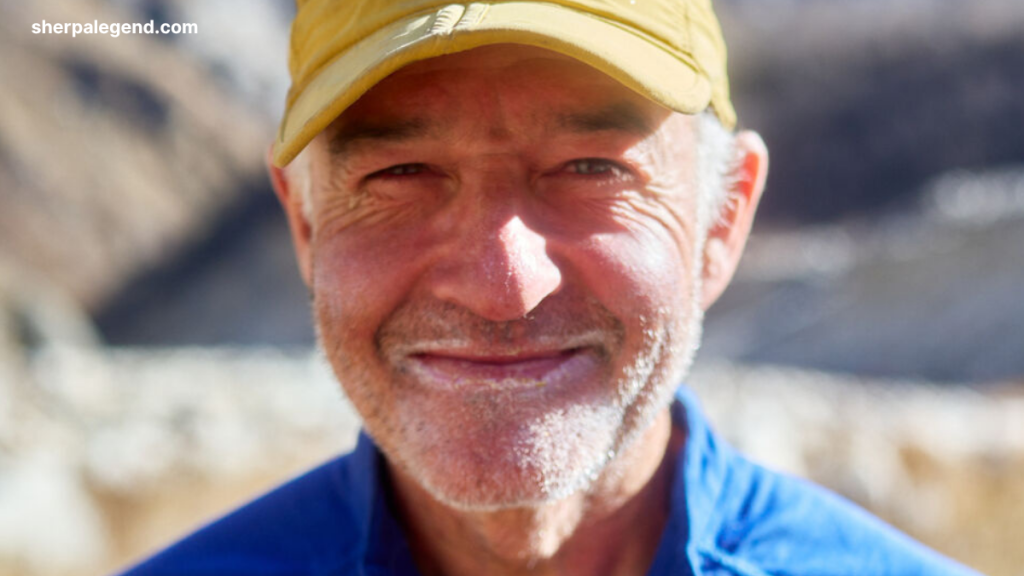
“It was a silly mistake,” Ramsden recalls with quiet intensity. “It seems a strange thing, but his death is what’s kept me alive all these years. It instilled in me, from the age of 17, that I was playing a very serious game.”
That early lesson in mortality didn’t stop him from climbing it made him smarter about it. Where other mountaineers might see Roger’s death as a reason to quit, Ramsden saw it as the ultimate lesson in preparation and respect for the mountains.
Learning the Hard Way
Ramsden’s first expedition to the Himalayas in 1990 was, by his own admission, “a complete disaster.” Instead of giving up on high-altitude climbing entirely, he took a step back and built his skills methodically.
He cut his teeth in Alaska and Patagonia smaller ranges with lower altitudes that allowed him to find his footing without the extreme pressures of the world’s highest peaks.
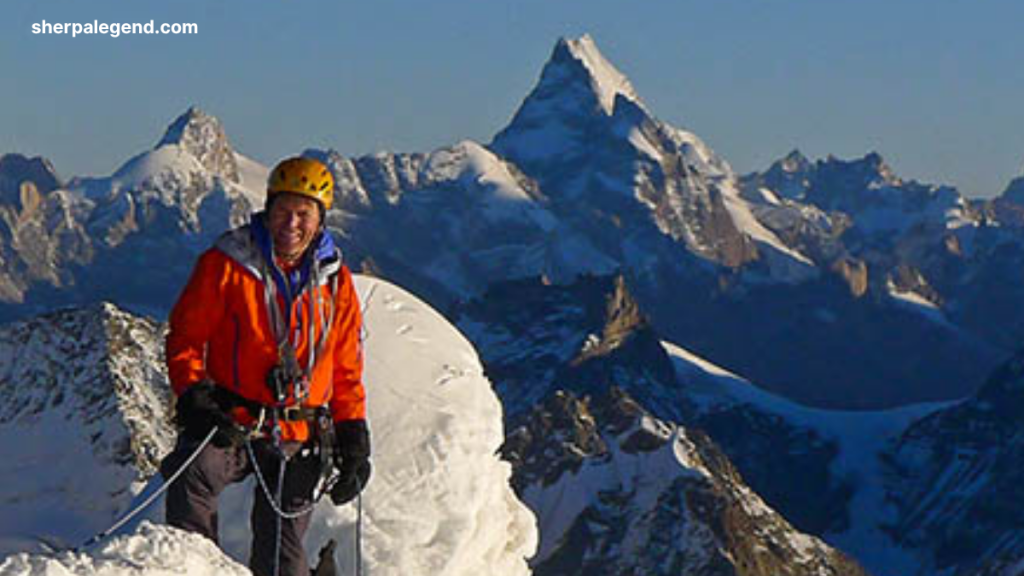
“People are obsessed with shortcuts these days,” he explains. “Everything’s about ‘hacks’. And, in mountaineering, there aren’t any. You just need to put in the time and learn the trade.”
This patient approach to learning stands in stark contrast to the modern climbing world, where social media fame can sometimes overshadow actual skill.
Ramsden built his expertise the old-fashioned way through years of gradual progression, countless mistakes, and careful observation of what worked and what didn’t.
Art of Alpine Style
What sets Ramsden apart isn’t just his success rate or his collection of awards it’s his commitment to what’s called “alpine style” climbing. This means ascending mountains with small teams, carrying everything they need on their backs, without fixed ropes, supplemental oxygen, or porter support. It’s the purest form of mountaineering, and also the most dangerous.
“I am an alpinist and would never consider climbing in another way,” he states firmly. “If I couldn’t climb alpine style, then I would stop climbing. It’s the only ethical way to climb big mountains, and to be honest any other way is simply cheating.”
Paul Ramsden
This philosophy puts him at odds with the commercial mountaineering industry, where paying clients are often guided up mountains using extensive support systems. Of those who pay expedition companies to tackle the world’s highest peaks, Ramsden has a simple assessment “They aren’t climbing the mountain. They’re climbing a rope that’s been fixed for them by someone else.”
Partnership
Throughout most of his career, Ramsden’s success has been built on carefully chosen partnerships. His most famous collaboration was with Mick Fowler, with whom he won three Piolet d’Or awards between 2003 and 2016.
Their first victory came for opening up the North Face of Siguniang in China in 2002 a climb that made them the first British winners of the prestigious award.
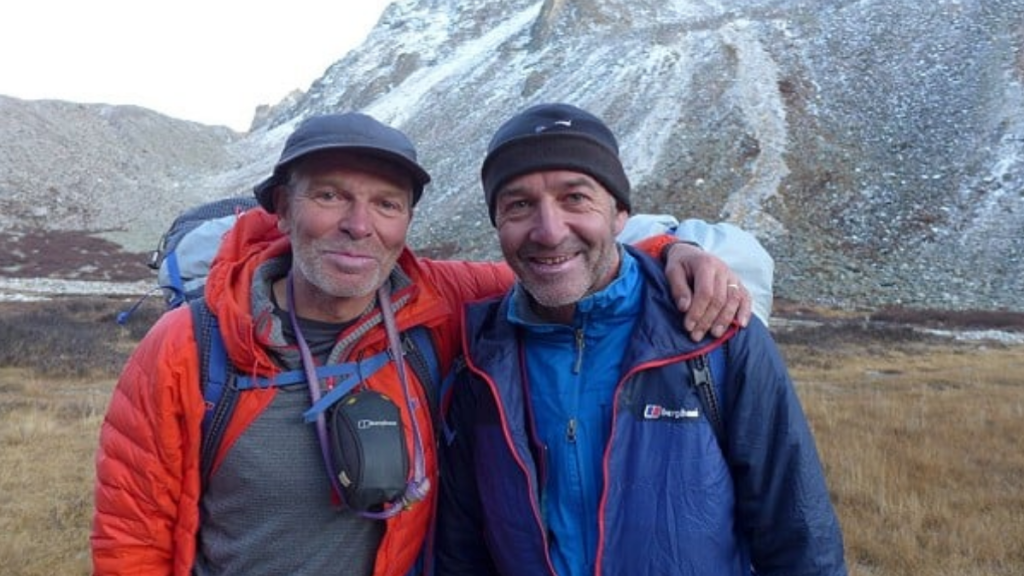
The partnership with Fowler was more than just successful; it was transformative for British mountaineering. Together, they tackled some of the most challenging unclimbed lines in the Himalayas, always maintaining their commitment to pure alpine style.
Their climbs on Shiva’s Prow in India and Gave Ding in Nepal became legendary within mountaineering circles, even if the general public remained unaware.
When Ramsden and Fowler eventually went their separate ways, the transition wasn’t easy. “I’d not really climbed with anyone except Mick for years,” Ramsden admits. “I’m 15 years younger than Mick and I wanted to find someone about 15 years younger than me, who could last a long time as a partner.”
Finding that partner proved challenging. Many of the obvious candidates had either died in the mountains or become guides – “which is kind of the same thing!” he jokes darkly. Eventually, he found Nick Bullock, and later Tim Miller, both of whom proved worthy successors to the Fowler partnership.
The Google Earth Explorer
Ramsden’s Piolet d’Or came for a climb that began, remarkably, during COVID lockdown. Spending time on Google Earth, he spotted what looked like an impossible line up an unnamed 6,563-meter peak in Nepal’s Jugal Himal region.
The mountain appeared to have a thin slash of ice and snow cutting diagonally across an otherwise blank granite face.
“We couldn’t really believe it to be honest, it was in such an outrageous position,” Ramsden recalls of first seeing the line in person. “I really wasn’t sure that it would go, mainly due to the blank section in the middle.”
With Tim Miller, he spent five days in April 2022 ascending what they called “The Phantom Line” – so named for its ability to appear and disappear under different light conditions.
The climb took them through squeeze chimneys inside the rock itself, across desperately thin ice, and up what shouldn’t have been climbable at all.
“Basically there shouldn’t really be an ice route on a rock face like this,” Ramsden explains with characteristic understatement. Yet they found a way, demonstrating the kind of problem-solving and commitment that has defined his career.
The Day Job Reality
Perhaps most remarkably, Ramsden has achieved all of this while maintaining a day job as an occupational hygienist monitoring workplaces for health and safety hazards.
He’s not a professional athlete living off sponsorships and speaking engagements. Instead, he fits his expeditions into annual holiday time, usually managing one major trip per year.
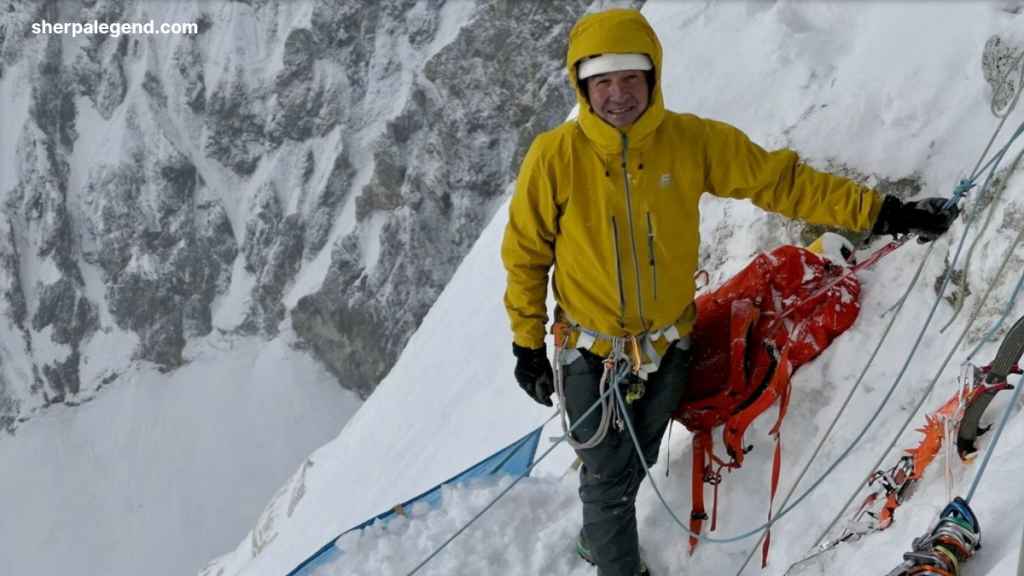
“I’m self-employed, which means I can have as much time off as I like, but in reality I don’t get paid if I’m not working,” he explains. This practical approach to balancing life and climbing is typical of his no-nonsense Yorkshire character.
When outdoor equipment maker Rab approached him for sponsorship, his response was telling: “As long as I don’t have to do anything in return!” They were surprised but agreed.
His sponsorship remains limited to brands that provide equipment he actually needs, without any obligation for promotion or marketing activities.
The Cost of Commitment
Ramsden’s single-minded dedication to mountaineering comes at a personal cost that he acknowledges openly.
“Everybody has to help so that I can go away. I couldn’t do it without my family. But you also have to be pretty bloody-minded to keep insisting on going away every year when you know you’re causing massive inconvenience to people.”
The psychological pressure on family members is real. “I can’t claim it isn’t stressful for my family when I’m away on a trip like this but they do trust me,” he says. That trust has been earned through years of careful decision-making, including times when he’s reached basecamp and decided conditions weren’t safe enough to attempt a climb.
What keeps Ramsden alive in one of the world’s most dangerous sports is his sophisticated understanding of risk. Every decision is calculated, from route selection to partner choice to equipment. The lesson learned at 17 with Roger’s death has been refined over decades into a complex equation of safety and ambition.
“Safety is a complicated equation,” he explains. “Looking at yourself and your partner and thinking about how you’re feeling and thinking. Looking at the quality of the ice and how safe you can make it. If you can’t make it that safe then you need to be much more positive about what you are doing.”
Paul Ramsden
This isn’t about avoiding risk entirely – that would make serious mountaineering impossible. Instead, it’s about understanding and managing risk intelligently. Ramsden has learned to read the mountains, his partners, and himself with remarkable precision.
The Anti-Celebrity
In an age where adventure sports are increasingly about building personal brands and social media followings, Ramsden represents something different entirely.
He has no social media presence, gives few interviews, and actively avoids the spotlight. When journalists do track him down, he’s more likely to talk about cutting his lawn than celebrating his latest achievement.
This isn’t false modesty it’s a genuine belief that the mountains themselves matter more than personal glory. His approach connects him to an older tradition of mountaineering, where the adventure was its own reward and public recognition was secondary.
“I have no interest in it,” he laughs when asked about the speaking circuit. “Social media is just something I don’t do, and for years because of that people didn’t really know I existed.”
Legacy in the Mountains
Paul Ramsden’s legacy isn’t measured in followers or endorsement deals, but in the routes he’s pioneered and the standards he’s maintained. His five Piolet d’Or awards represent not just personal achievement, but a consistent commitment to climbing’s highest ethical standards.
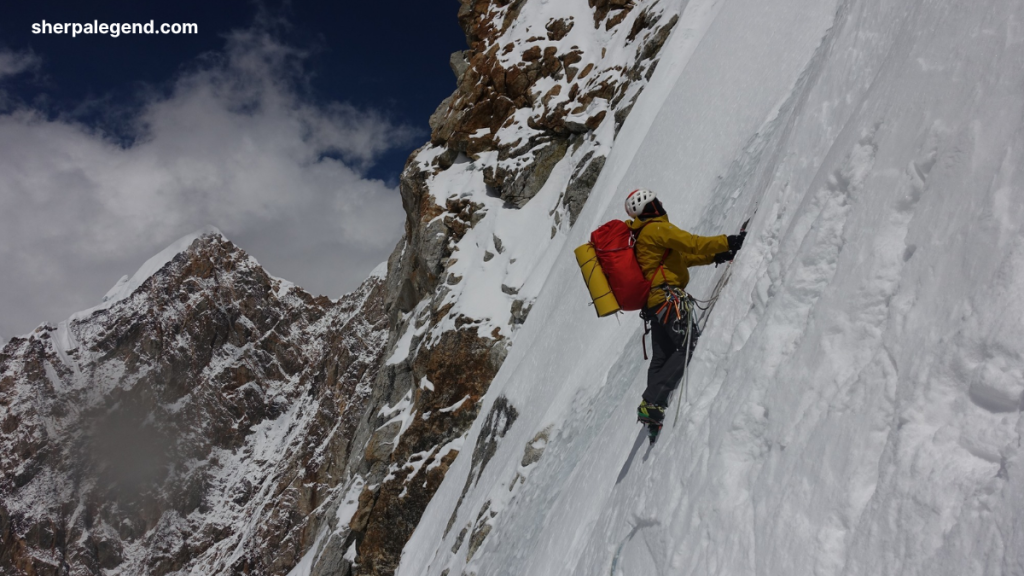
More importantly, his example shows that there’s still room in modern mountaineering for the quiet professional who lets the mountains do the talking. In a world increasingly dominated by performance and publicity, Ramsden proves that the purest rewards still come from the simple act of going up.
At 56, he shows no signs of slowing down. With over 30 expeditions behind him and more planned, he continues to seek out unclimbed lines in the world’s most remote ranges. His snow hammock sewn by his mother-in-law – still hangs from vertical walls. His ice axe still cuts steps up impossible faces.
And somewhere in the Himalayas, there’s another perfect line waiting to be climbed by a man who believes that the only way up a mountain is the right way up even if nobody’s watching.
