


Some time ago, when passengers stepped out of Nalchik Airport in southern Russia, the first thing they saw was a large banner bearing the photograph of a young woman and the words “Queen of the Heights.”
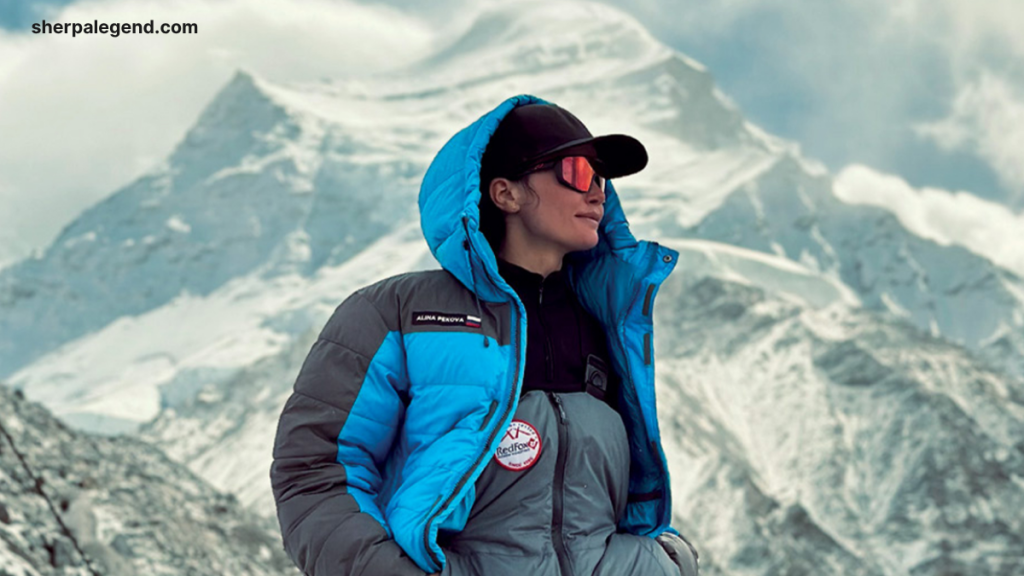
The woman was Alina Pekova, who, at just 32 years old, had become the first Russian to climb all fourteen of the world’s highest peaks those giants above 8,000 meters, where the air is thin enough to kill and every step is a battle against one’s own body.
It took her only eighteen months.
To understand this achievement, consider this fewer than a hundred people on Earth have accomplished what Alina did. More humans have been to space than have stood atop all fourteen eight-thousanders. The great Italian climber Reinhold Messner was the first to do it, and it took him sixteen years. Alina did it ten times faster.
A Mountain Girl Who Didn’t Climb Mountains
Alina was born on January 8, 1993, in Chegem Vtoroy, a small village in Kabardino-Balkaria, where mountains aren’t just scenery they’re part of the people’s identity. But her childhood didn’t hint at mountaineering greatness. She did rhythmic gymnastics, played tennis, and studied languages at university, becoming fluent in English.
Her mother worked in jewelry, her father had wrestled in his youth. They were an ordinary Caucasian family living in the shadow of Mount Elbrus, Europe’s highest peak.
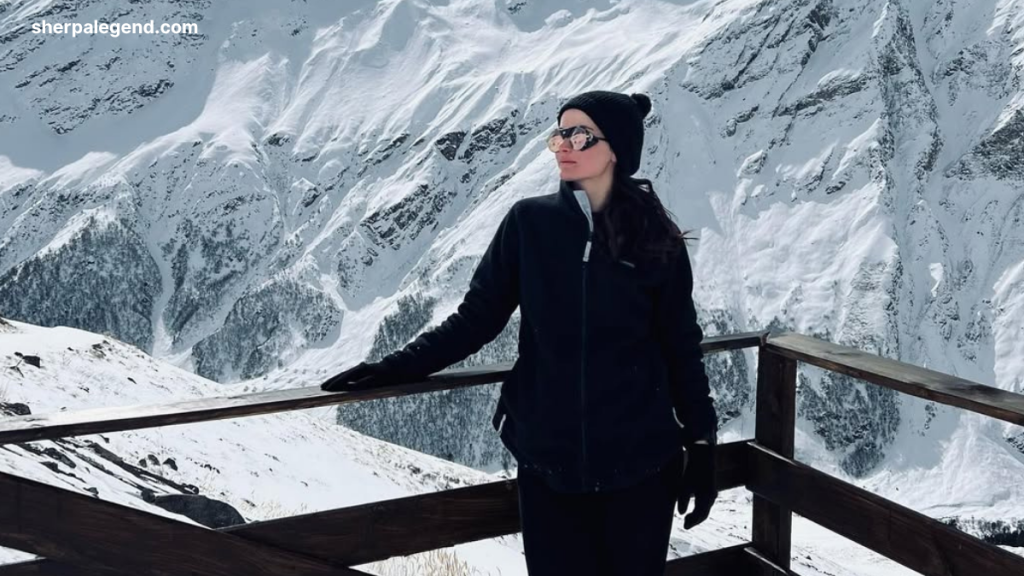
“In autumn, the landscape is mesmerizing,” Alina says. “Yellow leaves on the trees, and above them, snow-white peaks.”
She looked at those peaks for twenty-four years before deciding to climb one. It wasn’t a dramatic calling or a childhood dream. It was simpler than that. “I thought people from all over the world come here to climb Elbrus, and I live right here and have never even tried.”
In October 2017, she wrote to a friend who worked as a guide in the Elbrus region. They climbed together, just the two of them. Seven or eight days of preparation, and then up.
When she reached the summit, a sea of emotions washed over her. She posted a photo on social media. Her parents were surprised especially her father, who couldn’t understand why a girl would want to do such a thing.
That climb should have been a one-time adventure. Instead, it was the first step on a journey that would nearly kill her several times and make her a national hero.
The Mountains That Almost Broke Her
Two years after Elbrus, Alina climbed Kilimanjaro in Tanzania with a friend. The next year, she attempted Ojos del Salado in Chile, one of the world’s highest volcanoes. But she didn’t make it. She stopped climbing partway up and turned around.
“A difficult period in life,” is all she’ll say about it now.
It wasn’t about fitness or weather. It was something deeper personal troubles that weighed heavier than any backpack. She had gone to Chile thinking the mountains would help her feel better. They didn’t.
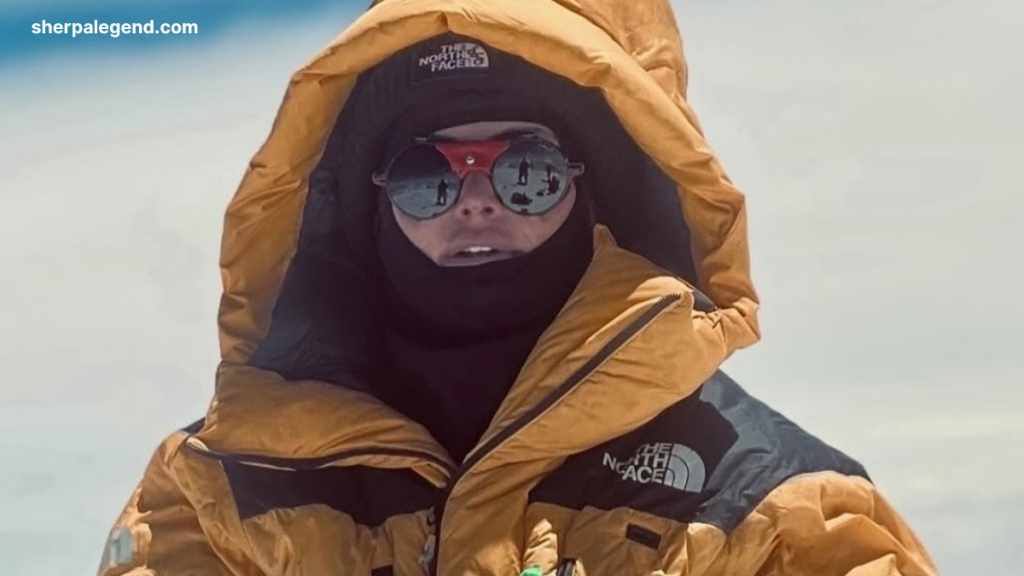
But failure taught her something crucial: you can’t climb one mountain while thinking about another. You have to be present, focused, committed to where you are.
Before her next attempt Aconcagua in Argentina she went to Moscow and tested herself in a hyperbaric chamber at the Russian Olympic Committee.
The doctor looked at her results and delivered a verdict that would have ended most people’s climbing careers “You’re not recommended to go to the mountains. The chances are extremely slim.”
She went anyway.
On Aconcagua, fighting through altitude sickness and antibiotics that slowed her body’s responses, she reached the summit. And for the first time in the mountains, she cried. Not from joy, but from relief. Relief that after failure, she could still succeed. Relief that the doctor had been wrong.
She sent him a photo from the top.
The Project Nobody Believed In
In 2022, Alina and a friend went to Nepal to attempt Manaslu, her first eight-thousander. Bad weather and her inexperience stopped them at 7,000 meters. People died on that mountain including her Sherpa and the famous American skier Hilary Nelson. Avalanches swept the slopes.
But something happened on Manaslu that changed everything. Alina saw other climbers who were attempting to summit all fourteen eight-thousanders. She watched them, talked to them, and thought: why not me?
Nobody in Russia had done it yet. She had assumed some strong male climber had already achieved it, but she was wrong. There was one contender Sergey Bogomolov preparing for his final peak. Alina thought, “Great, he’ll be the first man, and I’ll be the first woman.”

She didn’t tell anyone about her plan except her mother. When she mentioned it might cost everything she had, her mother asked, “With what money?” Alina said, “I have an apartment I can sell it.”
Her mother called her crazy. Then she supported her anyway.
They sold the apartment.
Eighteen Months at the Edge of Death
In April 2023, Alina stood at the base of Annapurna, the deadliest of the eight-thousanders, with a 29% fatality rate. Even Sherpas avoid it when they can. She didn’t have a choice—the climbing season begins with Annapurna.
She lay in her tent at night, listening to avalanches thunder down nearby slopes, unable to tell if she was dreaming or awake, wondering if the next avalanche would hit her camp. On every mountain she climbed, a friend died. Every single one.
But she kept going.
From March to May 2023, she climbed four peaks a Russian record for speed. Then she flew to Pakistan and climbed four more in three months.
After a brief rest in Dubai, she returned to Nepal for three more. Six months straight in the mountains, living above the death zone where the human body doesn’t recover, it only depletes.
On May 18, 2023, she did something remarkable even by her standards: she climbed both Everest and Lhotse in a single day.
After reaching Everest’s summit in the dark before dawn, freezing in brutal winds, she descended to a camp and asked her Sherpa, Pasang, if he wanted to try for Lhotse immediately instead of waiting until the next day.
He was tired. He said he needed ten minutes to rest.
Ten minutes later: “Okay, Alina, let’s try.”
They climbed through the day and into the evening, reaching Lhotse’s summit and descending to camp around ten at night. She had been awake for more than a day.
The Philosophy of the Mountains
People ask Alina why she climbs. She still doesn’t have a complete answer.
“I don’t like the expression about conquering peaks,” she says. “It sounds too self-assured, even arrogant. I could talk about overcoming, conquering inner fears, but the reality is much deeper.”
The mountains, for her, aren’t things to defeat. They’re teachers, mirrors, forces of nature that don’t care about human ambition. “I don’t know if the mountains have become closer to me after all my ascents,” she says. “It’s presumptuous to claim to understand them. More likely, I’ve been somewhat lucky.”
She avoids the internet and all communication when she’s climbing. No distractions. No noise. Just her, her Sherpa, and the mountain. Sometimes she’d borrow a satellite phone to send her mother a brief message: “Everything is fine. Don’t worry.”
She stopped calling because her mother would cry, terrified of hearing bad news.
Alina writes down her emotions on her phone sometimes, but she keeps them private. “Maybe I’ll tell my story someday to dispel stereotypes,” she says. “People often judge things they don’t know.”
A Woman in a Man’s World
When Alina started climbing, one man told her, “Go home, this isn’t for girls. Why do you need this? You’ve climbed one mountain; that’s enough.”
Another said, “Don’t even think about it. First, you don’t have enough money. And you’ll never be the first anyway, so don’t bother.”
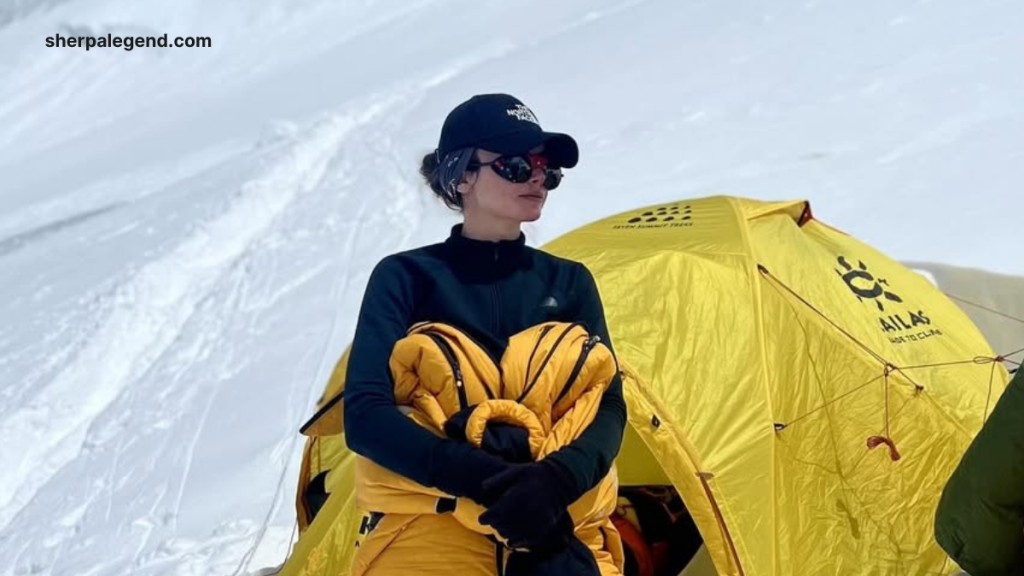
She summited Annapurna. He didn’t.
Alexander Abramov, president of the Seven Summits Club, later said, “It’s a shame, we shouldn’t have let a girl go first that should’ve been done by a man.” Alina doesn’t hold it against him. She knows what he meant.
“Men still don’t like when women surpass them,” she says simply. “As far as I can see, they often try to diminish women’s achievements.”
Alina Pekova
But she notices something else too “When women decide to do something, they go all the way.”
The Final Mountain
In October 2024, Alina prepared to climb Shishapangma, her fourteenth and final peak. It had taken three attempts permit issues, bad weather, tragedy. In the fall of 2023, four climbers had died on Shishapangma, including friends of hers. An avalanche had swept them away. The route was temporarily closed.
She was exhausted. Physically. Mentally. Emotionally. She had been depressed. She had questioned whether it was worth risking her life. What was she trying to prove?
But she went back.
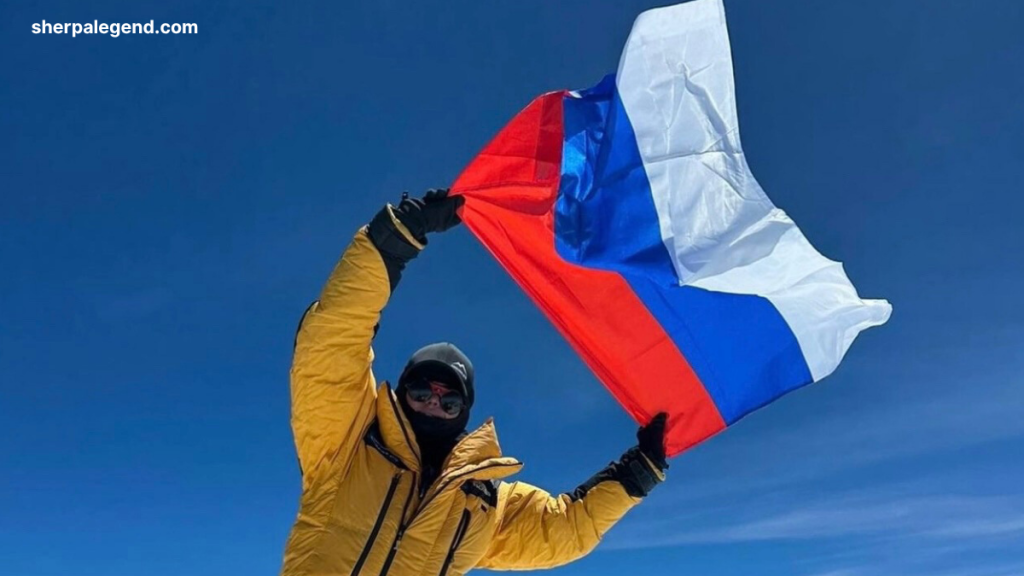
On October 9, 2024, she stood on the summit of Shishapangma. She had done it. All fourteen. In less than a year and a half.
When she returned to Nalchik, people gathered at the airport with flowers and posters. The governor called her the pride of the republic. They hung her banner at the terminal. “Queen of the Heights.”
Alina remains modest about it all. “I’m simply doing what I love,” she says. “The mountains are my place of power. And what matters most is not titles and records, but the feeling of living on the edge, where you truly hear your heart.”
What She Leaves Behind
Alina Pekova is only 32. Her climbing career is far from over. She talks about attempting oxygen-free ascents next, the “sporting style” that’s more respected in the climbing world and far more dangerous. But for now, she wants to rest, spend time with family, and figure out her purpose in life.
She ranks 279th in the Russian Mountaineering Federation and holds only a third-class rating, despite having climbed fourteen eight-thousanders. She doesn’t care about the ranking. That’s not why she climbs.
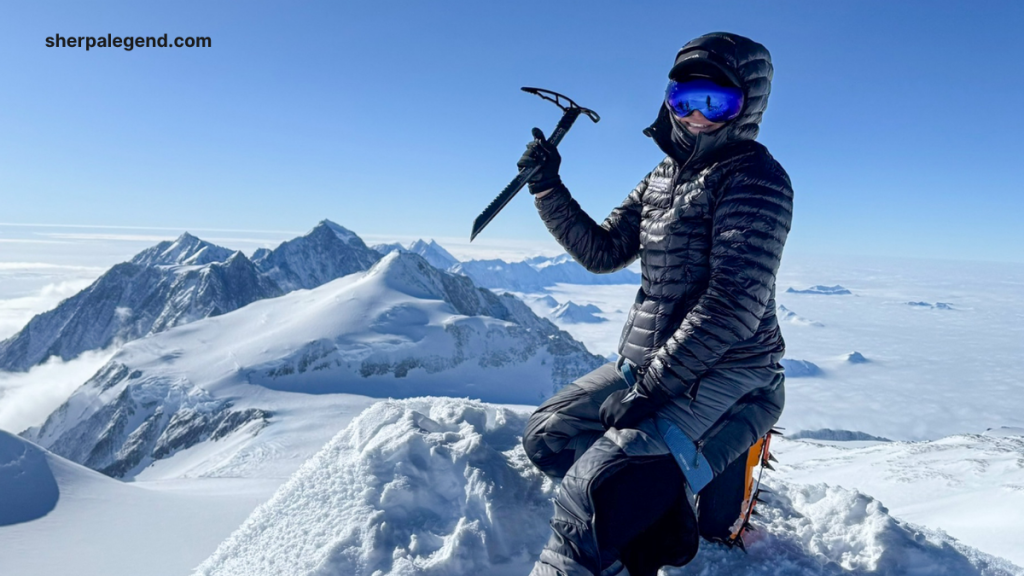
“Only I know what I had to go through, the difficulties I had to endure,” she says. “There were many moments when I could have said, ‘That’s it, stop.’ But now I look back and see that I’ve accomplished a great deal.”
Her legacy isn’t just about being first. It’s about being stubborn. About selling your apartment to chase a dream. About crying on a summit and then climbing the next mountain. About watching friends die and continuing anyway. About being told you shouldn’t, you can’t, you won’t and doing it regardless.
“I hope that someday there will be other heights, even more interesting,” she says.
Knowing Alina Pekova, there will be. The girl from Chegem is just getting started.
