


Three attempts, countless setbacks, and one impossible dream finally realized , The Man Who Skied Down Everest
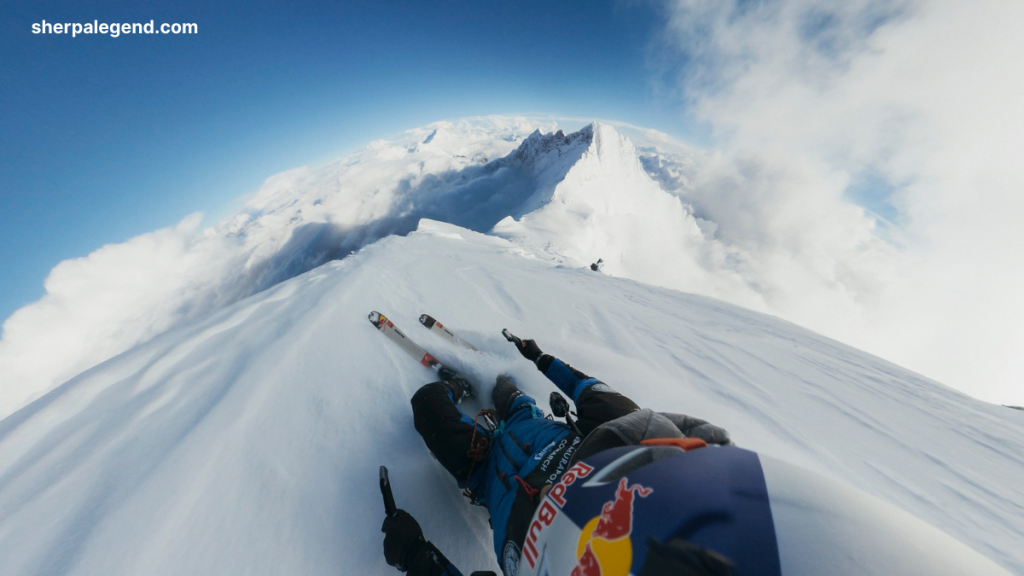
On September 22, 2025, at 3:00 p.m. Nepal time, Polish mountaineer Andrzej Leszek Bargiel stood atop Mount Everest’s summit at 8,848 meters. What happened next had never been done before in mountaineering history. Within minutes of reaching the world’s highest point, Bargiel clipped into his skis and began descending without supplemental oxygen completing the first-ever complete ski descent from Everest’s summit to Base Camp without bottled oxygen.
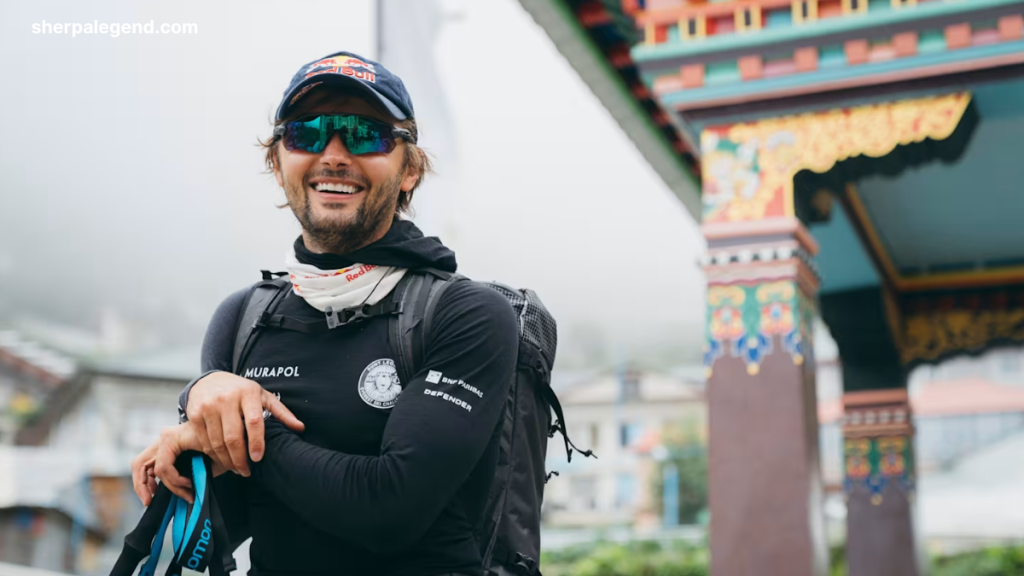
“I have finally done it,” Bargiel said after his historic feat. “Around 3:00 p.m., I stood atop the roof of the world and began skiing down from the summit. It was really hard but amazing to scale Mt. Everest this autumn and ski from the top.”
Andrzej Leszek Bargiel
But this moment of glory was decades in the making, rooted in the childhood dreams of a boy from a small Polish village who would grow up to redefine what’s possible on the world’s highest mountains.
Andrzej Leszek Bargiel was born on April 18, 1988, in Łętownia, a small village near Jordanów in southern Poland. The ninth of eleven children born to Maria and Józef Bargiel, young Andrzej displayed boundless energy from his earliest years. His teachers and parents had their hands full trying to keep him grounded, as their vision of a traditional backyard household career simply wasn’t the path meant for him.
The foundations of his future career were built unconsciously through backyard sports running after balls, climbing the tallest trees, swimming, and roaming the mountains. These activities became his greatest passion, setting the stage for what would become an extraordinary mountaineering career.
When Bargiel was nine years old, he made what he called “the deal of my life.” He exchanged table tennis paddles and, with a heavy heart, added his pocket knife to acquire wooden skis with screwed edges, plastic sliding surfaces (190 cm tall), and size 44 boots from his neighbor. The excitement was so overwhelming that he experienced many sleepless nights, and this uncontrolled excitement and endless obsession confirmed that skiing was his true passion.
As soon as the first snow fell, young Bargiel and his friends made their way to the hills near his house. Together, they created ski runs and built their first ski jumps. This place would always hold sentimental value, as it was where he took his first steps into what’s known as “freeride” skiing. He often escaped school or feigned ailments to free himself from classes what he now considers his private investment in his sports career.
For young Bargiel, winter existed only for skis.
Finding His Mountain Calling
During junior high school, it became clear that regular sports training was the only way to channel Bargiel’s tremendous energy. He tried various sports including horseback riding and mountain biking in mountainous terrains, achieving some small successes at competitions. Unfortunately, his bike wasn’t built for the demanding terrain and fell apart frequently.
The sports club lacked the budget for a new bike, and his parents couldn’t afford such a luxury. Looking back, Bargiel believes the cycling career path just wasn’t meant for him.
After attempting various sports, he felt a natural pull back to skiing. But it was through his older brother Grzegorz, a mountain rescuer, that Bargiel was introduced to ski touring and discovered the mountains that would define his life. This family influence proved pivotal in directing his passion toward the high peaks.
Bargiel’s first major summit was Mount Elbrus, marking the beginning of his high-altitude mountaineering career. He began competing in ski-mountaineering events in 2006, steadily building the skills and experience that would later enable his groundbreaking achievements.
The Birth of “Hic Sunt Leones”
In 2013, Bargiel launched his ambitious project called “HIC SUNT LEONES” (“here are lions” in Latin). The goal was clear but seemingly impossiblespeedy, oxygen-free ascents and ski descents from the highest mountain peaks on Earth. This project would become his life’s work, pushing the boundaries of what was considered possible in high-altitude mountaineering.
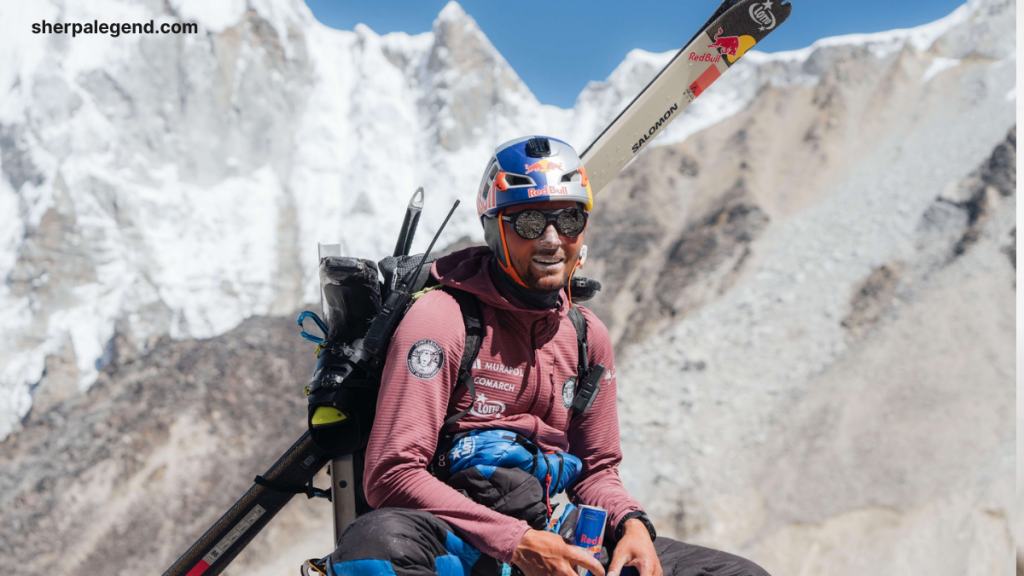
His first major achievement came in 2013 with the first ski descent without supplemental oxygen from Shishapangma, an 8,000-meter peak. This success proved that his vision was not just a dream but an achievable reality.
In 2014, Bargiel became the first Pole to ski down Manaslu without supplemental oxygen, setting a record for both ascent and descent. The following year, 2015, he achieved the first ski descent from Broad Peak without supplemental oxygen, further establishing his reputation as a pioneer in extreme skiing.
Building Toward the Impossible
The year 2016 marked another significant milestone when Bargiel achieved the record-setting Snow Leopard award, climbing five 7,000-meter peaks in the former Soviet Union in just 30 days without oxygen. This achievement shows not only his exceptional physical capabilities but also his ability to perform consistently at extreme altitudes.
However, it was his 2018 achievement that truly captured the world’s attention. Bargiel accomplished what many considered impossible the first and only complete ski descent from K2 without supplemental oxygen. K2, known as the “Savage Mountain,” is considered one of the most dangerous peaks in the world, with one in four climbers who attempt it never returning.
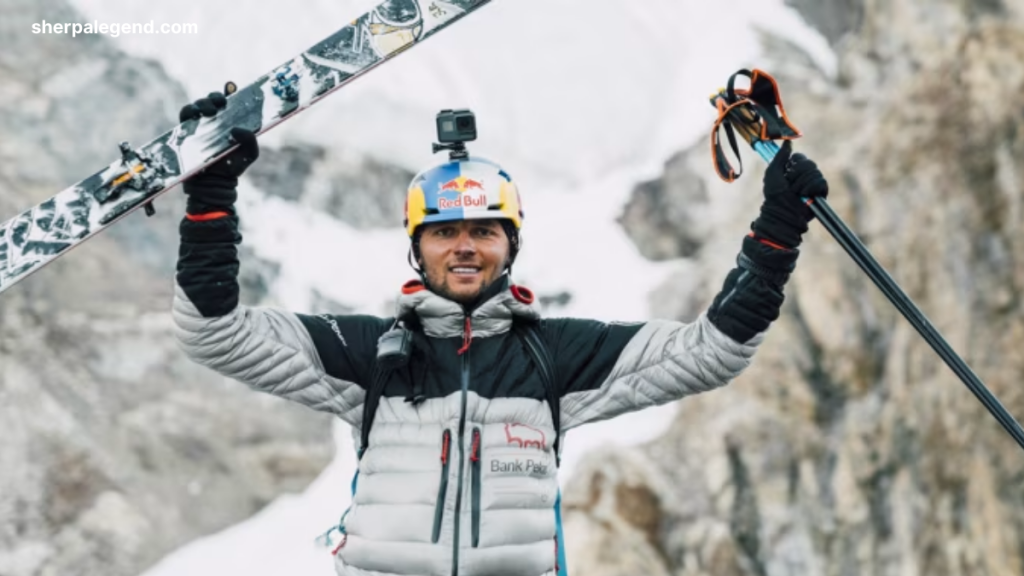
The K2 descent required extensive preparation and mental conditioning. “The decision to ski down K2 was a milestone for me,” Bargiel explained. “After I had seen the summit a few years earlier, from the perspective of 8,000m above sea level, I realized that the descent was possible and I said that sooner or later someone would do it. But back then, I knew it wasn’t my time yet.”
Bargiel’s approach to K2 was methodical and patient. His first expedition to K2 in 2017 was invaluable reconnaissance, learning the hard way that skiing down K2 was possible and that his route idea was realistic. This expedition confirmed his conviction, leading him to return one year later for the successful attempt.
Summiting the Karakoram
Bargiel continued building his remarkable resume with ski descents of Gasherbrum II and Gasherbrum I, both in 2023 and both accomplished without supplemental oxygen. With these achievements, he became the first person to ski down all four of Karakoram’s 8,000-meter peaks a feat that established him as the world’s premier extreme skier.
Each of these descents required not just physical preparation but also mental conditioning and technical innovation. Bargiel became known for adapting and building his own equipment from a young age, prioritizing comfort and functionality for both climbing and skiing.
The Everest Dream and Preparation
The idea of skiing down Everest without oxygen had been growing inside Bargiel for years. However, the mountain proved to be his greatest challenge, requiring multiple attempts before success.
His first attempt in autumn 2019 was foiled when a giant serac threatened the Khumbu Icefall, forcing a retreat. A second attempt in 2022 ended at the South Col due to fierce winds. These setbacks only strengthened his resolve.
“To finally stand on top and ski down after those setbacks feels extraordinary,” Bargiel remarked after his successful 2025 attempt.
The preparation for Everest was exhaustive and multifaceted. Bargiel’s training regimen included road cycling, running, climbing, and extensive skiing in difficult terrain. He emphasized the importance of endurance training, explaining that “in ski mountaineering endurance is irreplaceable.”
His physical preparation focused on building the strength needed for high-altitude climbing without oxygen. “You need extra power, therefore the gym, among other things, is also pretty important. High altitude makes our muscles burn during physical effort,” he explained. His training included squats for leg strength, sit-ups for core stability, pull-ups for upper body strength, and extensive balance work.
For altitude preparation, Bargiel experimented with various techniques, including sleeping in tents with limited oxygen and training at high altitudes in places like Chamonix and Mont Blanc. However, for his final Everest attempt, he relied on his body’s memory and focused on quality training rather than altitude acclimatization, planning to acclimatize during the expedition itself.
Equipment Innovation
Bargiel’s success was also due to his meticulous attention to equipment. His priorities when preparing equipment focused on boots that were comfortable for both climbing and skiing. He used boots from Pierre Gignoux in France, modifying them with special overboots for warmth and creating ski bindings that allowed him to release the boots with foot warmers attached.
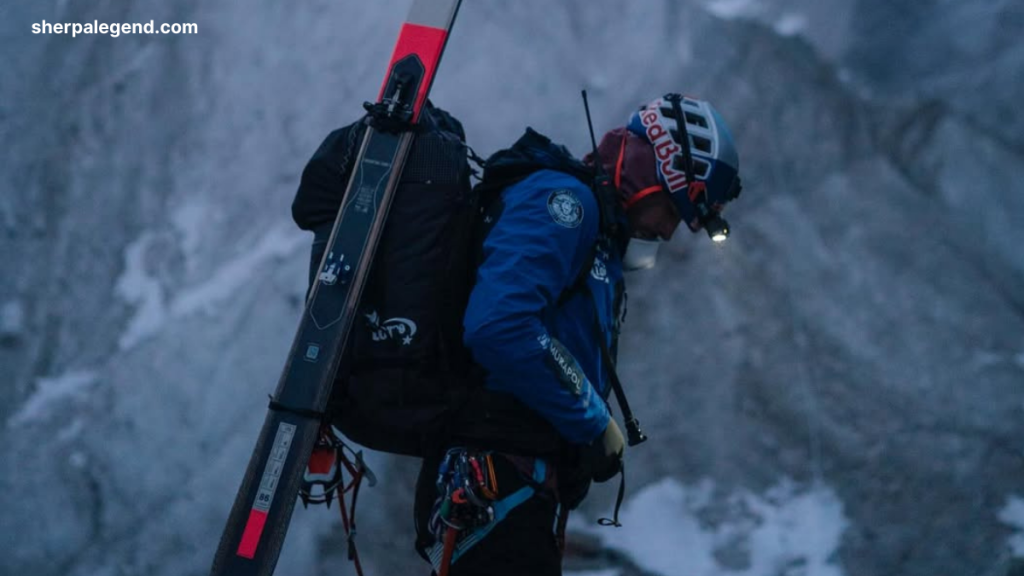
He utilized heated insoles to prevent frostbite, lightweight ice axes, and ropes made from Dyneema material for durability while minimizing weight. Every piece of equipment was carefully chosen and often modified to save weight while maintaining functionality. “If I can save 100 g on each of them, and we multiply it by 20 or even 30, it becomes quite a load off my back,” he explained.
The Historic Descent
Bargiel’s successful 2025 Everest expedition was managed by Seven Summit Treks, with Expedition Director Chhang Dawa Sherpa providing critical oversight from Base Camp. The team included more than 16 Sherpa climbers and IFMGA guides, along with extensive support staff for planning, health, safety, filming, and logistics.
The expedition began on September 19, 2025, when Bargiel and his support team left Base Camp at 4:30 am. On September 21, he left Camp 4 at the South Col (7,900m) at 11:24 pm Nepal time. Due to heavy fresh snowfall that made trail-breaking more difficult, the ascent took much longer than expected nearly 16 hours before summiting.
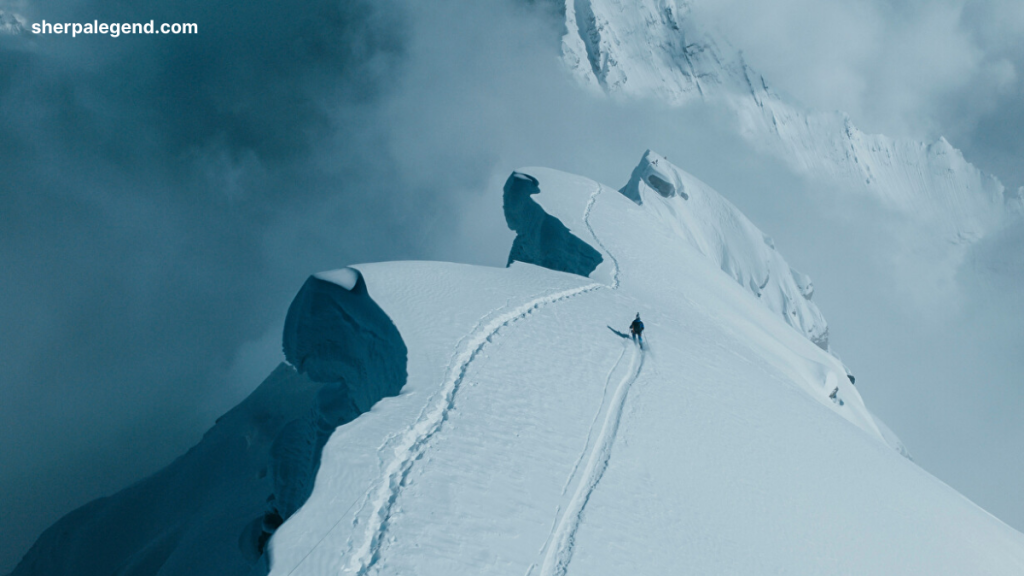
He summited shortly after 3 pm on September 22, 2025, and immediately began his historic descent. The skiing route took him down the Hillary Step, the South Summit, and the Balcony to the South Col. By 5:20 pm, Bargiel had descended below Camp 4 and continued left of the Geneva Spur en route to Camp 2, where he stopped at 8:30 pm local time.
The next morning, September 23, he started the final leg of his descent at 7 am. After Camp 1, he continued across the slopes of Nuptse, crossing the treacherous Khumbu Icefall completely on skis without using fixed ropes or lines. He was guided in part by a drone flown by his brother Bartek, helping him navigate the labyrinth of shifting ice and deep crevasses.
Bargiel reached the end of the Icefall and the snowline at Everest Base Camp at 8:45 am local time, completing the first-ever complete ski descent from Everest’s summit to Base Camp without supplemental oxygen.
Why This Achievement Matters
Bargiel’s achievement represents more than just another mountaineering record. It redefines the limits of human possibility at extreme altitude and shows what can be accomplished through careful preparation, patience, and determination.
His success contrasts with previous ski descents of Everest. Slovenian Davo Karničar achieved a complete ski descent from Everest’s summit in 2000 but used supplemental oxygen. Italian Hans Kammerlander made an oxygen-free descent in 1996 but began about 300 meters below the peak. Bargiel’s achievement combines the completeness of Karničar’s descent with the oxygen-free challenge of Kammerlander’s attempt.
The autumn ski descent represents the ultimate fusion of technical skiing ability, mountaineering expertise, and physiological adaptation to extreme altitude. It required not just the ability to reach Everest’s summit without oxygen itself an extraordinary feat—but also the technical skiing skills and mental focus to safely descend nearly 9,000 meters of technical terrain while managing the effects of severe altitude.
For Bargiel, the Everest descent represents both an ending and a beginning. “Everest has been a personal dream for many years, and to finally accomplish it this way is incredibly satisfying,” he said. “I will continue skiing in Patagonia and other mountains.”
His advice to others facing setbacks reflects the patience and persistence that made his success possible “We need to always remember not to do something at all costs. This is sport and passion. When a project is risky, we need to distance ourselves and stop assuming that we will make it very quick. It requires patience, waiting for the right moment to reach the goal.”
Bargiel’s story shows that achievements are built through years of preparation, learning from failures, and maintaining faith in one’s vision even when others consider it impossible. From a young boy trading table tennis paddles for his first pair of skis to becoming the first person to ski from Everest’s summit without oxygen, Andrzej Bargiel has shown that with enough dedication and careful planning, even the impossible can become reality.
His legacy extends beyond the records he’s set. By pushing the boundaries of what’s possible in the mountains, Bargiel has inspired a new generation of climbers and skiers to dream bigger and prepare more thoroughly for their own impossible goals.
As he wrote on social media after his historic descent “The first ever skiing downhill from the summit of Mount Everest without the use of additional oxygen” a simple statement that captures one of mountaineering’s most extraordinary achievements.
