

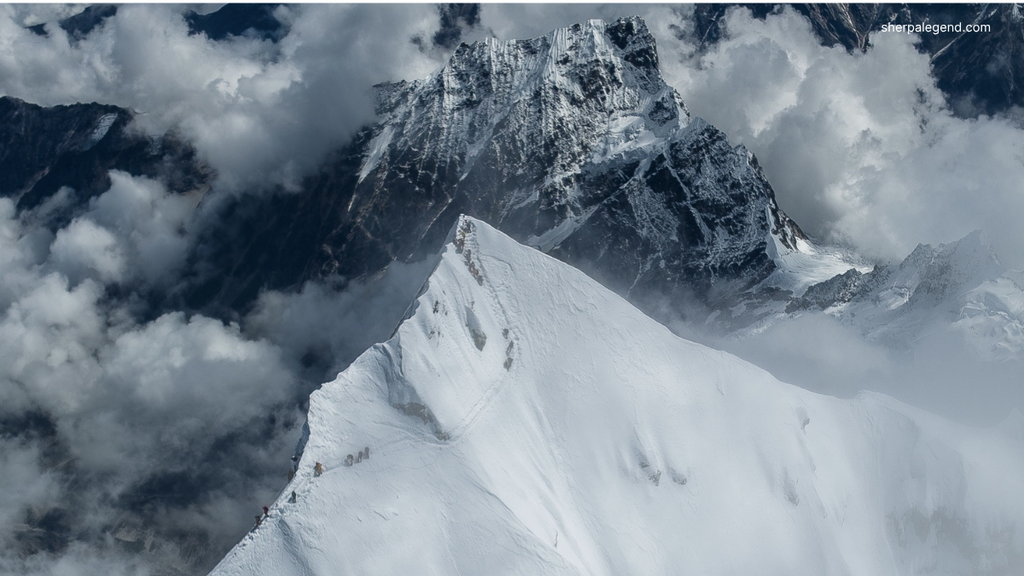
Manaslu, the world’s eighth-highest mountain at 8,163 meters, has become the undisputed center of Nepal’s autumn 2026 climbing season. As of the Department of Tourism’s royalty report covering September 11–13, 2026, the mountain holds 451 climbers, including 120 women, across 38 teams.
That is 451 of the 498 total climbers authorized this autumn across all six peaks for which Nepal’s Tourism Ministry issued permits. Manaslu alone has generated roughly $1.35 million in royalties, more than 97 percent of the season’s total royalty revenue of about $1.39 million, or Rs 21.1 crore.
Why Manaslu, Why Now
Three forces have converged to push climbers toward this single mountain. China closed Tibet to foreign mountaineers this season, shutting off Cho Oyu and Shishapangma, the usual alternative 8,000-meter peaks, and redirecting climbers and operators to Manaslu.
Separately, floods struck Nepal hard in late August and early September, hitting the Rasuwa and Langtang corridor as well as Manaslu’s own approach trail near Namrung, damaging bridges and forcing helicopter access to Base Camp for a period.
On top of both disruptions, Manaslu already carries a reputation as the “easiest” true 8,000-meter peak and a common rehearsal climb for Everest, a commercial pull that this year’s circumstances have amplified rather than created.
The Numbers
Permit numbers rose steadily through the season 348 climbers across 29 teams on September 6, 422 climbers across 35 teams by September 9, and 451 climbers across 38 teams by September 13.
The other five peaks that received permits this autumn were Makalu I, Dhaulagiri I, Danga, Gangapurna West (Lache), and Thorong Peak, together accounting for the remaining 47 climbers.
Nepal raised the autumn foreign-climber royalty to $3,000 per person, effective from September 2025 roughly double the old rate underlining how lucrative this season is for the country’s tourism economy.
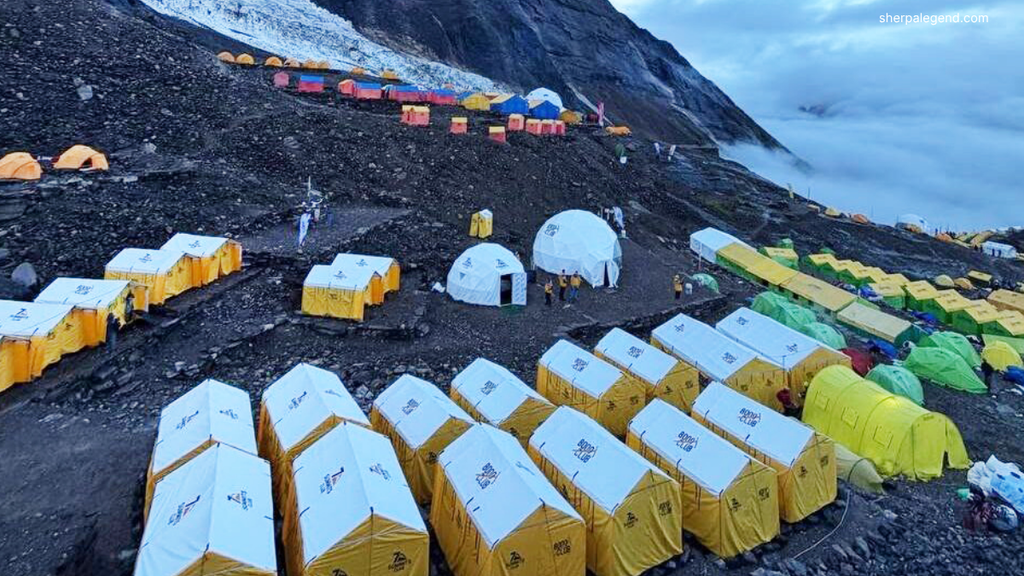
Counting Sherpa guides and support staff, at roughly 1.5 support workers per climber, the total number of people on the mountain likely exceeds 1,000. Base Camp is now described as Nepal’s second-largest after Everest’s, with what is described as “thousands of tents.”
The Route: Rope-Fixing and a New System
Rope-fixing this year is coordinated centrally by the Expedition Operators Association of Nepal (EOAN), rather than being contracted out to a single private operator a structural change from past seasons.
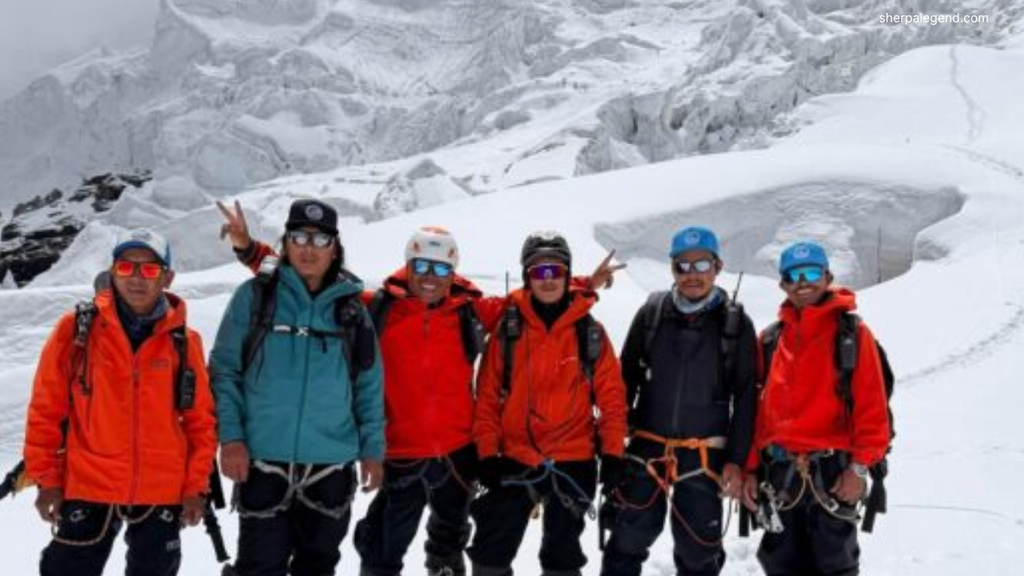
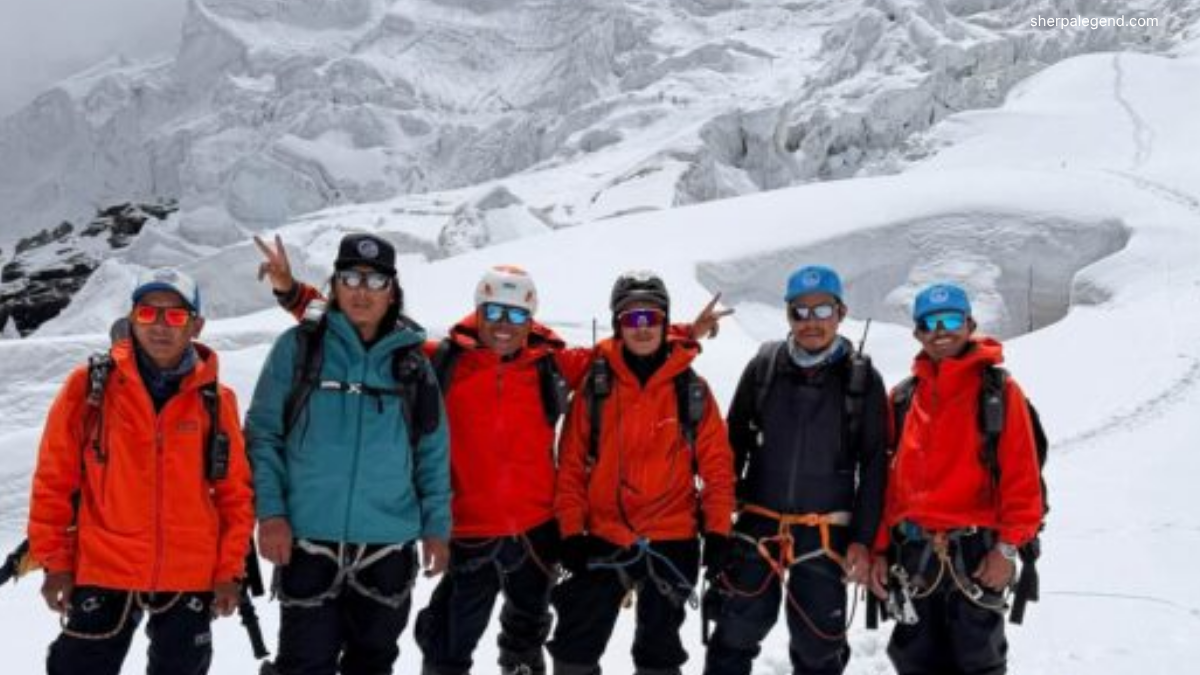
A seven-member Sherpa rope-fixing team carried out the work, led by Chhiring Bhote and including Lopsang Bhote, Ngima Sherpa, and Pam Dorjee Sherpa, among others. By mid-September, the team had fixed ropes to Camp 3, clearing the technical serac area between Camp 1 and Camp 2, widely regarded as the trickiest section of the route.
EOAN Secretary Rishi Ram Bhandari targeted September 19–20 for ropes to reach the summit.
But According to Miles Sherpa, an expedition operator based at Manaslu Base Camp, the rope-fixing team’s main target is to complete the route by September 17. If the team doesn’t finish by then, the work will carry over to the following day, September 18. Per Miles Sherpa, climbers are not permitted to follow the rope-fixing team until the ropes are fully fixed so if the team completes the route on the 17th, climbers would begin following it on the 18th.
The Obstacles: Snow, Floods, and Helicopter Workarounds
Heavy rain and snow in the week before mid-September dumped significant fresh snow, with some reports of up to roughly three feet in spots, raising avalanche risk and stalling progress above Camp 3.
The approach trail was also hit by flooding near Namrung, which destroyed bridges. Many climbers reached Samagaun and Base Camp by helicopter instead of trekking in, though temporary bridges and alternate paths were later restored.
Acclimatization is underway further down the mountain in the meantime. According to Elite Exped, the operator’s Team A and Team B are now at Camp 1, continuing acclimatization and preparing for the higher stages of the climb.
The typical Manaslu autumn summit window falls in mid-to-late October, though in years when ropes finish early, some teams push for the summit in late September.
The Human Cost and the Colour
A 20-year-old local porter was found dead inside a tent at Manaslu Base Camp weeks back in September 5 as reported by The Tourism Times , with poor weather preventing authorities from immediately airlifting his body.
Tashi Sherpa, a resident of Makalu Rural Municipality-2 in Sankhuwasabha, had been hired by Pioneer Adventure to carry expedition loads from Samagaun to the base camp, according to Nivesh Karki, general manager of the company.
Sherpa reportedly went to sleep inside a tent where a generator had been placed without informing others. He was later found dead inside the tent.
A rescue took place on the mountain . According to Phuri Sherpa of Elite Exped, on September 14 at around 4:00 a.m., a climber fell into a crevasse just below Manaslu’s Camp 1. The response team reached him immediately and rescued him safely.
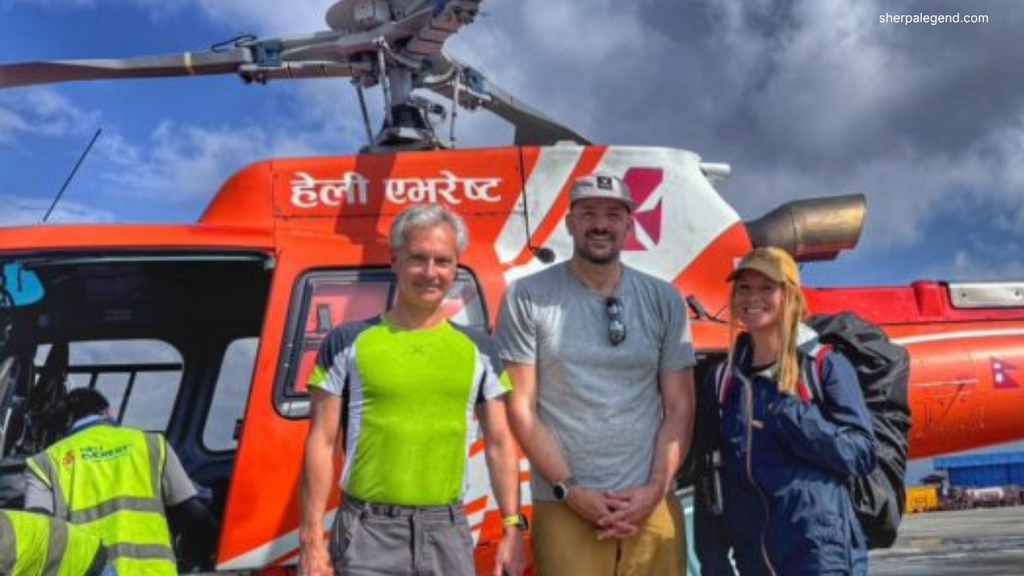
Alongside the record crowds and royalty figures, a specialty and adventure angle is unfolding as well Luke Smithwick is leading a small team attempting to ski down from the summit.
Major commercial operators active on the mountain this season include Elite Exped, 7 Summits Club, Adventure Consultants, Satori Adventures, 8K Expeditions, The Summit Force, and Altipro, among others.
With rope-fixing targeted to reach the summit by September 19–20 and the typical summit window running mid-to-late October, the coming weeks will determine how many of Manaslu’s 451 permitted climbers reach the top of a mountain that, this autumn, is carrying nearly the entire weight of Nepal’s 8,000-meter season.
