
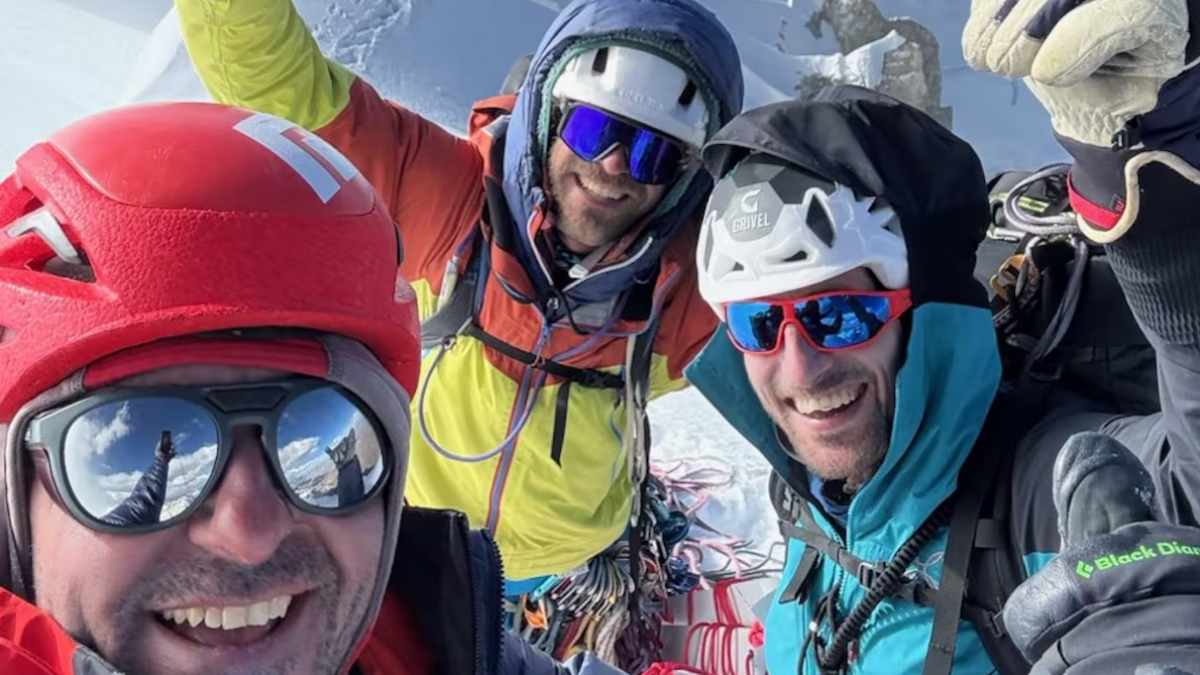

There was a point, high on the ridge of Yerupajá, when going back stopped being an option. Three men stood on a knife-edge of snow and rock, the kind that drops away on both sides, with a storm sitting low over the valley and visibility down to almost nothing. They had climbed too far to retreat the way they came. From here, the only way off the mountain was up and over.
The three were Bru Busom, Rubén Sanmartín and Marc Toralles, a trio of Spanish mountain guides. What they were finishing, in that moment, was the first full ascent of the east ridge of Yerupajá Grande, a 6,634-metre peak in Peru’s Huayhuash range followed by a traverse across to the neighboring summit of Yerupajá Sur and a descent down the south face.
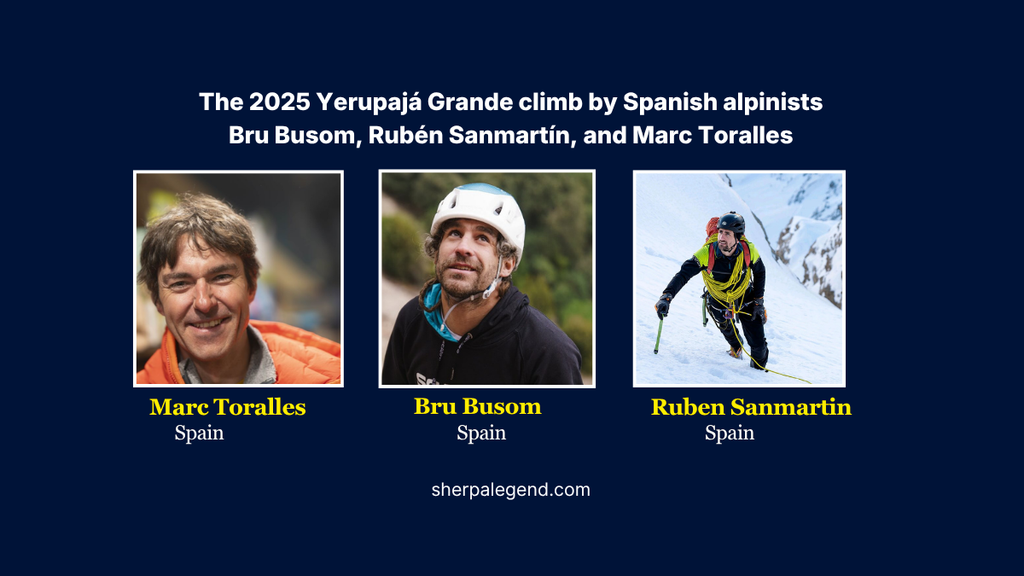
They carried no fixed ropes placed in advance, used no high camps stocked ahead of time, and had no outside team backing them up.
It was just the three of them, on the mountain, making every decision as they went. In 2025, that climb won them the Piolet d’Or alpinism’s highest honor the first time a Spanish team has ever received it.
To understand why that matters, it helps to understand the mountain. Yerupajá is Peru’s second-highest peak, and among Andean climbers it carries a nickname that says everything “The Butcher.”
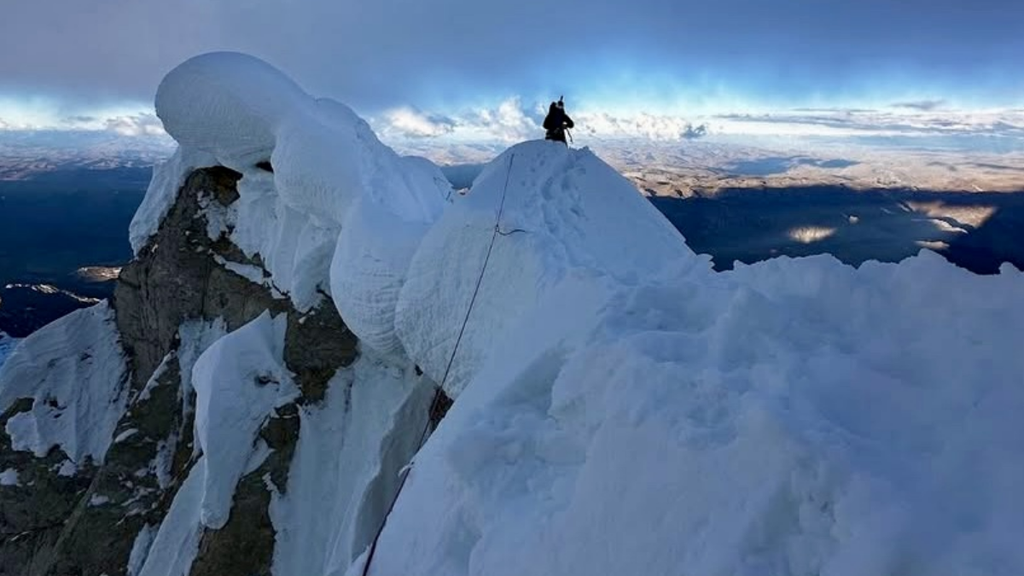
It is known for razor-thin ridges, cornices that can collapse without warning, and rock and snow that rarely feel solid underfoot.
It was first climbed in 1950, by two American climbers who very nearly didn’t survive the attempt they came down with severe frostbite after a cornice gave way beneath them, and both lost toes and fingers to it.
In the 75 years since, only a small number of climbers have reached the top, likely fewer than two dozen, against a far longer list of attempts that failed. Nobody is known to have stood on the summit since around 2014. That is the mountain Busom, Sanmartín and Toralles walked into.
Toralles and Busom are longtime climbing partners from Catalonia, and neither is a sponsored professional both work as guides and funded this expedition themselves, the way they have funded their other big objectives.
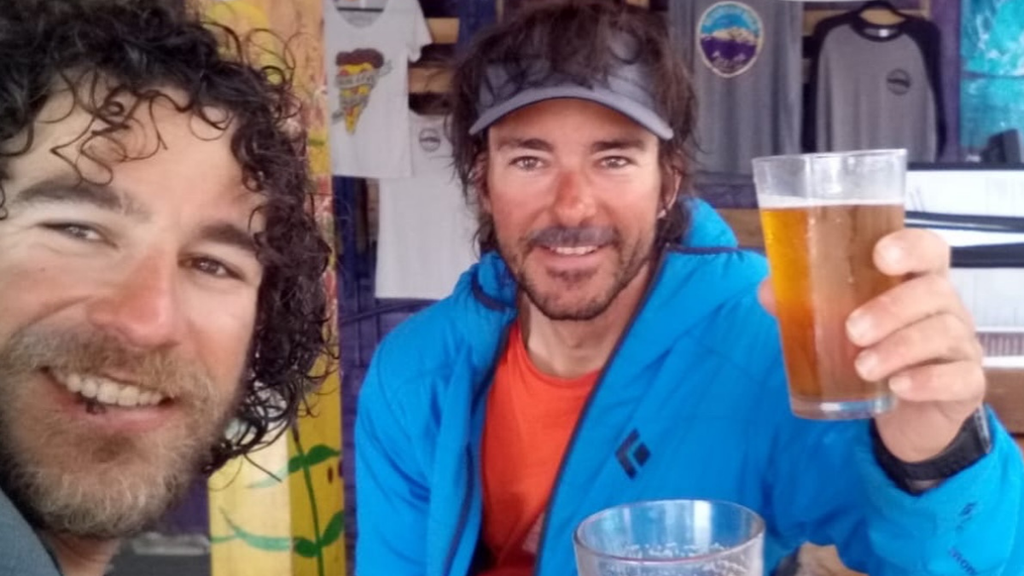
© Marc Toralles, Bru Busom
Together they’ve taken on some serious routes before the Slovak Direct on Denali in 2019, a new route on Siula Grande another peak in the Huayhuash range in 2022, and a repeat climb in the Hindu Kush in 2023.
People who know their partnership describe it as close to seamless Toralles brings experience and a steady head, Busom brings the drive to push further.
Rubén Sanmartín, a guide from Binéfar in Aragón, had climbed with both of them for years across the Alps, the Dolomites and the Pyrenees, but Yerupajá was his first big expedition with them outside Europe, and his first time on this scale in the Southern Hemisphere.
There isn’t a single, clean story about how the idea for this climb came together no one moment where one of them pitched it to the others.
It grew naturally out of a partnership that already existed. Toralles and Busom already had a habit of choosing committing, unclimbed objectives together, and Sanmartín was already part of their circle.
Yerupajá was simply the next step up an unclimbed line on a mountain almost nobody had dared to repeat in over a decade.
What came before the climb itself was quiet, careful work, not the kind of detail that makes headlines but the kind that keeps people alive.
The three acclimatized first in the Cordillera Blanca, then set up a base camp near 4,900 metres, below the peak itself. Before they ever committed to a route up, they spent real time scouting how they would eventually get back down partly by climbing into the crevassed glacier beneath the southeast face to see the terrain up close, and partly by flying a drone over it to map out the safest possible line of descent in advance.
It’s a detail worth sitting with, because it says something about how they approached the whole expedition: this wasn’t three men throwing themselves at a dangerous mountain on instinct or bravado. It was a calculated risk, planned as carefully as a mountain like Yerupajá allows anything to be planned.
The climb itself unfolded over several long, demanding days. They started up the east face on a rightward-slanting line through rock and mixed ice terrain, working their way to a first bivouac up on the ridge.
It was there, settled in for the night, that they realized they hadn’t carried enough gear to rappel back down the way they’d come. That single fact changed everything about what came next the summit was no longer just the goal, it was now the only way out. From there, they pushed on through days of poor visibility, picking their way across unstable mushrooms of wind-sculpted snow toward the main summit, never quite sure the ground beneath them would hold.
Reaching the top of Yerupajá Grande wasn’t the end of the exposure either they still had to cross a corniced, knife-edge ridge over to the neighboring peak, Yerupajá Sur, before they could even start thinking about getting down safely. The descent itself, down the southeast face, was its own separate ordeal: a long, careful rappel using improvised ice anchors known as Abalakovs and snow stakes hammered into whatever snow was solid enough to trust.
They named the route “L’essència del compromís” Catalan for “The Essence of Commitment.” It’s a fitting name, because commitment is exactly what the climb demanded once they were past the point of turning back.
In their own telling, what carried them through wasn’t bravado it was the friendship between the three of them, the teamwork built over years of shared rope, and a willingness to accept uncertainty rather than control for it.
The Piolet d’Or doesn’t go to the hardest climb on paper each year it goes to the climb that best reflects a certain style of alpinism exploration into the unknown, minimal impact on the mountain, self-reliance, and total commitment to the line once it’s chosen.
The jury singled out this ascent specifically for its boldness in a range far outside the usual Himalayan spotlight, for the near-total absence of any rescue option once the three of them were past their first bivouac, and for the quality of the preparation behind it.
It was also, notably, the first Piolet d’Or ever awarded to a Spanish team for a specific ascent closing a gap in the award’s history that had stood since the prize began.
The significance of this climb reaches past the three men who did it. It puts the Andes and Peru’s Huayhuash range in particular back on the map for serious, cutting-edge alpinism, an area that has spent years living in the shadow of the Himalaya.
It’s a reminder that groundbreaking climbing doesn’t require a big sponsor or an 8,000-metre peak to matter. And for Spanish mountaineering, it’s a landmark: a first that had simply never happened before.
But strip away the history and the award, and what’s left is three working guides who paid their own way up one of the most feared mountains in Peru, who ran out of options to turn back and kept going anyway, and who did it, by their own account, for each other more than for anything else.
