
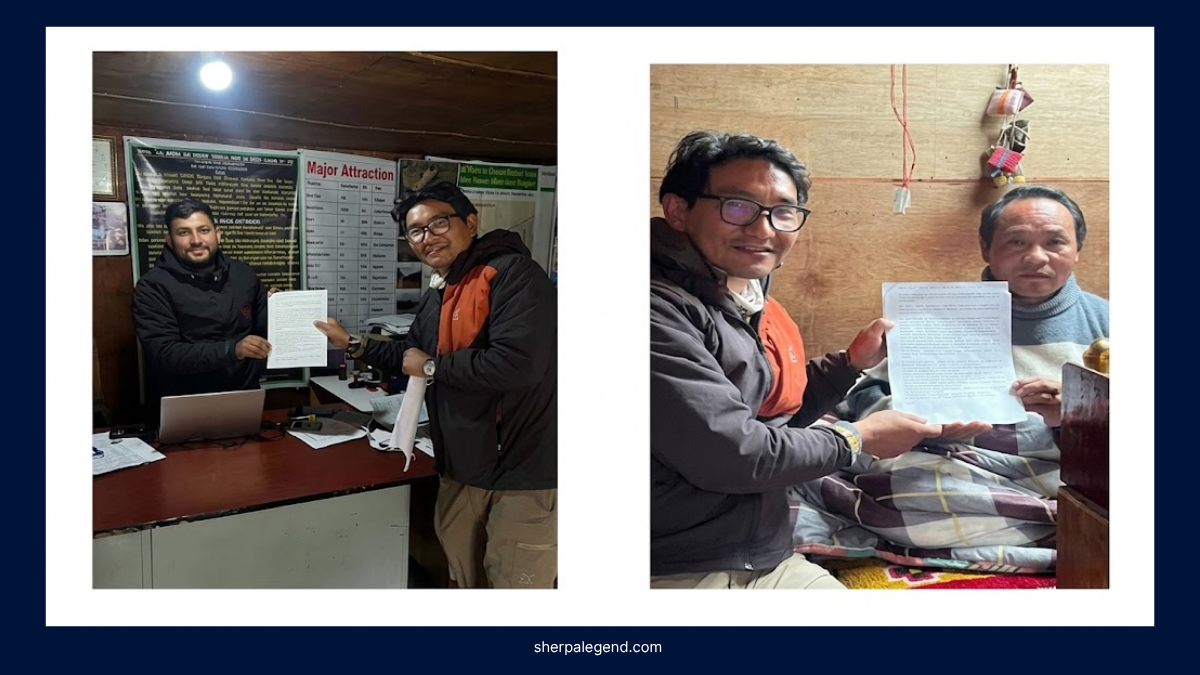

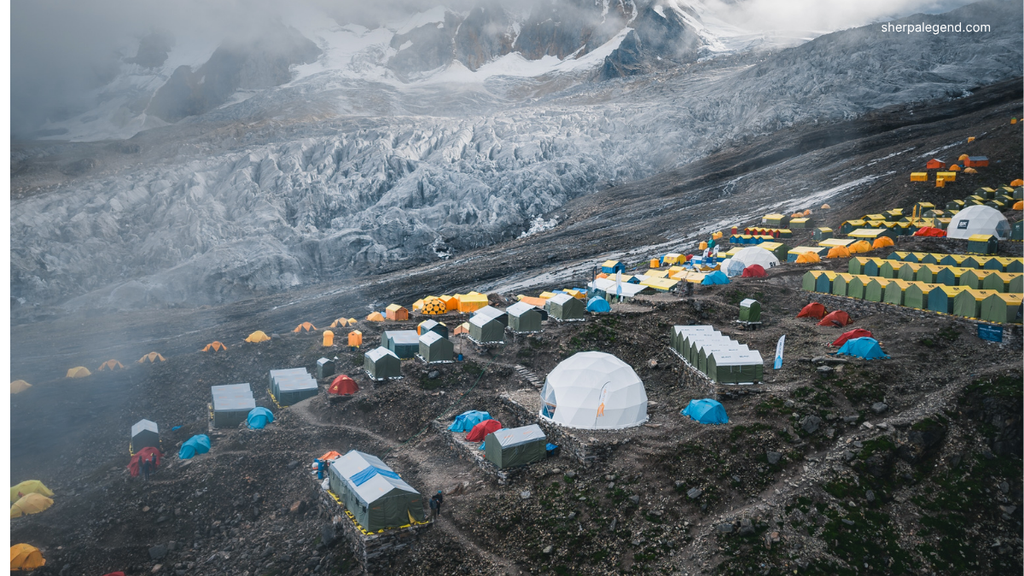
High above the Manaslu Base Camp, a group of young people from Samagaun are preparing to stop eating. Not because food is scarce but because they say the world has ignored the risks hanging over their village for too long.
Dawa Norbu Lama, a youth leader from Samagaun in Gorkha’s Chumnubri Rural Municipality-1, says the indefinite hunger strike will begin on September 18 and continue until October 4. He plans to start it alone if no one else joins him. But he says many young people in the area have already said they will.
Their demand is simple to state and hard to deliver: real action on the climate risks closing in on Himalayan communities like theirs.
What they’re asking for
The youths have handed over an eight-point memorandum, but the demands boil down to three plain asks.
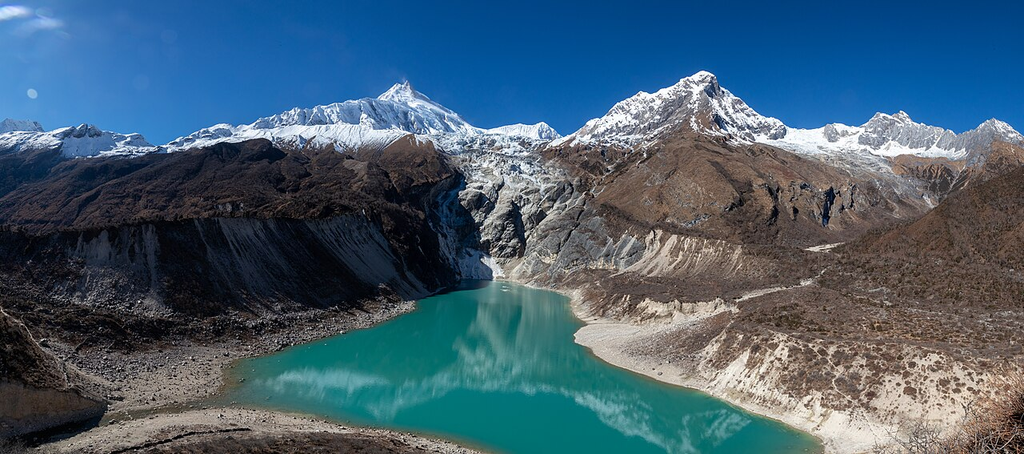
The first is about watching the lakes. New glacial lakes have appeared near Manaslu this year, and the youths want them studied before they become a threat not after. They’ve named specific lakes for aerial survey and depth measurement: Pungen, Birendra Lake, Kal Tal, Ghunsarphuk, and the three high-risk lakes at Nyochuthan. They also want water-level sensors and warning sirens installed, so residents get some notice if a lake starts to fail.
The second is about working together. Since many of these glaciers straddle the Nepal-China border, the youths want joint monitoring between the two countries. They’re also asking that climate meetings be held in the mountains themselves, not just in Kathmandu conference rooms, so decision-makers see the risk firsthand.
The third is about fixing the system underneath it all. They want climate change taught in Himalayan schools, and they want Nepal’s government to push harder for international compensation from the countries most responsible for warming the planet.
The memorandum went to every level of local authority that could plausibly act: the Chief District Officer of Gorkha, Ward Chairperson Karma Chhewang Lama, the Manaslu Conservation Area Project office, and the Samagaun Police Post.
Why now: the Bhotekoshi flood
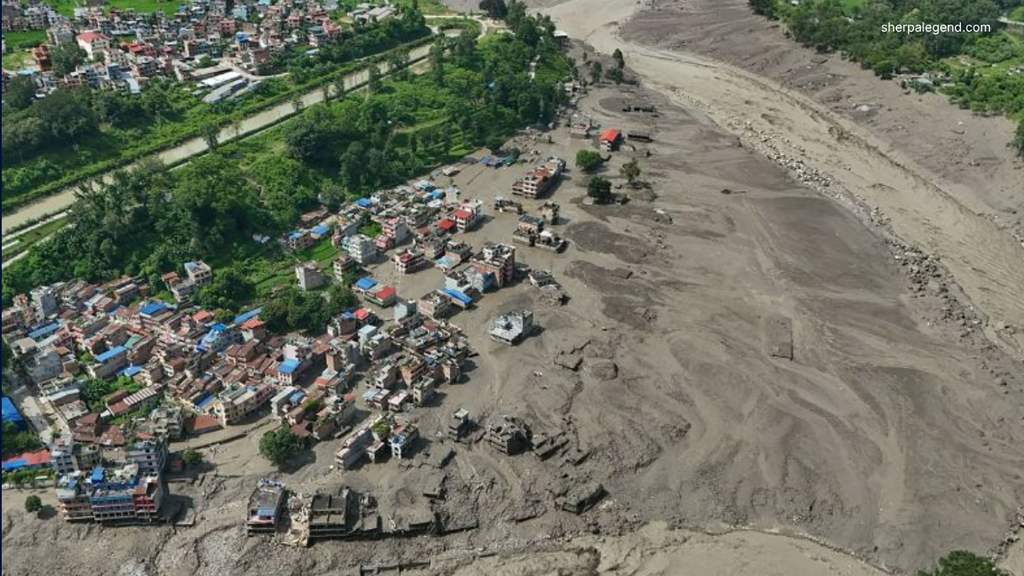
The timing isn’t an accident. On August 26, 2026, a massive ice-rock avalanche near the Nepal-China border in the Langtang Lirung area triggered a flash flood that tore down the Lende Khola into the Bhotekoshi and Trishuli rivers, traveling nearly 100 kilometers at extreme speed.
The toll has been staggering. More than 1,400 people are confirmed dead, thousands remain missing, and roughly 1.6 million people across Rasuwa, Nuwakot, Dhading, Gorkha, Chitwan and other districts have been affected. Homes, roads, schools, and hydropower projects were destroyed. Losses are estimated at USD 2.7 to 7 billion.
Here’s the part most people don’t expect: scientists still don’t know for certain whether climate change caused it. That’s worth saying plainly, because it’s honest. Experts point to a mix of factors permafrost thaw, glacier instability, and older geological wounds like the 2015 earthquake but a full scientific study is still months away.
Even without a definitive verdict, the disaster became the emotional and political backdrop for what’s happening in Samagaun now.
Nepal’s paradox: barely polluting, paying the price
The numbers here are stark. Nepal produces roughly 0.05% of global CO2 emissions each year about 18.8 million tonnes in 2024 and just 0.013% of all emissions released since 1850. Even counting methane from farming, the country’s total share stays around 0.1% or less of the global total.
And yet Nepal is one of the most climate-vulnerable countries on Earth. Its geography leaves it little room to hide steep mountains, rivers fed directly by glaciers, and communities living right below unstable ice and water.
That gap a country that barely pollutes, yet pays one of the steepest prices is the literal meaning of “climate injustice.” It’s a phrase the Samagaun youths chose on purpose.
Nepal’s push for justice on the world stage
The protest isn’t happening in isolation. The government is making a similar argument internationally. Since the flood, Nepal has shifted its language from “aid” and “charity” to “justice and compensation.”
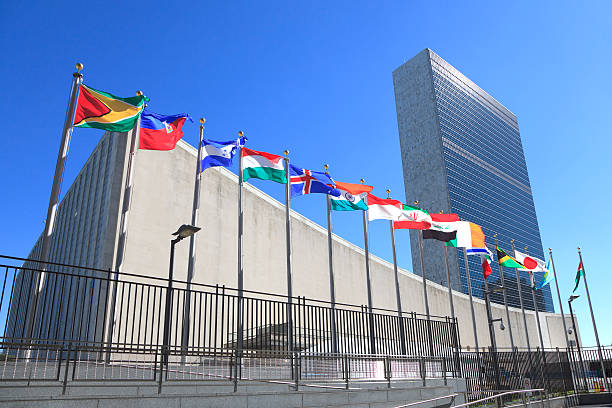
Nepal has formally approached the UN’s Loss and Damage Fund, set up under the Paris Agreement. Officials have publicly named major emitters China, the United States, and India as bearing responsibility. Nepal plans to raise the issue at the UN General Assembly, building on the role it already played in the International Court of Justice’s advisory opinion on climate change.
The slow-motion threat: glacial lakes
A glacial lake outburst flood, or GLOF, happens when melting glaciers form lakes held back by loose rock and ice. When those natural dams give way, the result is a sudden, catastrophic flood downstream. New lakes have appeared near Manaslu just in the past year which is exactly why the youths are demanding monitoring now, before disaster strikes, not after.
For now, it comes down to one person Dawa Norbu Lama, standing at Manaslu Base Camp, ready to begin alone if he has to, expecting others to follow. It’s a small act of protest standing in for a much larger, slower-moving emergency one Nepal did not cause, but has to live with anyway.
