
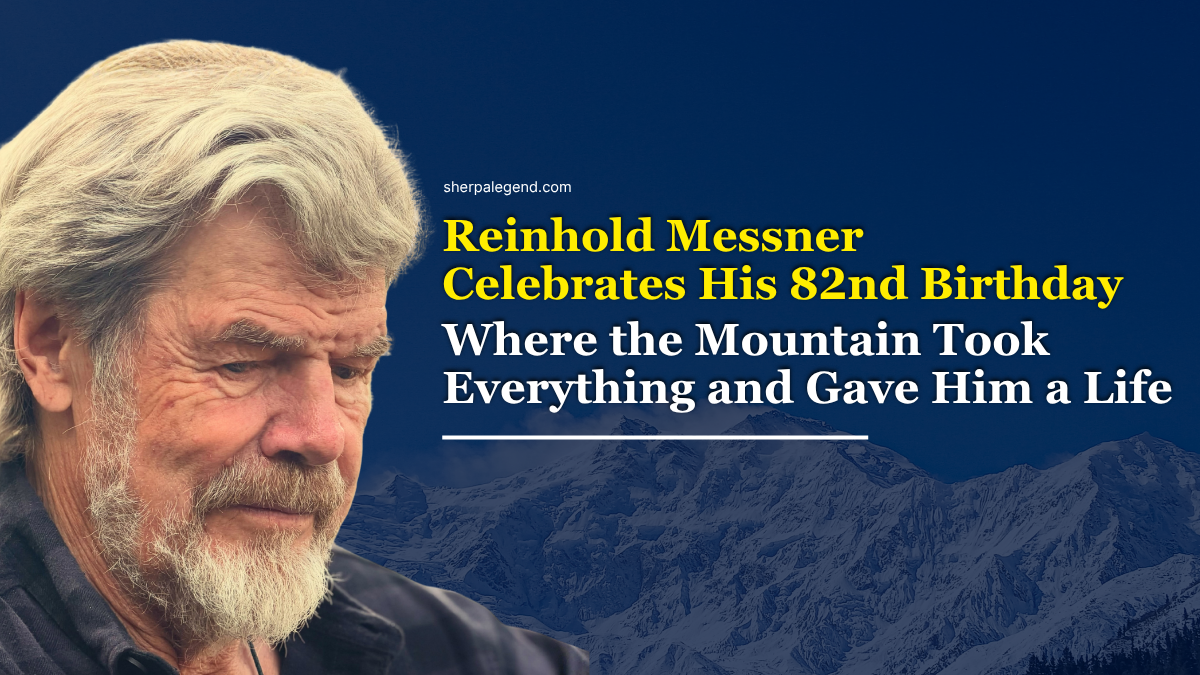

Eighty-Two, and Still Climbing the Same Rock
Today Reinhold Messner turns 82. He is not celebrating at home in South Tyrol. He is in Pakistan, in Gilgit-Baltistan, in the shadow of the mountain that has shaped and cost more of his life than any other place on earth.
A days before his birthday, he climbed a rock. Not a summit, not a wall, just a modest outcrop above the valley. He posted about it afterward, admitting he managed the climb “not quite like a mountain goat” the way he once did. But he made it. At 82, he still feels fortunate, he wrote, to shape his life close to what he once dreamed it could be even as the possibilities narrow and the radius of what’s still doable grows smaller with each year.
So why does an 82-year-old man keep returning to this one country, this one mountain, this one rock?
The rock and the boy in the smile
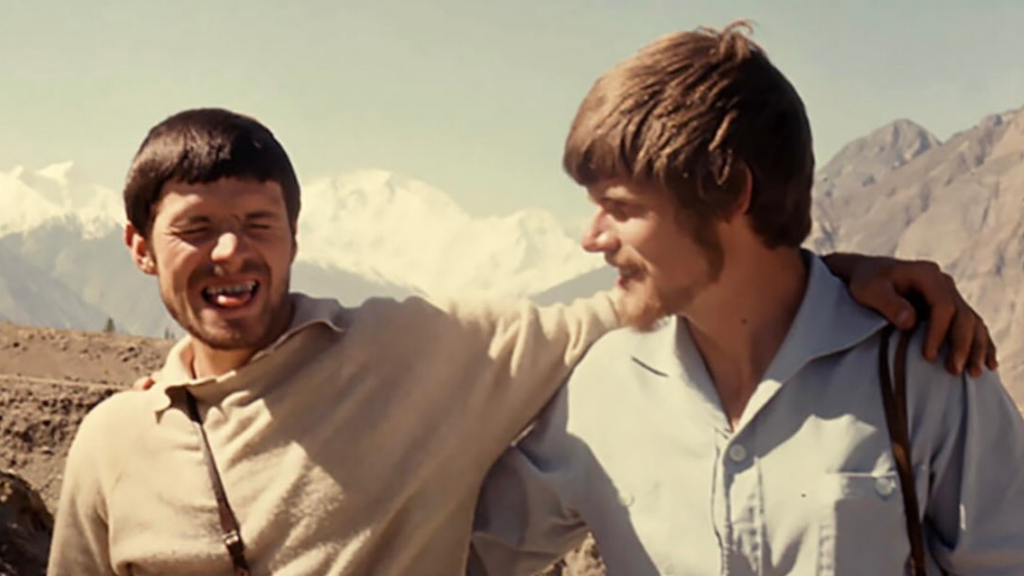
The rock itself is the answer, or most of it. It’s the spot from an old photograph and a piece of footage that has followed Messner for more than half a century a young man climbing up onto a boulder, his younger brother Günther following him up, the two of them embracing, Günther grinning into the camera with the mischief of a 24-year-old who has no idea what’s coming.
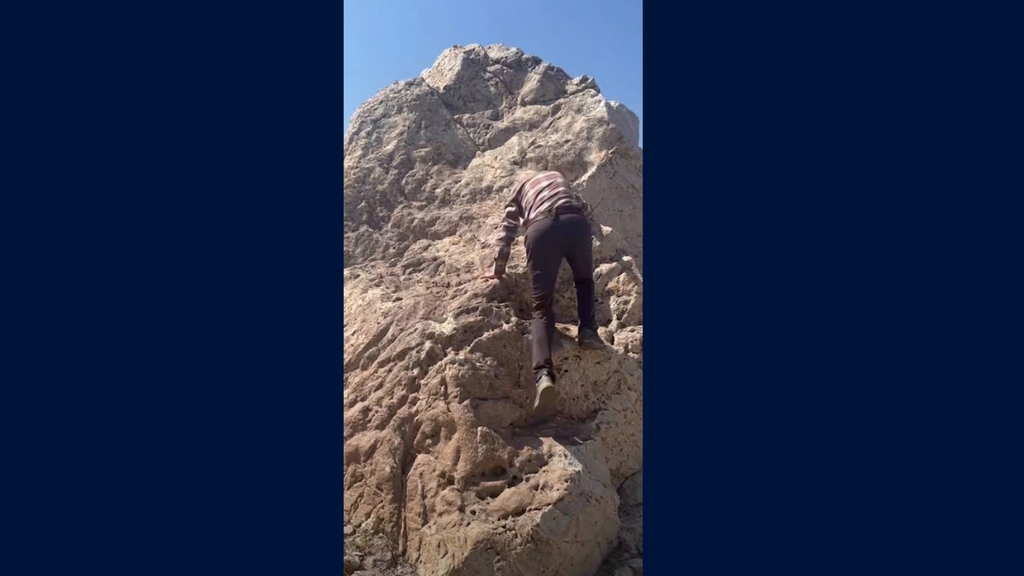
That was 1970. This September, Messner climbed the same rock again the place, he says, where he and Günther first saw Nanga Parbat rising in the distance. He can’t pass it without stopping. “Too much began here,” he said. “Nanga Parbat became more than a mountain to me.”
It’s a small gesture, an old man hauling himself up a boulder he once bounded onto. But it’s also the whole story in miniature a life measured out against a single point in the landscape, returned to again and again, as if enough visits might soften what happened next.
1970, and what actually happened
In late April 1970, a 25-year-old Messner arrived in Pakistan for the first time. He was part of the Sigi Löw Memorial Expedition, led by Karl Maria Herrligkoffer, with one goal the first ascent of Nanga Parbat’s Rupal Face, one of the largest rock and ice walls on the planet. His brother Günther, 24, was with him. The team assembled in Rawalpindi, flew to Gilgit, and reached base camp in the Rupal Valley by mid-May.
On June 27, 1970, Reinhold and Günther reached the summit together Messner’s first ascent of an 8,000-metre peak. Then they attempted something no one had done before descending the opposite side of the mountain, the Diamir Face, to complete the first traverse of Nanga Parbat.
Günther did not come back. He was lost, most likely in an avalanche, during the descent. Reinhold survived barely severely frostbitten, exhausted, eventually helped to safety by villagers in the Diamir Valley. He lost several toes.
It wasn’t the climb that made his career. It was the climb that planted something else in him a reason to keep coming back, to keep climbing, not to conquer the mountain but to find his brother, to finish what the two of them had started together. Nanga Parbat didn’t close that day. For Messner, it opened.
Fifty-six years in between
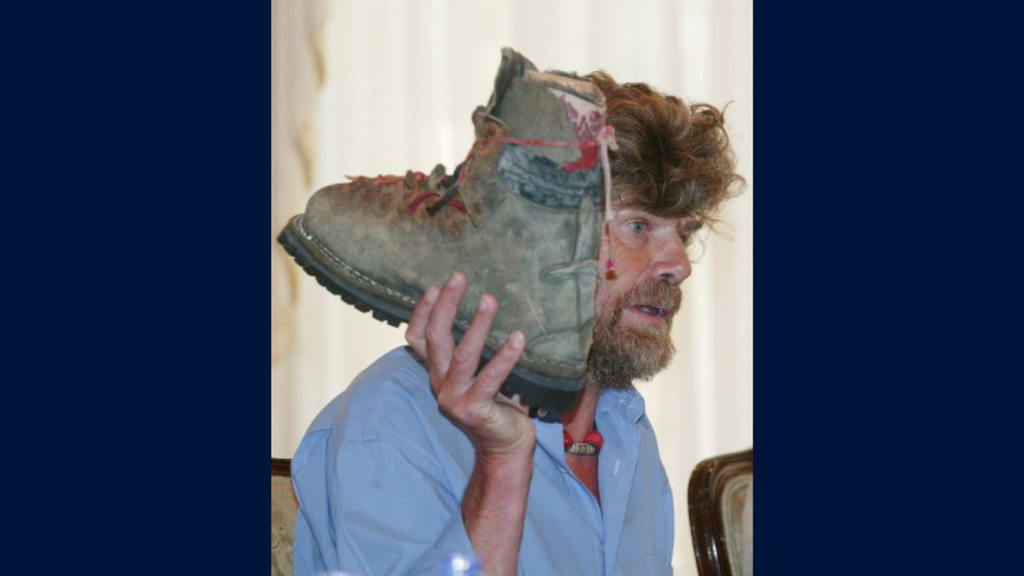
What followed wasn’t a single encounter but a pattern of return. In 1978, Messner soloed a new route on the same Diamir Face the first solo ascent of an 8,000-metre peak. For decades after, he kept going back to search for Günther, until 2005, when his brother’s remains were finally found and confirmed, along with a boot that matched the account Messner had given all along.
He also built. Through his foundation, Messner helped establish schools in the valleys around Nanga Parbat, one of them carrying Günther’s name. He stayed connected to the communities that had helped him down the mountain in 1970. Grief, for him, didn’t stay only a private weight it became something he built with.
The stranger at dinner
In 1978, after his solo climb, Messner photographed a shy four-year-old boy who happened to be standing nearby. It’s an unremarkable photograph, the kind taken and half-forgotten.
This September, decades later, by pure chance, he sat down to dinner with friends in Gilgit and that boy, now a grown man, was at the table. He recognized Messner instantly. Messner did not recognize him. The man produced the old photograph, and there, Messner said, “you can still see the four-year-old boy in the man he has become.”
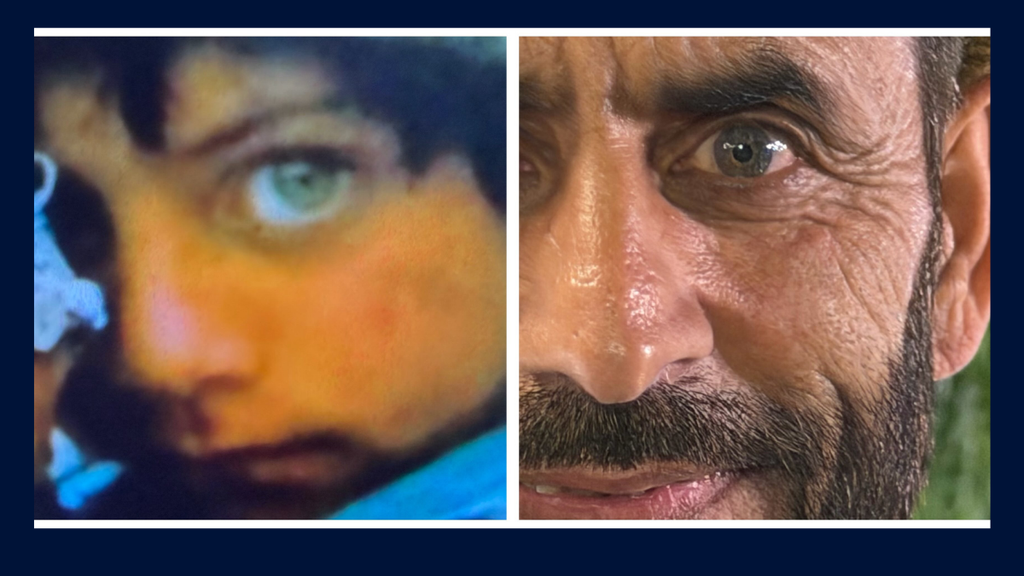
“How fascinating that our paths should cross again after all these years,” Messner wrote. “To sit at the same table with someone who did not learn this story from books or photographs, but who was simply there and who has carried that memory with him for a lifetime.”
It’s a quiet moment, easy to miss beside the drama of 1970. But it says something about what these decades in Pakistan have actually built for Messner not just a personal shrine to loss, but a web of people, memory, and return that has nothing to do with mountaineering at all.
What he’s carrying now
At the beginning of October, Messner will publish a new book, Lebenszeit a German word meaning, roughly, the time we are given in life. He wrote it with his wife, Diane. Its subject is death, something Messner has lived alongside since he was young. He says silence doesn’t make it easier. For him and Diane, talking about it openly does.
The book, he says, is a chance to keep being creative to write and reflect on life, death, and the time allotted to each of us. “We only have this one lifetime,” he said. “We should use it well.”
Still going where he wants to go
Back to the image this piece opened on an 82-year-old man on a rock in Gilgit-Baltistan, not quite the climber he was at 25, but still walking, still curious, still making the trip back to the place where everything began.
Messner has said before that this is simply how he lives now: if he can no longer do one thing, he does what is still possible. Not a grand philosophy, not a dramatic confrontation with age just a man who keeps showing up at the same rock, year after year, because so much began there, and some places don’t let go.
Happy birthday, Reinhold. Eighty-two years old, and still standing on rocks he first touched as a young man with his brother beside him. Still posting from the mountains at dawn, sharing not conquests but wisdom a line about walking, a memory of a valley that reminds him of home, a photograph of a stranger who turned out to be someone he’d met once, forty-eight years ago, as a shy four-year-old boy. He doesn’t perform the legend. He just keeps living the life that made him one, in real time, in front of anyone who cares to follow along.
Somewhere right now, a young climber is scrolling through his Instagram, reading his words about doing what is still possible rather than mourning what isn’t, and deciding to book a ticket toward some mountain of their own. That may be the truest measure of what Messner has built in these 56 years of returning not just a personal confrontation with a rock and a brother, but a kind of open invitation, still being extended, to anyone willing to go where he went and see what he saw.
Long live the legend. Not because the climbing was extraordinary, though it was but because he never stopped showing up, never stopped telling the truth about what it cost, and never let the mountain become only a tragedy when it could also be a teacher.
Happy birthday, Reinhold Messner. May there be many more rocks left to climb.
