
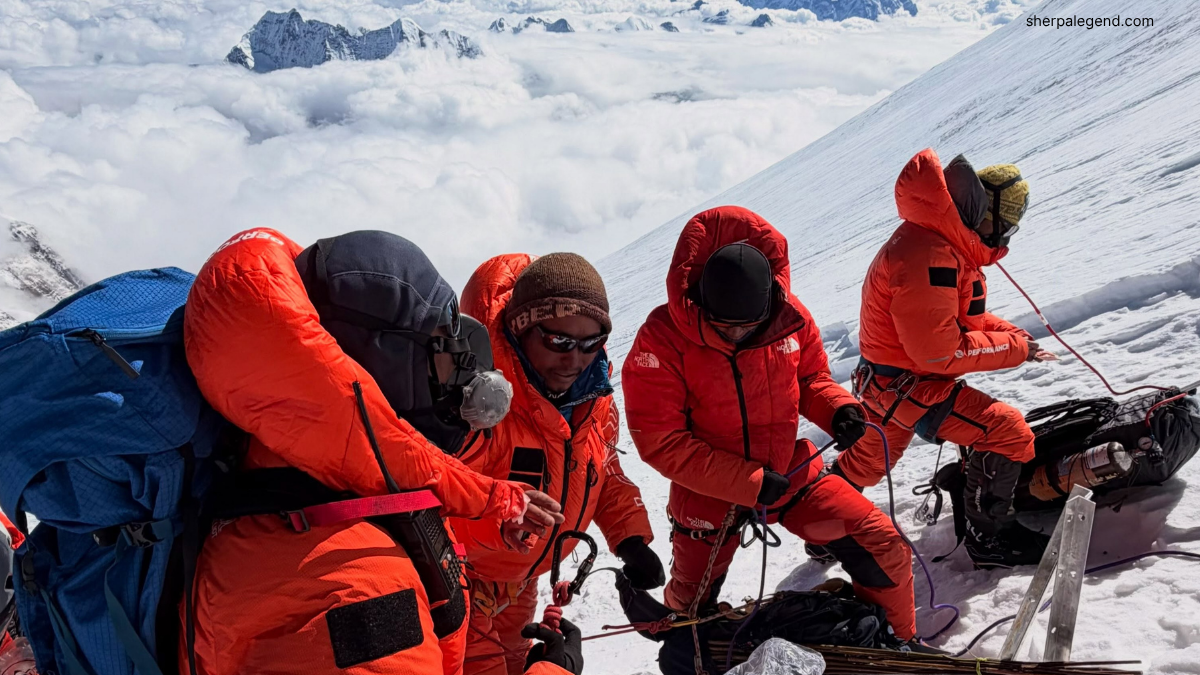

At 9:25 p.m. on September 17, nine exhausted climbers stood on the summit ridge of Manaslu, 8,163 meters up, in total darkness the first people to stand there this season.
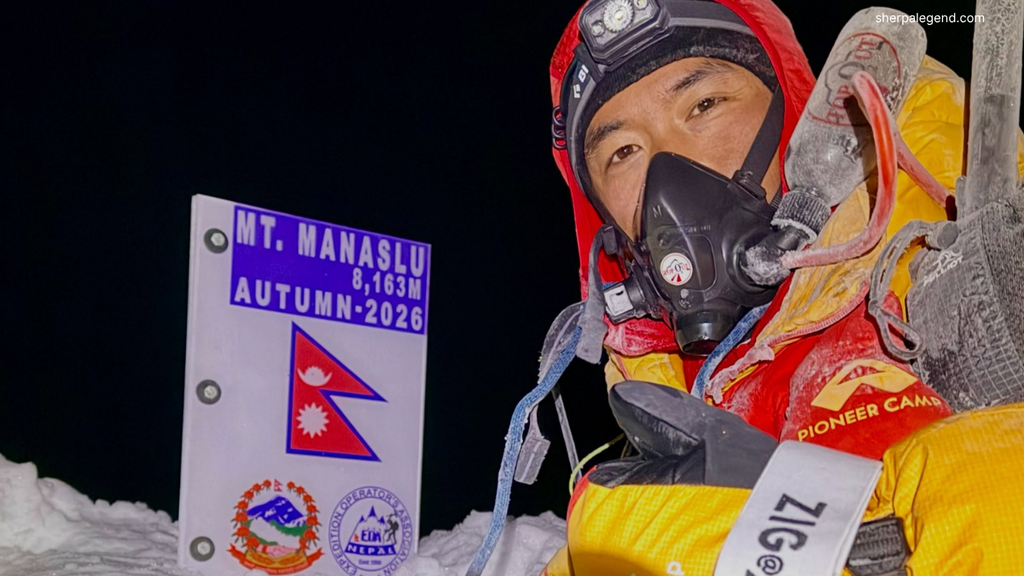
Below them, spread across Base Camp, 493 climbers were waiting for exactly this moment. Behind the nine lay eleven days of work, an avalanche that had buried what they’d already built, and a mountain that had made them earn the same ground twice.
What rope-fixing actually means
Most people who follow mountaineering news skip past the phrase “rope-fixing team” without asking what it means. It means this before any client can start toward the summit, someone has to go first into the most exposed and unstable sections, often unroped themselves and install the fixed lines that every other climber on the mountain will later clip into. It is the most dangerous job on an 8,000-meter peak, and almost always the least visible.
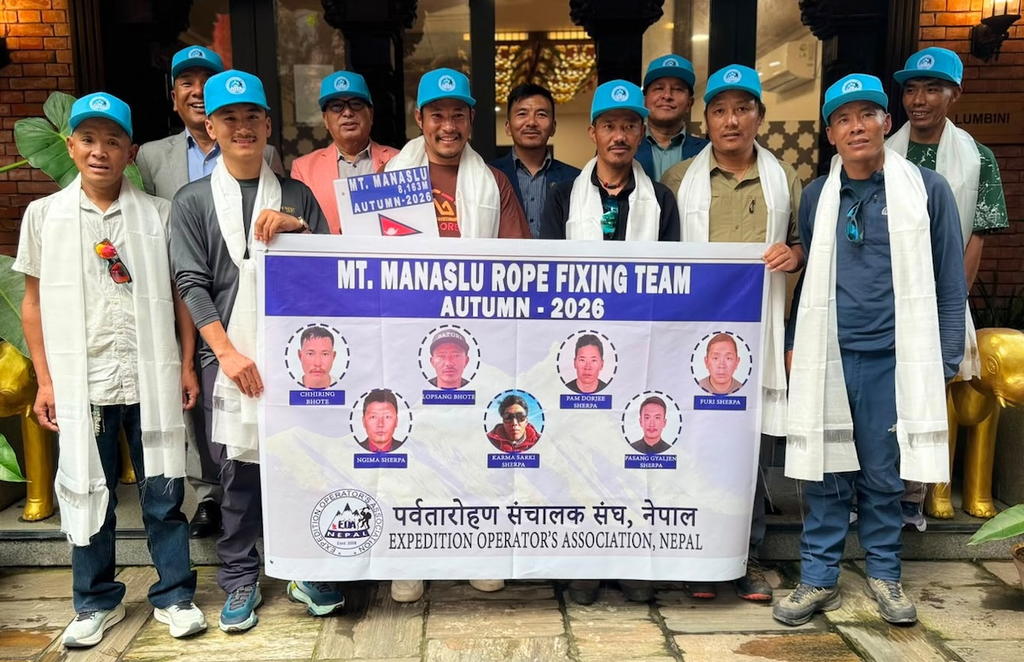
On Manaslu this autumn, that job belonged to nine men, deployed by the Expedition Operators Association Nepal. Chhiring Bhote led the team, which arrived at the mountain in the first week of September. The original seven were Bhote, Furi Sherpa, Karma Sarki Sherpa, Lopsang Bhote, Ngima Sherpa, Pam Dorjee Sherpa and Pasang Gyaljen Sherpa. Karma Gyaljen Sherpa and Tashi Sherpa, both experienced in high-altitude route work, joined later, once the season turned hard.
Between them, the nine spent weeks fixing line up a mountain that did not want to be climbed this year so that 493 people who will likely never meet them could walk up behind them in relative safety.
A hard season, in order
The team started work in the first week of September. By September 10, they had fixed rope as far as Camp III, on pace with a normal season.
Then, on September 16, an avalanche came down the slope above Camp III, burying the line they had just spent days installing. The team had already pulled back to Camp III when the slope released, and every one of them walked away unhurt.
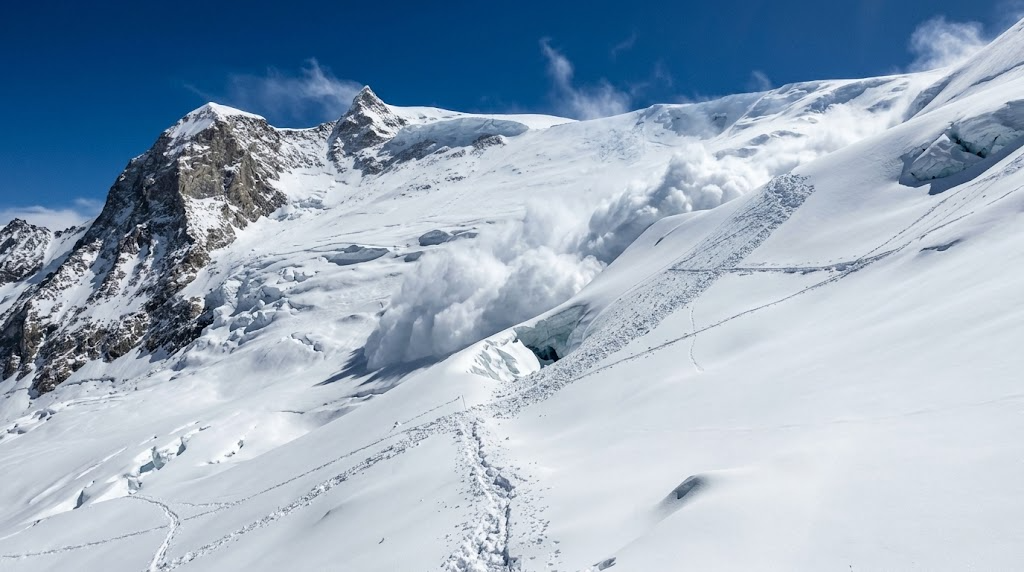
Reinforcements went up almost immediately. Sherpa climbers from Base Camp and from other expedition teams carried roughly 1,300 meters of new rope up the mountain to replace what the avalanche had taken, and the push toward Camp IV and the summit resumed.
At 9:25 p.m. on September 17, the nine reached the top. The route was open.
“It all comes down to luck”
Mingma G has climbed nearly every kind of mountain there is, and by his own account, avalanches are the one thing that has never stopped scaring him. Skill and technique, he said afterward, mean almost nothing once a slope actually lets go you can use some of what you know, but “it all comes down to luck.”
On Manaslu, he said, they got a lucky day nobody happened to be above Camp III when the avalanche swept down from Camp IV to Camp II, which is the only reason the route below Camp III stayed clear and safe.
It is not a comfortable thing for a veteran like him to say out loud. It is also, by every account of what happened on that slope, true.
A quieter voice
Karma Gyaljen Sherpa was one of the two climbers added to the team after the season turned difficult. Manaslu was new to him, and so was rope-fixing itself work he’d expected to find intimidating simply because none of it was familiar. What got him through it, he said, was the team around him veteran climbers whose knowledge and support made the whole experience “much easier,” and taught him things he hadn’t expected to learn this early in his career.
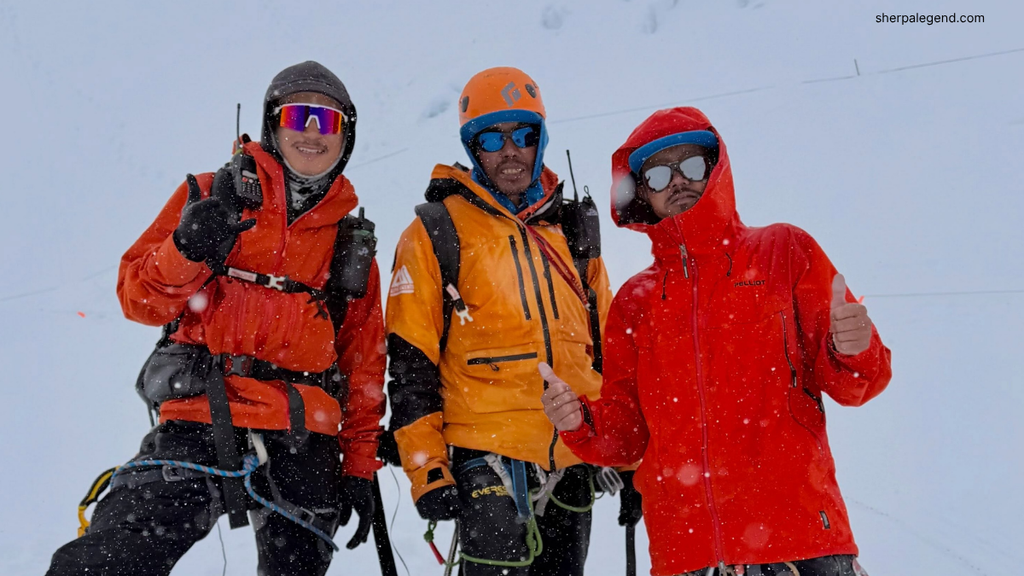
It is a small, grateful account next to Mingma G’s reckoning with luck and mortality and that contrast is the point. Nine names sat on a list of a rope-fixing team. Behind each of them was someone doing this for the first time, or the fiftieth, carrying the same mountain differently.
A death unrelated to the avalanche
The same day the route opened, Manaslu recorded a second loss. Lau Wee Seng, a 50-year-old Singaporean climber with the 8K Expeditions team, had arrived in Samagaun around September 7 and reached Camp II, roughly 6,000 meters, on September 16 for an acclimatization rotation. He stayed the night and began descending toward Base Camp the next morning.
During the descent he felt unwell and stopped to rest. Within about a minute, he lost his pulse. A doctor traveling with another team, along with nearby climbers, tried to revive him and could not. What caused his death has not been officially confirmed; early assessment points toward a possible heart attack or an altitude-related failure.
His death was unrelated to the avalanche two days earlier. He was the first foreign fatality of Manaslu’s 2026 autumn season a Nepali porter had died at Base Camp earlier in the season, before the mountain claimed its first client.
What “open” actually means
Strip away the drama and the sentence is short the summit route on Manaslu is open. But behind that sentence, the Department of Tourism has issued 41 permits for the mountain this season, covering 493 permitted climbers plus their guides all of them now cleared to begin their own summit pushes, on a route nine men bled time and nerve to secure twice.
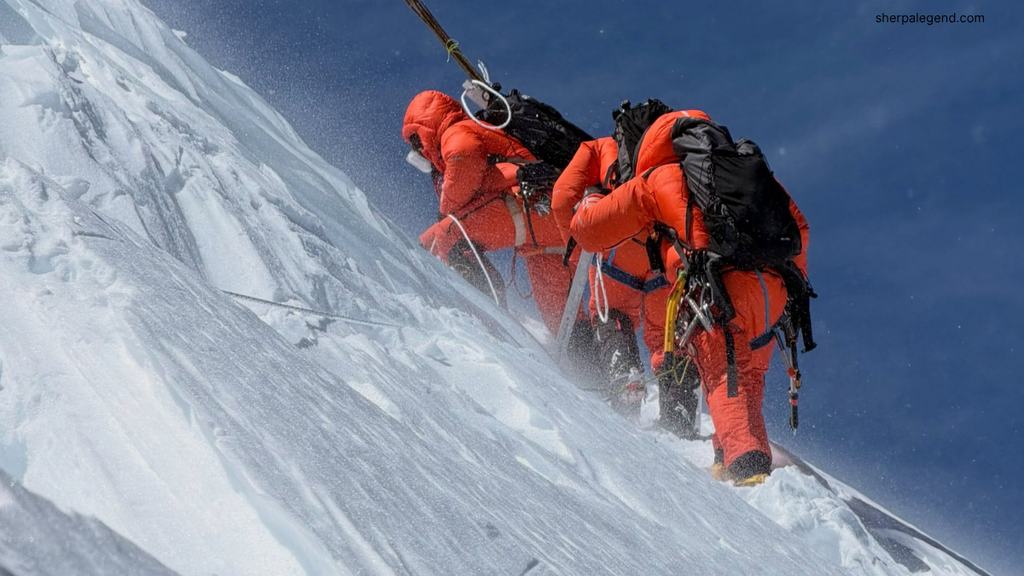
Every one of those 493 people will walk up a line that a team of nine fixed once, lost to an avalanche, and fixed again. Almost none of them will know the names.
The snow, right now
As this is being written, snow is falling at Manaslu Base Camp. More snow means more weight on the same slopes the team just spent two attempts securing the same slopes that let go once already, on the same mountain that has already taken two lives this season.
The route is open. Whether it stays that way now depends on the sky.
