
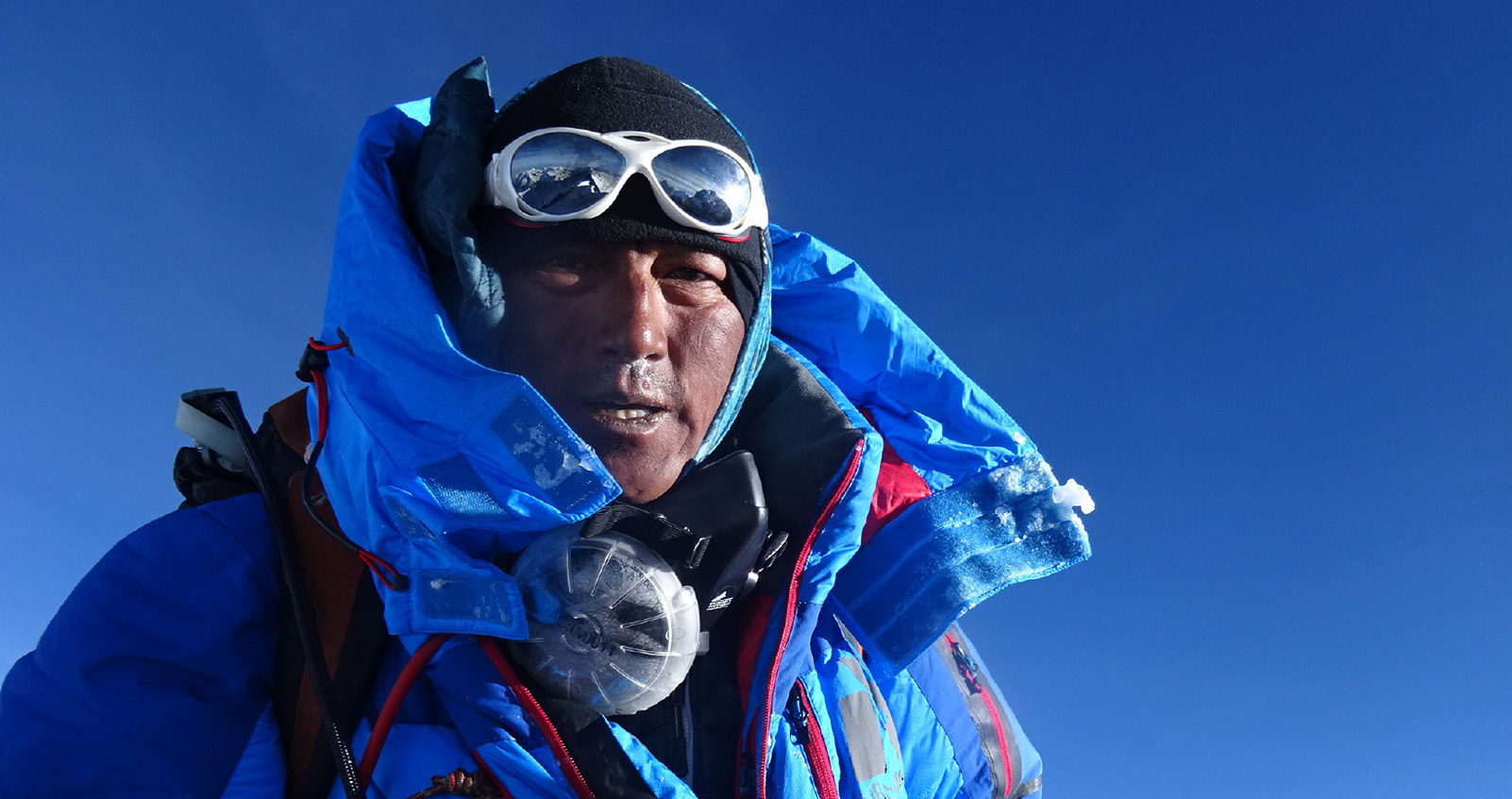

Ang Dorje Sherpa does not chase headlines. He does not count his summits out loud or post them on social media. He simply goes back to the mountain, does the work, and brings people home safely. In the spring of 2026, he stood on the summit of Everest for the 25th time. He was 56 years old. He had been doing this since 1992.
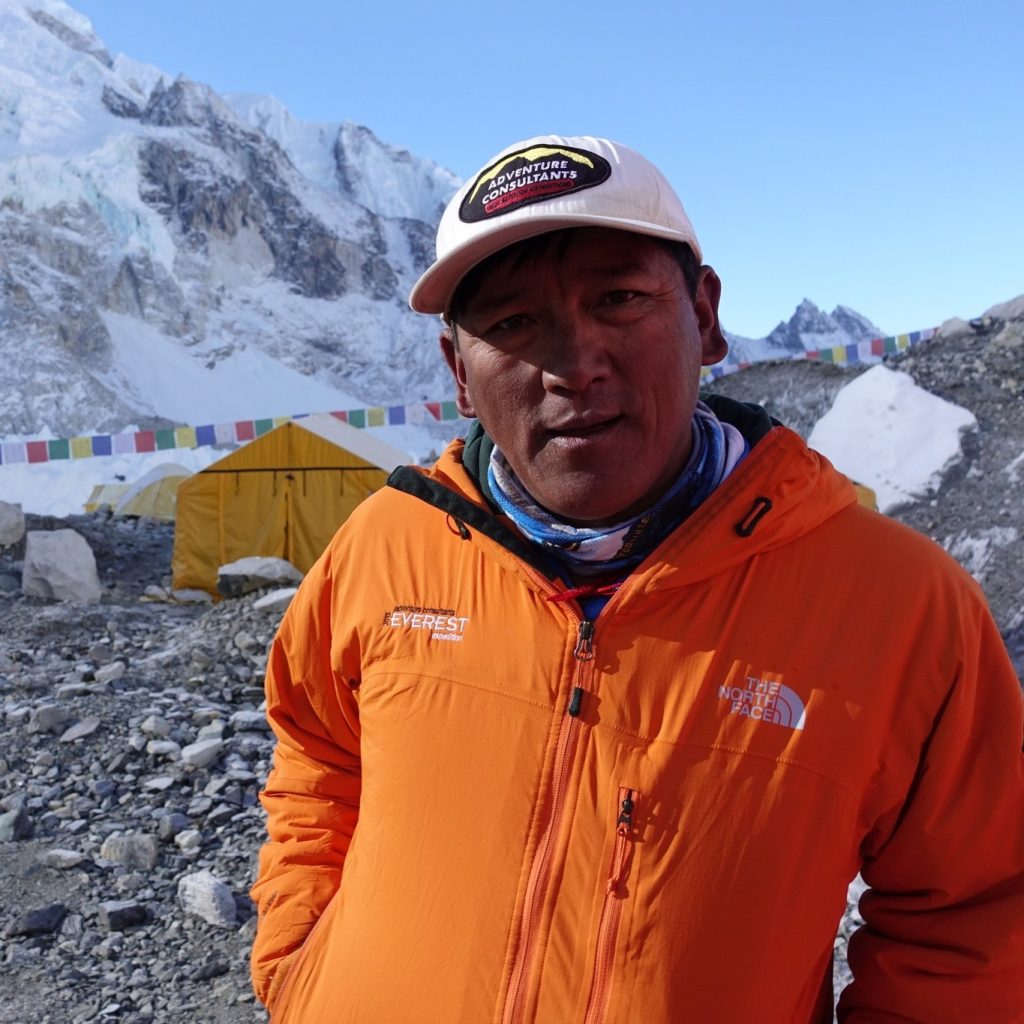
That is 34 years on the world’s highest mountain. That kind of career does not happen by accident. It happens through discipline, experience, and a deep understanding of the Himalaya that cannot be learned from books.
Where It Began
Ang Dorje was born in 1970 in Pangboche, a small village in the Khumbu region, sitting in the shadow of Everest. Pangboche is one of the highest permanently inhabited villages in the world, and its people have lived alongside the great peaks for generations. The mountains are not an adventure for people from Pangboche. They are the landscape of everyday life.
His father, Nima Tenzing Sherpa, climbed with legendary British mountaineer Chris Bonington in the 1970s and 1980s. So mountains were already part of the family. Ang Dorje began working as a porter at age 12. He has said he always wanted to climb. That desire never left him.
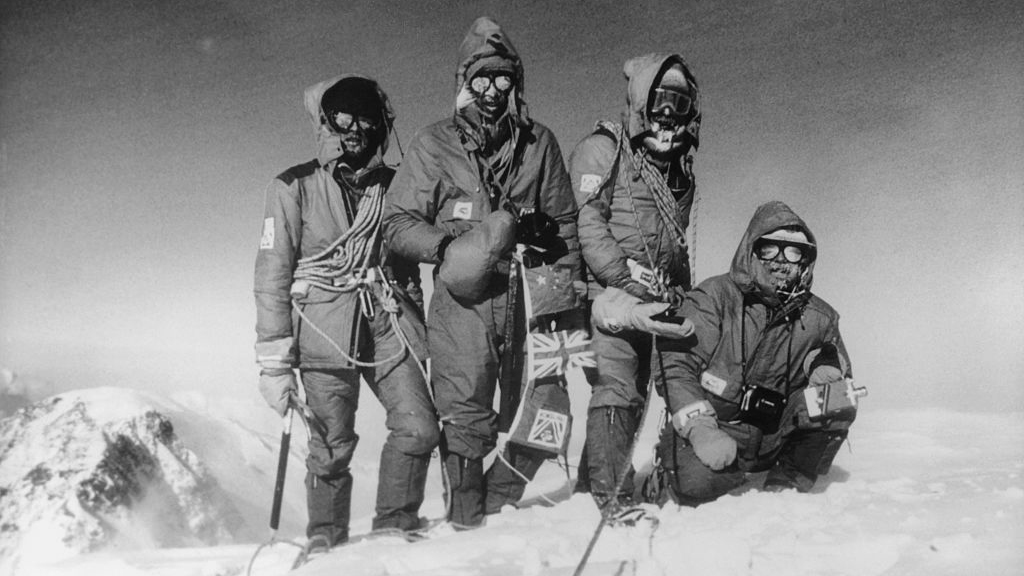
Western clients who encountered him early on noticed his work ethic and helped sponsor his education at a private school in Nepal. He balanced schooling with expedition work in the Everest region. It was not an easy path, but it was one he walked with purpose.
1992: The Beginning of a Career
His first Everest summit came in 1992, when he was 22 years old. It was not just any expedition. It was the very first guided commercial expedition to Everest run by Adventure Consultants, the New Zealand company founded by Rob Hall. That first summit planted the seed of a career that would run for more than three decades, almost all of it in service of that same company.
Most people pick a job and change it a few times in their lives. Ang Dorje found his place and stayed. He became the climbing Sirdar for Adventure Consultants, the leader of the Sherpa team on expeditions. That role carries enormous responsibility. A Sirdar organizes the Sherpa crew, oversees route fixing, manages logistics at extreme altitude, and carries final responsibility for client safety above base camp. It is one of the most demanding jobs in mountaineering.
1996: The Storm That Changed Everything
In May 1996, Ang Dorje was the climbing Sirdar for Rob Hall’s Adventure Consultants team when one of the deadliest storms in Everest history hit the upper mountain. Eight climbers died. The disaster was later described in Jon Krakauer’s book, Into Thin Air, and became one of the most scrutinized events in mountaineering history.
Ang Dorje was there. In brutal storm conditions, when most climbers were fighting for their own survival, he and others made rescue attempts, including efforts to reach clients trapped high on the mountain. He worked in conditions where visibility was near zero and temperatures were life-threatening. He did not turn away from the danger. He went toward it.
That experience alone would define most lives. For Ang Dorje, it was one chapter in a career that kept going.
A Career Built on Consistency
After 1996, he kept returning. Every spring season, back to base camp. Back through the Khumbu Icefall, that constantly shifting maze of ice towers and crevasses that kills climbers before they even reach the real mountain. Back up the Lhotse Face, up the Yellow Band, up to the South Col and beyond.
By 2019, when he summited for his 20th time, clients who were with him that day described it as something they would never forget. One said he had the honor of summiting with Ang Dorje on his 20th ascent. Another said his spiritual connection to the mountains, and the prayers he chanted while moving through the Icefall, made the entire experience feel sacred.
That is not the description of a guide doing a job. That is the description of someone who belongs to the mountain.
What the Numbers Mean
By 2026, Ang Dorje had summited Everest 25 times, all via the South Col route. He had also climbed Cho Oyu seven times, Ama Dablam ten times, and reached the top of Broad Peak, Gasherbrum II, Makalu, and other major peaks. Around 30 ascents of 8,000-meter mountains in total.
But the number that matters most is not 25. It is 34. That is how many years passed between his first summit and his 25th. No one who makes it to the top 25 times over 34 years is doing it carelessly. They are doing it right.
Many Sherpas with impressive records get attention in the press. Ang Dorje is not widely publicized. He is not competing for headlines. But the guides and operators who work at the highest levels of Himalayan mountaineering know his name. Clients who have climbed with him call him a legend. Not because of a number, but because of who he is when the weather turns bad and the decision-making matters most.
The Man Behind the Career
He has lived parts of his life in the United States, in the Boise area, while returning to Nepal for climbing seasons. It is a life split between two worlds, a pattern many experienced Sherpa guides know well. The Khumbu in spring. Somewhere quieter the rest of the year. Then back again.
Clients describe him as calm, experienced, caring, and deeply knowledgeable. They talk about his strength at altitude, his warmth, his sense of humor. They talk about feeling safe with him. For a guide working at 8,000 meters, that is the highest compliment there is.
What His Career Represents
Ang Dorje Sherpa’s story is not about breaking records. It is about what it means to spend a lifetime doing something with care and skill. He is a bridge between the earliest days of commercial Everest guiding and the modern era. He was there when it all began, and he is still there now.
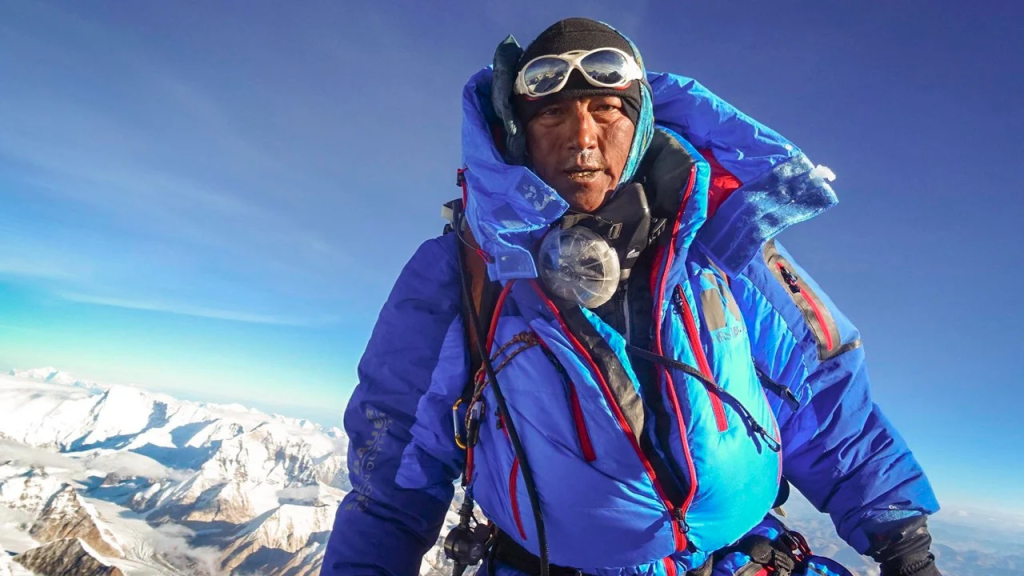
The mountain has claimed the lives of people he knew. He has seen disasters and close calls. He has carried ropes and oxygen and clients and hope up the same ridge more than two dozen times. And in 2026, at 56, he went back again and stood on top.
That is not a record. That is a life’s work.
