
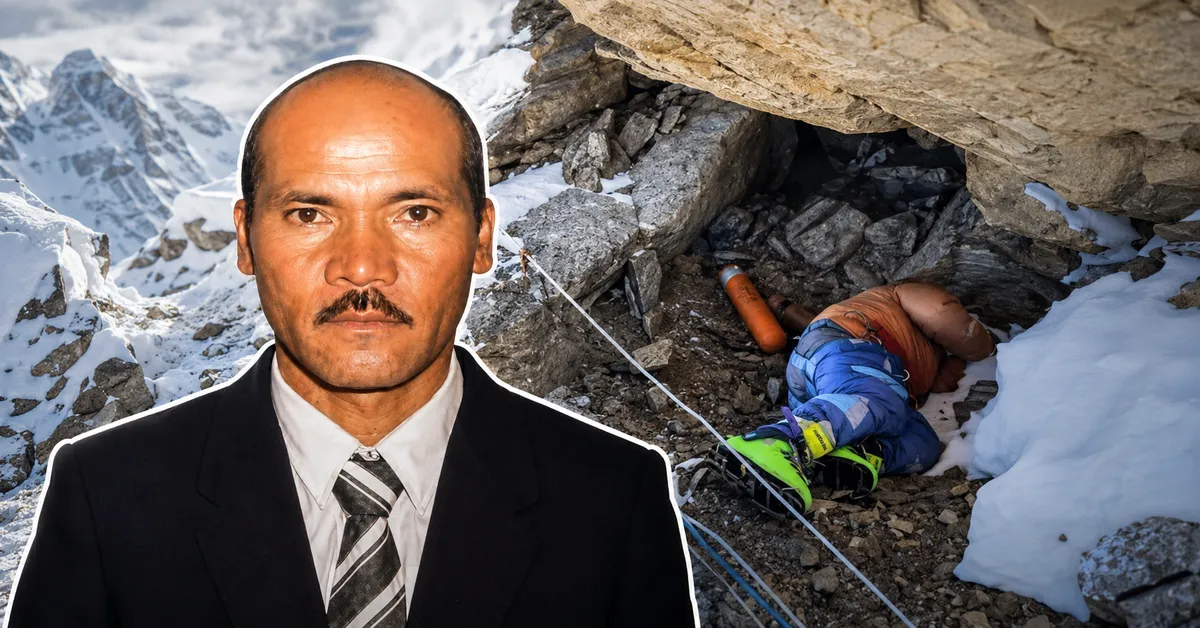

For almost thirty years, climbers moving along Everest’s Northeast Ridge on the Tibet side passed a small limestone alcove at roughly 8,500 meters. Inside it lay a frozen body, curled on its side, wearing a pair of bright lime-green mountaineering boots.
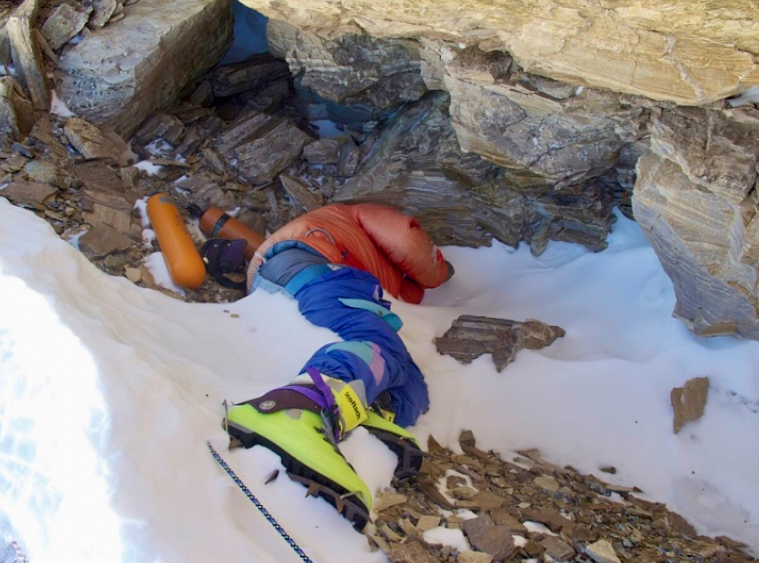
Climbers called him “Green Boots.” Nobody stopped to ask who he was. In the Death Zone, above 8,000 meters, there is barely enough oxygen to keep your own body moving, let alone to carry out someone else’s. So the man in the green boots simply stayed there, season after season, a landmark for the living on their way to the summit.
In 2026, nearly thirty years after he died, India is finally trying to bring him home.
A Deadly Season in 1996
The story begins in May 1996, one of the worst seasons in Everest’s history. That same month, eight climbers died on the mountain in what is now remembered as the 1996 Everest disaster. In the middle of that chaos, an Indo-Tibetan Border Police, or ITBP, team was attempting something no Indian team had done before: reaching the summit from the north side, through Tibet. The expedition was led by Commandant Mohinder Singh. His team fixed their own ropes and broke trail through the upper mountain without help from Sherpa climbers, which is unusually difficult and dangerous work at that altitude.
On May 10, six members of the team pushed for the top. Three turned back as the weather worsened. But three others kept going: Subedar Tsewang Smanla, Lance Naik Dorje Morup, and Head Constable Tsewang Paljor. Late in the afternoon, at around 3:45 pm Nepal time, they radioed down that they had reached the summit. They left prayer flags, ceremonial scarves, and pitons at the top, and began their descent.
Then a blizzard hit. The three men were last seen using their headlamps near a feature called the Second Step, a notoriously difficult rock band high on the route. None of them made it back to Camp 6, at around 8,300 meters. All three died on the mountain.
What happened next added a painful layer of controversy. A Japanese team, climbing from Fukuoka, reportedly came across struggling climbers on May 11 but continued their own descent, citing their own dwindling oxygen and worsening conditions. For years afterward, there were disputes and unclear accounts about exactly what the Japanese team saw and did. Eventually, the ITBP accepted their version of events, but the episode remained one of the more uncomfortable footnotes of the disaster.
Whose Boots Were They, Really?
For decades, almost everyone who wrote or spoke about “Green Boots” assumed the body belonged to Tsewang Paljor. It became the most widely repeated version of the story, appearing in countless articles and climbing accounts. A few earlier sources, including a 1997 piece in the Himalayan Journal, had actually pointed toward Dorje Morup instead, but that version never caught on the way the Paljor story did.
The real answer took nearly thirty years and modern DNA science to settle. Recent testing carried out by the ITBP, confirmed publicly around 2026, identified the body as Lance Naik Dorje Morup, not Tsewang Paljor. Both men died in the same storm, on the same mountain, within the same failed descent. But it was Morup whose body ended up resting in that particular cave, wearing the lime-green Koflach mountaineering boots that gave the site its name.
Interestingly, the body itself did not stay in exactly the same spot the entire time. In 2014, a Chinese expedition team moved it slightly, to a less visible location, since it had become something of a grim tourist marker on the route. Over the years, the site was also sometimes confused with the resting place of other climbers who died nearby, including British climber David Sharp in 2006.
Why India Is Acting Now
DNA confirmation changed everything. Once the ITBP could say with certainty that the body belonged to Dorje Morup, it gave his family, and the organization, a real reason to seek closure. Instead of an unmarked, unofficial cave on a foreign mountainside, his remains could be brought home and given a proper resting place.
In 2026, the ITBP issued a formal tender for what amounts to one of the most difficult recovery missions ever attempted at that altitude. The plan is to hire specialist high-altitude agencies, ideally ones working with experienced Everest summiteer Sherpas, at least six of them, to retrieve Morup’s remains from the Tibetan side of the mountain and deliver them to Delhi by October 2026. The physical recovery attempt itself is planned for the June to September window, when weather conditions on the north side are more manageable.
Why This Is So Dangerous
Recovering a body from above 8,000 meters is sometimes described by mountaineers as roughly double the danger of a normal Everest climb. Bodies at that altitude freeze solid, and after years of exposure they can become encased in ice, which makes the physical act of extraction slow, delicate, and exhausting even for strong, experienced climbers. Every extra minute spent in the Death Zone increases the risk to the recovery team itself.
Beyond the physical danger, there is a maze of logistics to work through: securing permissions from Chinese authorities to operate on the north side, managing unpredictable weather windows, supplying enough oxygen and manpower for the operation, and absorbing a significant financial cost. Recoveries like this are rare precisely because so few of these pieces come together at once. As of early July 2026, the tender process is underway, with bids being reviewed or selected, but the actual physical operation on the mountain has not yet taken place.
A Larger Story About Everest’s Dead
Green Boots is far from the only body left on Everest. Estimates suggest somewhere between 200 and 350 people have died on the mountain over the years, and many of them remain there permanently, simply because bringing them down is too dangerous or too expensive. Some families choose to leave their loved ones on the mountain, viewing it as a fitting resting place.
But for the ITBP, Dorje Morup is one of their own, a soldier who died attempting a first for his country. Their decision to pursue this recovery, whatever the risk and cost, is a statement about how far an institution is willing to go to honor a fallen member. It is also a reminder of what Everest really is beneath the record-chasing headlines and dramatic photos a mountain that has quietly kept hundreds of people who never came back down, and occasionally, decades later, gives someone the chance to finally bring one of them home.
