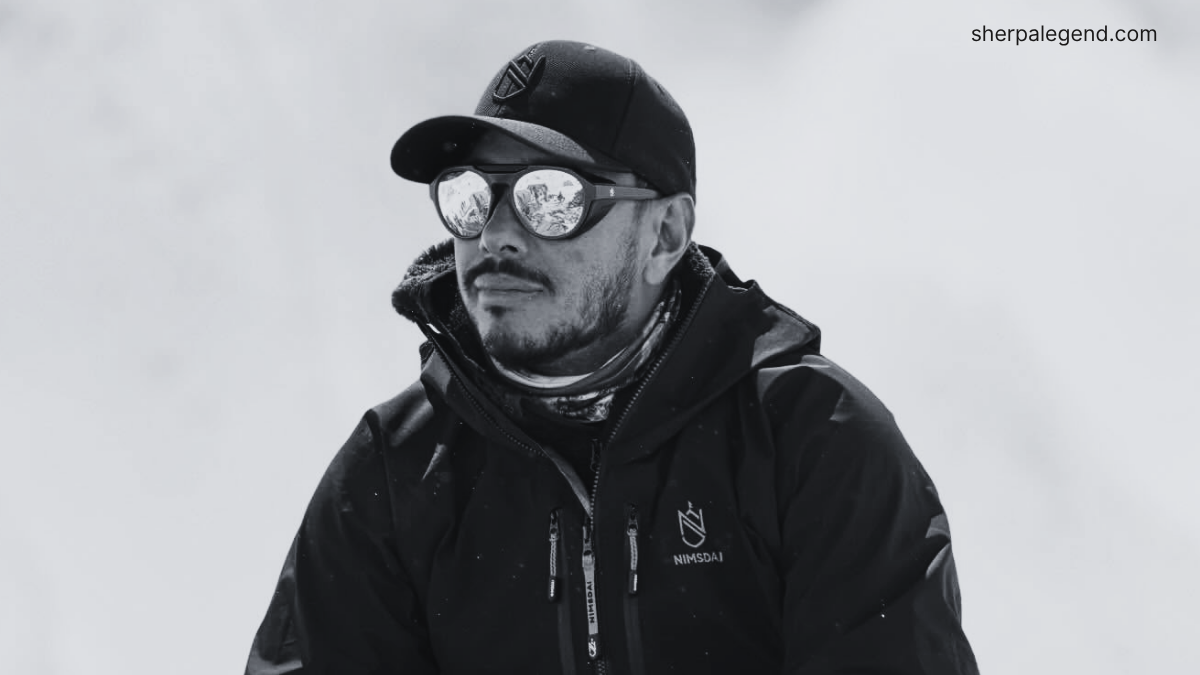
Days before his death, Nirmal Purja wrote directly to the mountain he was preparing to climb:
“Broad Peak, I ask for nothing but safe passage up and back down.”
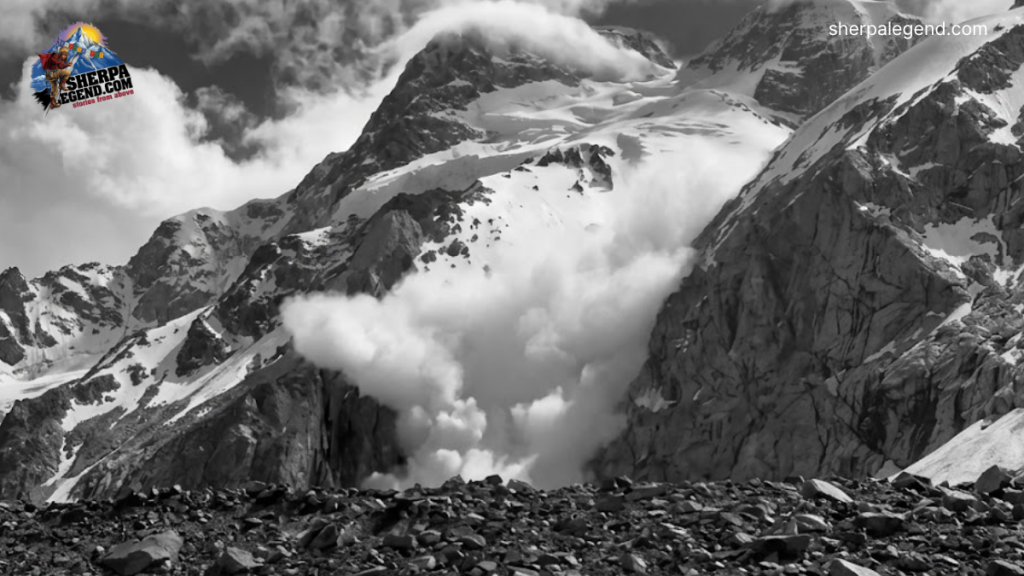
Broad Peak Avalanche on Broad Peak , Pakistan
On 30 July 2026, an avalanche swept through his expedition on Broad Peak in Pakistan. Nims and the other members of the team lost their lives.
He was 43.
For someone who spent his life challenging the word impossible, the ending was brutally ordinary in the world he inhabited: the mountain made the final decision.
But records alone do not explain why Nimsdai mattered.
He was a soldier, mountaineer, rescuer, entrepreneur, extreme-adventure promoter and philanthropist. He was flamboyant, relentless and sometimes controversial. Most importantly for Nepal, he helped change who stood at the centre of the Himalayan story.
Nims was born in Myagdi in 1983 and grew up largely in Chitwan. His father and three older brothers had served as Gurkhas, and he followed the same path.
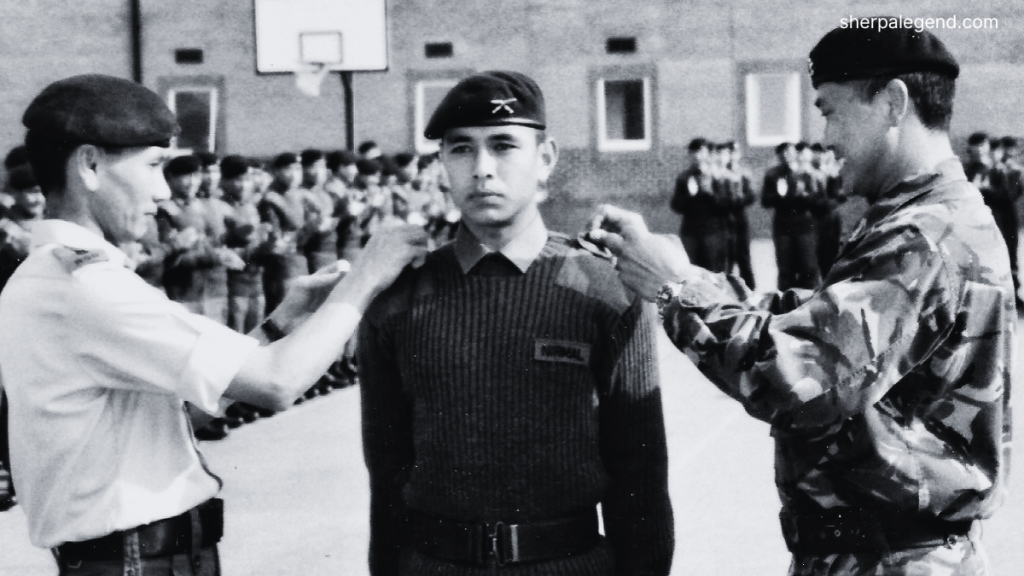
Young Nirmal “Nims” Purja during a British Army Gurkha promotion ceremony, as officers place his new rank insignia on his uniform. The moment captures the early military career of the man who would later become Nimsdai, one of the world’s most celebrated mountaineers.
He joined the British Army, served with the Gurkhas and later became the first Nepali accepted into the Special Boat Service, one of Britain’s elite special-forces units. His military career lasted around sixteen years.
The qualities that would later define him were already there: enormous physical capacity, meticulous preparation, stubborn self-belief and an almost restless supply of energy.
He could also be blunt, emotional and unapologetically confident.
Nims was not someone who tried particularly hard to appear small so that others might feel comfortable around him.
That personality would become both a source of his success and part of the resistance he later encountered.
Nims came to serious mountaineering unusually late.
His first major Himalayan climb came in 2012. He summited Dhaulagiri in 2014 and Everest in 2016. By 2018 he had walked away from his military career and placed his financial future at risk to pursue climbing full-time.
Then came an idea almost everyone understood immediately and almost nobody believed could be done.
Climb all fourteen mountains above 8,000 metres in seven months.
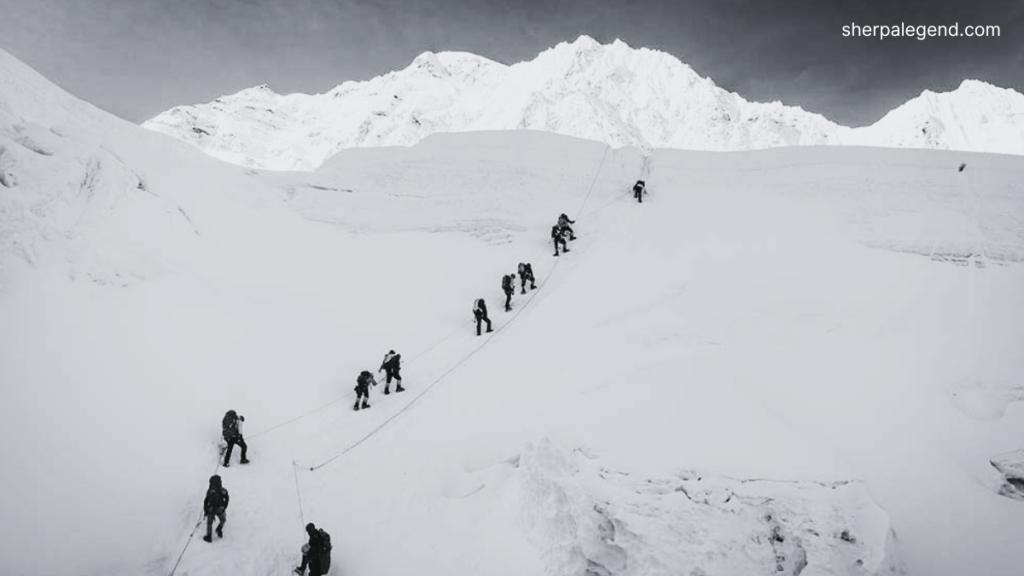
For generations, Sherpa and other Nepali high-altitude workers had fixed ropes, carried loads, established camps, broken trail and rescued climbers on the highest mountains on Earth.
7 May 2022 — Everest: Rope fixing team, led by Kami Rita Sherpa, Photo by @pp_sherpa.
Yet too often someone else became the hero.
The foreign climber appeared on the cover.
The Nepali climber remained somewhere behind him.
That was already slowly changing before Nims arrived. Nepali-owned expedition companies were growing and Sherpa climbers were demanding better recognition, pay and opportunity.
But Nims accelerated that change and made it impossible for the international climbing world to ignore.
He wanted Nepalis not simply to work on expeditions but to lead them, own the companies, become internationally recognised athletes and participate more fully in the economics of the mountains.
Project Possible would become his loudest statement.
Beginning with Annapurna in April 2019 and finishing on Shishapangma in October, Nims climbed all fourteen 8,000-metre mountains in 189 days—six months and six days.
During Project Possible
The previous benchmark had been measured in years.
But Project Possible was never a one-man achievement.
Mingma David Sherpa, Geljen Sherpa, Lakpa Dendi Sherpa and a powerful group of Nepali climbers carried enormous responsibilities throughout the project. Nims’s genius was not merely that he could climb fast; he could assemble elite teams, organise extraordinary logistics and convince people to attempt something that sounded unreasonable.
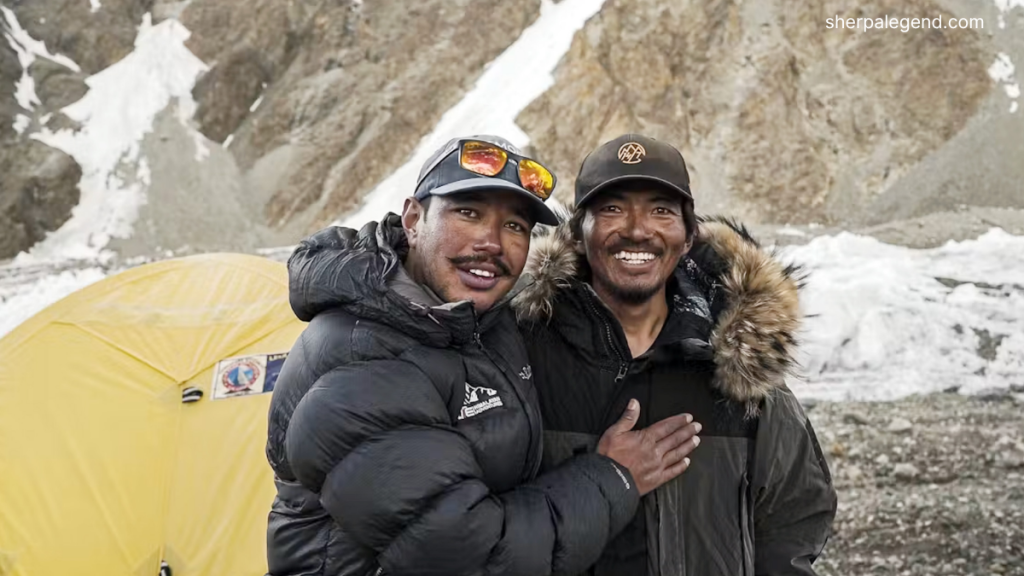
Late Nimsdai with his expedition and business partner, Mingma David Sherpa.
He also stopped for people.
During Project Possible, Nims participated in the rescue of Malaysian climber Chin Wui Kin from Annapurna. On Kangchenjunga, he and teammates gave their own oxygen while attempting to save climbers in distress in the death zone.
For all the image of ruthless ambition surrounding him, there were moments when another person’s survival came before his stopwatch.
Then came K2.
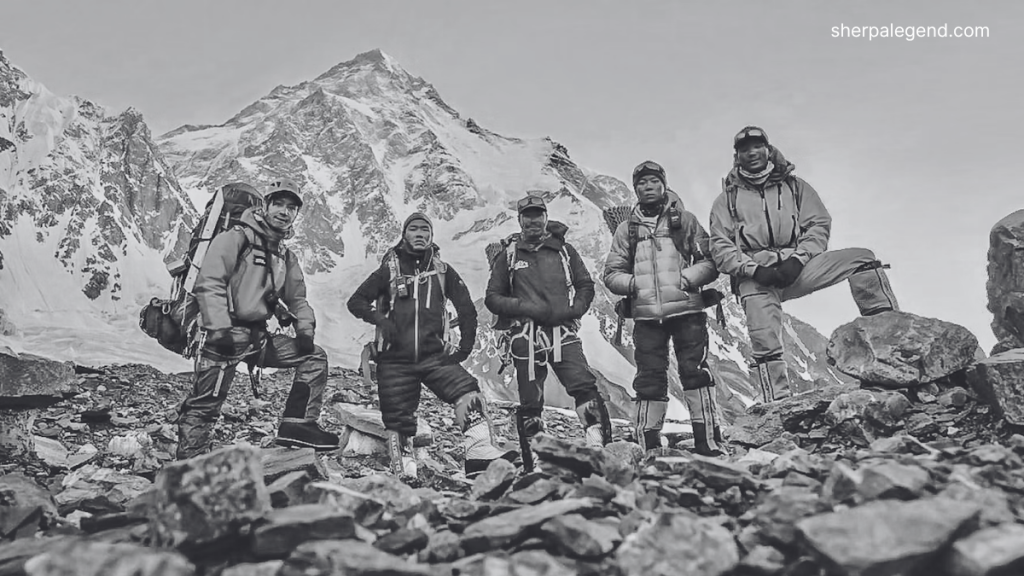
On 16 January 2021, ten Nepali climbers completed the mountain’s first winter ascent. They waited below the summit so that they could walk the final metres together, singing Nepal’s national anthem.
Nims climbed without supplementary oxygen. It was one of those rare sporting moments whose symbolism became larger than the record itself. Nepalis were no longer standing behind the expedition. They were the expedition.
Netflix’s 14 Peaks: Nothing Is Impossible carried that image around the world.
Suddenly people who knew almost nothing about Himalayan climbing knew names like Nimsdai and Mingma David. Nepali climbers were increasingly presented as elite athletes, expedition leaders, entrepreneurs and record-setters rather than anonymous high-altitude labour.
Nims also understood something many traditional climbers did not: the modern mountain story would be told through cameras, social media, branding and personality as much as through expedition journals. By the time of his death, he had recorded 57 successful 8,000-metre ascents, including 29 without supplementary oxygen.
He was not merely a climber anymore. He was building companies, equipment, private expeditions and high-altitude special projects.
And he increasingly pushed into extreme adventure beyond conventional mountaineering, including skydiving. His later ventures promoted Himalayan skydiving and specialised adventure experiences in Nepal, while his broader commercial operation increasingly positioned the Himalaya as a stage not only for expeditions but for world-class extreme adventure.
Nims understood that the mountains were not simply natural resources to be climbed. They could underpin an international adventure industry owned, promoted and led by Nepalis.
There is another part of Nims’s legacy that deserves far more space than it usually receives.
He gave back. It is impossible to objectively rank the charitable contributions of every great climber in history. But among modern elite mountaineers, few built a social programme as broad as the one Nims developed while still actively pursuing world records. He established the Nimsdai Foundation in 2022, working across education, environmental protection, community development, rehabilitation and disaster relief.
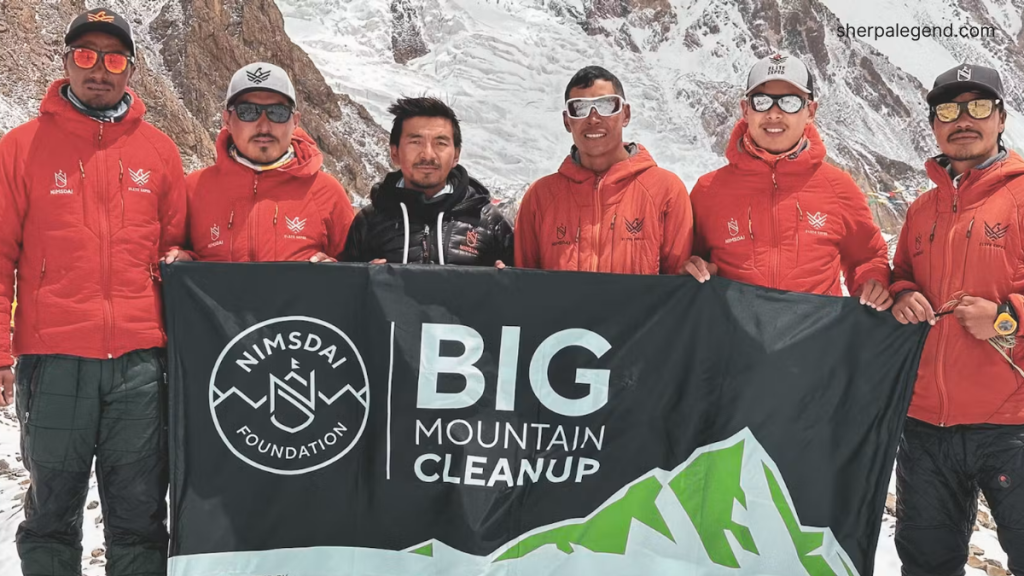
Big Mountain Clean Up Nimsdai Foundation’s high-altitude teams removed hundreds of kilograms of waste from Everest, Manaslu and K2, tackling decades of discarded equipment, ropes and other rubbish left on the world’s highest mountains. Photo: @nimsdaifoundation.
Its Big Mountain Clean Up tackled something the mountaineering industry had helped create: enormous quantities of waste left at altitude. Foundation teams reported removing: 500 kg from Manaslu, 632 kg from Everest, and 492 kg from K2. These were not roadside litter collections. Waste had to be recovered by trained high-altitude teams from environments where simply surviving is difficult.
The Foundation funded educational scholarships for Nepali children, including long-term school support for children who otherwise might not have access to quality education. It supported communities struck by floods and earthquakes in Nepal and Pakistan.
Through an energy project in western Nepal, Foundation funding supported renewable electricity, water pumping and irrigation intended to benefit more than 100 households and two schools in previously off-grid communities. Its programmes also included rehabilitation expeditions for veterans and initiatives aimed at education, women and vulnerable mountain communities.
But perhaps the project that captured Nims’s philosophy most clearly was the Lobuche Porter House. For decades, visitors on the Everest trail could sleep in lodges while the porters carrying the food, fuel and equipment that sustained the tourism economy often lacked dignified facilities of their own.
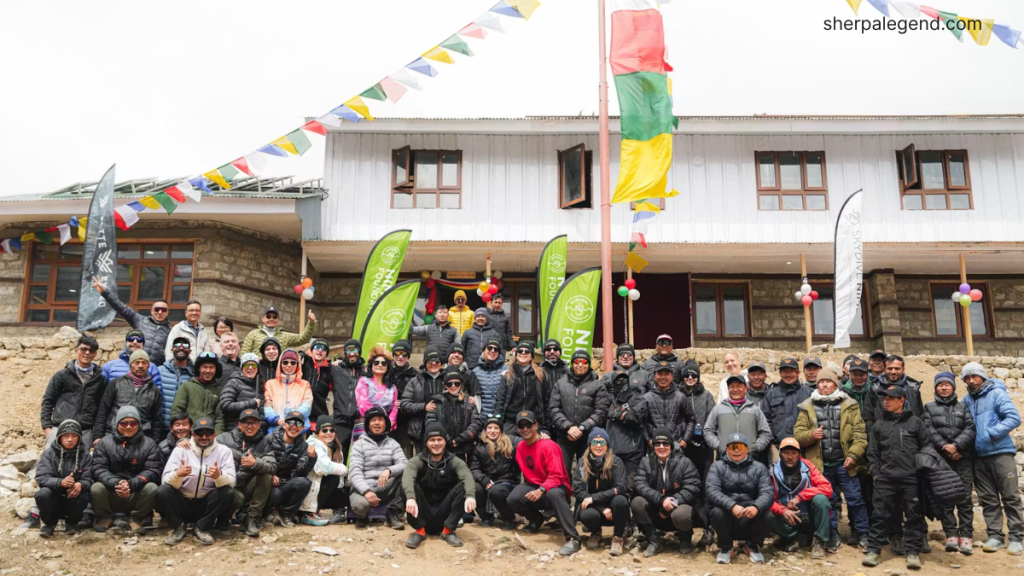
Opening of the Lobuche Porter House The Nimsdai Foundation opened a new Porter House in Lobuche after two years of work, Photo: @nimsdaifoundation.
Nims’s Foundation spent two years developing a purpose-built Porter House in Lobuche. Opened in June 2026, shortly before his death, it included insulated accommodation, sleeping facilities, a kitchen, communal space and a medical room. The project was designed around a simple principle: the people carrying the loads deserved dignity too.
For a man who had spent years arguing that Nepali mountain workers should no longer remain invisible, the building was perhaps a physical expression of everything he had been saying.
None of this requires pretending that Nims’s life was uncomplicated.
Traditional alpinists criticised his dependence during Project Possible on oxygen, established routes, fixed ropes, helicopters and enormous logistical resources. To some, his achievements represented extraordinary expedition management rather than classical minimalist alpinism.
Nims never seemed particularly troubled by that distinction. He was trying to accomplish something different. Speed. Scale. Leadership. Execution. Then came something far more serious. In 2024, two women made allegations of sexual misconduct against him. Nims unequivocally denied the accusations, calling them false and defamatory through his legal representatives. The claims remained disputed, but they severely damaged his international reputation. Sponsors ended relationships with him and some prominent members of the climbing community publicly supported his accusers.
The heroic image created around 14 Peaks began to fracture. And something else changed too. People disappeared. Relationships that had once looked close became distant. Some individuals and organisations that had worked, climbed or associated publicly with Nims were no longer beside him. Even after his death, the response from parts of the world that had once surrounded him was noticeably uneven. Silence cannot tell us why someone chose not to speak, and it would be wrong to assign motives we cannot know.
But for Nims, the feeling of abandonment appears to have begun well before Broad Peak. In one of his most revealing posts in July 2026, titled “The Scars You Don’t See,” he wrote not about avalanches or frostbite but about friendship, betrayal and isolation. As a person climbed higher, he suggested, the circle around them became smaller.
He wrote of former friends, people he had helped and even those he loved becoming sources of pain. For the man who had spent years presenting almost superhuman confidence, it was an unexpectedly vulnerable confession.
His Hat-Trick project aimed to complete another circuit of the fourteen 8,000ers while continuing his extraordinary no-oxygen tally. Had he summited Broad Peak, only Cho Oyu would have remained in his attempt to complete all fourteen twice without supplementary oxygen. Everest Today recorded his final totals as 57 8,000-metre summits and 29 without bottled oxygen.
Yet his final writings suggested that the numbers were no longer the whole story. He spoke about purpose. About ignoring noise. About maintaining direction when people around you changed. And finally he asked Broad Peak only for safe passage.
He did not receive it. But even after his death. His Foundation kept moving, the Foundation established the Broad Peak Guides’ Family Support Fund, specifically to provide financial assistance to the immediate families of the five mountain guides who died in the avalanche. Even after Nims was gone, an institution carrying his name is still trying to look after the mountain workers beside him.
That may ultimately say more about his legacy than another world record.
Nirmal Purja was imperfect. He was polarizing. He could be flamboyant, abrasive and intensely competitive. His career contained extraordinary achievements as well as controversies that cannot simply be erased because he died. But neither should those controversies erase everything else. He helped force Himalayan mountaineering to recognise Nepali climbers as leaders. He built a globally recognized Nepali expedition business. He helped create international stars out of climbers who in another era might have remained unnamed behind a foreign client.
He promoted Nepal not merely as a trekking destination but as a centre for extreme adventure.
He rescued people. He financed community projects. He helped remove waste from the mountains that had given him his fame. He built a house for the porters who carried everyone else’s dreams towards Everest. And the Foundation he left behind is now helping families whose fathers, husbands and sons died beside him on Broad Peak.