
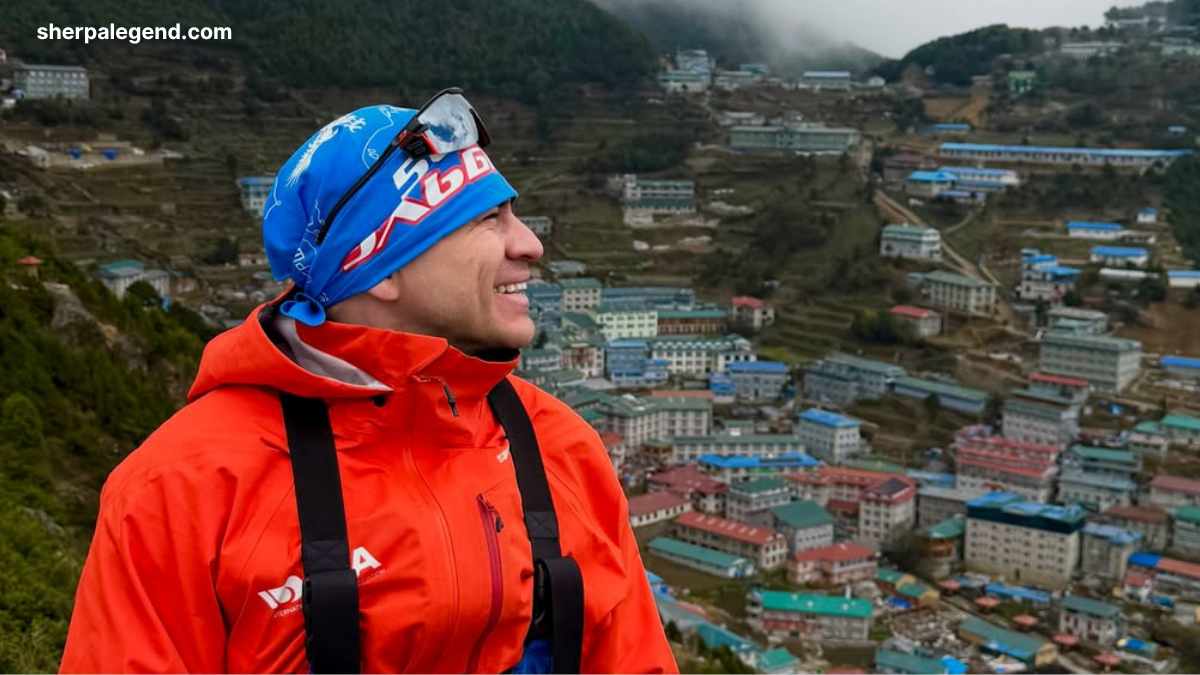

A Russian Soldier Lost His Legs at 23. At 34, He Reached the Top of the World Without Them.
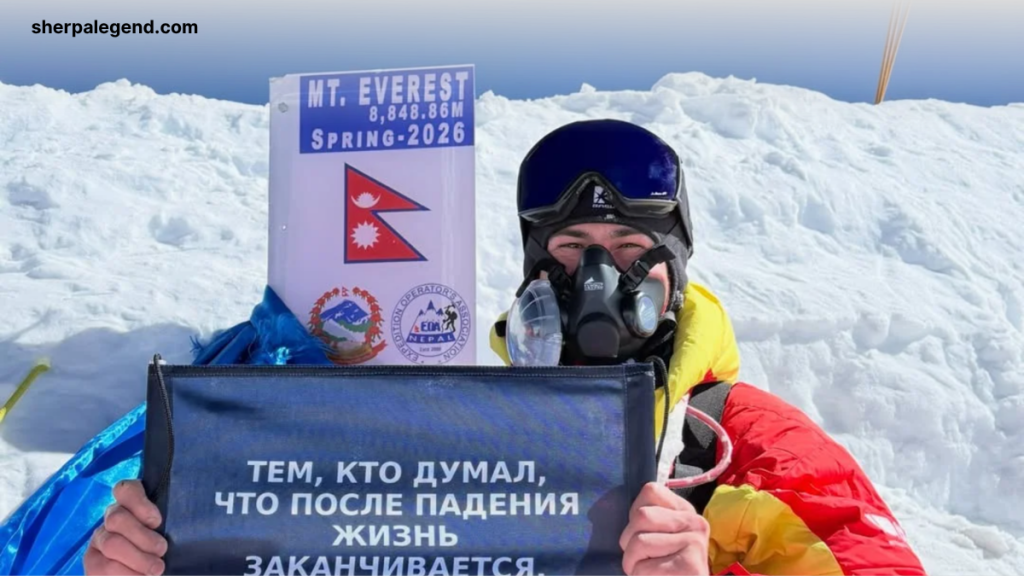
On May 20, 2026, at 8:16 in the morning Nepal time, Rustam Nabiev reached the top of Mount Everest. He is 34 years old, from Bashkortostan, Russia. He has no legs. He made it using only his hands and ice axes the first person in history to ever do this.
How It All Started
In 2015, Rustam was doing his mandatory military service with the Russian Airborne Forces in Omsk. The day after he took his military oath, the barracks collapsed.
He fell from the second floor and ended up buried under concrete and rubble. He stayed there for about seven hours. Around him, people were crying out for help. He was the last survivor pulled out.
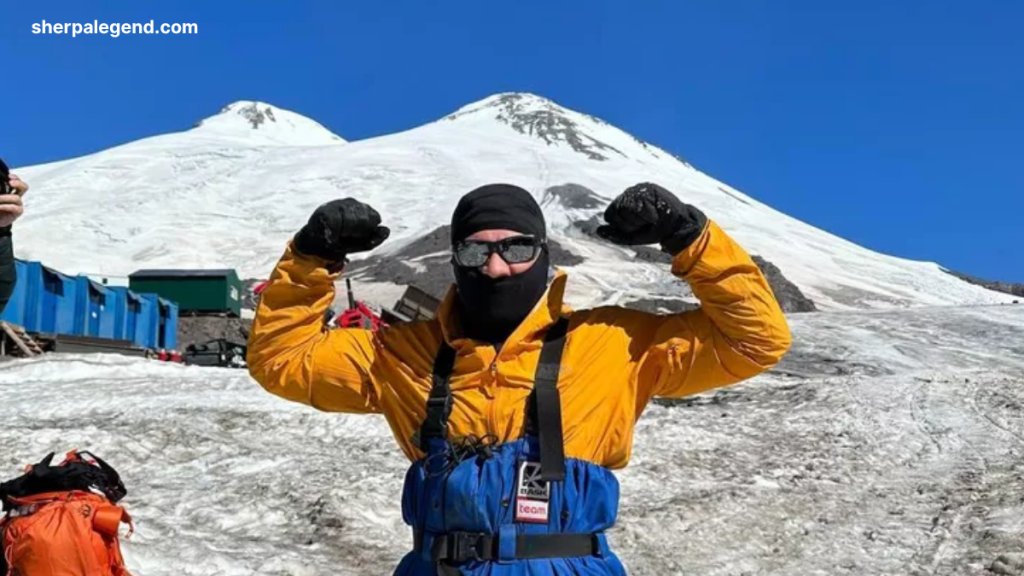
Twenty-four people died that day. Rustam survived, but both his legs were amputated. He also experienced clinical death twice, underwent more than twenty surgeries, and suffered kidney failure. At one point, doctors even considered amputating his hands.
“My life ended there and began again,” he later wrote.
His wife Indira stayed by his side through all of it and gave everything to his recovery. Rustam found his way back through sport. He started with sled hockey. Then he watched the Sochi Paralympics and felt something shift. He saw that disability was not a sentence.
Into the Mountains
He found mountaineering and he did it entirely without prosthetic legs. Just his hands, ice axes, and thousands of strikes on every route.
In September 2020, he climbed Elbrus for the first time. He had thought about using a sled, but once he was there, he made a different choice.
If someone simply dragged him to the top, there would be nothing to be proud of. He climbed on his hands. He cried on the summit. He said he was exhausted, hadn’t slept all night, and emotions came all at once.
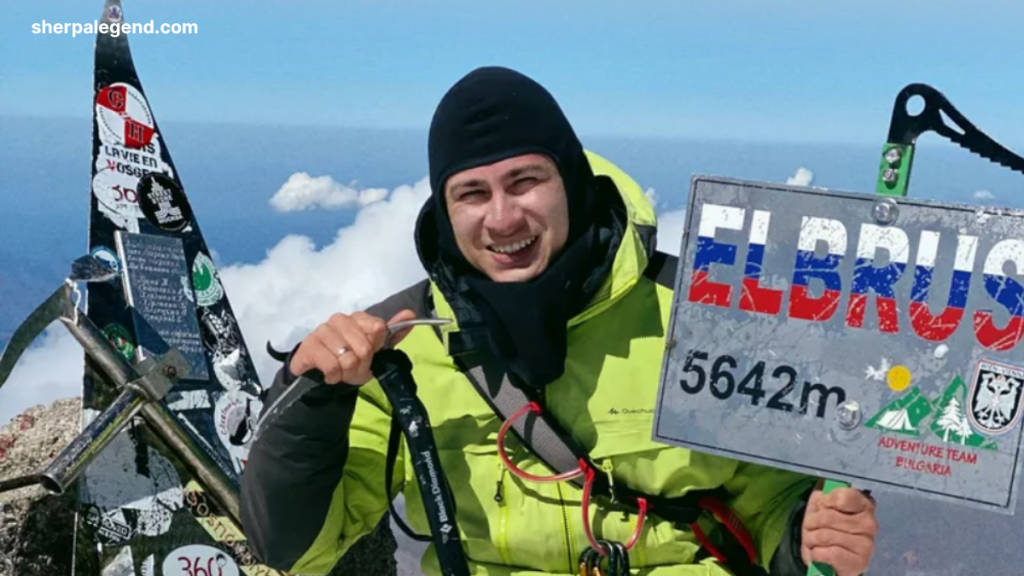
After that, he kept going. He climbed the eastern peak of Elbrus again. Then Manaslu at 8,163 meters becoming the first legless person in history to reach the top of an eight-thousander. Then Kazbek, Kilimanjaro, Ararat, Aconcagua. Summit after summit.
But Everest was the biggest dream.
The 2026 Everest Expedition
Rustam flew from Russia to Nepal on April 7, 2026. Before leaving, he prepared a will and paid off all remaining payments on the house he was building in Ufa. He knew what he was walking into.
He spent April and the first half of May acclimatizing. His warm-up climb was Mera Peak at 6,476 meters, which became the ninth summit of his career.
During that climb, his oxygen saturation dropped to a critical 60 percent from altitude sickness. He called it “a small victory on the way to a big one.”
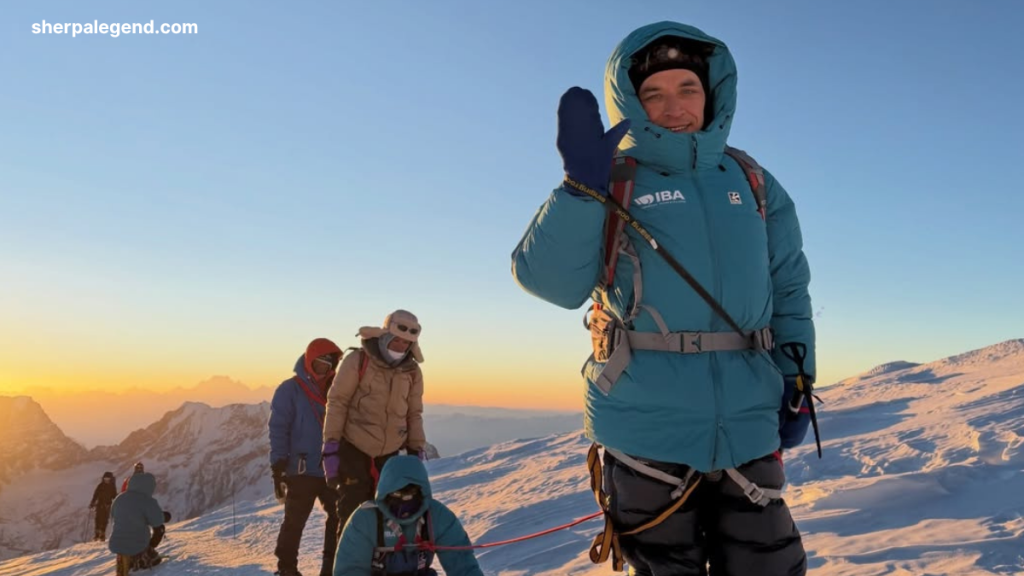
On May 13 his 34th birthday he left Everest Base Camp. With him were five Sherpas and three of his own guides.
Two days later, on May 15, he crossed the Khumbu Icefall. It took him 15 hours. He called it one of the hardest sections of his entire mountaineering life. He moved entirely on his hands through the ice and crevasses.
He rested at Camp I at 6,100 meters. By May 17, his group had reached Camp III at 7,178 meters. The climb to Camp IV took 14 hours. On May 19, he reached the Balcony a platform at 8,400 meters. At 11:00 p.m. that night, he began his final push for the summit.
On May 20, 2026, at 8:16 a.m., he was at the top of the world.
What He Said at the Summit
“At 8:16 a.m. Nepal time on May 20, for the first time in the history of mountaineering, I, Rustam Nabiev, climbed the summit of Everest using only my hands. I dedicate this ascent to everyone watching me right now. With this act, I simply want to say one thing: as long as there is life within you, keep fighting. Fight until the very end, please. It is worth it.”
Rustam Nabiev
Why He Did It
Before the climb, Rustam had explained his reasons simply and clearly.
“I’m going there to show that limitations are not a sentence. So people with disabilities see not a ceiling, but a path. So men broken by life remember that there is still strength inside them. So that one day my son will know: his father chose not fear, but forward movement.”
He did not go to prove something to critics. He went because he knows the value of every step.
