
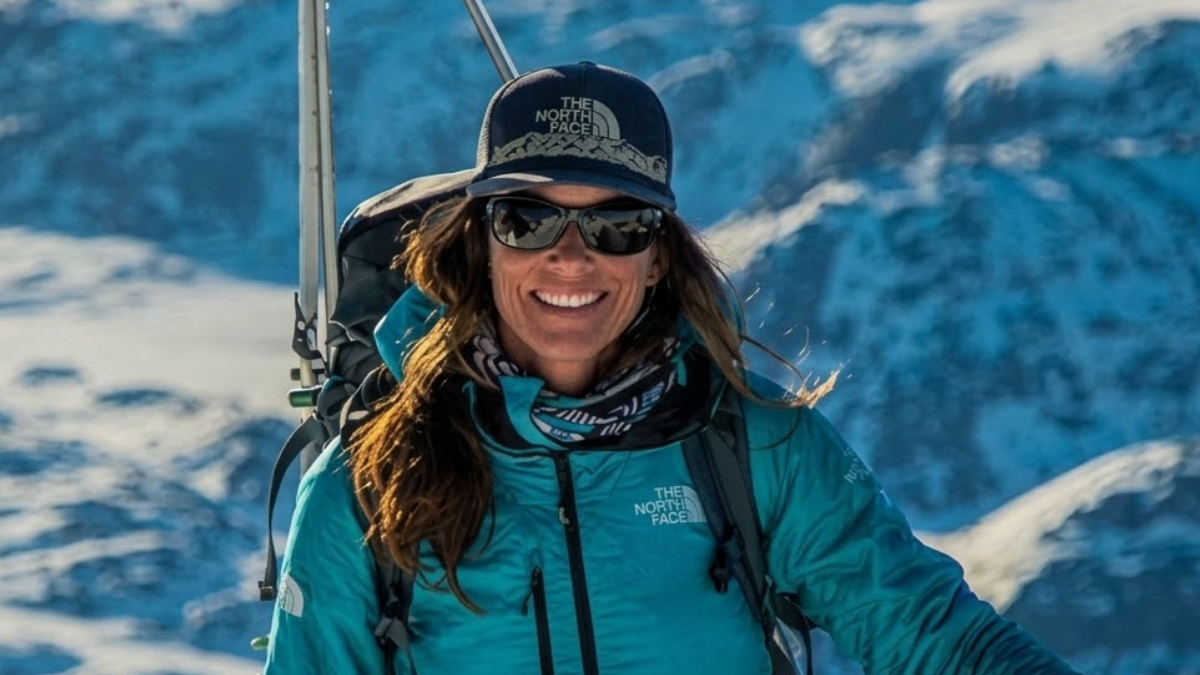

The summit of Mount Everest. 18 October 2006. About 11 a.m.
The team landed in Nepal in late August. It took about seven weeks to get here. Fourteen people stand on top. It is cold. The air is thin.
Kit DesLauriers clicks into her skis. They came up the mountain in an unmarked bag, so they would not draw attention. Her husband, Rob, and the photographer Jimmy Chin click in too. Three people on skis at the top of the world.
Some of the Sherpas, born in the region and having worked there for years, initially found the news so surprising that they thought it might be a joke.
But it’s not a joke. The news is real.
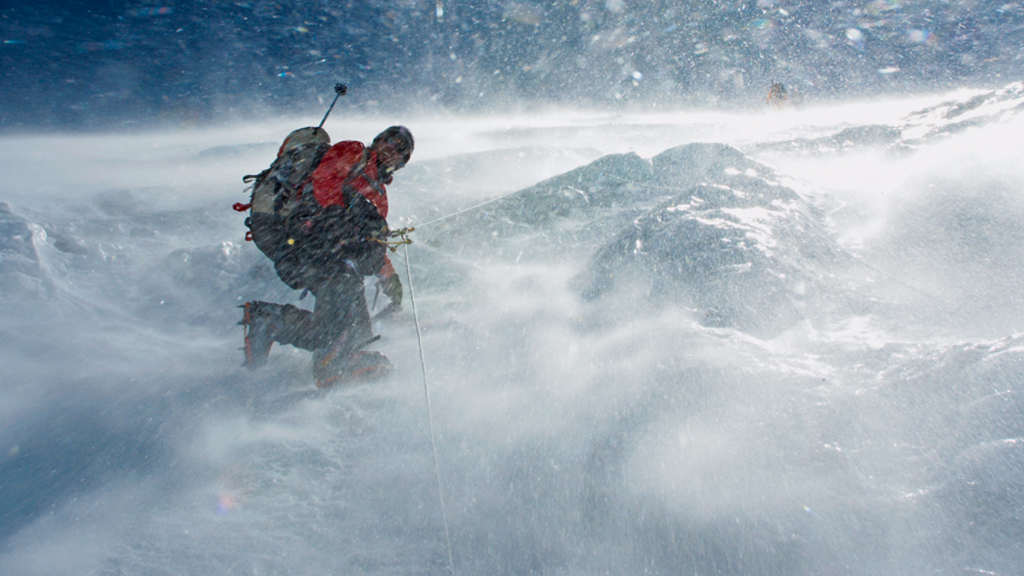
The next day, she is on the Lhotse Face. The slope is 45 to 50 degrees. There is blue ice in places. A fall here cannot be stopped.
She is afraid. She uses a mantra. “Turn… like your life depends on it.”
Kit DesLauriers is 56. She is the first woman and the first American to ski from the summit of Mount Everest. She is also the first person of any gender to climb and ski from the summits of all Seven Summits, the highest peak on each continent.
The Everest ski is the fact most people know. But she is still working. She is a ski mountaineer, a board member, a speaker and a mother of two. This story is about what a record leaves behind: what came before it, and what she chose to do with it afterward.
Not a mountain kid
Kit was not born on a mountain. She was born Catherine Katzenbach in Albany, New York, in 1969. She grew up on Long Island and in Westport, Massachusetts, among New England farmland. Her father, Peter, built custom furniture and boats. Her mother, also named Catherine, was a realtor.
She was a sporty kid who played almost everything: soccer, softball, volleyball, tennis, track, cross-country running, swimming and even badminton. She fell in love with winter through quiet Nordic skiing in farmers’ fields. She has said she loved the peace of moving through the woods in winter. She did not grow up as an alpine skier or a climber.
Skiing was in the family, though. Her grandfather built the first chairlift at Stowe Mountain in Vermont. Still, this is not the story of a born mountaineer. That is part of why she is easy to root for.
Around age 14, before high school, the family moved to Arizona. Annual ski trips began, first to local Arizona resorts and later to Sun Valley, Idaho, and Telluride, Colorado. She was hooked on the freedom and personal expression of alpine skiing. She made herself a promise: as soon as she finished college, she would move to a ski town.
Becoming a mountain person
She studied environmental political science at the University of Arizona. In college she took up trail running and rock climbing. A scholarship from the National Outdoor Leadership School took her to Alaska for a semester in the summer of 1991.
She modeled briefly to pay for travel to Europe. There she skied in Verbier and Chamonix and discovered climbing skins, which let a skier travel uphill. A semester abroad and hitchhiking through the Alps left her sure she could go anywhere and do anything she set her mind to.
After college she kept her promise. She moved into a small cabin in Ophir, near Telluride, Colorado, and stayed nearly ten years, also spending time in Indian Creek, Utah. She waited tables. She laid carpet. She patrolled at Telluride Ski Resort for two seasons. She became an accomplished stonemason.
She also volunteered with the San Miguel County Search and Rescue Team. She became a certified EMT and wilderness EMT, trained in technical and helicopter rescue, and later taught rope rescue. She even raised a wolf pup. These were the quiet years. The work was ordinary, and it was steady. None of it made headlines. It built her mountain skills, her self-reliance and her experience in wild places.
In 1998 she stood on a peak in Sikkim, India, and realized she always wanted skis on her back, so she could ski down whatever she climbed. From then on, she focused on ski mountaineering.
Rising fast
She came to competition late. After only two years, she won the World Freeskiing title in 2004 and again in 2005. She was the first woman to win it two years in a row. In 2005 she also won the women’s division of the Rendezvous Hill Climb at Jackson Hole.
Firsts came along the way. In 2003 she made the first female ski descent of Mount Aspiring in New Zealand. In May 2004 she became the first American woman to climb and ski from the summit of Denali in Alaska. She did it more as a vacation after her first freeskiing wins, without the full Seven Summits project in mind.
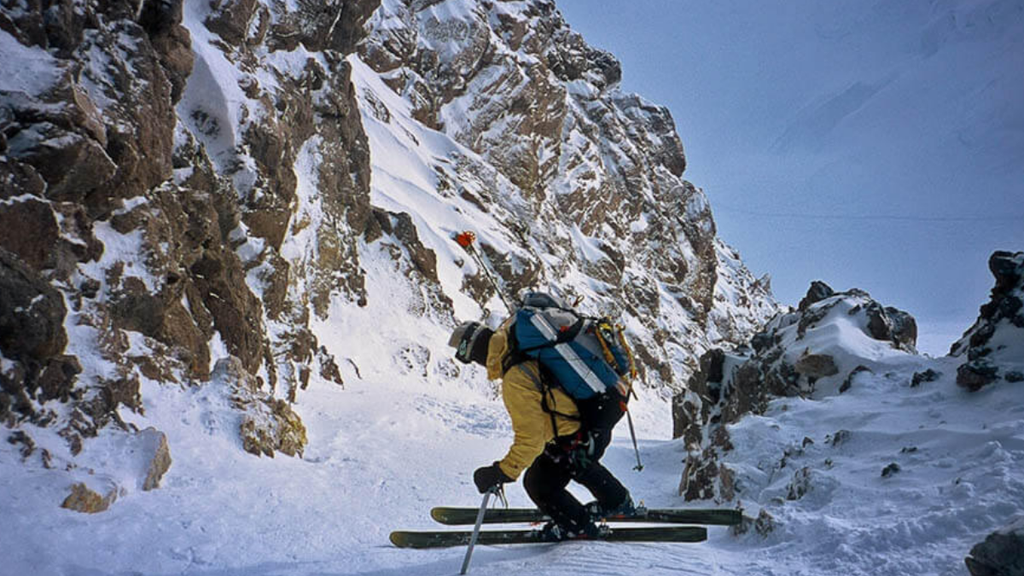
She made the first complete female ski descent of Vinson Massif in Antarctica and the first female ski descent of the Polish Glacier on Aconcagua in South America. She made the first female solo ski descents of the Grand Teton and Gannett Peak in Wyoming.
In 1999 she met her future husband, Rob DesLauriers, on a North Face expedition to Mount Belukha in Siberia. Rob was himself a pioneering extreme skier and a North Face athlete. They married the following year and moved to Teton Village, Wyoming. She joined The North Face Global Athlete Team in 2005.
The Everest plan
The big idea started at a dinner. During the 2005 freeskiing season, Kit and Rob had dinner with Dick Bass, the first person to climb the Seven Summits. Bass left her a signed copy of his book, Seven Summits. She read it and began to picture the same peaks on skis.
After her second title, she sat quietly with herself. She decided competition was pulling her away from pure ski mountaineering. She committed to the project.
She treated it like a job. She wrote a business plan. She researched each mountain herself: the best season, the equipment, the logistics and the conditions for both climbing and skiing. Almost none of them had a history of being skied. A sponsor from the Jackson Hole area, described as an “angel,” offered to cover travel and costs. The North Face and Balance Vector also backed the expeditions. The whole project took about two and a half years.
Everest came last. The permits, timing and logistics for the world’s highest peak were the hardest, so it became the finale.
She chose autumn on purpose. May is crowded. Autumn brings more snow and empty slopes. It also brings colder air, shorter days and weather that is harder to predict. Her team was almost alone on the mountain.
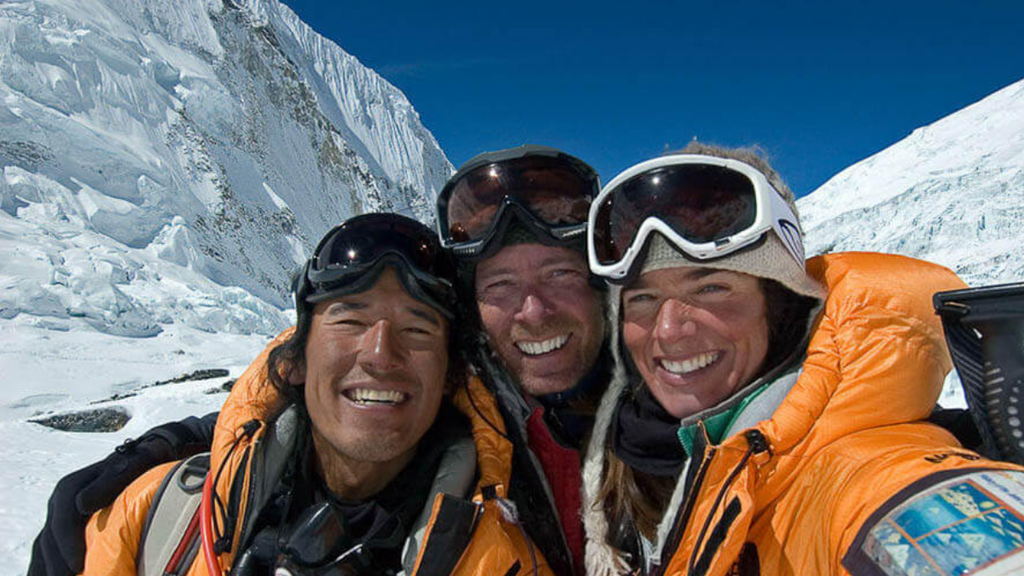
The team was small and experienced. Rob would ski and film. Jimmy Chin was the photographer. Dave Hahn was the veteran guide, and he and the skiers agreed on “complete autonomy” so they could manage their own descent if the climb went well. Wally Berg of Berg Adventures was expedition leader, working from base camp. Bryce Brown was the physician. A strong Sherpa crew fixed the ropes and supported the ascent, and when storms and avalanches damaged the lines, the ropes were fixed again.
Before the climb, a lama gave the team a long blessing. He told them to do it in a way that helps others. Kit later called it meaningful.
At base camp, she told Rob that if they got down alive, she wanted a family.
The climb and the ski
Fourteen people reached the top at about 11 a.m. Kit, Rob and Jimmy skied from the summit. They skied the upper ridge. Then they reached the Hillary Step.
The rock there was dry. It could not be skied. Oxygen was low. Rob was managing the rappel and the ski transition while filming, and he briefly lost consciousness. Safety came first. The team carried the skis and down-climbed much of the upper ridge to the South Col. They spent a cold night.
The next day they skied the Lhotse Face. It is steep, 45 to 50 degrees, with blue ice in places. It is a no-fall zone. Kit was afraid, and she repeated her mantra. She has called it the most difficult, frightening and consequential ski of her life.
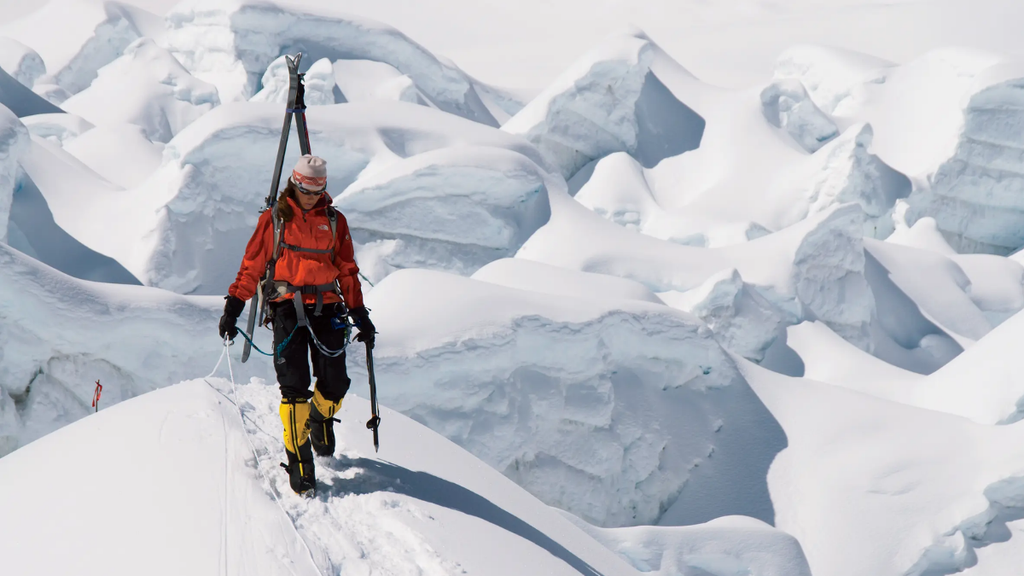
In all, they skied about 6,000 of roughly 8,500 skiable vertical feet from the summit toward base.
Some purists say this was not a continuous descent. That is true. Reports at the time noted roughly 15 ski attempts on Everest, and an earlier full descent by Davo Karničar had come under better snow. This was not that.
But look at what it was. It was the first ski from the true summit by a woman and by an American. It was done in the quiet, colder autumn season, on icy slopes, past a dry Hillary Step, with little oxygen to spare. The team made the safe call when it counted, and everyone got down. It finished the Seven Summits. Jimmy Chin has called watching her ski one of the most amazing things he has seen. The dominant view accepts the ski and celebrates it.
Kit has framed the climb as a test of mental limits, not a statement about gender. Others noted the milestone for a woman in a male-dominated sport.
Beyond Everest
After Everest, she became a mother on purpose. Her daughters are Grace, born around 2007, and Tia, born around 2009. The family lives in Jackson and Teton Village, Wyoming. Both girls have climbed the Grand Teton. The family has trekked to Everest Base Camp, skied in Japan and appeared in Warren Miller’s 2019 film Timeless. Kit stayed a professional athlete when that was not the norm, and she has said that is what her “neverstopexploring” spirit made room for. She has kept up competitive road and mountain biking, and she has coached women’s ski camps called Turn It Up. She wrote a memoir, Higher Love: Skiing the Seven Summits, published around 2015. She appears in the film Like a Wolf.
Since around 2010, she has worked in Alaska’s Arctic National Wildlife Refuge and the Brooks Range. The trips combined first ski descents with mapping and science. She made the first ski descent of Mount Isto. Her ground measurements supported aerial methods and helped confirm Isto as the highest peak in the U.S. Arctic. She has also filmed in Greenland’s fjords. This work earned her National Geographic Adventurer of the Year. She says her care for the environment is rooted in her degree and her experiences.
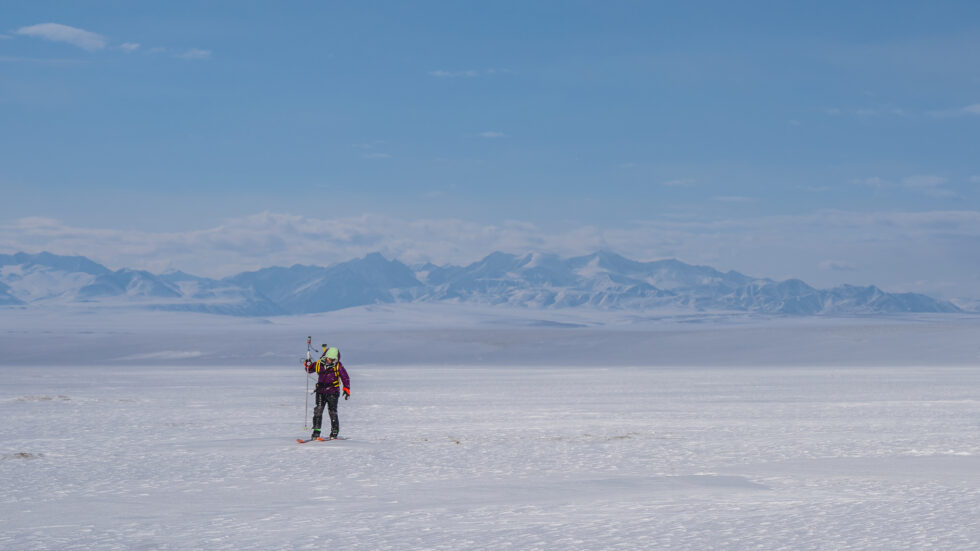
In 2022 she led Beyond the Summit, a self-supported two-week ski traverse of Alaska’s Coastal Plain, the area targeted for oil leasing. Her team included Jim Morrison, Sophia Schwartz and Sarah Carpenter. They collected citizen-science snow-depth measurements to test assumptions about conditions for seismic exploration and drilling, and they documented thinning snowpack. She described seeing less snow and more wind and ice exposure, and called the work “extreme ecoactivism.” They also made the first ski descent of Mount Hubley, the second-highest peak in the U.S. Arctic. That made her the first person to ski the five highest peaks in the U.S. Arctic. A film of the same name premiered in late 2022. She has called the Refuge one of the wildest, most beautiful places she has visited.
The recognition followed. She was inducted into the U.S. Ski & Snowboard Hall of Fame in the Class of 2019, and into the Intermountain Ski Hall of Fame. In 2017, Outside magazine listed her among 40 women with the biggest impact on the world.
Now, and why we still remember her
Today she serves on the Board of Directors of the Alaska Wilderness League, the national nonprofit that works to protect Alaska’s federal wild lands and waters, including the Arctic Refuge. She has been vice president and, at points in recent years, president. She is a member of the Protect Our Winters Riders Alliance.
She frames the Refuge not only as wilderness but as a climate, justice and Indigenous rights issue. She urges people to contact officials and support the Arctic Refuge Defense Campaign. She has also installed solar on her home. She gives keynote talks on risk, resilience and teamwork. She mentors, including adaptive climber Kimber Cross through The North Face Athlete Development Program around 2023. She has appeared on podcasts, including The Ski Podcast in late 2025 and REI’s Wild Ideas Worth Living in September 2026.
In 2025 she returned to posting publicly after a quiet stretch. She wrote that she had been intentionally absent from that space, and that she had continued, quietly, in community.
The feat is remembered. But the Everest ski is not what keeps her name alive. What does is what she did with the platform it gave her.
In her own words: “We are resilient. I am resilient.” She calls neverstopexploring “literally my DNA.”
