
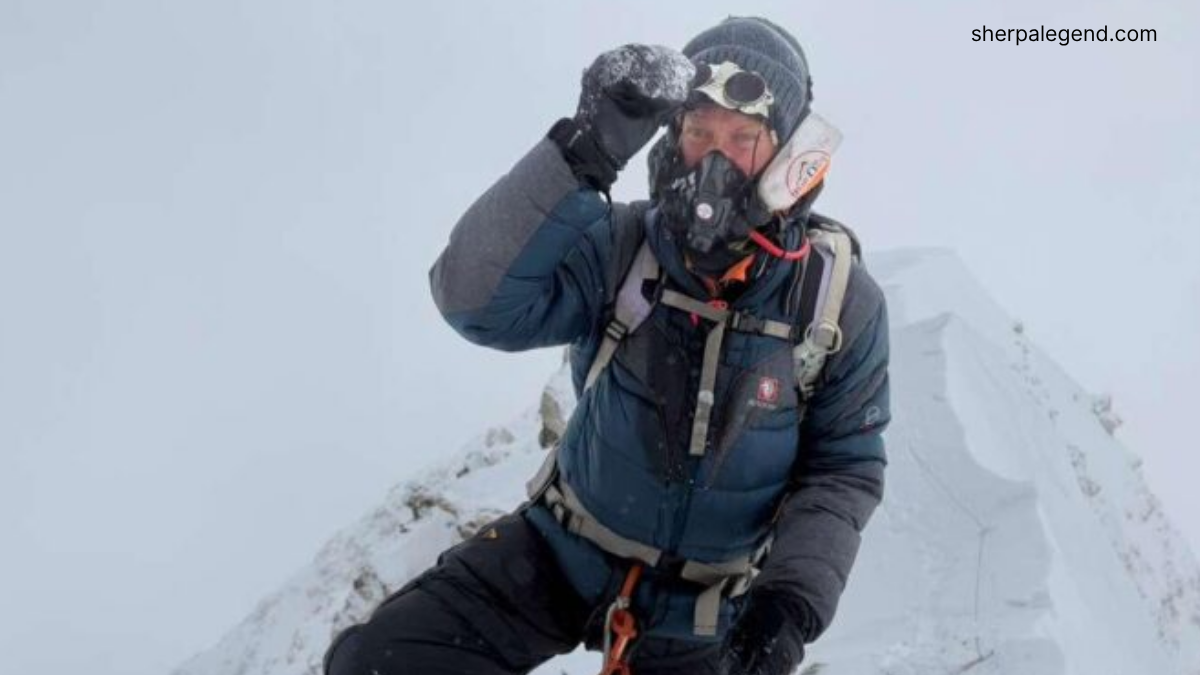

Konstantin Smirnov was fifty-three years old, a father of four from Moscow, and thirty years into a climbing life built one mountain at a time fifteen trips up Elbrus, eight peaks above 7,000 metres, a career of careful, patient ambition.
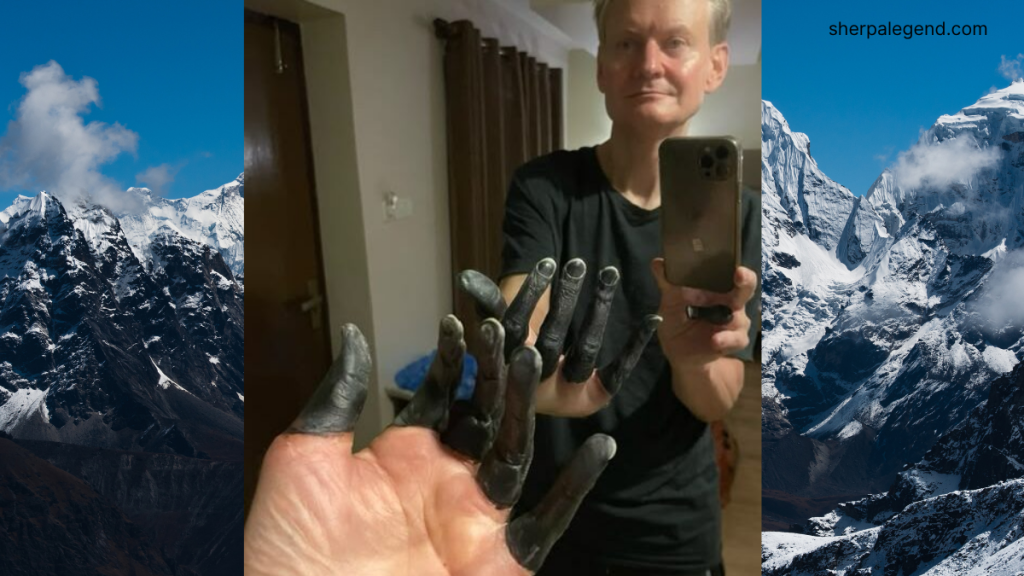
On May 9, 2026, that ambition finally carried him to the summit of Makalu, the fifth-highest mountain on Earth and the first 8,000-metre peak he had ever completed. By nightfall that same day, the climb that was supposed to crown thirty years of experience had instead become the thing that nearly ended his life, and left him marked for the rest of it.
The wind carried his guide’s voice before it carried his shape. Smirnov heard the shout first too slow, too slow, it’s getting dark and only then saw Bhajuram Gurung closing the gap between them, a dark figure moving fast against a sky already losing its light.
It was somewhere around 6:30 in the evening, at roughly 7,900 metres on the shoulder of the mountain. Nine hours earlier, Smirnov had stood on its summit. Now he could barely stand at all.
“I was tired and could not go faster,” he told Gurung. That was the truth, and it was not enough.
Gurung’s headlamp had failed, or was failing Smirnov never learned exactly which. He handed his guide a spare flashlight, the last practical thing he remembers doing with a clear mind. He told him not to worry, that walking in the dark would be no problem for a man as strong as Gurung. Then Gurung went down the mountain alone, and Konstantin Smirnov did not.
He does not remember the hours after that. His Coros watch does. It shows him still moving, step by faltering step, until 9:30 p.m., at 7,720 metres, when the track simply stops. Somewhere in that stretch of snow and failing light, at fifty-three years old, a father of four with three decades of climbing behind him, Smirnov sat down and did not get up. At some point he pulled off one glove to fix something, to check something, nobody will ever know what and did not put it back on.
He would not wake for nearly eight hours. When he did, he was alone on an 8,000-metre peak, and his guide was two hours below him, warm.
A life built on ice
To understand what Smirnov lost on Makalu, it helps to understand what he’d built before it. Behind the tally of summits was a habit of caution as much as ambition: he had gone toward Gasherbrum II without oxygen or a guide the year before, and turned back when the mountain told him to. He had experience on Ama Dablam, and had climbed with guides from Russia, Kazakhstan, France, Britain, the United States, and Peru, never once doubting that whoever was roped or in this case unroped to him would be there when it mattered.
Makalu was different only in scale. At 8,485 metres, it would be his first completed 8,000-metre summit, the last threshold in a climbing life built patiently, peak by peak. He hired Makalu Adventure, a Kathmandu-based outfitter, and paid roughly $14,600 for what the company sold him as a full personal-guide package oxygen, high camps, and one man assigned to him alone. That man was Bhajuram Gurung, of the Gurung community, not ethnic Sherpa, whom Smirnov met for the first time at Base Camp.
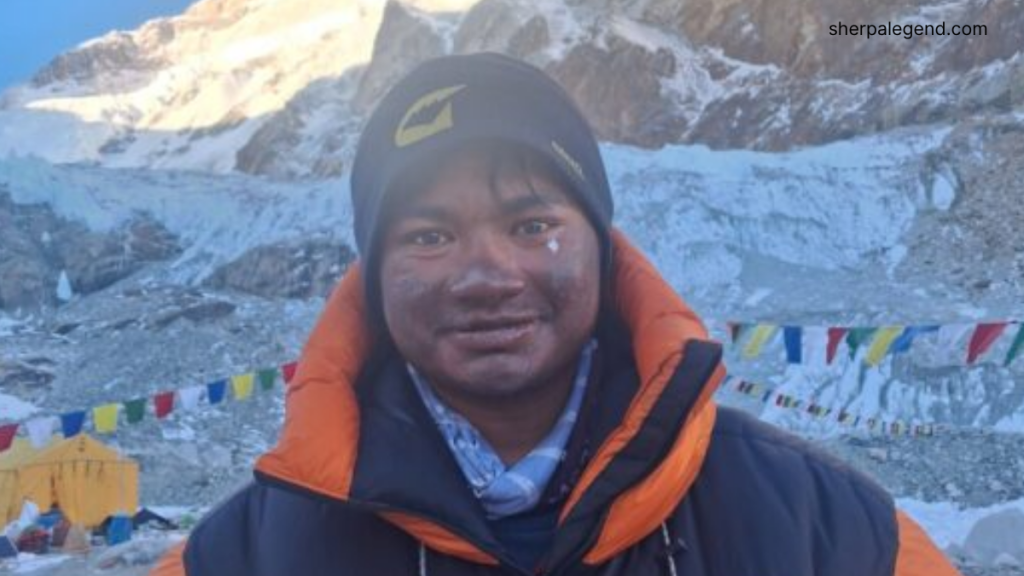
Through two acclimatization rotations, Gurung was, in Smirnov’s telling, exactly what a client hopes for strong, carrying heavy loads to Camp 3, cheerful, helpful around the cook tent. “He was very helpful on both rotations,” Smirnov would later say. He didn’t ask about certifications. Why would he? The man in front of him was doing the job.
What Smirnov didn’t know then was that Makalu would also be Gurung’s first completed 8,000-metre summit. And that the license permitting him to guide there a “support climber” credential from the Nepal Mountaineering Association, introduced only in 2025 sat several rungs below what climbers on Everest or Manaslu might assume a “personal guide” implies. Nepal’s regulations require one guide or altitude worker for every two clients above 8,000 metres. Smirnov had Gurung entirely to himself. On paper, the arrangement satisfied the rule. What the rule never specified was what that one guide needed to know.
The summit, and the mountain that changed
On the morning of May 9, roughly eight clients and eleven guides reached Makalu’s summit. Smirnov and Gurung were part of the last group up, cresting the top at around 10:45 to 11 a.m., hours behind the others. By then the weather had already begun turning against them cloud swallowing the upper mountain, snow settling over the fixed ropes below.
The descent that should have taken a few hours instead crawled. Smirnov, spent from the push, slowed further as the light dimmed. It was somewhere in that stretch, at 7,900 metres, that Gurung came up behind him shouting about the fading daylight and then left him behind it.
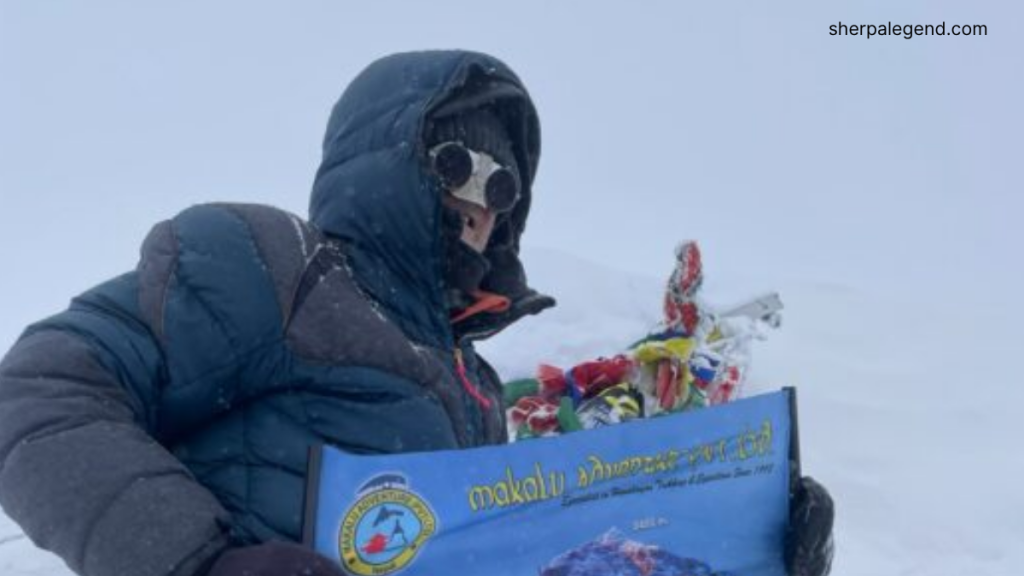
Gurung reached Camp 3, the summit camp at 7,500 metres, at around 9 p.m. According to Sonam Sherpa, a guide with a nearby American team, he said nothing to anyone there about a client still unaccounted for above him. Not to Base Camp. Not to the climbers in the tents around him. For the length of that night, on the mountain’s official record, nobody but Smirnov himself knew Smirnov was still up there and Smirnov, by then, didn’t know it either.
Ordeal
He woke at 5 a.m. on May 10, alone in the snow at 7,720 metres, and the shock of it, he said later, was its own kind of injury. “I was shocked to discover that my guide had left me to die high on the mountain.”
There was no time to feel it for long. He triggered the SOS on his Garmin device, left his backpack where it lay, and started down along the fixed lines with one hand already stiffening in the cold. By 7:30 a.m. he had reached 7,600 metres and there the ropes ended. Camp was somewhere below him, hidden inside a whiteout so total it might as well not have existed. He lay down again. He waited. Eventually, lying still began to feel more dangerous than moving, so he got up and kept going.
Below, the machinery of rescue had technically started. Garmin’s emergency responders reached his family and Makalu Adventure the moment he hit SOS, streaming his coordinates in real time to a company that, by Smirnov’s account, spent the next three hours telling his wife he was already safe at Camp 4.
When that story became impossible to sustain, it changed first that he’d refused oxygen, then that the wind was too strong for anyone to move. His watch, recording thirty-three unbroken hours of GPS position, altitude, and heart rate, told a different story while rescuers were supposedly grounded, Smirnov was descending hundreds of metres on his own, one hand already lost.
He reached the summit camp at 5:40 that evening more than thirty hours after he’d last had water. What happened next is where the two sides of this story permanently part ways. Smirnov says Gurung came out only when he was a hundred metres off, gave him no water, and offered a first-aid kit stocked with diarrhea tablets instead of the medicine he needed. He collapsed onto the tent floor and slept. By his account, he woke the next morning to find Gurung breathing bottled oxygen in comfort, oxygen left over from clients who’d abandoned their own summit bids.
“He just sat there waiting for me to die,” Smirnov said, “so that there were no witnesses.”
Rescue
The man who actually saved him didn’t start from the camp nearby. He started from Base Camp, almost two kilometres below. Lakpa Rinjin Sherpa left at noon on May 10 and climbed through the night, reaching Smirnov roughly thirteen hours later with oxygen, water, and medicine.
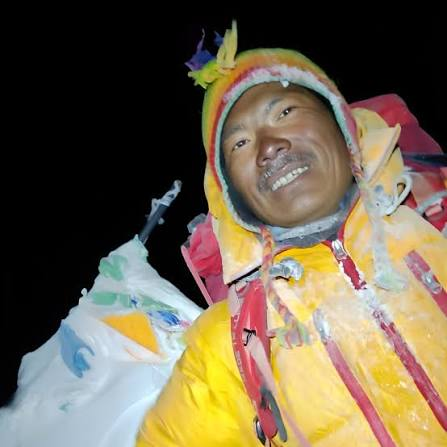
He would tell Smirnov afterward that two or three more hours might have been the difference. He helped him find his dexamethasone, watched him fall asleep the moment it hit his system, and through the night gave him oxygen, pulled off his boots, and settled him into a sleeping bag the care, Smirnov has since noted pointedly, that his own guide never offered.
On May 11, Rinjin helped him down a steep stretch of fixed line to Camp 2, at 6,600 metres, with a hand already dead to the frost. The next morning a helicopter lifted him to Kathmandu. Nine days in hospital confirmed what the mountain had already decided: every finger on his left hand, gone to fourth-degree frostbite; on his right, all but half of one.
There is a bitter symmetry in who Rinjin Sherpa turned out to be. Four months earlier, in January, he had been part of a winter attempt on Makalu when a different client, Iranian climber Abul Fazul Gazali, was left alone high on the mountain after a fatal fall claimed a teammate below him. Gazali was never found. Rinjin had spent days searching for him. In May, he was the one sent back up to bring a stranded man home. On Makalu, it seems, the line between abandonment and survival can run through the very same people.
The legal battle
Smirnov did not go quietly home to Moscow and let the mountain keep its secrets. Through Kathmandu firm Imperial Law Associates, he filed a civil claim against Makalu Adventure in the Court, seeking roughly $75,000 in compensation. Separately, and far more unusually, he filed a criminal complaint against Bhajuram Gurung at the district police office in Khandbari, alleging attempted murder a charge that, if it proceeds, would be without precedent in Nepal’s mountaineering history, asserting not mere negligence but intent that Gurung left him, failed to raise the alarm, and never went back up, in order to erase a witness.
“It took my lawyers some time to persuade the police to open the investigation,” Smirnov said, “as there have been no similar cases to date.”
Makalu Adventure rejects the entire framing. Its director, Mohan Lamsal, points out the obvious rebuttal to claims that Gurung was unqualified: he got his client to the summit. Lamsal has produced Gurung’s paperwork basic rescue training, grade-one rock climbing, mountain navigation, a support climber’s license from the Nepal Mountaineering Association, prior climbs on Ama Dablam and Annapurna IV, guiding work on Manaslu.
He says Smirnov himself is responsible for what followed: that the Russian lingered on the summit for over an hour, ignored instructions to descend quickly, and that Gurung, running low on oxygen, went down for his own safety and reported in immediately, only for a fatal avalanche elsewhere on the mountain —one that killed American climber Shelley Johannsen that same day to complicate any rescue.
Bhajuram Gurung himself has not spoken publicly. The only version of him in the record belongs to his employer.
What the industry allows
Smirnov’s case is not Makalu’s only warning this year, nor Nepal’s only one. Months earlier, Everest guide Hillary Dawa Sherpa was left behind by his own employer and presumed dead before miraculously surviving a case involving not a paying client but a company’s own worker, raising its own question about whose safety gets budgeted for at all.
Across the wider industry, the pattern repeats in different shapes: guides pushed to say yes to unready clients because saying no invites lawsuits; expeditions thinned to the legal minimum of staff because thinner staffing sells cheaper; insurance that quietly stops covering the altitudes where disaster actually happens.
Nepal’s guiding hierarchy porter, trekking guide, support climber, national guide, internationally certified guide exists to sort exactly this kind of risk. But the law leaves the meaning of “personal guide” almost entirely to whoever is selling the package. On paper, Makalu Adventure met the letter of every rule. Whether the rules were built to protect someone like Smirnov is the harder question, and it is one Nepal’s courts, for the first time, may now have to answer.
What the mountain takes, and what it doesn’t return
Konstantin Smirnov is home now, learning to live with hands that will never again close around an ice axe the way they used to. He still calls the case forward, giving interviews, because he says nobody he has climbed with in thirty years not in Russia, not in Peru, not among the Sherpas he has since spoken to can recall a guide simply walking away and leaving a client to the dark.
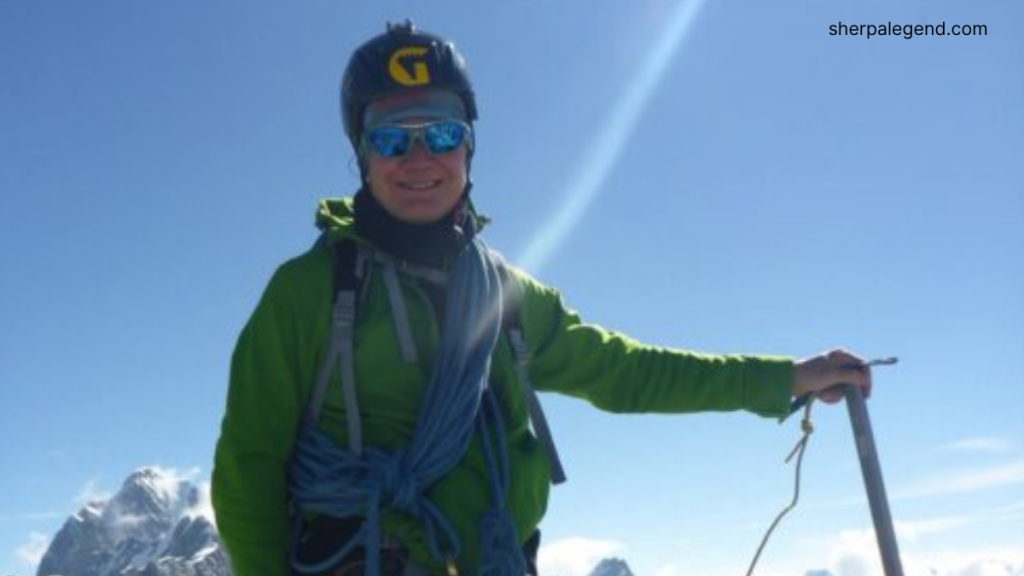
Whether a court in Kathmandu ever agrees that what happened on Makalu’s upper slopes was a crime and not merely a tragedy, the facts that both sides accept are damning enough on their own: a man paid to be someone’s only lifeline chose, at the hardest possible moment, to become someone else’s alone. Somewhere above 7,900 metres, trust the one piece of equipment no contract can specify and no certificate can guarantee simply failed. Smirnov survived it. Nine fingers did not. And the mountain, indifferent as ever to who is telling the truth, keeps calling the next client anyway.
