
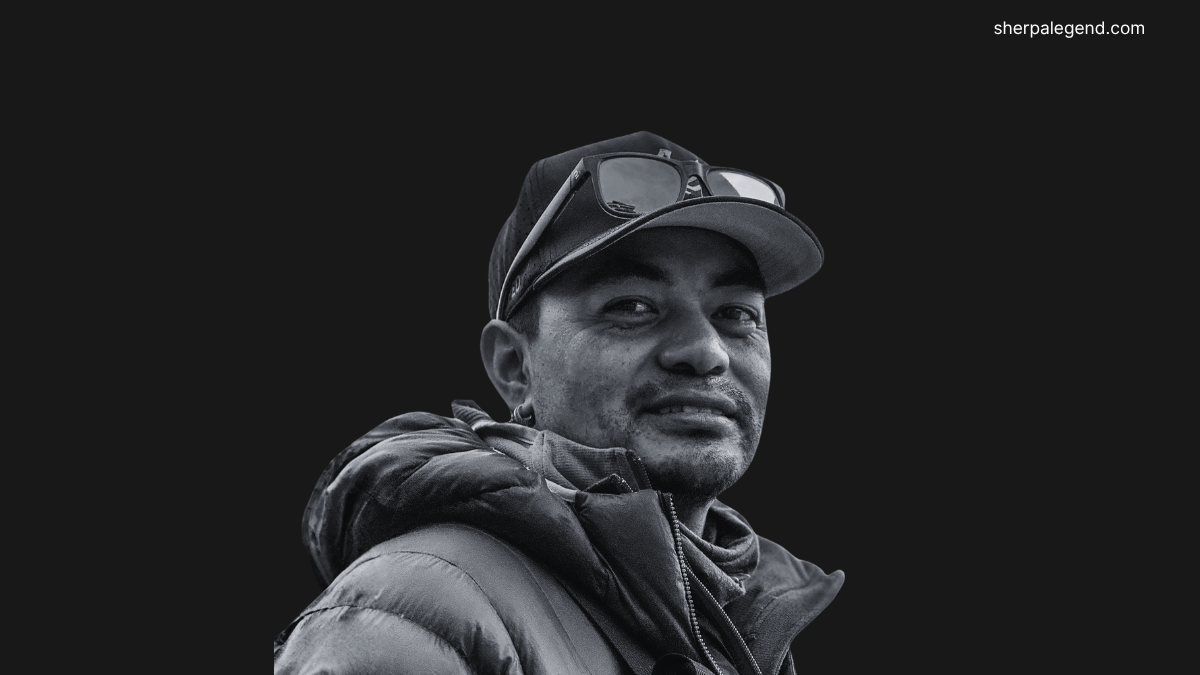

He survived one Everest avalanche by rescuing himself. A second avalanche, on Broad Peak, didn’t give him the chance.
At 7,700 metres on the north side of Everest in Tibet, the air holds barely a third of the oxygen it does at sea level. Every breath is a negotiation. Yukta Gurung is fixing the last length of rope, the line other climbers will clip into on their way to the summit. Below him the mountain drops into cloud. Above him, wind is picking up, dragging loose snow across the ridge in long white streaks.
He has already sent the others down. Only one friend is still close by, working the slope below. The last anchor is tied. He turns to start his own descent.
That is when he hears it. A low sound, felt before it is heard. Then a gust of wind reaches him first, as if the mountain is clearing its throat. He is calling down to his friend when the second wave hits. It does not knock him down so much as lift him. The world turns white and moving, and he is inside it now not standing on the mountain, but part of what the mountain is doing.
For about ten seconds a length of time he will remember exactly, because it is short enough to hold onto Yukta reaches for the rope. His hand finds air, finds snow, finds nothing that holds. He is turning over inside the slide, tangled in his own line, and somewhere in the tumbling his leg breaks. His oxygen bottle tears loose and is gone. The rope that was meant to protect him is wrapping itself around his body, around his throat.
He stops fighting it. His family arrives in his mind, uninvited – his son, his wife, his parents- and with them comes a thought that is not quite fear. It is closer to surrender.
“This is where my life ends.”
Then, stillness. The avalanche has stopped moving, and so, it seems, has he. Darkness gives way to light. He is alive. The fall is over.
He was hanging about eighty metres above the spot where he had been fixing rope. His friend, Sandesh Sherpa, had been thrown roughly forty metres above him and was already climbing down, racing snow that could slide again at any moment. It took him about five minutes to reach Yukta five minutes spent wrapped in his own rope, unable to move, waiting.
When Sandesh got to him, the rope had to be cut from his neck before he could breathe properly. Yukta asked him to check the oxygen. It was gone, torn away in the fall. Sandesh gave him his own.
He tried to stand and could not. For a moment he thought his legs were finished, that he might never walk again, let alone climb. Then he moved his toes. All five, one foot, then the other. It was not paralysis. It was a shattered femur and in that moment, that was almost good news.
What steadied him afterward was not the mountain but what was waiting below it. He is his parents’ only son. If he died here, he kept thinking, they would carry that for the rest of their lives, and his wife and small boy would be left to face a world that is not always kind to a widow and a fatherless child. He has said it was this, more than anything, that pulled him back toward wanting to live.
“I must survive. I have a son, I have a wife, I have a family.”
-Yukta Gurung, speaking on the Ankur Podcast, July 26, 2025
Getting off the mountain took the rest of that day and most of the night. When the avalanche hit, the zipper of his jacket had been open, and snow had packed itself inside his clothes before anyone noticed. As his team began moving him down, that snow melted and refroze against his skin, and the cold became its own emergency, separate from the broken leg and the fear of another slide above them.
At Camp 2, Yukta made a call that likely saved him a second time. Don’t take me down further, he told them the cold will finish what the avalanche started. Keep me here instead.
“Remove my clothes, put me inside the sleeping bag, and heat bottles of water and put them inside.”
They did. Friends climbed up from Camp 1 through the night carrying medicine. Sandesh did not sleep at all, checking again and again that Yukta was still breathing, still warm enough. Around two or three in the morning, Yukta finally felt his body begin to warm from the inside. Only then did he tell them to pack up and move. From inside his sleeping bag, injured and exhausted, he directed the final stage of his own rescue which ropes to use, which line down, when to move and when to wait.
It was five days before he reached proper medical treatment. Doctors set the shattered femur with a rod. Four months of physiotherapy followed, rebuilding a leg and a body that had been asked to survive an avalanche and then carry itself down a mountain on willpower and hot water bottles.
Less than a year later, he was climbing again first Nanga Parbat, then Everest, his eighth summit, the rod from his accident still in his leg. Asked why he would go back so soon, his answer was less a philosophy than a plain fact about who he was: giving up was not a habit he had.
Yukta Gurung was born Pur Bahadur Gurung, on December 24, 1988, in Laprak, a mountain village in Gorkha district. He did not grow up dreaming of Everest. He dreamed of joining the British Army. That dream did not survive Nepal’s years of armed conflict, so instead, as a young man, he went looking for work in Manang, taking a hotel job for a thousand rupees a month.
It was there, among the trekking guides passing through, that something in him shifted. He moved to Kathmandu wanting one thing: to become a mountain guide. He started in 2009, carrying loads as a porter. From porter he became a kitchen helper on expeditions, then an assistant guide, then a trekking guide, and finally a professional climbing guide each step earned the hard way, in conditions few people choose to work in twice.
He summited Everest for the first time in 2011, and returned in 2017, 2018, 2019, twice in 2022, and again in 2024, the year of the avalanche. In his final year alone he stood on the summit three more times on May 19 and October 15 of 2025, and finally on May 20, 2026, his tenth Everest summit. That run made him the most-summited climber in the Gurung community, and by the end, the non-Sherpa climber with the most Everest summits in the world.
He climbed twelve of the world’s fourteen mountains above 8,000 metres. He once climbed K2 in twenty-four hours, a pace that startled climbers used to being hard to startle. Just months before he died, he finally earned the International Mountain Guide certification he had worked toward for years, through the demanding IFMGA process. He was known, too, for something quieter than any record: joining rescue after rescue on the mountain, going back up not for a summit but to bring someone else down alive.
On Everest, when everything went wrong, Yukta rescued himself. Hanging in his own rope with a broken leg, he still knew what to do where to make camp, when to warm his body, when to move, which way down. He told his friends what to do and what not to do, and they listened, because even injured, he was still the most experienced person on that mountain. That is how a man with a shattered femur walked away from an avalanche.
Broad Peak did not give him that chance. The avalanche that hit on July 30, 2026 was not a single slide he could out-think from inside a sleeping bag. It was massive, and there was no window of the kind he had found in 2024 no five minutes for a friend to reach him, no radio call to guide his own way down.
If he had had even that much, people who knew him believe he would have found a way through it again. He had already proven once that he could talk himself down a mountain in the dark. This time, there was no one left for him to tell what to do, because he was not there to tell it.
He had planned to climb Shishapangma in Tibet this year. Permission was denied. So instead, three weeks earlier, he had traveled to Pakistan to attempt Broad Peak, 8,047 metres.
He did not come back.
An avalanche hit the mountain on July 30, 2026. Yukta Gurung survivor of Everest, ten times over its summit was thirty-seven years old.
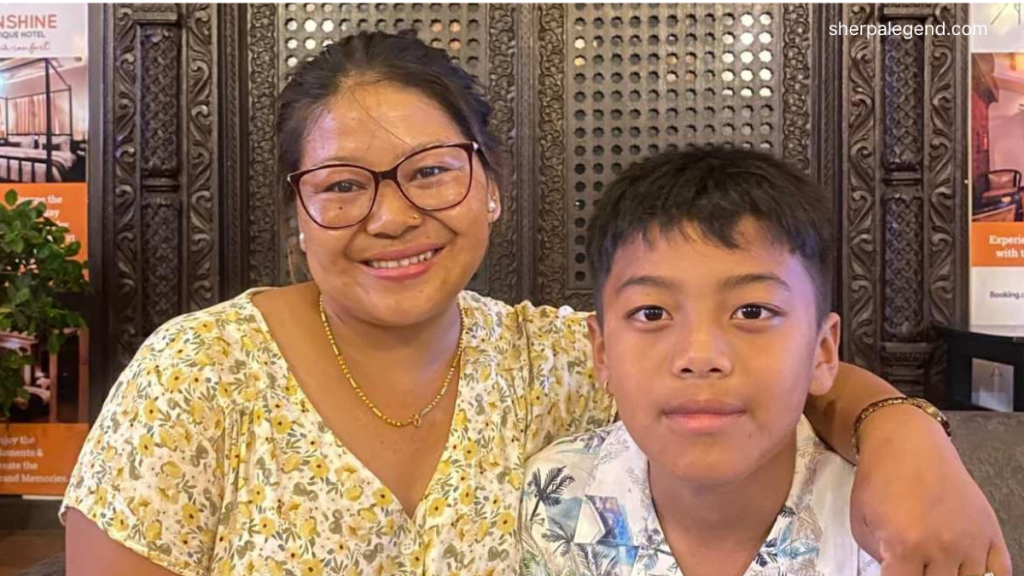
In a small house in Kathmandu his Yugen waits for his father. He does not fully understand why so many people keep arriving at the door, or why his mother, Bhim Kumari, keeps crying quietly in the next room. His father always came home before after Everest, after K2, after every expedition that took him away for weeks. This time is different.
Elite Exped, the company Yukta was associated with, and the Juniper Fund, the NGO working to support mountain communities and people who knew him have opened funds to help the family now. It is real help, and worth giving to. It will not be enough, because no amount was ever going to be enough it was never money that Yugen needed from his father.
Twice, an avalanche came for Yukta Gurung. On Everest, he found ten seconds inside it where he could still fight, and he used every one of them, and then he used the hours after to talk his own broken body down a mountain in the dark. On Broad Peak, the mountain didn’t give him the ten seconds. That is the whole difference between the two stories not courage, not skill, just time he wasn’t given.
The guides still going up this season carry his name with them the way they’d carry a spare oxygen bottle something they hope they won’t need, that they’re glad someone thought to bring. They go to the mountains anyway. They always have. They just go now knowing what Yukta’s name costs.
This story draws on Yukta Gurung’s July 26, 2025 interview on the Ankur Podcast, where he described how an avalanche hurled him at 7,700m on Everest and the miracle that saved him.
