


The Himalayas’ Warning: Glacial Flood Without Rain Claims Lives on Nepal-China Border
A devastating flash flood that struck without warning along the Nepal-China border has left dozens dead and missing, highlighting the growing threat of climate-induced disasters in the Himalayas.
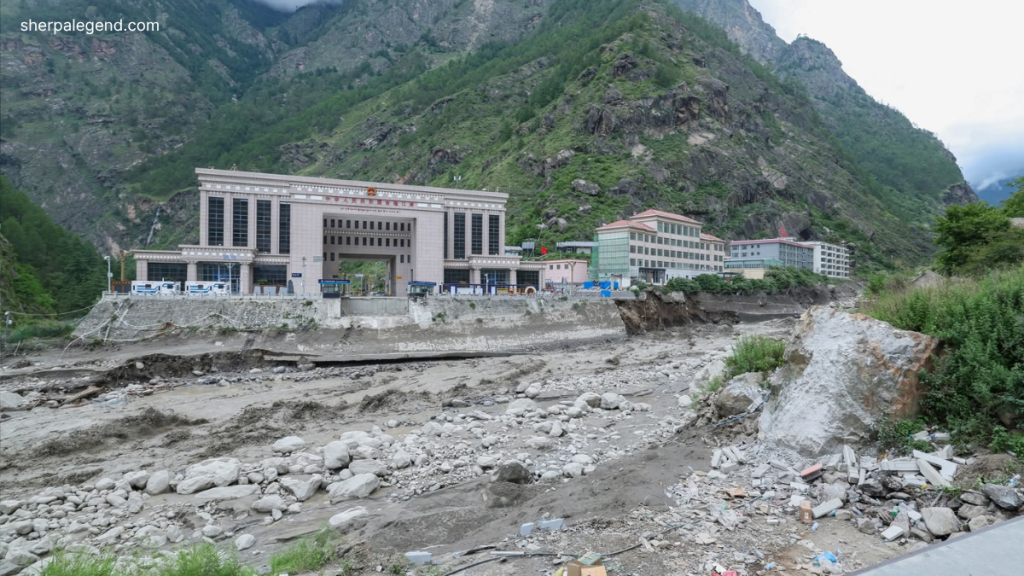
The morning of July 8, 2025, began like any other at the Rasuwagadhi border crossing between Nepal and China. Trade vehicles lined up at customs, electric cars charged at the nearby station, and the Miteri Bridge a symbol of friendship between the two nations—stood firm over the Bhotekoshi River.
Within minutes, everything changed.
A wall of water came rushing down the river valley, sweeping away the bridge, drowning hundreds of vehicles, and claiming lives on both sides of the border. But what made this disaster particularly chilling was what didn’t cause it: there had been no rain.
A Flood Without Rain
The Department of Hydrology and Meteorology of Nepal conducted a preliminary investigation that revealed a key finding the flood was not caused by local rainfall.
No significant precipitation had been recorded in the last 24 hours in the Bhotekoshi watershed area. Only minimal rainfall was measured at nearby meteorological stations, and satellite data confirmed no precipitation in the catchment area.
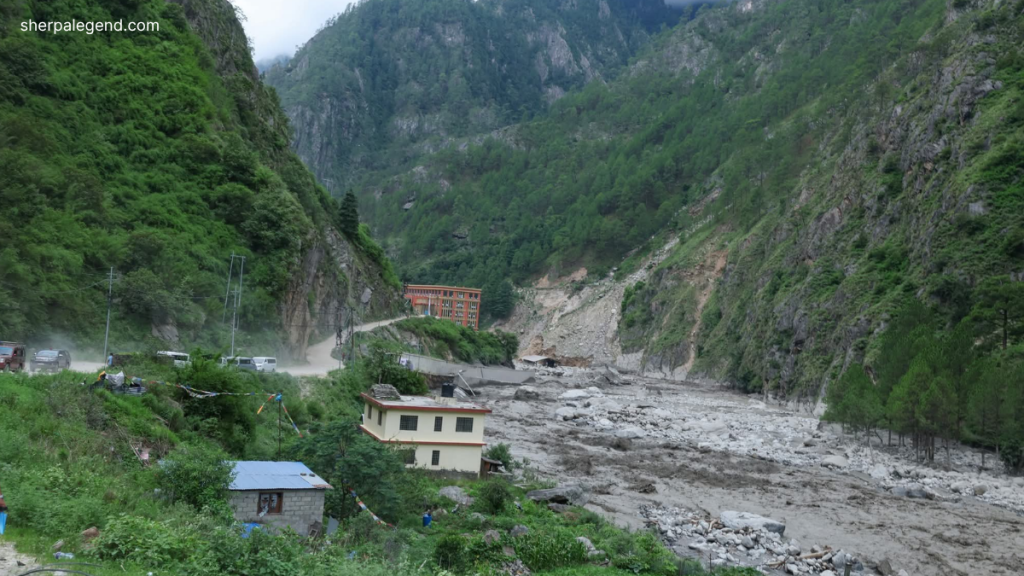
Yet water levels at monitoring stations rose dramatically within minutes from 3.65 meters to 5.37 meters in just 10 minutes. The sudden surge pointed to a different, more ominous cause.
Weather experts suspect the flood resulted from a glacial lake outburst flood (GLOF) in Tibet. These events occur when glacial lakes, swollen by melting ice, suddenly breach their natural dams, releasing massive volumes of water downstream with devastating force.
The Human Cost
The disaster has exacted a heavy toll on both sides of the border. According to official reports, 18 people are missing in Nepal, including 11 Nepali citizens (among them 3 police personnel) and 6 Chinese nationals. One death has been confirmed on the Nepali side.
Chinese state media reported 11 additional people missing on the Chinese side, bringing the total missing persons to approximately 29.
Some sources indicate that 8 people have been confirmed dead across both sides, with 31 people missing in total.
Prime Minister KP Sharma Oli, along with senior ministers and officials, traveled to Rasuwa to inspect the flood damages. The government mobilized 294 Nepal Army personnel across 17 locations for search and rescue operations, supported by Armed Police Force and Nepal Police units, with army helicopters conducting rescue operations.
Infrastructure Devastation
The flood caused severe damage to critical infrastructure that will take years to rebuild. The Miteri Bridge connecting Nepal and China was completely destroyed, severing a vital trade link between the two nations.
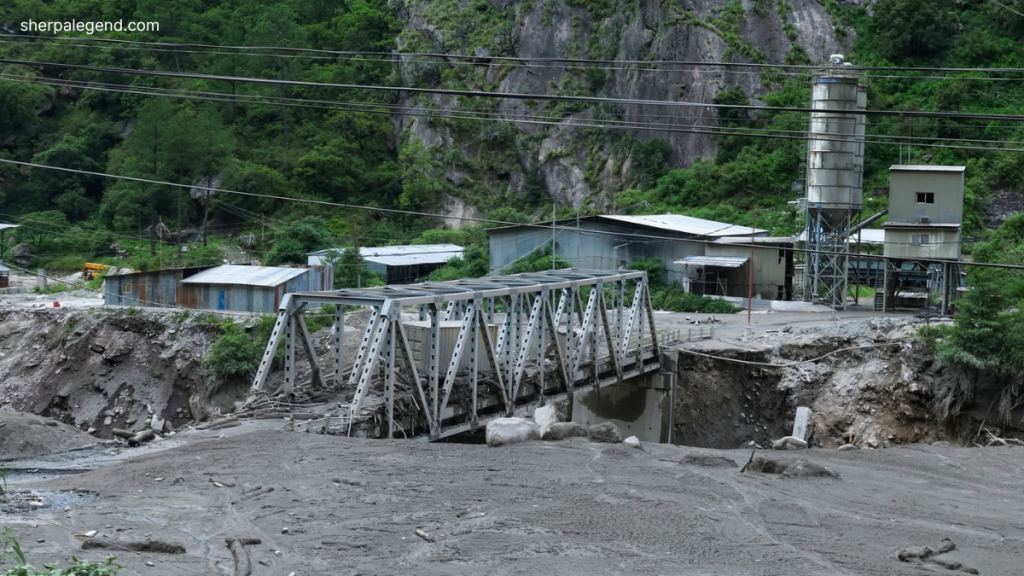
The Rasuwagadhi Hydropower Project dam was damaged, and an EV charging station at Timure was destroyed, with 75 electric vehicles swept away by the torrential waters.
The customs yard and containers with imported goods were washed away, while the Pasang Lhamu Highway was severely damaged, cutting off vehicular access to the border region.
A Climate Emergency in the Himalayas
This disaster is not an isolated incident but part of a broader pattern of climate-induced catastrophes in the Himalayas.
Research indicates that glacial lakes in the Himalayas are expanding at an alarming rate, with the Hindu Kush Himalaya region expected to lose approximately one-third of its glaciers by 2100.
Warming rates in the Himalayas are higher than the global average, with temperature increases of 0.15°C to 0.60°C per decade observed. Many Himalayan glaciers are retreating by 0.3 to 1 meter per year, leaving behind unstable glacial lakes that pose increasing risks to downstream communities.
Since 1977, Nepal has recorded 26 GLOF events, with 11 originating outside its borders. The transboundary nature of these disasters makes them particularly challenging to predict and manage.
Historical Warning Signs
The July 8 flood follows a troubling pattern of cross-border GLOF events. In 1981, the Cirenma Co GLOF caused $4 million in damages and killed 5 people in Nepal. The 2016 Gongbatongsha Lake GLOF destroyed infrastructure and affected the Bhotekoshi basin. The 1964 Zhangzangbo GLOF crossed from Tibet into Nepal, causing widespread damage.
Of the more than 3,600 glacial lakes in Nepal’s three major river systems, over 1,500 are located in Tibet. Researchers have identified 47 potentially dangerous glacial lakes in the Koshi, Gandaki, and Karnali river basins, with 25 located in Tibet.
The Search for Answers
The Department of Hydrology and Meteorology issued an Emergency Observation Request to Sentinel Asia at 7:00 AM on July 8, 2025, requesting immediate satellite imagery to determine the flood’s cause and assess its impact. This international initiative uses space-based technology to support disaster management in the Asia-Pacific region.
The ongoing investigation using satellite imagery will provide insights into the exact cause of this disaster, potentially improving future prediction and prevention capabilities for similar transboundary climate-related hazards.
A Call for Action
According to the International Centre for Integrated Mountain Development (ICIMOD), rising temperatures and extreme rainfall increase the risk of water-induced disasters. Floods, landslides, and debris flows are becoming more frequent and intense, with the UN’s World Meteorological Organization describing intensifying floods as a “distress signal” of climate change impacts.
The incident shows the urgent need for enhanced Nepal-China cooperation in shared monitoring systems for glacial lakes, joint early warning mechanisms, coordinated disaster response protocols, and information sharing about upstream water conditions.
More than 85% of high-risk transboundary water basins in the Himalayas are near the China-Nepal border, making international cooperation not just beneficial but essential for survival.
The July 8, 2025 flood along the Nepal-China border serves as a stark reminder of the increasing risks posed by climate change in the Himalayas. The suspected glacial lake outburst flood, which occurred without local precipitation, highlights the vulnerability of downstream communities to events originating in upstream glacial regions.
With climate change accelerating glacial retreat and expanding glacial lakes, the frequency and intensity of such transboundary disasters are expected to increase. The incident has resulted in significant loss of life, destruction of critical infrastructure, and disruption of Nepal-China trade.
As the search and rescue operations continue and investigators work to determine the exact cause of this disaster, one thing is clear: the climate crisis is no longer a distant threat but a present reality claiming lives. The question now is whether the international community will act swiftly enough to prevent the next catastrophe.

На этом веб-сайте легко отыскать массу ценной сведений.
https://nanmed.ru/read/4393-mikhail-drapatyy-vozglavil-vsu-chto-uzhe-izvestno-o-novom-komandire/