

Bishwa Prakash Sharma: The Lawmaker Who Climbs Mountains for Change
To see the nation, you have to stand at the highest point on earth, and from that vantage point, policy change could be seen. That’s exactly what Bishwa Prakash Sharma did when he traded his suit for climbing gear and headed to the world’s tallest mountains.
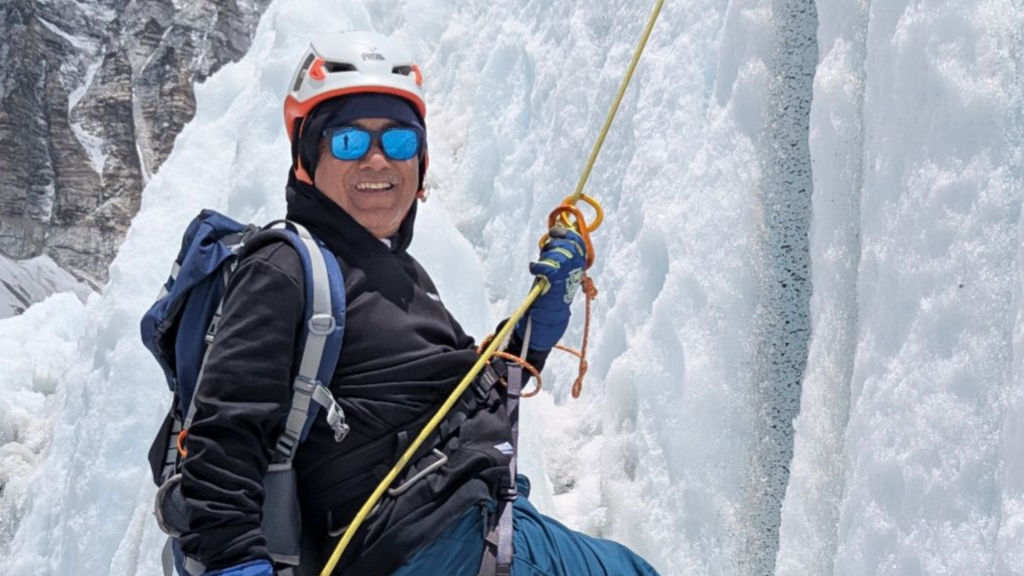
Bishwa Prakash Sharma is not your typical politician. As one of the two General Secretaries of Nepal’s oldest political party, the Nepali Congress, and a member of Parliament representing Jhapa 1 constituency, Sharma could easily spend his days in comfortable office meetings.
Instead, he chooses to climb some of the world’s most dangerous peaks, using each expedition as a platform to highlight critical issues facing Nepal and the world.
The Politician Who Climbs Mountains
At 54, Sharma represents a new generation of leaders in Nepali politics. He rose through the ranks from his days as national president of the Nepal Student Union, later serving as the party’s spokesperson before being elected as General Secretary alongside Gagan Thapa in the 14th general convention of Nepali Congress. This appointment was seen as the rise of young leadership in Nepal’s politics
But what sets Sharma apart from his political peers is his unique approach to advocacy. While others write policy papers from air-conditioned offices, Sharma literally climbs mountains to make his point about climate change, tourism development, and national transformation.
From Lobuche to Everest A Journey of Purpose
Sharma’s mountaineering journey began to gain serious attention in December 2024 when he successfully summited Lobuche Peak at 6,119 meters.
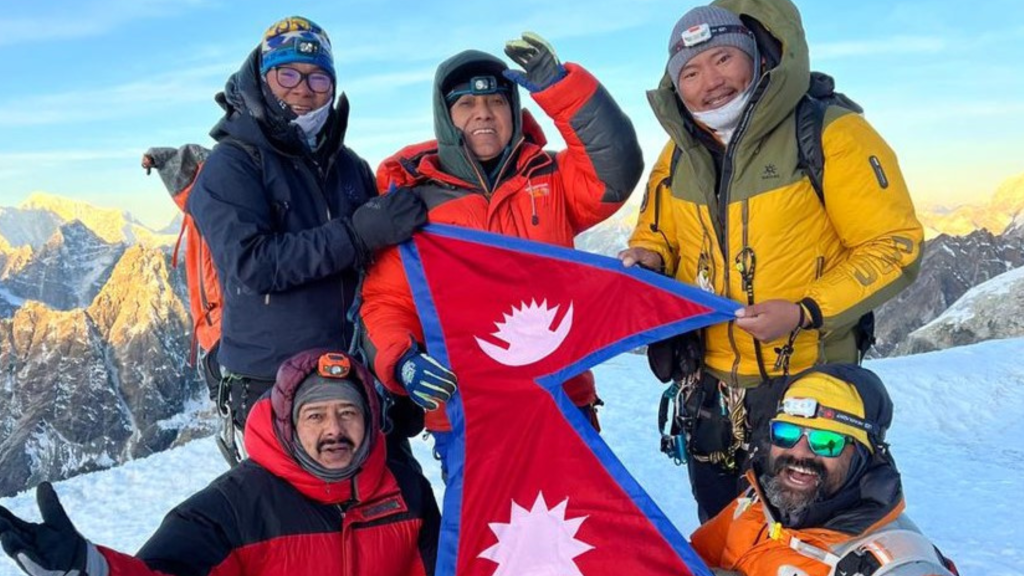
This wasn’t just a personal adventure it was a carefully planned mission with nine specific themes he wanted to highlight. Leading a team of five young climbers, Sharma reached the summit at 6:45 AM on December 13, 2024, after starting the expedition on December 6.
The Lobuche expedition served multiple purposes. Sharma used it to draw attention to climate change, honor mountaineers, promote tourism development, and build public trust in parliamentary institutions. He also advocated for political transformation, anti-corruption efforts, infrastructure development, and creating an inclusive parliamentary system.
The Everest Challenge When Weather Becomes the Enemy
But Lobuche was just the beginning. Sharma had his sights set on the ultimate prize – Mount Everest.
Starting from Everest Base Camp, Sharma began his ascent with high hopes and clear objectives. He successfully challenged through camp 1 and camp 2 , showing considerable mountaineering skill. However, his journey took a challenging turn when he reached Camp 3. From this high-altitude perch, he witnessed firsthand the devastating effects of climate change on the Himalayas.
“On one side, the majestic white peaks remain; on the other, dark rock faces are increasingly exposed. Snow is receding, avalanches are becoming more frequent, glacial lakes are growing unstable, and human settlements are facing heightened risks,” Sharma observed during his expedition.
Unfortunately, adverse weather conditions forced him to abandon his summit attempt and descend to Base Camp. But rather than viewing this as a failure, Sharma used the experience to strengthen his environmental advocacy.
A Letter from the Top of the World
From Everest Base Camp, Sharma did something unprecedented in Nepali politics he wrote a 19-point letter to Prime Minister of Nepal, urging Nepal to take leadership in the global fight against climate change. This wasn’t just political posturing; it was a deeply personal appeal based on what he had witnessed with his own eyes.
In his letter, Sharma positioned Nepal as uniquely qualified to lead climate discussions due to its position as home to the Himalayas. He questioned the long-term sustainability of Nepal’s mountaineering tourism industry, asking pointed questions about the future of the workforce that supports climbing activities.
“If we fail to support this workforce, the mountains may remain – but without the hands to serve, how will mountaineering tourism survive?” he wrote, highlighting the human cost of environmental change.
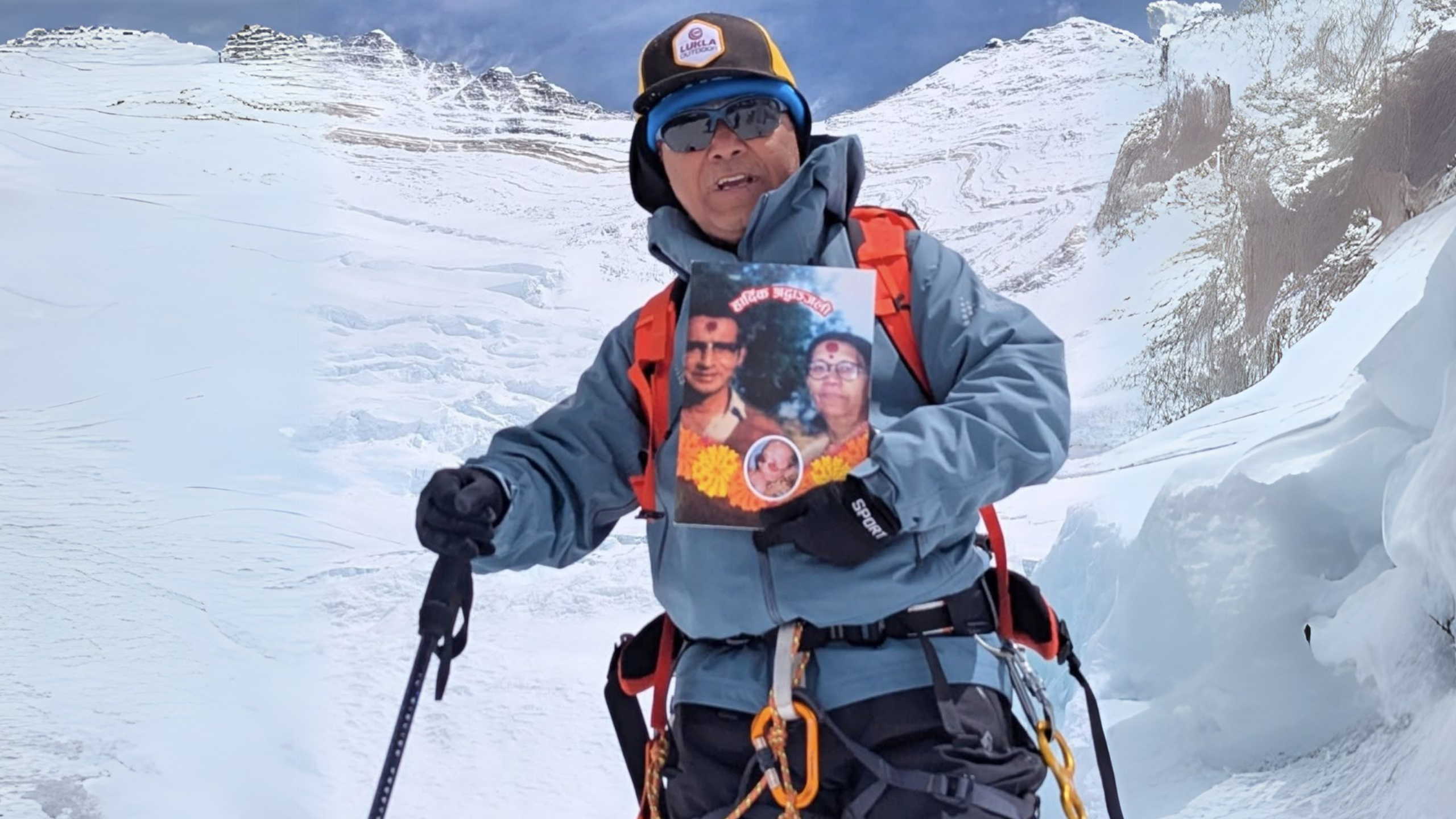
This time, his social media updates provided real-time insights into the climbing experience. Writing from various camps, Sharma shared both the physical challenges and the emotional journey of high-altitude climbing. On reaching Camp 2 at 6,400 meters – higher than his previous personal record – he took time to honor his late parents, showing the deeply personal nature of his mountain journey.
“Today is, my loving mother’s birthday. From this height, infinite respect, infinite memories, unbreakable love,” he wrote, sharing a photo of his parents.
The Reality of High-Altitude
Sharma’s approach to mountaineering reveals the practical challenges of combining serious climbing with political messaging.
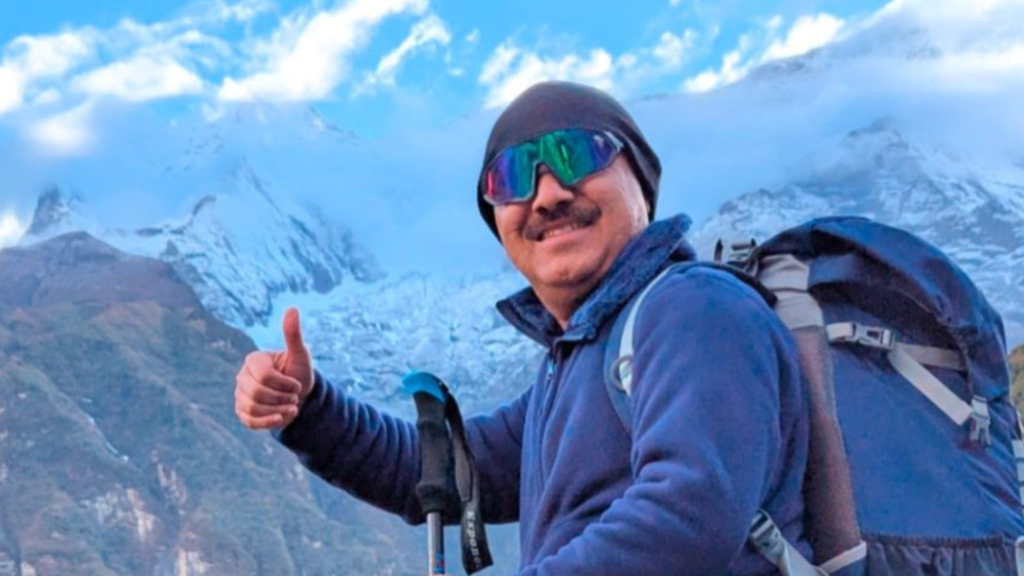
His detailed social media posts from the mountain show someone genuinely grappling with the technical aspects of high-altitude climbing discussing rotation strategies, weather windows, and the critical difference between ascending and descending skills.
He openly acknowledged his limitations, writing
“Just reaching Everest Base Camp doesn’t mean reaching Everest. To achieve desired goals, one must have appropriate qualifications, and right now I don’t have sufficient qualifications for that.”
This honesty about his mountaineering abilities, combined with his determination to improve, reflects a refreshing approach to both climbing and politics – acknowledging limitations while working to overcome them.
When Even Legends Face the Mountain’s Fury
The harsh reality of Everest’s unpredictable nature became evident when Sharma witnessed the retreat of Kamirita Sherpa, a legendary climber who had already summited Everest 30 times.
While Sharma was making his way down from Camp 2, he learned that Kamirita, who was attempting to break his own record with a 31st ascent, was also descending from Camp 4 due to terrible weather conditions.
Sharma reflected on this moment with characteristic optimism, writing “Though newcomers like us have returned, I am confident that this snow leopard brother will surely trick the weather and break his record of 30 climbs to give news of his 31st ascent.”
The incident reinforced Sharma’s understanding that success on Everest depends not just on skill and determination, but also on nature’s cooperation.
Beyond Personal Achievement
What makes Sharma’s mountaineering unique is how he consistently focuses on issues larger than personal achievement.
His expeditions serve as platforms to discuss climate change impacts on mountain communities, the economic importance of tourism to Nepal, and the need for sustainable development practices.
His observations about the mountaineering workforce including icefall doctors, professional climbers, expedition operators, and porters shows his understanding of the challenging ecosystem that supports Nepal’s climbing industry. By highlighting their challenges, he brings attention to often-overlooked aspects of mountain tourism.
A New Model of Political Leadership
Bishwa Prakash Sharma’s mountaineering journey represents something new in political leadership the willingness to literally climb mountains to understand and advocate for critical issues. His combination of personal challenge, environmental observation, and policy advocacy creates a compelling model for engaged leadership.
Whether or not he reaches Everest’s summit, Sharma has already achieved something significant: showing that effective political leadership sometimes requires stepping out of comfortable offices and experiencing firsthand the challenges facing the nation and the world. In his case, that means climbing toward the roof of the world, one camp at a time.
