
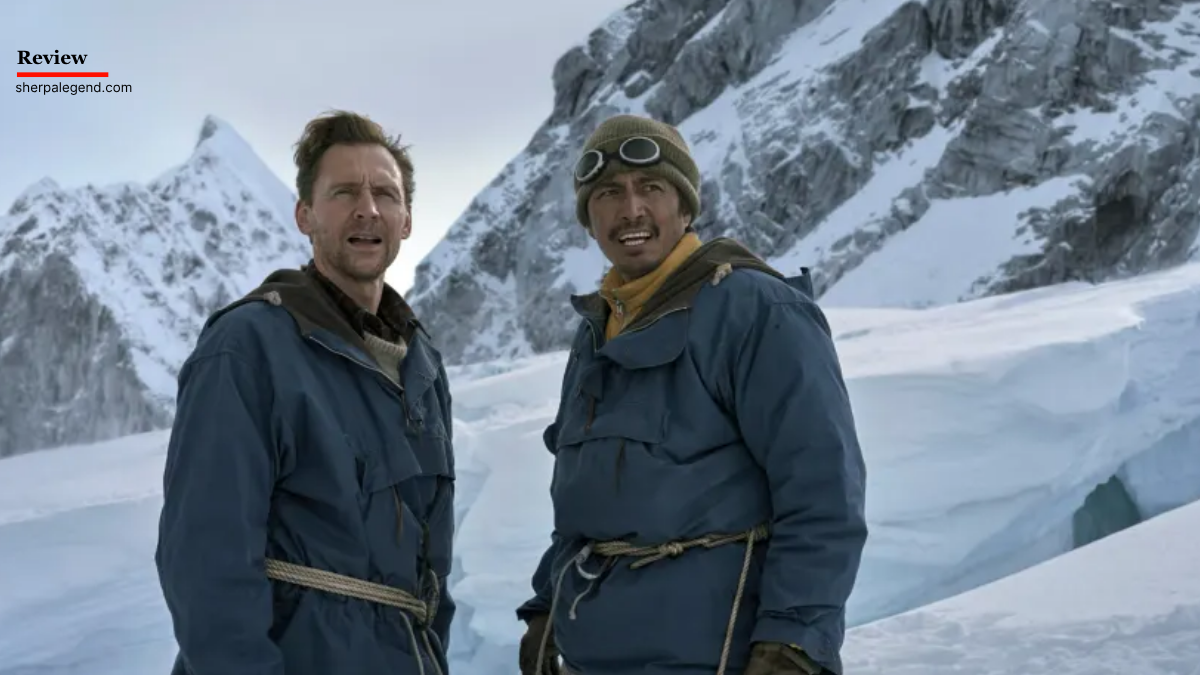

The world knows Tenzing Norgay as a Sherpa. The new film Tenzing asks us to look at that word again.
Director Jennifer Peedom has said that the most famous Sherpa in the world was not an ethnic Sherpa. Tenzing was born to Tibetan yak herders, not in the Khumbu Sherpa communities. The film shows what that meant for him. Among the Sherpas, some distrust his authority as sirdar, the head Sherpa. Among the British, he has to fight to be treated as a full climber and not a servant. Neither side makes it easy, and the world still gave him one label.
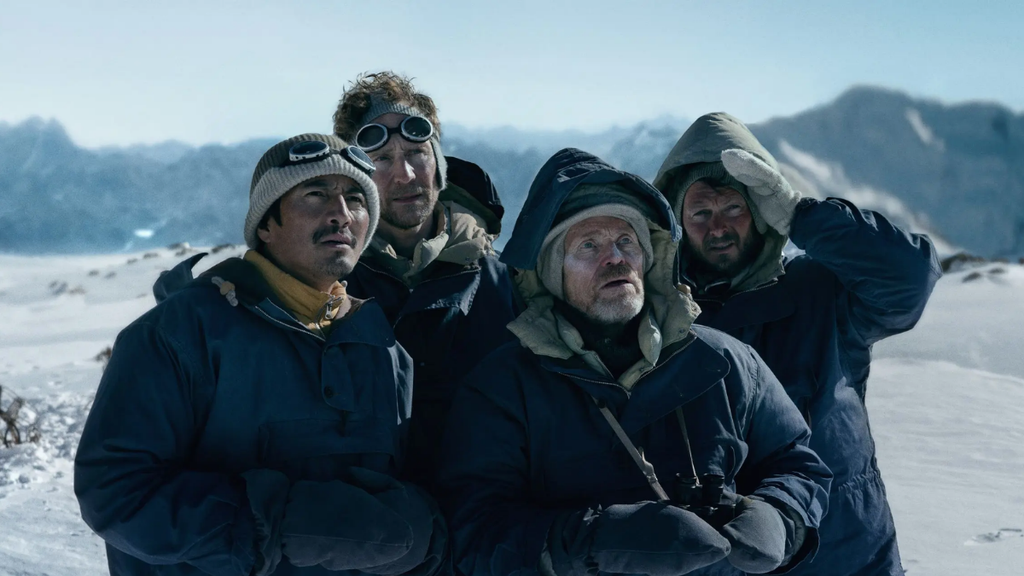
I am writing this review for Sherpa Legend, so this is not a small point for us. The word Sherpa is part of our name, our identity, and the stories we choose to tell. It is a word our readers know well, but its meaning is often reduced to a profession or a role in mountaineering. The question this piece asks is simple when the world says “Sherpa,” who does it mean, who decided that, and who gets left out of the story?
My opinion is that this is the film’s real subject. Everyone knows the summit. What the film adds is the way the man who stood on it was treated on the way up: as an outsider by some Sherpas, and as hired help by the British who needed him. Tenzing fixes a long-standing imbalance in the Everest story, and it works because it treats the mountain as a mother, not an enemy.
That matters beyond 1953. In the film, Sherpas do much of the heaviest and most dangerous work while the Western climbers get the public credit. The last part of this piece asks whether that has changed.
The story the film tells
A Bhotia boy whose obsession with Chomolungma would eventually make him one of the first two human beings to stand on the summit of Mount Everest. Tenzing is more than a mountaineering film; it is a deeply personal journey of identity, ambition, love, loss and the extraordinary circumstances that turned an outsider into a legend.
Set against the backdrop of British imperial ambition, the film takes us to 1953, when a British mountaineering expedition led by Army Colonel John Hunt sets out to conquer the world’s highest mountain as the greatest possible gift to the newly crowned Queen Elizabeth II.
Despite Tenzing Norgay and New Zealander Edmund Hillary emerging as two of the strongest climbers, Hunt selects Charles Evans and Tom Bourdillon for the first summit attempt. Their failure to reach the summit dramatically opens the way for Hillary and Tenzing, who make history on May 29, 1953. The irony is striking: a triumph celebrated as a British imperial achievement is delivered by a New Zealander and a Tibetan-origin Nepalese-Indian climber.
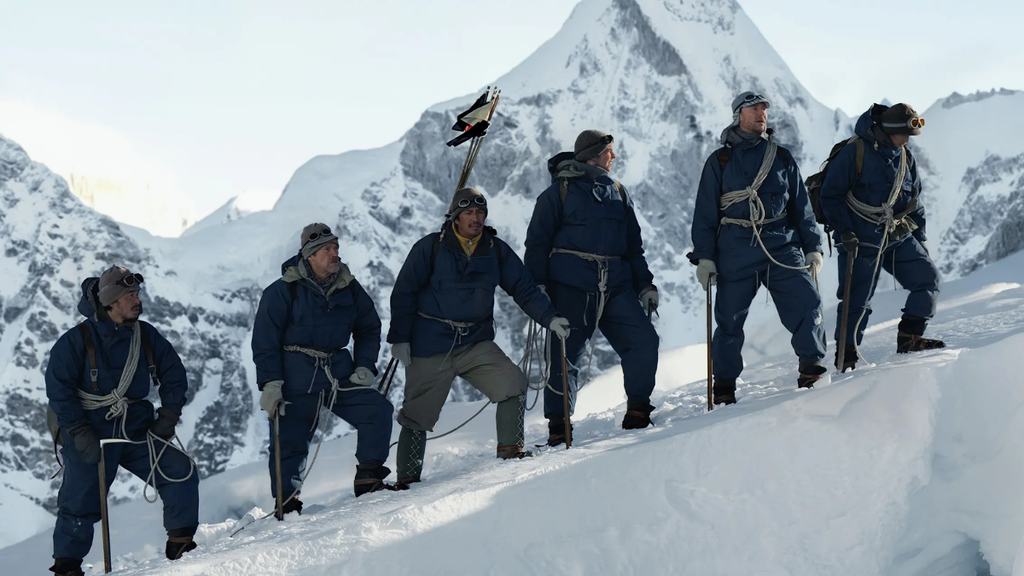
The film moves between the expedition and Tenzing’s childhood, when an accidental encounter with legendary British climber George Mallory and a playful moment involving his climbing boots spark a lifelong fascination with Chomolungma.
Mallory’s disappearance on Everest in 1924 remains one of mountaineering’s greatest mysteries, but for young Tenzing, he becomes an unlikely inspiration. From the breathtaking mountains surrounding Tengboche monastery to the streets of Darjeeling, we follow a boy whose spiritual connection with the mountain grows into an obsession. Along the way, he falls in love with Dawa, faces discrimination over his Bhotia identity, finds moments of humour amid hardship and eventually experiences the devastating loss of his wife, to whom he had promised his hope, his future and his heart.
The tent
The scene that explains the film is not on the summit. It is in a tent, where the men are talking about how to approach the mountain.
Colonel Hunt (Willem Dafoe) calls the climb the “siege of Everest.” For him, the mountain is an enemy to be beaten. Hillary says the British tend to see nature as something to be conquered. Tenzing answers that this may be where they go wrong: they see mountains, and the Sherpas see themselves. The mountains are the bones, and the people are the blood.
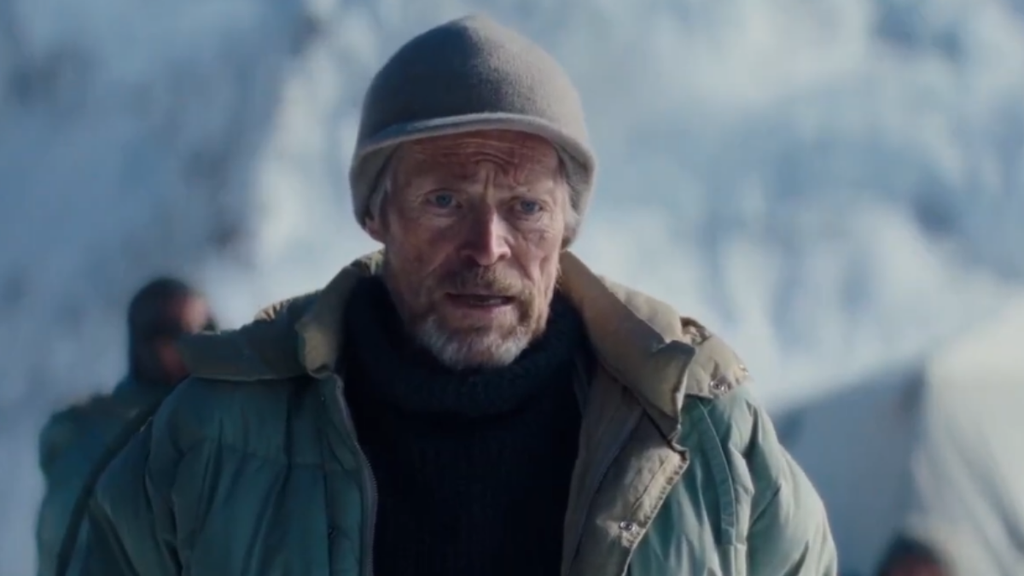
The imbalance is old. The first ascent has often been told as a story of British achievement, with little attention to the Himalayan climber or where he came from. Tenzing had spent two decades pioneering Himalayan routes, yet the names were usually given in the other order.
On one side is a military and imperial mindset. On the other is Chomolungma, a living mother goddess whose permission you ask. The dialogue grew out of workshops with real climbing Sherpas in Kathmandu.
Genden Phuntsok, who plays the adult Tenzing, holds the same view. When he was 23 or 24 and guiding back home, he walked two Europeans toward a holy mountain near his village. In his culture, you do not climb it. He told them so. They said it was not a problem for them, so he said they could go, but he would not. They made it about halfway, understood where they were standing, and came back down. Genden also likes a line of Hillary’s: the mountain accepted them, and they did not conquer it.
Mallory, and who was here first
In 1953, Hillary and Tenzing bond over Mallory. Hillary says, in words close to these, that Mallory is the reason they are all there. Tenzing replies with quiet pride: “I was already here.”
Mallory inspired the Western climbers, including Hillary, who read about him as a boy. Tenzing’s connection to the mountain came first, and it was spiritual. It was part of his identity before the British expeditions arrived.
Who made it
Jennifer Peedom, an Australian filmmaker, directs. Tenzing is her first feature film. The story she wanted to tell was his life before the expedition, and none of that exists in any archive, so she made a drama, with the blessing of Tenzing’s eldest son, Norbu Tenzing, an executive producer who was involved in casting, financing and production.
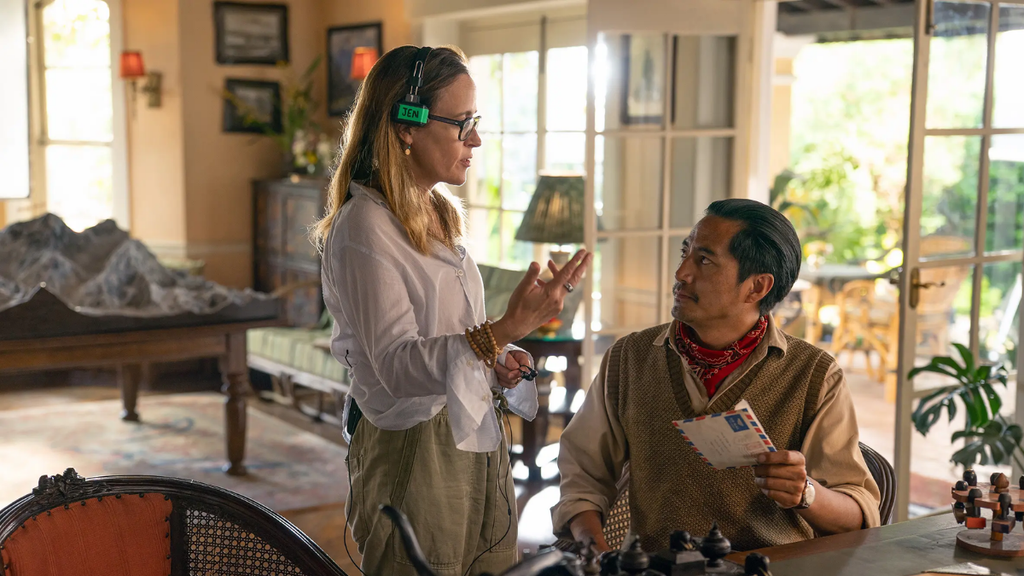
Tom Hiddleston plays Hillary, Dafoe plays Hunt, and Apple TV released the film. Peedom has said Hiddleston understood from the start that the movie was not his movie, which matters in a story about whose name comes first.
Sherpa anthropologists worked as consultants, and a puja ceremony opened production in Kathmandu. One Sherpa anthropologist told the filmmakers it was the first film she had seen that let Sherpas show a full range of emotion, including anger.
Darjeeling, and an outsider twice over
Tenzing falls in love with Dawa (Thinley Lhamo). Her family sees him as an outsider, so the two leave for Darjeeling, the base for most Everest expeditions at the time. He starts as a porter and works his way up, expedition by expedition. Dawa is his strongest believer and pushes for him to be treated as a climber, not just support staff. With help from expedition secretary Jill Henderson, her support helps persuade Hunt to put Tenzing on the 1953 team. The film takes some dramatic license with the timeline of Dawa’s life and death, so it should not be read as strict history.
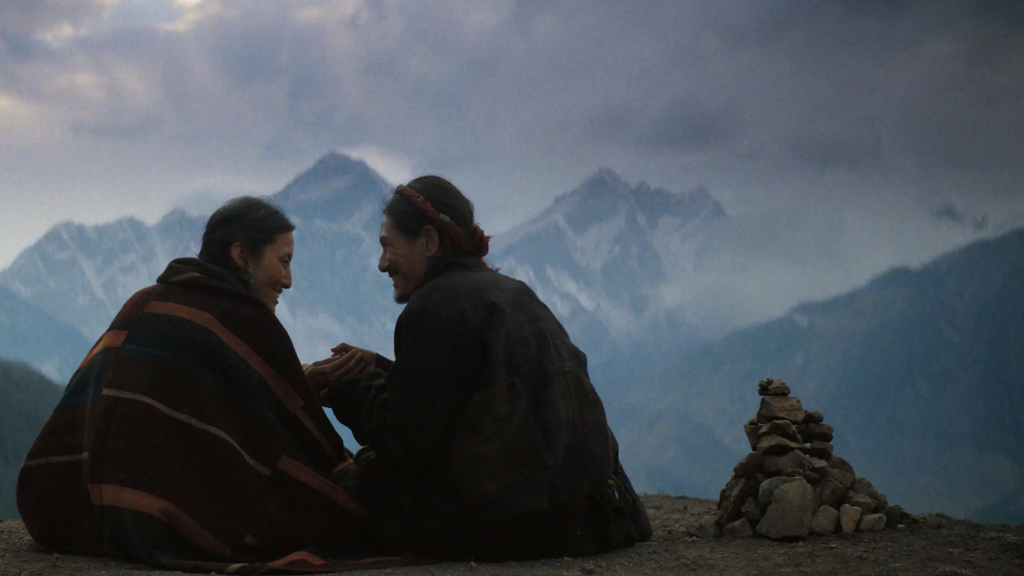
This is where the word Sherpa becomes complicated. Among the Sherpas, Tenzing was born in Tibet, not in the Khumbu communities. Some distrust his authority as sirdar, and the character Pasang says so directly. With the British, he has to be treated as a full climber and not a servant. Hunt resists at first. Tenzing earns respect through skill, leadership and character, and he mediates between the two groups.
Hillary is an outsider too, a New Zealander in a British-led team, and that is why the two men bond. The film does not shrink Hillary to make room for Tenzing. The change is that Tenzing’s story now gets equal weight.
No one summits alone
Inside the Sherpa group, the film shows real friction: complaints about dangerous work, about Europeans getting the glory, and about the fear of going higher on a sacred mountain. At the South Col there is even a mutiny-like moment. Tenzing picks Pasang for an important job, not because he likes him, but because “we need him.”
Two scenes show the same idea on the mountain. Hillary slips into a crevasse and Tenzing hauls him out. Later, the two make the final push together. The film does not settle who stepped up first. Genden’s answer is that it does not matter; it was as if humanity summited. Leadership in this film means unity, not ego.
Tenzing also speaks up for his people. He pushes for better treatment and pay for the Sherpa team, and sometimes quietly reinterprets British orders in their favour.
Casting the Tibetan actors
Genden Phuntsok is a Tibetan actor from Sichuan who grew up with yaks, barley and potatoes. Peedom searched about 2,000 actors worldwide to find him. He had never climbed before. He lived with Sherpa mountaineer Phurba Tashi in Khumjung and hiked at least four hours a day.
The choice follows the facts. Norbu Tenzing called the casting perfect and said Genden looks like his father.
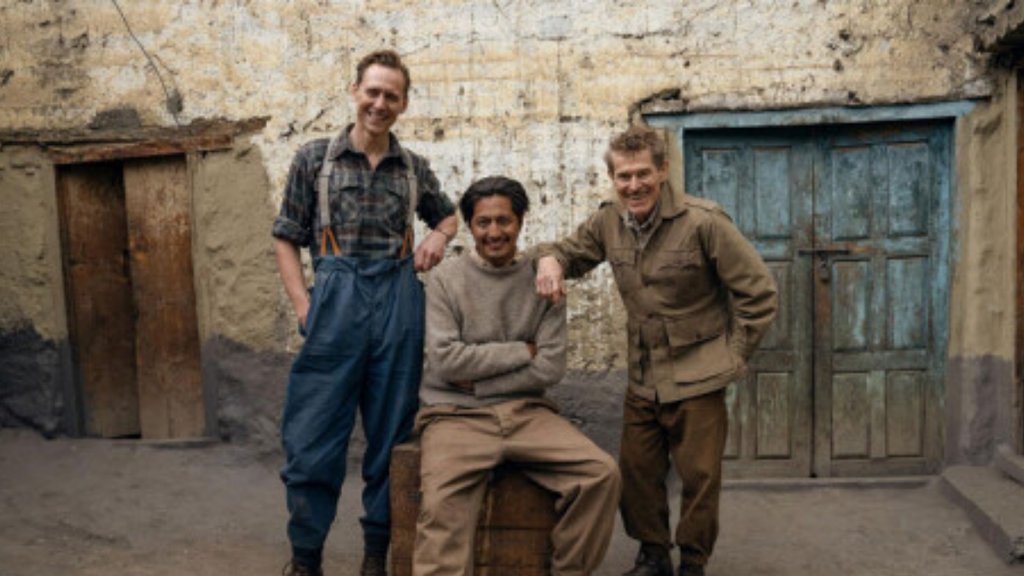
Some Nepali readers will ask why Nepali actors did not lead. The question is fair, and the answer is not a dismissal of Nepali talent. Many supporting roles went to Himalayan actors and real climbers. Twelve Sherpa climbers took the season off to join the cast, and between them they have summited Everest more than 65 times.
Lower Mustang in Nepal stands in for the Tibetan Plateau, and a small crew filmed in the Khumbu Valley and at Everest Base Camp with special government permission. The high mountain was shot in New Zealand, for safety. Shooting in both homelands mirrors the friendship at the centre of the story.
Critics broadly call the film an overdue correction. They praise the real glaciers and ice, the sound design, Genden’s warm and quiet performance, and the spiritual core. A Kathmandu screening drew the response that the film was refreshing for its shift “from conquering the mountain to surrendering to the mother goddess of the Earth.” Reception in Nepal, among Sherpas and in Tenzing’s family has been largely positive.
There are fair criticisms. Some reviewers find the film formulaic or restrained, and some supporting roles are thin. Our own reservation is close: the film sometimes keeps its characters at a reverent distance, and we wanted more of the people around Tenzing, not only Tenzing.
Those are real limits, but they do not touch the main achievement. Its Sherpa characters are not silent background figures. They are afraid, angry, proud and practical. The closing image says it best. The only photograph taken on the summit is of Tenzing, because Hillary had not taught him how to use the camera. For seventy-three years he has been the second name in the sentence. Here, his name comes first.
The film never tells us to stop climbing. It leaves questions in front of us.
The world calls him a Sherpa, and the film shows he was not one by birth and was not always treated as one by the people around him. If the word was never simple for Tenzing, who decides who carries it today?
Hunt saw an enemy to beat. Tenzing saw a mother to ask. After 73 years, which of those two views do our expeditions follow? When a mountain takes lives, as it has in the Himalaya in recent years, do we ask what we did wrong, or only how to climb it better next season?
Genden Phuntsok asks us to remember the families who wait. Every Sherpa on a team has a husband, a son or a father they are waiting for, every day. When we talk about the summit, how often do we talk about them, and who gets named in the story afterward?
The mountain accepted them. They did not conquer it. Do we still ask permission before we climb, or do we only say that we do?
