
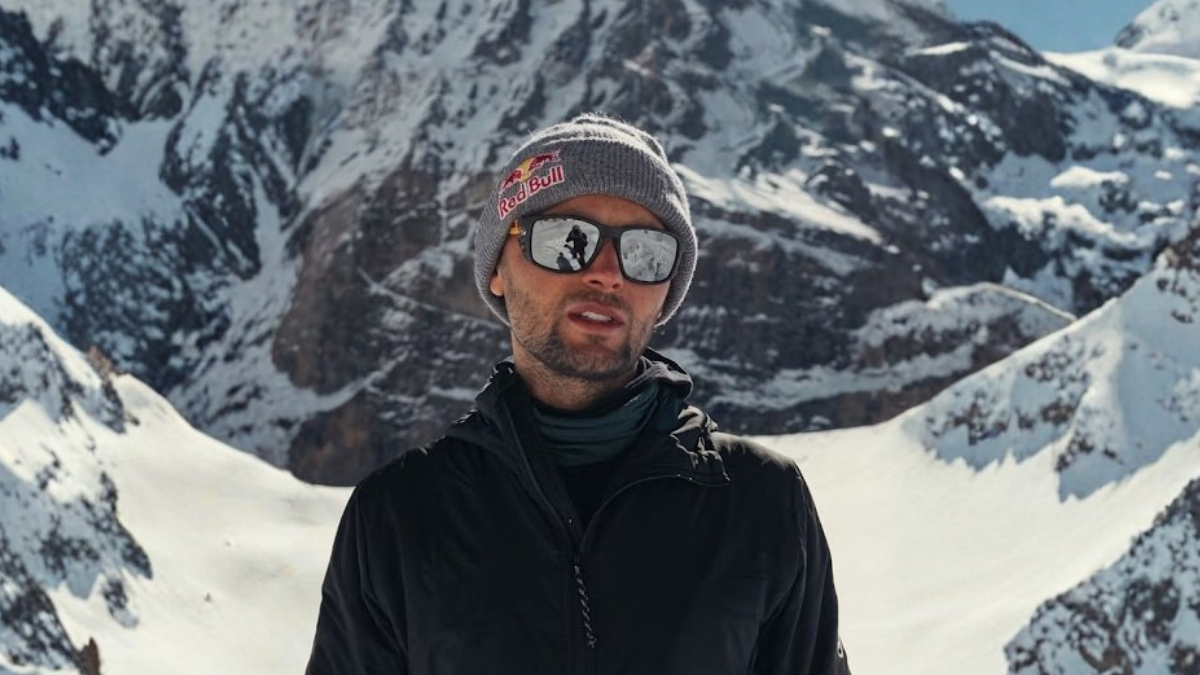

At about 7,000 metres on Dhaulagiri, Andrzej Bargiel waited at Camp 2. He was waiting for a weather window that would let him make a solo summit push without bottled oxygen, then ski down. The window did not come.
Snow kept falling and the wind stayed strong. Most other teams had already cancelled their attempts and left the mountain. Bargiel looked at the conditions above him and made his decision. He turned around.
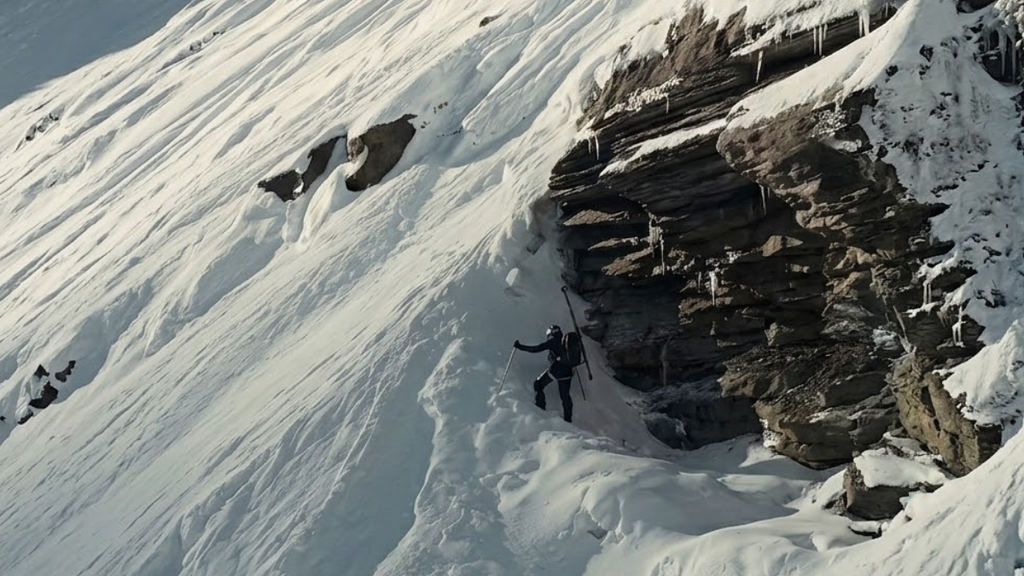
Polish ski mountaineer Andrzej Bargiel, 38, has abandoned his solo, no-oxygen summit push and ski descent of Dhaulagiri (8,167 metres).
The reasons were heavy snowfall, strong winds and rising avalanche danger. He returned to base camp and was expected to fly to Kathmandu by helicopter. Neither Bargiel nor the commercial teams reached the summit this season. It is not the first time he has had to turn back.
The attempt was called the Dhaulagiri Ski Challenge. It was the latest stage of his long-running project, Hic Sunt Leones, Latin for “Here are lions.” The plan was to climb Dhaulagiri without bottled oxygen, then ski down as far as the snow allowed. Success would have been his ninth 8,000-metre peak climbed and skied without oxygen.
The first eight are Shishapangma, Manaslu, Broad Peak, K2, Gasherbrum II and I, Everest and Nanga Parbat. It would not have been a first for the mountain. Fellow Pole Bartek Ziemski skied Dhaulagiri without oxygen in 2023. The draw was Bargiel’s own list, and his unofficial push to ski all 14 eight-thousanders without oxygen. He has never formally announced that goal.
Bargiel’s first trip to Nepal was in spring 2012, when he was 24. He joined an expedition to Manaslu. He reached about 7,600 metres, roughly 500 metres below the summit, before deep snow and strong wind turned the team back. Nobody on the expedition summited.
He returned to Manaslu in 2014 and reached the top on 25 September. He climbed from base camp in 14 hours 5 minutes and finished the round trip in 21 hours 14 minutes.
It was his first successful peak in Nepal. He has been back many times since, including to Everest. This autumn he arrived in late September and acclimatized on Manaslu up to about 6,000 metres. A cyclone stopped that rotation. He waited in Samagaun, then moved to Dhaulagiri.
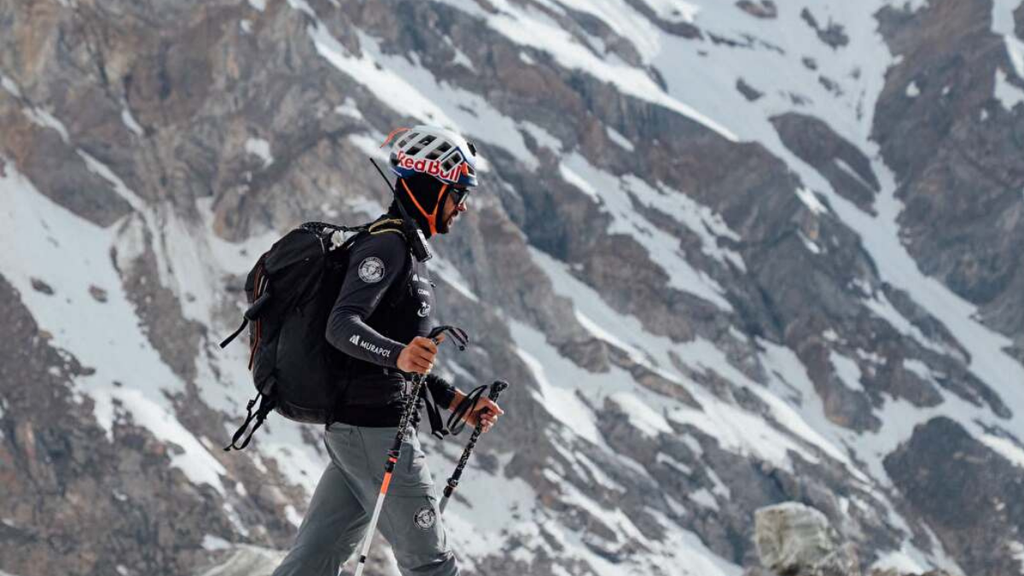
Bargiel reached Dhaulagiri in early October with a small team. It included Kuba Poburka and a film crew: Bartek Pawlikowski, Pasang Rinzee Sherpa and Maciej Sulima. They stayed first at Italian Camp, at about 3,600 metres. Bargiel then did his acclimatization rotations. He spent a night at Camp 1, went up to about 7,000 metres and spent a night at Camp 2, then skied back down to base camp.
After that he returned to Camp 2 to wait for a window for his solo summit push. It never came. A lot of fresh snow fell, the winds rose, and the danger of slab avalanches grew above Camp 3. He went down to base camp.
A slab avalanche is a thick block of snow that breaks loose as one piece. That was the danger above Camp 3. Commercial teams had already cancelled their attempts because of fragile snow and strong wind there.
Bargiel said much the same. A lot of snow had fallen over several days, and very strong winds made it worse. The avalanche risk became too high. He decided that going on was too dangerous and that turning back was the right call. Getting home safely mattered more than the summit. “You can’t always achieve everything you set out to do in the mountains,” he said. He added that this is part of mountaineering.
This is not the first time Bargiel has had to turn back. It has happened on several mountains on his list, and he went back to finish them. Everest took three attempts. In 2019 he called off the expedition because a large, unstable block of ice hung over the Khumbu Icefall, and he would not risk his team under it.
In 2022 very strong winds stopped him near the South Col, at around 8,000 metres. They made it impossible to pitch tents or go on safely. On 22 September 2025 he reached the summit of Everest (8,849 metres) after a 16-hour climb without bottled oxygen.
He then skied down to base camp, the first no-oxygen ski descent from the true summit. K2 followed the same pattern. In 2017 he gave up because of unusually high temperatures, falling rocks and avalanche danger. In 2018 he came back and made the first complete ski descent of K2, from the summit to base camp, without oxygen. Manaslu, described above, also turned him back first and let him finish later.
Fast, no-oxygen projects that finish with a ski descent from the summit depend on good conditions. Part of the skill is knowing when to leave. Bargiel’s record shows he has done that before, and on Everest, K2 and Manaslu he later came back and finished.
This latest turn-back also follows a big 2026 for him. In June he made the first continuous ski descent of Nanga Parbat. Dhaulagiri leaves his “ninth” open, and the larger 14-peak goal with it. Reports said this was to be his first and final attempt on Dhaulagiri this season. It is not known whether he will return to the mountain.
Bargiel went down to base camp. Manaslu turned him back in 2012, and he returned in 2014. Dhaulagiri turned him back in 2026. The mountain decided, and he accepted it. That, he said, is part of mountaineering.
