
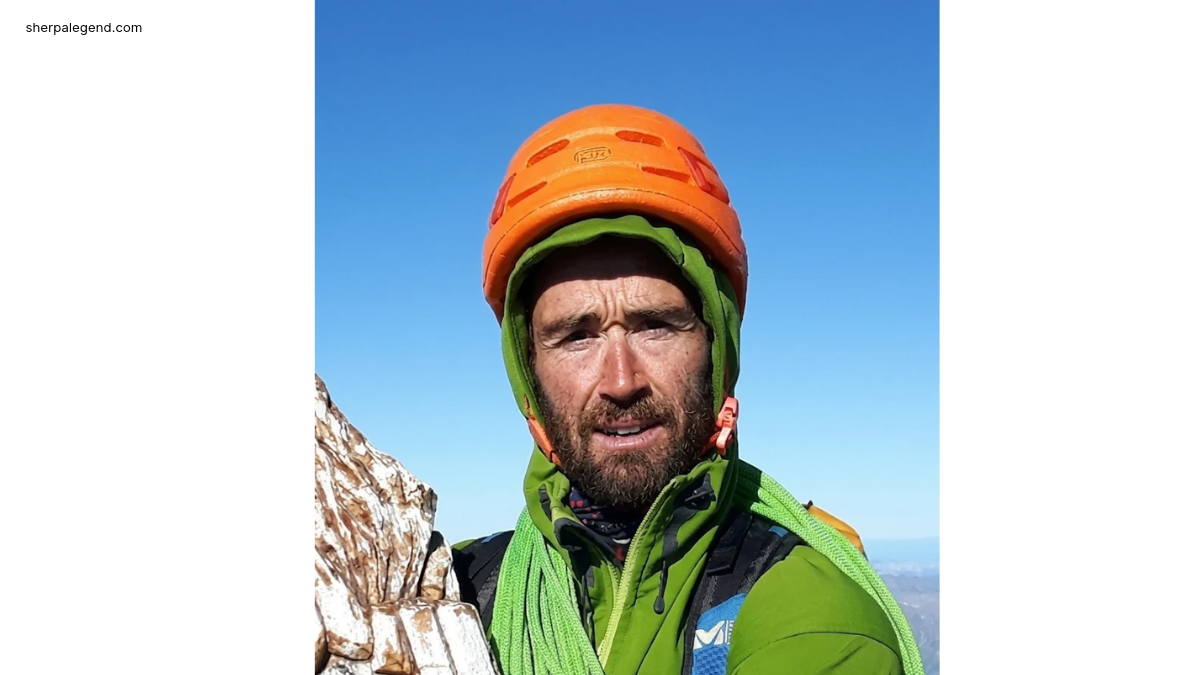

Weeks after a tragic avalanche killed Nepali workers at base camp, a French guide went up to check the snow and reached the 7,126m summit alone.
On the morning of October 22, Julien Laurence stood at Camp II on Himlung Himal. The camp sits at about 6,100 metres. It was 8:30 a.m. The sky was clear. There was no wind.
He was alone. The only other people on the mountain were the rope-fixing team, somewhere above him.
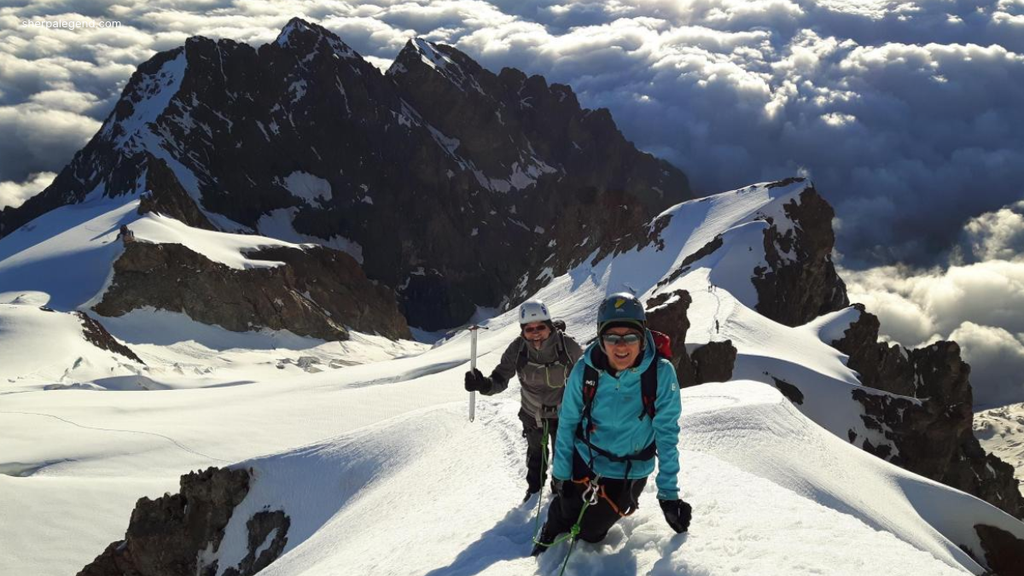
Laurence is a French mountain guide. He had not gone up to climb Himlung that day. He had gone up to check the snow. This was a mountain that had had a terrible autumn, and many people wanted to know what the upper slopes looked like.
“I actually wanted to check the snow conditions above Camp II,” he told Everest Chronicle. “Since I did not feel any difficulties, I continued climbing.”
The mountain felt inviting, so he kept going. About six hours after leaving camp, he reached the 7,126-metre summit. By 5 p.m. he was back at Camp II.
Laurence is a certified high-mountain guide. His certification is called UIAGM, or IFMGA in English. It is the international gold standard for mountain guides.
He was born and raised in the French Alps, close to Écrins National Park. He is based in Alpe d’Huez and works with the Bureau des Guides there.
His specialty is skiing. From September until May he is usually guiding clients across Europe. He also climbs rock and ice, and has summited many Alpine peaks and a few 6,000-metre peaks in the Himalayas. He guides private clients in Ladakh and Nepal as well.
Himlung was his first attempt on a mountain above 7,000 metres.
Himlung sits in the Nar-Phu area of Manang district, near the Tibetan border. It is known as a fairly straightforward 7,000-metre peak. It is also known as a cold one. “Himlung has a reputation for being very cold,” Laurence said.
It is popular because it is a manageable step up. Climbers who have done 6,000-metre peaks use it to move toward higher mountains.
This season, about 130 foreign climbers came to Himlung. That is among the highest numbers the peak has seen. Fewer than a dozen are believed to have reached the summit.
The gap between 130 and fewer than 12 shows how hard the season was.
On September 27, an avalanche buried Himlung Base Camp. A tropical cyclone had brought heavy rain and snow to Nepal for three days before it.
The people buried were Nepali expedition workers. They were preparing the camp for foreign climbers, who had not yet arrived. They were 14 kitchen staff and two climbing guides. Searchers dug through more than four metres of snow.
On Thursday, October 1, rescuers recovered eight more bodies. That brought the number recovered to 15. In the latest reports, one worker was still missing.
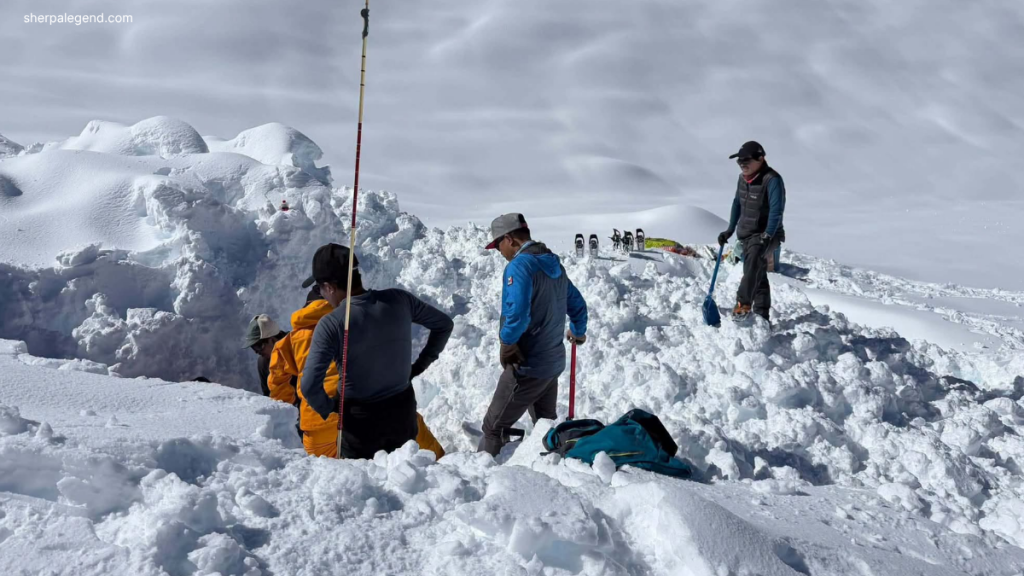
Mingma G led the search. He wrote on Instagram that the avalanche was enormous, and that no one had believed Himlung Base Camp could see something on that scale. Base camp is not considered an especially avalanche-prone place. That is part of why the slide was so shocking.
Accounts of the days before the avalanche differ. One account, quoted by AccuWeather, says colleagues had urged people at base camp to move to the lower valley from the Friday before, but the warnings were not taken seriously. A second account comes from Tul Singh Gurung, president of the Nepal National Mountain Guide Association. He told Outside that several workers tried to leave during the storm but were turned back by the heavy snow.
These two accounts have not been reconciled.
After the avalanche, everyone at base camp had the same question. How much snow had built up higher on the mountain? Those waiting there wanted to know. “Maybe even the rope-fixing team,” Laurence said.
When the avalanche struck, Laurence was trekking in Ladakh with two clients. Both wanted to attempt a 7,000-metre peak. He contacted Himalayan Summit Club, which he had worked with in 2023, to find out whether the autumn expedition on Himlung was still going ahead.
It was. Laurence and his clients arrived in Nepal on October 10, almost two weeks after the disaster.
The plan was an acclimatisation rotation. That means going high to let the body adjust, then coming back down. It was not a summit bid.
His clients were aged 63 and 67. Himalayan Summit Club provided the logistics. “It was slightly late, and Himlung has a reputation for being very cold,” Laurence said. “But it is also considered a relatively straightforward 7,000m summit. That is why we chose it.”
He had already acclimatised in Ladakh, and the three reached base camp without difficulty. Laurence climbed to Camp I and returned to rest. They later reached Camp II and spent a day there. The plan was to go down again before any summit attempt.
But Laurence felt strong. His clients went down to base camp, and he stayed high.
Summit day was close to perfect. “It was sunny, there was no wind, and nobody was on the mountain except the rope-fixing members, who were some distance above Camp II,” he said.
He was not worried about the descent. “I know how to come back. If I get too tired, I can turn around and descend using my hands and feet.”
The climb was easier than he expected. “I was surprised myself.”
When he got back to Camp II, he was still alone. The club’s support staff had left food and supplies there and were expected to bring his clients up. But one of the clients was unwell, so the pair never made it to the high camp. Laurence spent five nights at Camp II, waiting.
His climb also brought him face to face with a different way of doing things.
In Nepal’s commercial mountaineering industry, climbers generally wait for the rope-fixing team to finish the route before they try the summit. The ropes are the safety system. They are also how commercial expeditions are organised.
In the Alps, Laurence said, the habit is different. “Nobody wants to equip a mountain with fixed ropes to make it easier for everyone. Whoever can climb it, climbs it.”
Both approaches have reasons behind them. Fixed ropes exist for good reasons, especially for climbers with less experience. A guide with Laurence’s background can choose to go without them. Two traditions met on the same mountain.
Afterwards, Laurence asked himself whether he had misjudged the situation. “I don’t know whether it was the right thing to do. If it wasn’t, I am sorry,” he said. He was clear about why he went up. “I primarily wanted to check the snow conditions, not set a record or get ahead in a competition.”
His climb answered the question people at base camp were asking. On that day, the upper slopes could be climbed. It came two days before the rope-fixing team completed the route.
Reaching 7,000 metres has left him wanting more. He believes an 8,000-metre peak would be an entirely different challenge. His goal goes beyond reaching one. “One day I would love to ski an 8,000m peak, an easier one. That is my dream.”
After the avalanche that killed at least 15 mountain workers, many in the mountain community will ask whether the season on Himlung should have ended. For those who lost colleagues and friends, the question is a fair one.
Others see it differently. The expedition went ahead. The ropes were fixed, and climbers kept coming.
Laurence went up for a small reason. He wanted to check the snow. Other people came to Himlung with different plans, and they had their own reasons for going or staying. The mountain did not choose between them. It stayed open to anyone who wanted to climb it.
