

Editorial
The mountain does not know how many followers you have. It does not know your nationality, your wealth, your title, your sponsors or whether the world knows your name.
But we humans do.
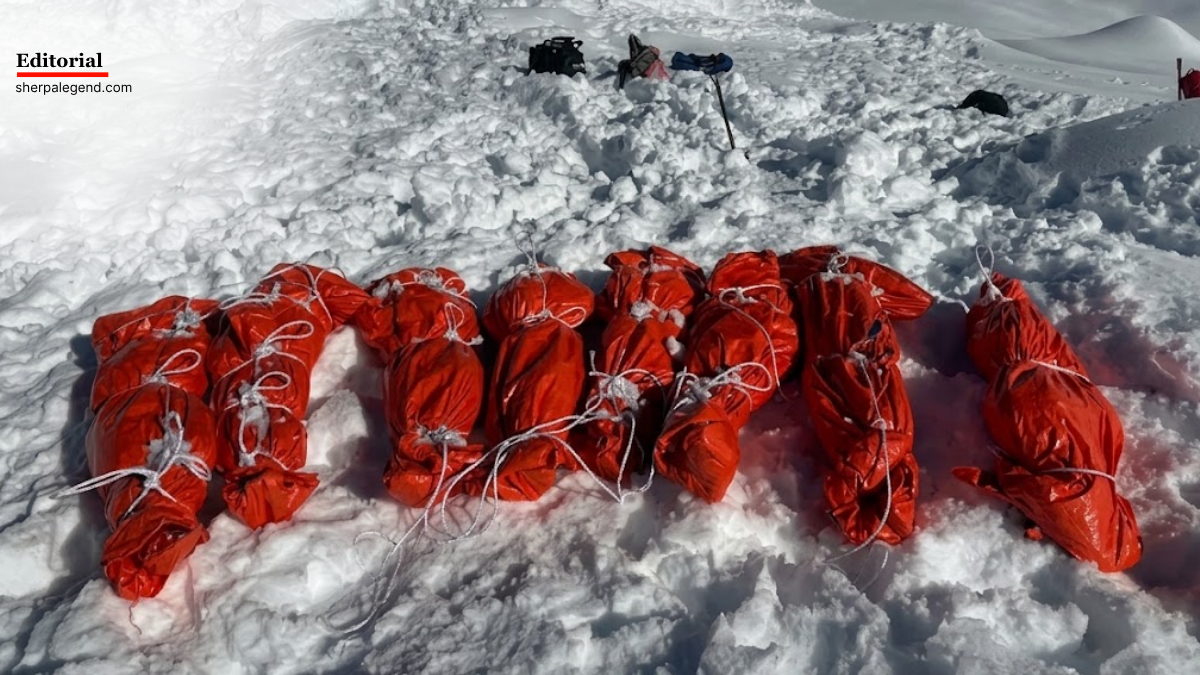
On September 27, an avalanche buried 16 Nepali mountain workers at Himlung Himal Base Camp. Fifteen have been recovered dead. One remains missing. They were guides, kitchen staff and support workers preparing the camp before the foreign climbers had even arrived.
They are the one who carry supplies, pitch tents, built kitchen and prepare the food. The one who fix ropes and guide climbers to the summit. And when the summit photos are posted and the climbers return home, these workers are often still there, packing everything away.
They are not background figures in mountaineering. They are its backbone. Yet 16 of them were buried at Himlung, and the silence has been difficult to ignore. Had these been internationally famous climbers, would social media look the same? Would there be more tributes? More headlines? More voices demanding answers?
We live in a world where fame often determines visibility. When someone rich, celebrated or followed suffers, social media can become deafening. When the victims are workers whose names rarely appear in summit captions, their tragedy can disappear almost as quickly as the news cycle moves on.
The mountain does not rank human lives. We do. That is what makes Himlung more than a mountain tragedy. Only days earlier, Nepal’s Prime Minister stood before the United Nations speaking about climate justice, warning of the growing risks facing the Himalaya from avalanches, floods, landslides and other disasters. Then Himlung happened.
Sixteen Nepali citizens working in that very Himalayan environment were buried. As of this writing, we have seen no comparable national acknowledgement from the Prime Minister or central government mourning these workers by name. Authorities assisted with parts of the response, but the difficult search and recovery on the mountain was led largely by the Nepal National Mountain Guide Association and expedition professionals themselves.
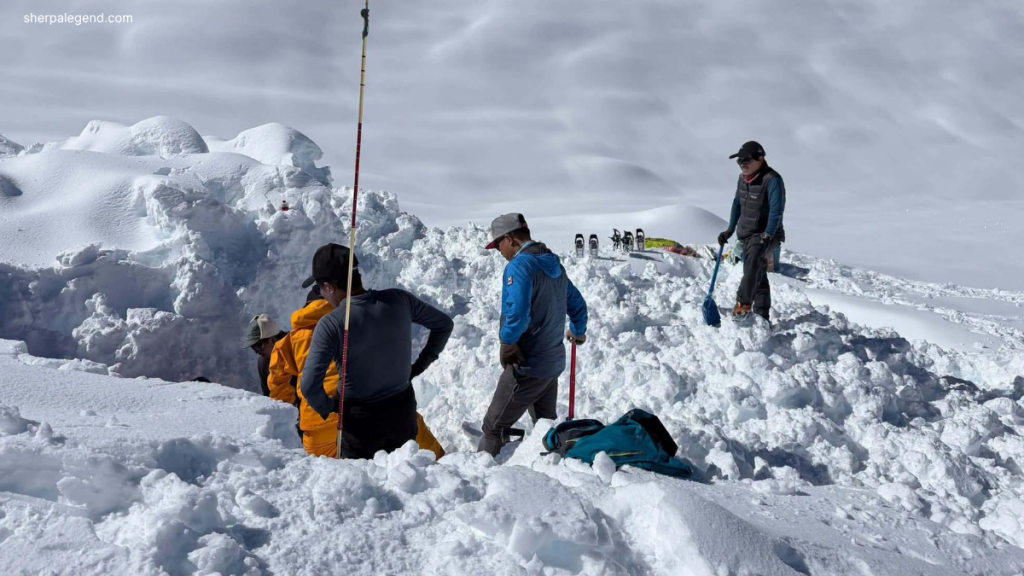
NNMGA guides flew into dangerous conditions and dug through deep snow looking for their colleagues. Expedition teams, helicopter operators, local rescuers and everyone who stepped forward deserve our deepest respect. But their courage also leaves us with a question Who protects the people who make Nepal’s mountaineering industry possible?
We should also remember and record the names of those who went into the mountain to bring their colleagues home. During Phase I of the search and recovery, the NNMGA / IFMGA team was led by IFMGA mountain guide Mingma G. Sherpa, alongside Pimba Tenjing Bhote, Pasang Kaji Sherpa, Tsering Pemba Sherpa, Ashish Gurung, Pasang Rinzee Sherpa, Bikram Karki and Dandu Sherpa.
In Phase II of the recovery, Pasang Kaji Sherpa led the team with Bikram Karki, Ngima Tashi Sherpa, Dawa Sange Sherpa, Dawa Jangbu Sherpa, Kaji Sherpa, Da Nurbu Sherpa, Tarke Sherpa, Dawa Tenji Sherpa, Tashi Tenjo Gurung and Balaram Gombu Tamang.
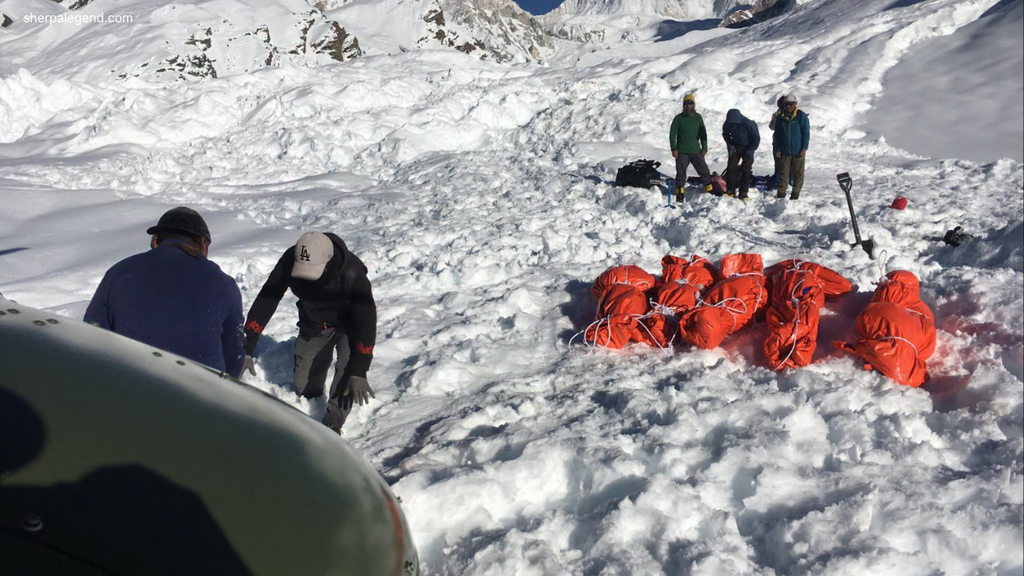
The Nepal National Mountain Guide Association coordinated and led the search and recovery, while Imagine Nepal Trek & Expeditions, Himalayan Holidays Nepal and Seven Summit Treks were involved in the response and coordination. The Nepal Army assisted with the transportation of recovered bodies, while local mountain guides and helicopter operators supported access, search and evacuation efforts.
These names should not disappear into a footnote after the recovery is over. They are part of the story of Himlung too. While fifteen families were waiting for their loved ones to be brought home and one family still waits for answers, these men entered 14 feet of snow with shovels, spending days digging through the mountain to recover their colleagues. Their work was not performed for headlines or recognition, but that does not mean it should go unrecorded. We owe it to them to remember who went into the mountain, just as we owe it to the victims to remember who they were.
Nepal government counts permits. It counts royalties. It celebrates summits and records. It markets the Himalayas to the world. It must also count the lives behind those summits.
Climate justice cannot only be something Nepal demands internationally. At home, it must mean safety, insurance, compensation, rescue preparedness and dignity for the workers who face the mountains every day.
And this responsibility is not the government’s alone. It belongs to climbers, expedition companies, mountaineering organizations, journalists, creators, sponsors and all of us who celebrate the summit photograph while rarely asking who made that photograph possible.
Behind almost every person standing on a Himalayan summit are people whose faces never appear in the frame. This time, let us turn the camera around. These workers may not have had millions of followers. They may not have had sponsors or famous names. But they had families waiting for them. They had lives, responsibilities, dreams and people who expected them to come home.
They deserve more than silence. It’s time we say their names, tell their stories, recognize their work and be a voice for them. Social media should not only become loud for the rich and famous. Sometimes it must become loudest for those who need our voice the most.
Fifteen workers are gone from Himlung. One is still missing. The mountain does not distinguish between the famous and the forgotten. Neither should we.
Our heartfelt condolences go out to the families, friends, and loved ones of Chhebi Bhote, Pasang Bhote, Birendra Gurung, Ghan Shyam Rai, Ash Gurung, Suraj Rai, Kalam (Kamal) Budha, Birkha Dhoj Tamang, Jagat Tamang, Ngima Tamang, Lak Kumar Gurung, Santa Bir Tamang, Urkha Dhoj Bohora, Prem Tamang and Kirte Tamang. We stand with the family of Pasang Nuri Sherpa, who is still missing.
May the departed souls rest in eternal peace, and may their families find strength through a grief that is unimaginable.
Om Mani Padme Hum
Prayers and strength, to the families, to the rescue teams, and to every worker who goes up the mountain so that others can climb.
