
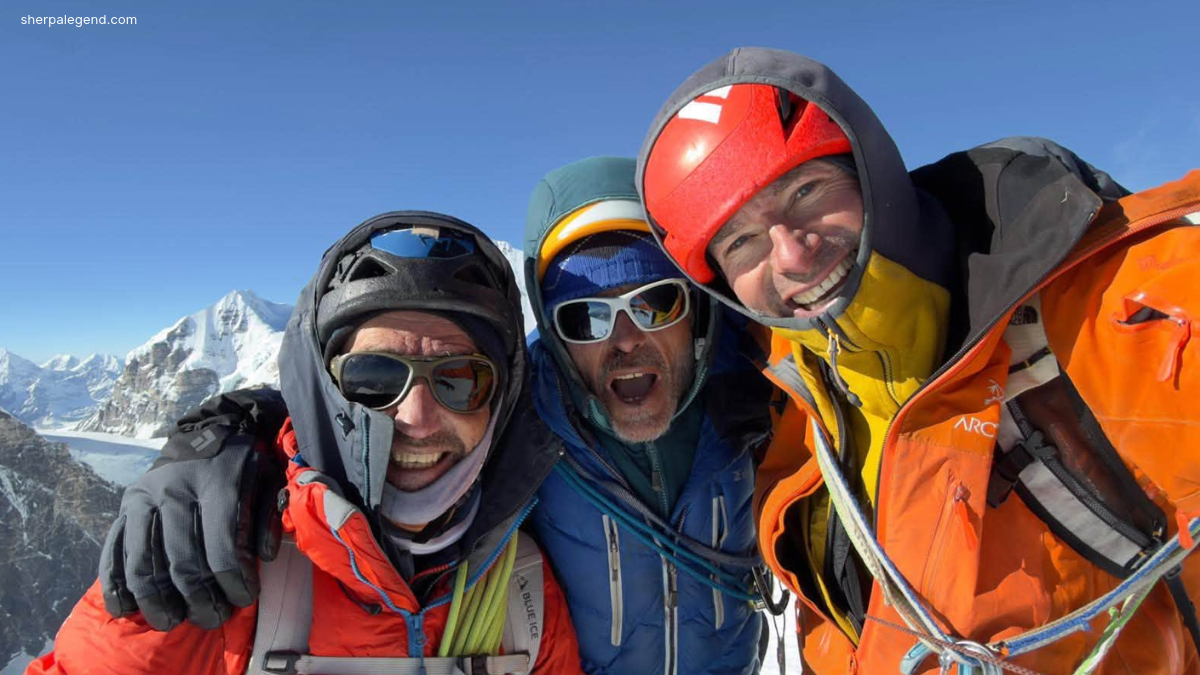

On Monday, October 26, 2026, three Spanish climbers reached the top of a mountain no one had climbed before.
A day later, on October 27, they were back at base camp.
The mountain is Jugal II. It is 6,518 metres (21,384 feet) high and stands in the Jugal Himal, in Sindhupalchok district, about 70 to 90 kilometres (43 to 56 miles) northeast of Kathmandu. It is the closest glaciated Himalayan range to the capital.
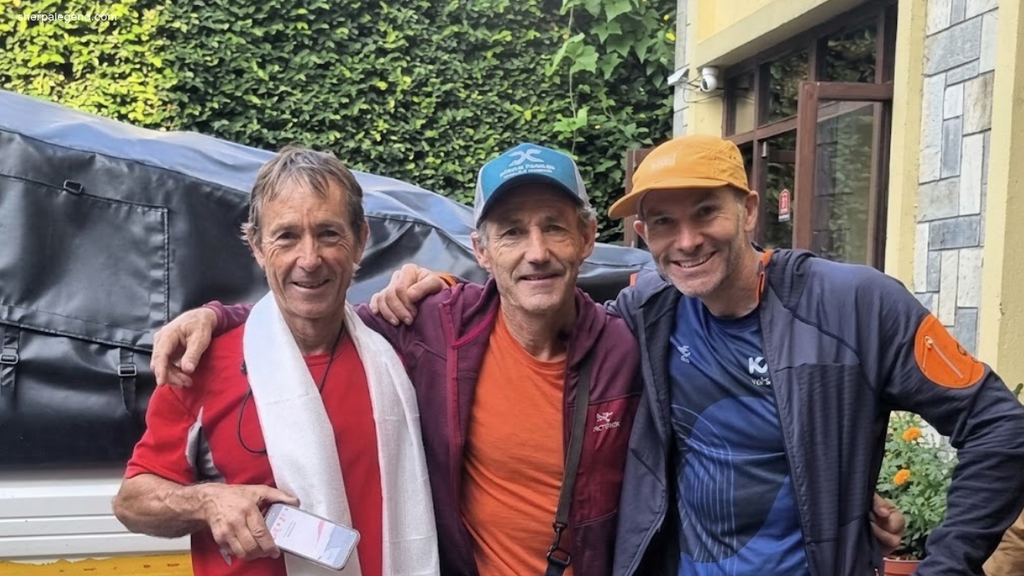
Mikel Zabalza, Mikel Sáez de Urabain and Rubén Pérez made the first ascent.
The Himalayan Database records no earlier ascent of Jugal II. The October 2026 expedition is now being reported as the mountain’s first recorded ascent, with local tourism officials also confirming the achievement.
This is a Himalayan peak you can reach by bus and a few days of trekking.
The mountain
Jugal II is in Jugal Rural Municipality, on the border with Tibet. From Kathmandu, you reach the area by bus and then a few days on foot.
The Jugal Himal has 11 peaks. Most of them are barely explored. The range sees only a tiny fraction of the trekkers and climbers who visit Langtang, Everest or Annapurna.
There is a reason Jugal II stayed untouched. For decades, the peaks above the Jugal valley were not named on Nepal’s official mountaineering lists, and they were legally off-limits to climbers.
That changed on April 11, 2023. The Government of Nepal named five Jugal peaks and opened them for expeditions. Jugal I and Jugal II were opened to foreign climbers.
The two sit side by side. Jugal I is taller, at 6,591 metres (21,624 feet). Jugal II is shorter, but it is steeper and more technical.
That difference showed in 2024. A large Korean-Nepali expedition held permits for both peaks. It climbed Jugal I. It did not climb Jugal II. The peak stayed open for someone else.
Three men, one valley
Mikel Zabalza was born in 1970 in Pamplona. He is the best-known name of the three. He is a certified high-mountain guide and led Spain’s national alpinism team for 13 years, from 2011 to 2024.
He has been on more than 40 international expeditions. He has climbed Everest and K2, and he skied 2,300 kilometres across Greenland from south to north. But the detail that matters here is the valley. Zabalza first came to the Jugal Himal in autumn 2021, and he has kept coming back. This climb was less a one-off trip than a long relationship with one place.
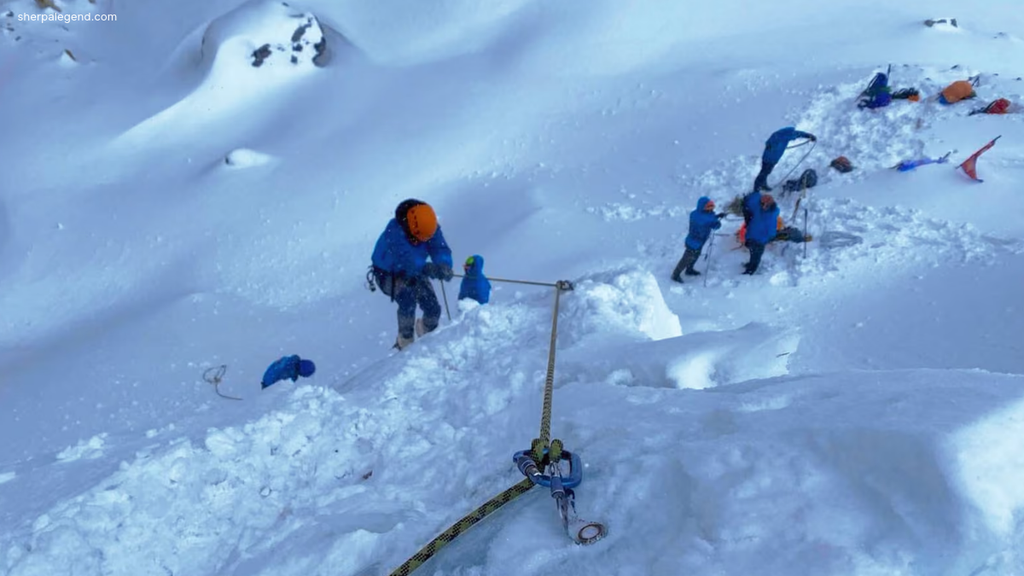
Mikel Sáez de Urabain was born in 1968 in Ordizia, in Gipuzkoa. He is a Basque rock climber who likes steep, technical walls. He has made first ascents in the Pyrenees, the Alps and Alaska. In September 2023, he and Pérez climbed Bhagirathi III (6,454 m) in India. The push took seven days and ended with a 43-hour non-stop effort to the summit. That climb is the reason the two were paired again.
Rubén Pérez, known as “Ino”, was born around 1979 in La Rioja. He is a mountaineer and a documentary filmmaker. He has led expeditions in the Peruvian Andes and the Indian Himalaya, and on one Andean trip he climbed nine peaks, the highest at 6,354 metres. He also made a film about the Bhagirathi III climb, which he had done himself. It was shown at the 2025 BBK Mendi Film Festival in Bilbao.
Two of the three are in their mid-to-late fifties. The third is in his late forties. They set out to climb a new face with no route information. Experience, not youth, is the story here.
Years of preparation
This climb did not start in October 2026. It started in 2021.
Zabalza came to the range that autumn, while he was still leading the Spanish national team. In 2021, Zabalza opened a new route on the south face of Dorje Lhakpa and explored the northeast ridge of nearby Lingsing Himal during acclimatisation.
In October 2023, he returned with Juan Vallejo and Iker Madoz. They tried Phurbi Chyachu (6,637 m) and made the first ascent of nearby Phurbi Txiki (6,125 m). Each trip taught them more about the valley’s glaciers and weather.
In spring 2024, Zabalza and Sáez de Urabain came for Jugal II. Heavy snow and unstable weather stopped them.
They did not go home. They climbed Jugal V (5,922 m) and Gyalzen Peak (6,151 m) to get used to the altitude. From those summits, they studied Jugal II. They picked out a line on its east-southeast face and a way down.
The weather had taught them something. For the return, they chose autumn 2026. After the monsoon, colder temperatures help snow and ice firm up on steep faces.
They also needed a third climber. They chose Pérez. He and Sáez de Urabain had already shown on Bhagirathi III that they could get through a long, hard push together.
The team travelled from Kathmandu through Tembathang, Chhendang and Nepemachhal and set up base camp at about 4,500 metres (14,764 feet). Jugal II has no fixed ropes, no high camps and no route information. So the trio planned an alpine-style push. In plain terms, that means you carry everything you need on your back and go.
In mid-October, the weather was unsettled. They waited. Then a clearing came in late October, and they went up the east-southeast face. They reached the summit on Monday, October 26.
The Italians who turned back a day earlier
Jugal II was not only a Spanish goal. Italians Nives Meroi and Romano Benet were also on the mountain.
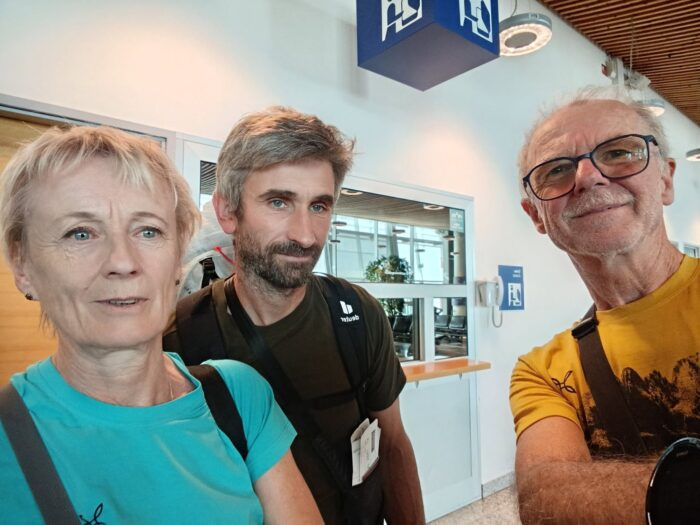
Meroi and Benet are well known in the sport. They have climbed all 14 of the world’s 8,000-metre peaks without oxygen. Their real plan this autumn was Tilicho Peak in the Annapurna region. Storms and floods there had cut trails and swept away bridges, so they switched to Jugal II. Their teammate, Slovenian Tine Cuder, fell ill and left the expedition.
Meroi and Benet left for the Jugal area about three weeks before the first reports of the Spanish climb. So two experienced teams, each with the same goal, were on the same mountain at the same time.
On October 25, Meroi and Benet turned back. That was one day before the Spaniards reached the summit.
This was not a failure. The mountain said no that day.
What happened next matters just as much. The Italians later confirmed the Spanish success. The two teams then trekked out toward Kathmandu together.
A short history of the range
The Jugal peaks were never undiscovered. To the Tamang, Hyolmo (Yolmo) and Sherpa communities of upper Sindhupalchok, and to people across the border in Nyalam, they have long been sacred. The range is linked to hidden valleys, protective deities and holy lakes such as Panch Pokhari and Bhairav Kunda.
The first Western mountaineer to approach the range on foot was British explorer Bill Tilman explored the approaches to the Jugal Himal in 1949. He reached Tembathang but did not have enough time to investigate the inner valleys further. Six years later, the Scottish women’s expedition returned to explore the region.
Six years later, three women did what he did not. In 1955, Monica Jackson and Betty Stark, accompanied by Sherpa climbers Mingma Gyalgen and Ang Temba, made the first ascent of a peak they named Gyalgen Peak. Later mapping confused the mountain’s identity with another nearby summit. The modern Gyalsten Peak (6,151m) was first climbed by a Nepali expedition led by Maya Gurung in April 2019.
More visits followed. A British team led by Crosby Fox tried Leonpo Gang in 1957, and the attempt ended in a fatal avalanche. In 1958, Japanese climber Kyuya Fukada led a reconnaissance of the inner peaks.
Then the range went quiet for decades. In 2019, Nepal opened Gyalzen Peak again, and a Nepali team led by Maya Gurung climbed it that April. In 2023, the Cabinet named and opened Jugal I to V. In May 2024, a Korean-Nepali team led by Um Hong-gil climbed Jugal I. The team included Dawa Yangzum Sherpa, Lakpa Dendi Sherpa and Lama Babu Sherpa. The team held permits for both Jugal I and Jugal II. They did not climb Jugal II.
Why it matters
First, real exploration still exists. Many Nepali peaks now come with fixed ropes and large support crews. Jugal II came with none of that, and with no route information. The trio went up a face no one had climbed. That kind of climb is rare on a peak of this height.
Second, it is a door for local tourism. Jugal Rural Municipality Chair Resham Syangbo and Tourism Committee Chair Milan Tamang say a first ascent by well-known European alpinists puts the Tembathang–Nepemachhal trail on the global mountaineering map. They say it can bring steady income to the Tamang, Hyolmo and Sherpa communities who live there. For a rural municipality that has pushed for years to be known as an alpine tourism area, that is the goal.
Third, it is close to home. The Jugal Himal is not a distant range. On a clear day, people in the Kathmandu Valley can see it. One of its peaks has now been climbed for the first time.
What comes next
Jugal II has now joined a growing list of climbed peaks in the range. Jugal I, Jugal III and Jugal V have already seen their first ascents. Jugal IV and other less-explored summits still leave room for future exploration.
The team says it will share more details when it gets home. Until then, the full account of the climb is still to come. How they climbed the face, and what they found on it, are still questions waiting for an answer.
A mountain you can reach by bus and a few days of walking now has a summit record. It still sees far fewer visitors than Langtang, Everest or Annapurna.
