
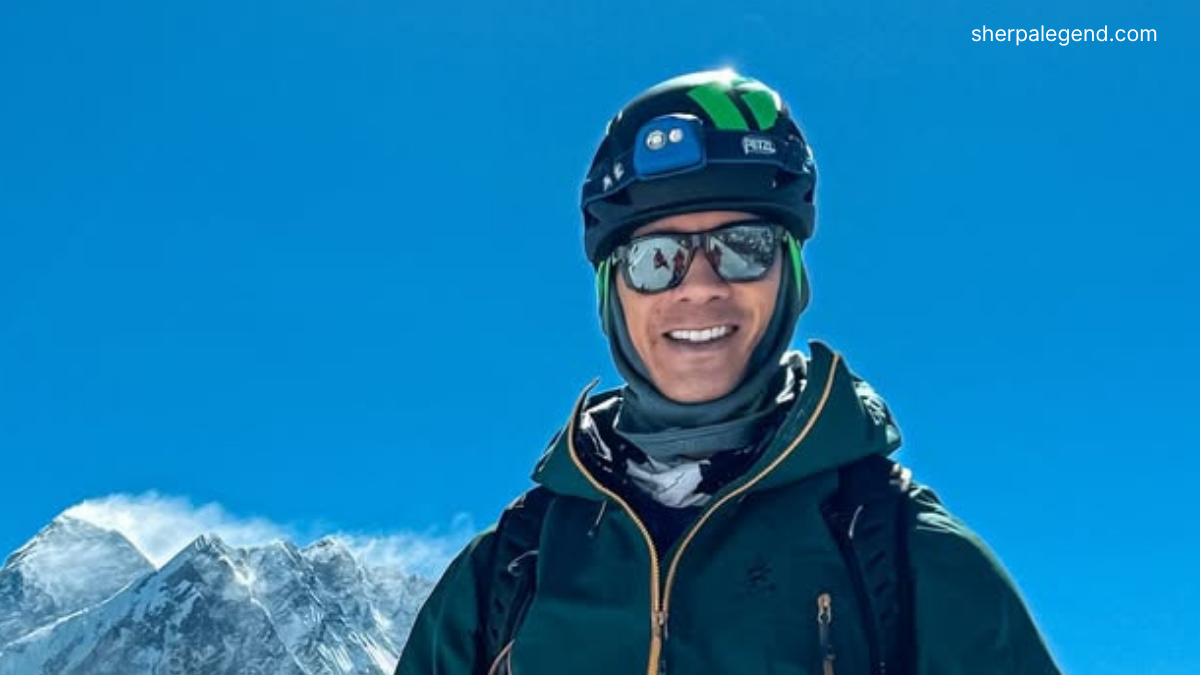

Mike Harker came to Nepal two years ago as a U.S. Embassy official. On May 20, 2026, he left something of himself on the highest point on Earth.
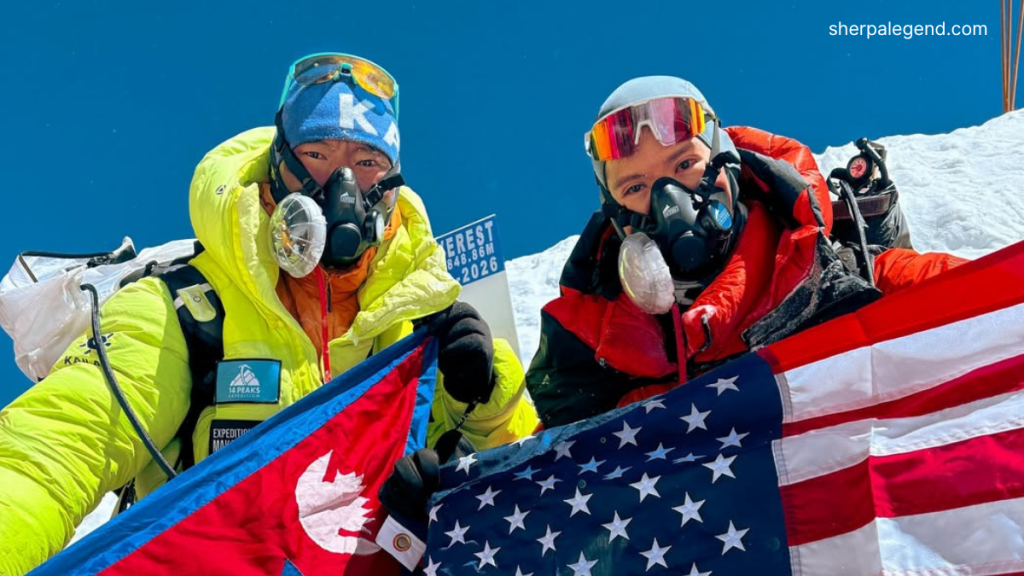
Mike Harker was standing in the freezing dark at Camp 4, nearly 8,000 meters above sea level, and the man just above him on Hillary’s Step suddenly fell.
The man had grown impatient waiting in the long queue on the near-vertical stretch of rock and snow. He stepped out of line, lost his footing, and came crashing down landing directly on Harker, flailing, grabbing at him. Below them, people were screaming. Harker clenched the fixed rope with everything he had. Five minutes earlier, he had passed a frozen body sitting upright on a ledge, its face completely eroded away by decades of wind, suit still intact, like something the mountain had decided to keep.
“I thought, man, I could be this next frozen guy on the side of the mountain,” Harker said.
He held on. The man eventually stabilized. And Harker kept climbing.
Twenty Years in the Making
Before any of this, before the embassy and the mountain and the frostbite and the hospital in London, there was a young man from California who once woke up inside a tent in the Annapurna region and looked up at a sky full of peaks.
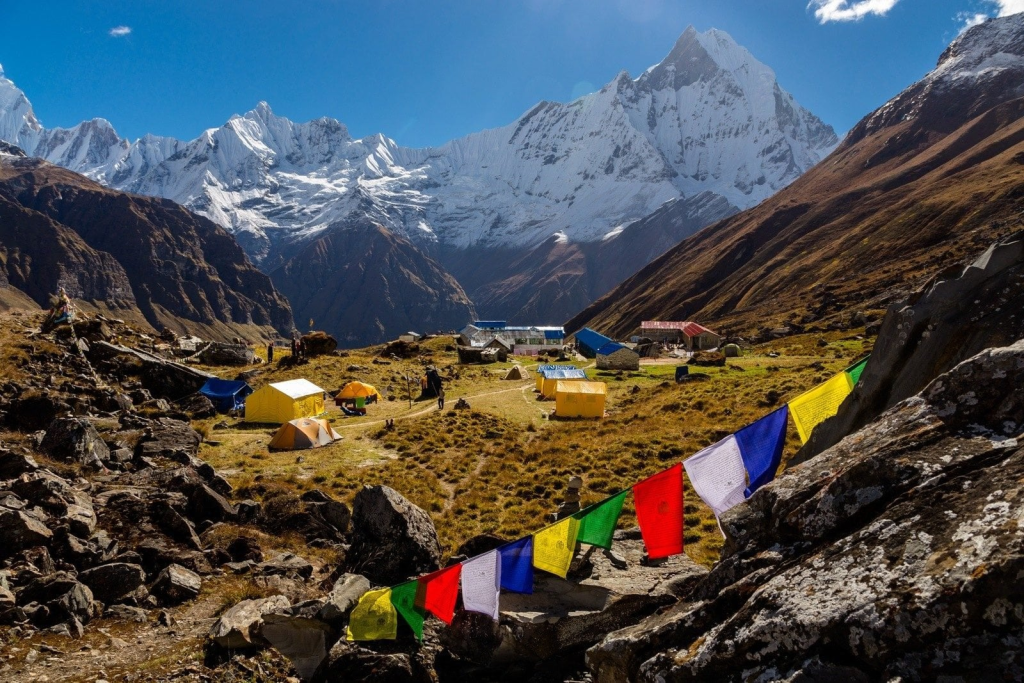
That was twenty years ago. Harker was just a backpacker then, trekking the Annapurna Circuit on his own. He made it up to Annapurna Base Camp, and one morning he stepped out into the freezing cold and felt something he could not fully explain a sense of vastness, of awe, of being completely overwhelmed by the beauty in front of him.
“That moment really stuck with me,” he said.
He went back home. Life moved on. He studied at UCLA, interned at a TV news station in Los Angeles, worked in research and production, covered both daily news and big international stories. He grew up in a military family his father was a lieutenant colonel in the U.S. Air Force who flew in the Vietnam War, and his birth mother was a Vietnamese refugee who had come to America. From the beginning, the idea of service was a regular part of his life.
Eventually, he decided that reporting on problems was not enough. He wanted to be part of the solution. He applied to become a diplomat.
Fifteen years later, he had served in Bangladesh, Iraq, Pakistan, Qatar, Egypt, and Burma. He had seen a great deal of the world. And then two years ago, he came back to the country that had never quite left him.
Coming Home to Nepal
Mike Harker arrived in Kathmandu as the Public Affairs Chief at the U.S. Embassy in Nepal. His job covers media relations, public diplomacy, cultural exchange programs.
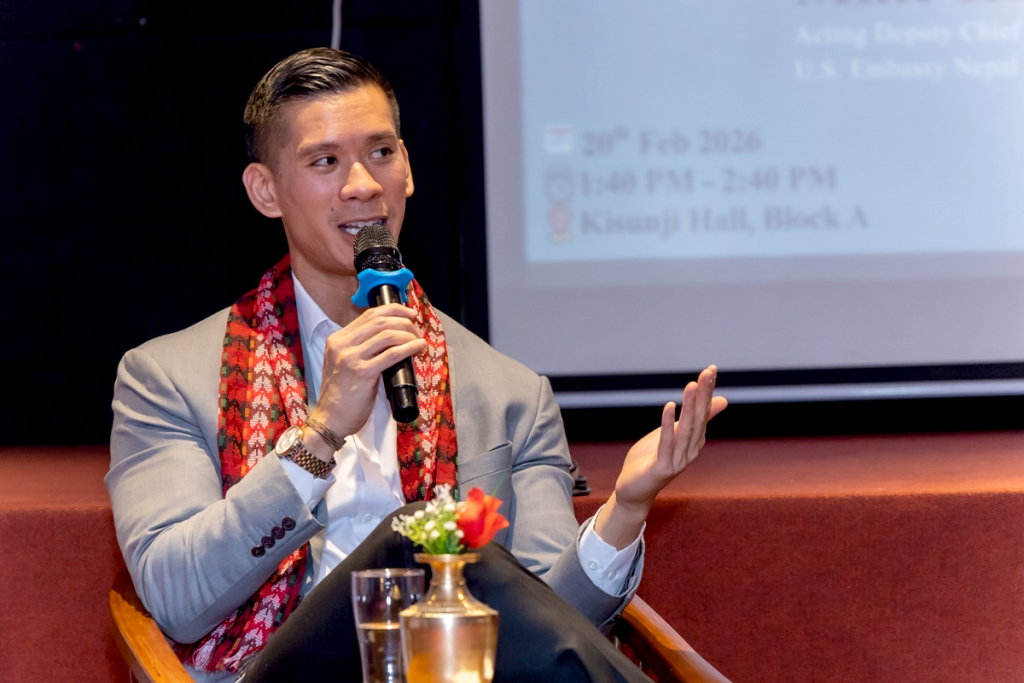
He has helped connect Nepali entrepreneurs with U.S. expertise and investment. He has worked on grant programs, cultural preservation projects in Mustang, and events that bring the two countries together.
But from the moment he landed, Everest was on his mind.
He had been surrounded by the right people. Mountaineers and Sherpas who had become friends. People who kept telling him quietly, consistently, over the course of two years that it was possible. That with the right preparation and the right mindset, someone like him could summit Everest.
“Having that message consistently for about two years really motivated me to actually try,” he said.
Last October, he summited Lobuche East, which sits at 6,119 meters. He thought that would prepare him for what was coming.
He was wrong about how hard it would actually be.
Into the Death Zone
From Everest Base Camp to Camp 1, Camp 2, and Camp 3, Harker felt like the climb was within reach. Difficult, exhausting, but possible. Then came the move from Camp 3 to Camp 4, and the moment everything changed.
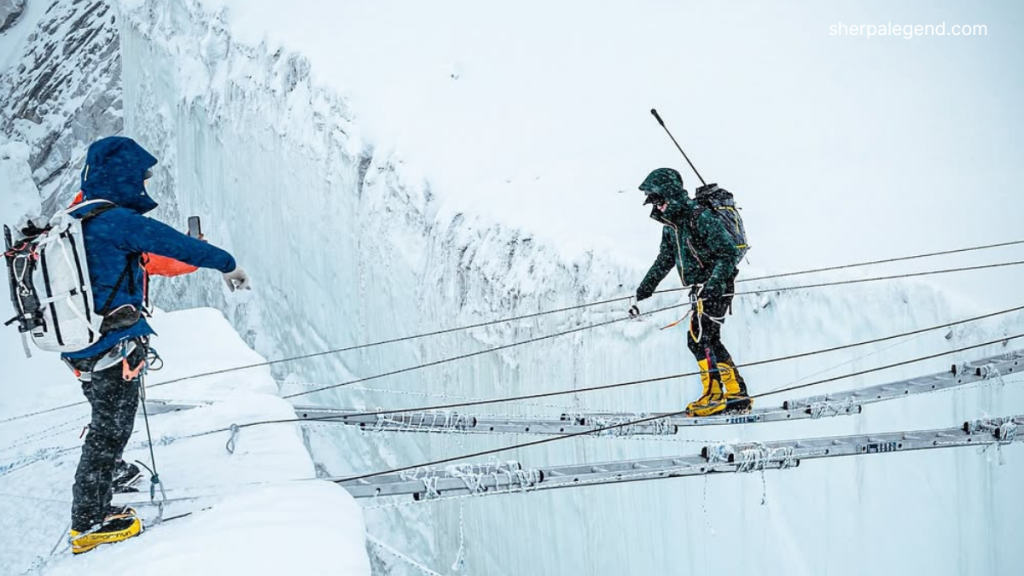
Camp 4 sits just below 8,000 meters the threshold of what climbers call the death zone. As he crossed into it, Harker understood, in a way that no amount of training can fully prepare you for, what that name means.
“You can either go back and give up, stay there and die, or just move forward,” he said. “There really is no choice.”
Mike Harker, Public Affairs Officer, U.S. Embassy Nepal
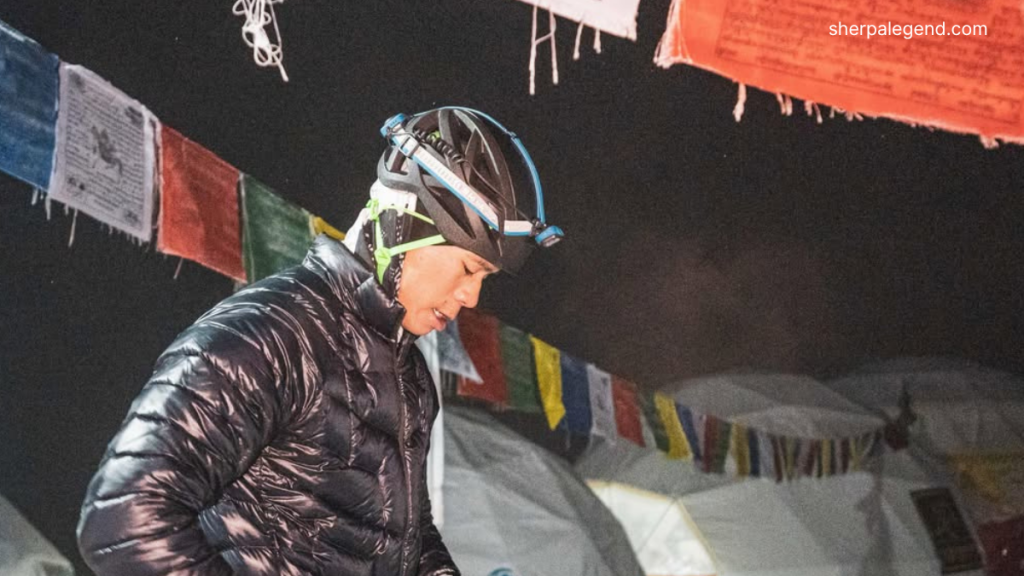
He left Camp 4 at 8:30 p.m. on May 19th, climbing through the night. The temperature, factoring in windchill, reached minus 50 degrees Celsius. He wore thinner gloves than he perhaps should have but when the man fell on him at Hillary’s Step and he needed full dexterity to grip the rope and hold both of them in place, those thinner gloves may well have saved his life.
“Better to have this glove than be the next guy on the map,” he said, with a short, quiet laugh.
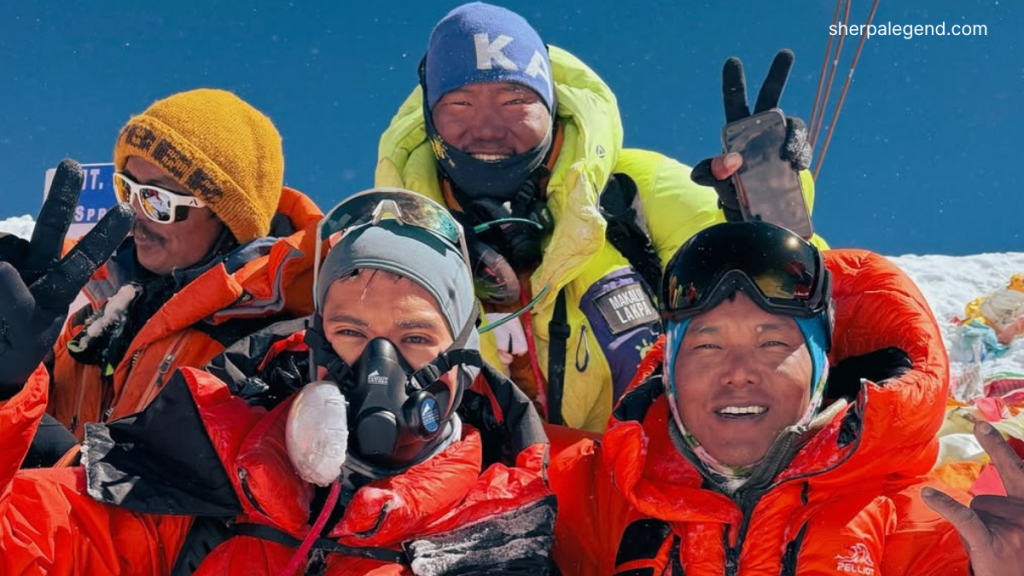
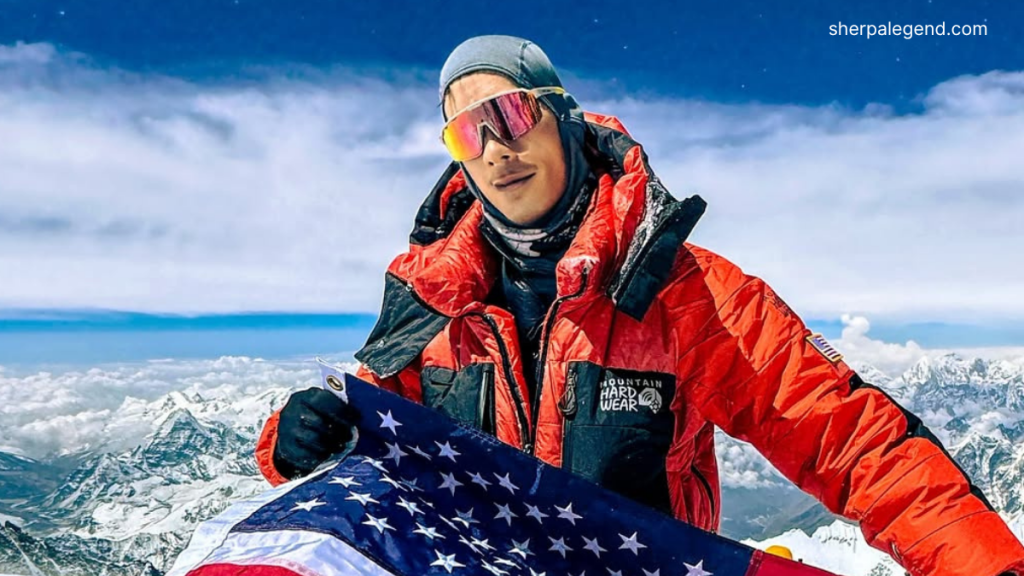
Thirteen hours after leaving Camp 4, at 9:10 in the morning on May 20th, Mike Harker stood on the summit of Mount Everest the first American Foreign Service Officer in history to do so.
What the Top Actually Feels Like
He had imagined a moment of clarity. A wave of peace, perhaps. The summit, after all those months of preparation and all those hours of climbing, arriving in a surge of realization.
It wasn’t quite like that.
“It was just such sensory overload,” he said. “There were maybe 15 other people up there scrambling around you at the same time. You have this 360-degree view of 7,000-meter peaks, but they look like tiny little cones underneath you.”
He described it as being on a moon of Jupiter the clouds below, the sunrise spreading across the horizon, peaks in every direction that look small from that height. Beautiful, overwhelming, and strange. He was there for about 20 or 30 minutes. Photos were taken. And then it was time to go down.
The Sherpa Who Brought Him Home
Getting down turned out to be harder than going up.
Harker descended from the summit around 10:00 a.m. and reached Camp 4 around 3:30 or 4:00 in the afternoon six hours of climbing back down, on a day when he had already been awake for more than 24 hours and had eaten perhaps a thousand calories. All the tents at Camp 4 were full because May 20th had been the busiest summit day of the year, with 274 climbers on the mountain. Harker sat outside a cooking tent as the wind picked up around him and ate a cup of noodles.
Then they kept moving.
Somewhere on the descent from Camp 4 toward Camp 3, in the dark, he was reaching for a rope to clip in and his eyes closed. Just for a moment. A sense of warmth came over him. Happiness, almost. His hand had not actually grabbed the rope.
“I knew that was not good,” he said. “Keep your eyes open. Keep moving.”
He felt, at certain moments, completely helpless. Like a child. Like someone who had no idea how he was going to make it off that mountain.
And that is where his guides came in.
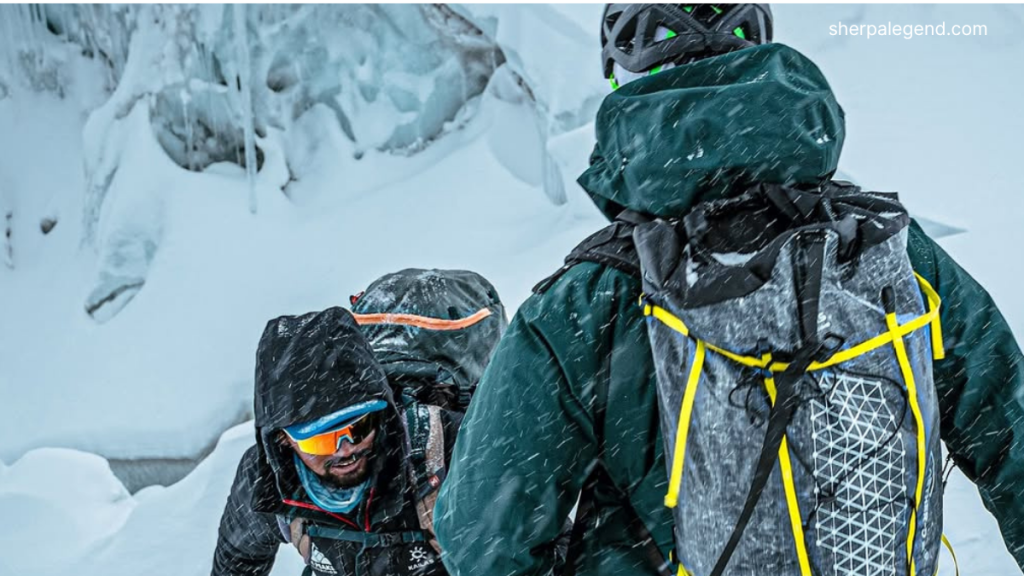
Lhakpa Sherpa a multi-Guinness World Record holder for multiple Everest ascents and Mikel Sherpa were with him on the descent. Both had summited Everest multiple times. They knew the mountain. They knew when someone was fading. They stayed patient, stayed close, and guided Harker down step by step through moments when he genuinely did not believe he could continue.
“I’m alive because of that willpower and because of the protection the Sherpas provided me,” he said plainly. “Thanks to their patience and guidance, I was able to safely get down that mountain when I thought I physically could not do it.”
Frostbite, London, and the Long Road Back
The price of those hours in the cold minus 50 degrees, thin gloves gripping ropes in the dark, sitting outside a tent at Camp 4 while the wind whipped around him became apparent when Harker finally came down to Camp 2 the next morning and got a helicopter back to Kathmandu.
He was exhausted. He wanted pizza. He wanted to sleep.
His guide told him to go to the hospital.
The embassy doctor confirmed it immediately: frostbite on both his hands and his feet. A cumulative injury, built up over hours and hours of exposure to extreme cold. The required treatment was a drug called isoprost given in five doses through an IV, each infusion lasting six hours. All of Kathmandu had exactly one dose available. Harker went to the hospital, lay in bed with an IV, and received that first infusion through the night.
The State Department, through its global network of embassies, determined that London was the best place for the remaining four doses. By 7:00 a.m. four hours after leaving the hospital Harker was on a plane.
He spent about a week in a London hospital, receiving 12-hour infusions of isoprost, which works by expanding the capillaries and blood vessels to improve circulation to the damaged tissue. In London, he could not walk. He was in a wheelchair.
By the time of his interviews after returning to Kathmandu, he was walking again. Feeling was gradually returning to his hands and feet. He said every day he felt a little better.
“Hopefully I’ll be able to get back to running soon,” he said.
The Man the Mountain Made
During the climb, when the self-doubt came and the thoughts of why and what for started crowding in, Harker returned to two things he had been practicing for twelve years: his ashtanga yoga practice and his meditation. He used a simple breathing pattern inhale two breaths, exhale two breaths to keep moving upward. And at certain moments, quietly, to himself, he chanted: Om Mani Padme Hum.
“Each faith is just a path up the same mountain,” he said of his spiritual life. He has visited monasteries and temples across his diplomatic postings. Nepal, he said, is a particularly powerful place for someone drawn to that kind of seeking.
He was asked, after all of it, whether he would go back.
“The mountains are calling,” he said.
Maybe Ama Dablam. Maybe Everest again someday. He is not sure yet. But the pull is already there.
He said something else that has stayed with him since coming down:
“Part of me is still on Everest. Maybe because I owe it something.”
The mountain took his gloves, his warmth, and the feeling in his hands and feet. It gave him back something harder to describe a reminder that stripped of title, resume, and everything he carries at the embassy, he is just a person, taking one step at a time, trying to keep his eyes open.
That, he said, is more than enough.
Sources: Interview with Dr. Samir Mani Dixit on Himalaya TV , Video released by the U.S. Embassy in Kathmandu, Nepal , Mike Harker’s Instagram posts.

