

When Dawa Hillary Sherpa was found crawling across a glacier after six days stranded alone on Everest, it was not a rescue team that spotted him it was garbage collectors. Workers from the Sagarmatha Pollution Control Committee, quietly doing what they have done since 1991.
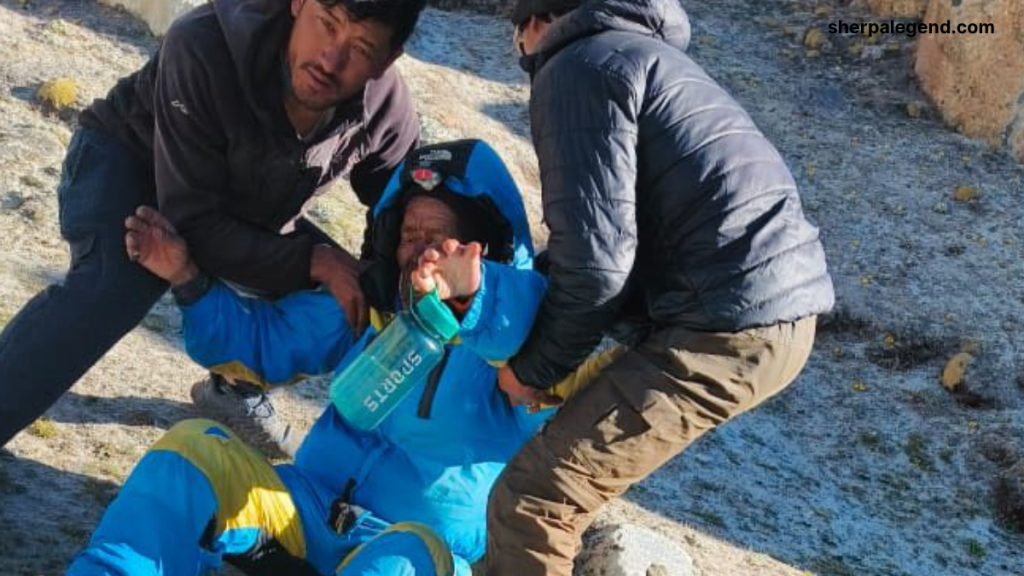
They were not searching for him. They were cleaning the sacred mighty mountain.
When Dawa Sherpa was found alive near Everest Base Camp, six days after he had gone missing high on the mountain, the people who spotted him were SPCC workers boots on the glacier, hands full of collected waste, eyes scanning not the skyline but the ground beneath their feet. There was no helicopter, no dramatic high-altitude rescue. Just workers doing their daily job, and a man crawling toward them.
Most people covering the story did not stop to ask who these workers were. Most people never do.
The Sagarmatha Pollution Control Committee SPCC is not a name that appears in summit dispatches or expedition press releases. But for more than thirty years, it has been the organization that makes Everest function.
Without SPCC, the trails would be buried in rubbish, the icefall would have no safe ladders, and thousands of climbers and trekkers would be moving through a mountain region with no system for waste, no environmental oversight, and no one coordinating the basic infrastructure of one of the most visited places on earth.
Born from Crisis
To understand why SPCC exists, you have to understand what the Khumbu region looked like before it was founded.
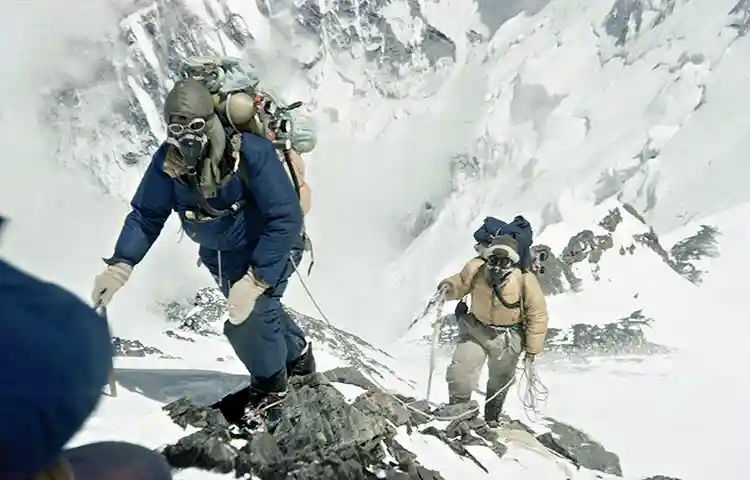
In 1953, Sir Edmund Hillary and Tenzing Norgay Sherpa made the first ascent of Everest. That single event changed everything. Within years, trekkers and climbers began arriving in numbers the region had never seen.
By the 1970s and 1980s, the flow had become a flood. Thousands of people were walking into the Khumbu Valley every season, carrying food wrapped in plastic, tins of kerosene, nylon ropes, and all the equipment of modern mountaineering and most of it was being left behind.
By the late 1980s, the trails, campsites, and glacier zones around Everest were littered. Plastics and cans lay along trekking routes. Waste piled up at Base Camp and higher camps. The region was a conservation emergency, and no organisation had been formed to address it.
In 1991, SPCC was founded not by the government, and not by an international NGO. It was created by local Sherpa communities themselves, people who lived in the Khumbu and were watching their homeland slowly fill with the waste of visitors who came and left without consequence.
The spiritual and moral force behind the founding was the late Tengboche Rinpoche Ngawang Tenzin Jangpo the abbot of Tengboche Monastery and one of the most respected figures in Sherpa society. His vision was simple the mountain is sacred, and it must be protected.
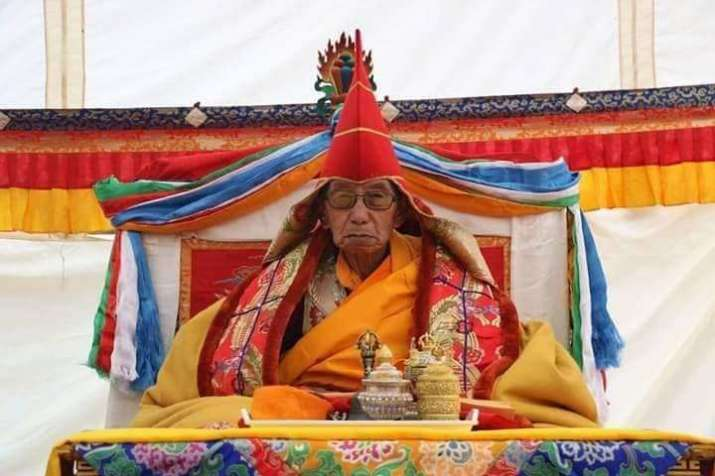
The founding also received early support from Nepal’s Ministry of Culture, Tourism and Civil Aviation, and from WWF Nepal. But the organisation was, at its core, a grassroots effort by local people to protect what belonged to them.
What SPCC Actually Does
SPCC is a non-profit, non-governmental organisation. It operates as a community-based body dedicated to environmental protection in the Khumbu region the zone that covers Sagarmatha National Park, its buffer areas, trekking routes, high mountain passes, key villages, and the peaks themselves, including Everest.
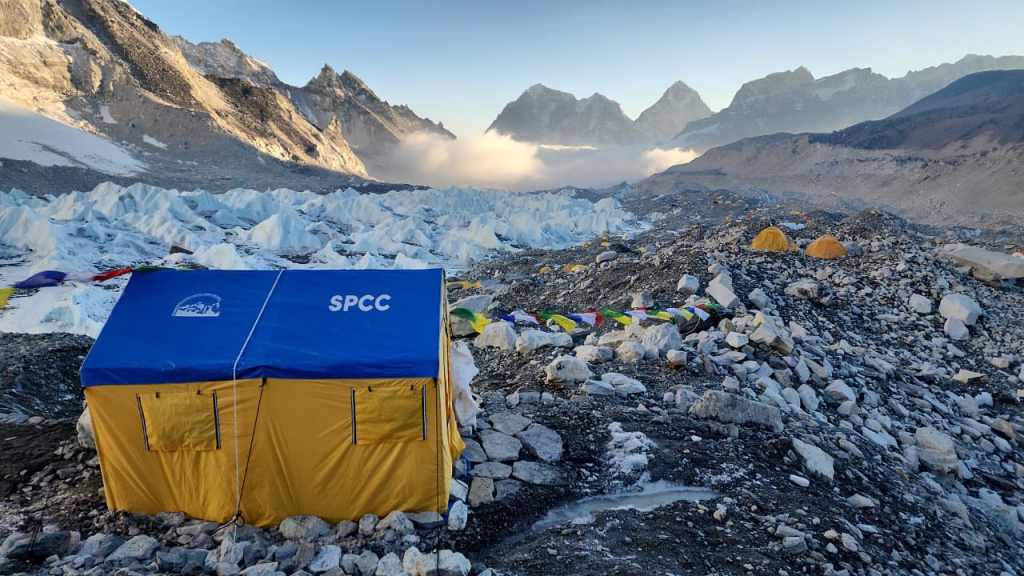
On the ground, this means collecting waste from trekking trails, villages, Everest Base Camp, and the higher camps on the mountain.
SPCC workers sort rubbish, transport it down from altitude, and process it at a Material Recovery Facility, where recyclables are separated and handled. Along the trails, they maintain garbage bins and Environmental Stations collection points where waste can be sorted before it is moved further down the valley. The organisation collects and processes hundreds of tons of waste every year.
To deal with the particular problem of waste above Base Camp where altitude and logistics make conventional transport almost impossible SPCC has developed its own solutions. It launched the Carry Me Back initiative, asking trekkers to carry small amounts of waste down with them as they descend.
Since 2016, it has required climbers above Base Camp to bring back a minimum of eight kilograms of garbage. More recently, it has deployed drones to transport waste from the higher camps down to where it can be collected by ground teams.
Beyond waste, SPCC monitors illegal climbing, verifies permits, and provides environmental oversight for more than sixty peaks in the Khumbu region. It works with local municipalities, trekking agencies, Sagarmatha National Park, the Department of Tourism, and the Nepal Mountaineering Association.
It has partnerships with over thirty community-based organisations, runs climate resilience and education programmes, and supports research initiatives including early warning systems for communities facing glacial and environmental risk.
The Icefall Doctors
Of all the work SPCC carries out, perhaps none is more quietly consequential than the job performed by its team of Icefall Doctors.
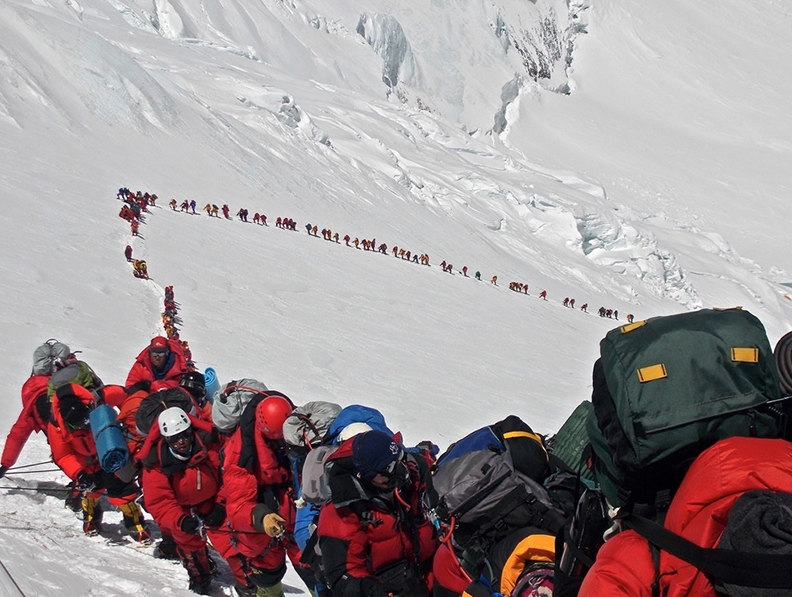
The Khumbu Icefall is the first major obstacle on the standard South Col route to Everest. It is one of the most dangerous sections of any mountain on earth a constantly shifting, collapsing maze of ice towers, crevasses, and unstable seracs. Without a prepared route through it, no climber would be able to pass. Every season, that route must be built from scratch.
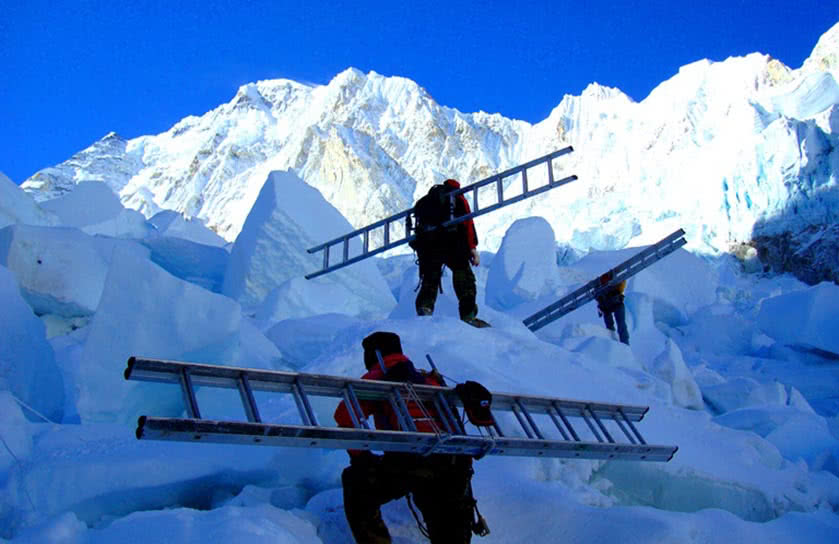
Since 1997, the government of Nepal has contracted SPCC to do exactly that. Each spring, SPCC recruits around eight highly skilled Sherpa mountaineers who enter the icefall early in the season before the commercial expeditions begin their rotations to scout safe pathways, clear snow, and install the aluminium ladders and fixed ropes that all climbers will depend on. They work in shifting ice, in the dark, before anyone else is moving on the mountain.
The Icefall Doctors maintain that route throughout the season, returning to repair damage when ice shifts and seracs collapse. They also manage the route between Base Camp and Camp II. Every climber who moves through the icefall does so on infrastructure built and maintained by this SPCC team yet most expedition dispatches rarely mention them.
Three Decades, One Mission
What makes SPCC unusual in the world of conservation is that it did not come from outside. It is not a Western NGO that arrived with a mandate and a budget. It is not a government programme designed from Kathmandu. It grew from the people who live in the Khumbu the Sherpa communities who depend on the land, the glacier, the mountain, and the tourism economy that surrounds it.
That origin matters. SPCC understands the Khumbu in ways that an external organisation simply could not. It has the trust of the local communities.
It operates in an environment of extreme altitude, difficult logistics, and often severe weather, and it has been doing so continuously since 1991 through political changes in Nepal, through the COVID-19 pandemic that shut the mountain entirely, through the increasing strain of a growing tourism industry.
Over those three decades, it has built waste infrastructure along the trails, moved toward a circular economy approach in one of the world’s most logistically challenging environments, and become the lead organisation for waste management in the entire Everest region.
The People Who Keep the Mountain Clean
When Dawa Sherpa was rescued, the world followed the story of his survival. Seven days alone on Everest. The cold. The silence. The slow crawl toward safety.
What the world did not follow was the question of who found him, and why they were there. SPCC workers were on that glacier because they are always on that glacier. Picking up what others leave behind, walking routes that no one celebrates, doing the work that keeps one of the most iconic landscapes on earth from becoming a dump at the top of the world.
That is what SPCC has been doing since 1991. And in the spring of 2026, almost by accident, the world caught a glimpse of it.
