
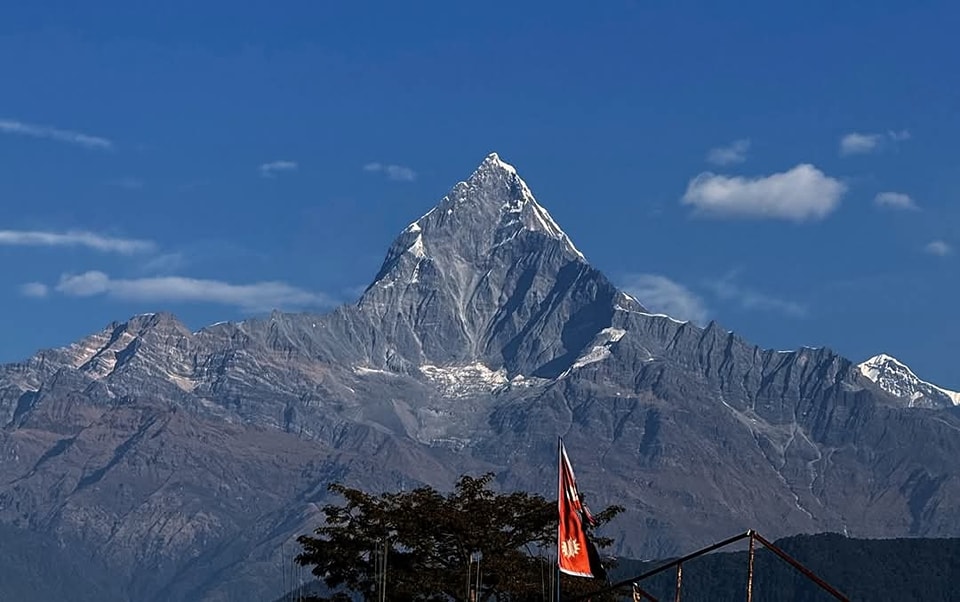

Snow—a priceless symbol of mountain and a important resource for ecosystems, water supplies, and local communities—is vanishing at an alarming rate. Across the globe, mountains are experiencing unprecedented changes in their snow cover due to the far-reaching impacts of climate change.
From the heights of Machhapuchhre in Nepal to the European Alps, the evidence is irrefutable; snow is melting, and the consequences are dire.
In the Himalayan region, in Manang, the mountains are transforming into barren, black cliffs. Locals report that most peaks, which were once blanketed with snow, are now only partially covered.
“It wasn’t like this before. Winters used to be cold most of the time, but now summers are extremely hot, and winters are bitterly cold,” said Sonamtapke Gurung from Tanki Manang. He noted that snowfall during winter has significantly decreased, while rainfall during monsoon seasons has increased.
“Everything used to be covered in white snow, but now even the mountains lack snow,” said Yangdung Gurung of Upper Pisang, reflecting on his 60 years in the village.
Kumar Gurung of Khangsar recalled that snow used to pile up to eight feet but now barely reaches a foot.
Over half the peaks in Manang, including Gangapurna Mountain, Lamjung Mountain, and Pisang Peak, have turned into barren cliffs. Rising temperatures have caused glaciers to melt, swelling glacial rivers and altering the local climate.
The phenomenon of disappearing snow is not limited to the Himalayas. Other iconic regions are facing similar challenges:
In 2024, Japan’s famed Mount Fuji recorded its latest first snowfall in 130 years, with snow arriving on November 6 instead of the usual early October.
Snowfall in the Alps has decreased by nearly one-third over the past century. Rising temperatures and changing precipitation patterns have led to inconsistent snow cover, earlier melting, and disruptions in ecosystems and winter tourism.
The western Himalayas are experiencing a “historical snowless dry winter.” Gulmarg, a popular winter destination, reported an 80% drop in snowfall, while Pakistan’s Hunza region saw unprecedented snow scarcity this winter.
The retreat of snow cover is more than an aesthetic or cultural loss. Snow serves as a natural reservoir, storing precipitation during winter and releasing it gradually during warmer months. Its disappearance has cascading effects
While long-term data confirms a decline in snow cover in the Himalayan region, annual variations persist. Dr. Sher Mohammed from the Integrated Mountain Development Center noted that last winter (November to April) saw the highest snowfall in the Himalayas in 20 years.
He explained, “Some years experience heavy snowfall, while others see very little. Rising temperatures and melting snow continue to impact snow availability in high mountain regions.”
“The disappearing snow across the world’s iconic peaks serves as a big warning. It shows the urgent need for global action to combat climate change. The choices we make today will determine whether future generations can marvel at majestic snow-covered peaks or inherit barren, lifeless landscapes”
Where has the snow gone? The answer lies in the collective decisions we take now to safeguard our planet.
