
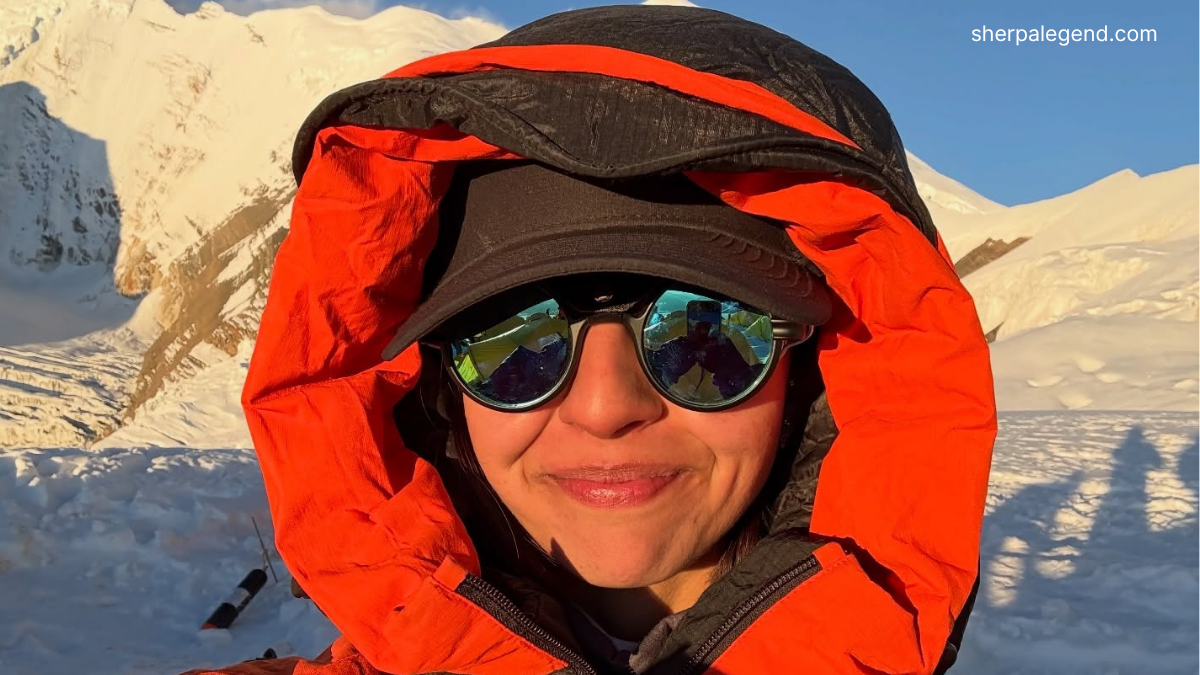

The Film School Student Who Wrote “Everest 2026” on Her Bedroom Whiteboard And Then Went and Did It
How Saanika Shah, a 22-year-old actor and dancer from Mumbai, gave up parties, auditions and a normal college life to become one of India’s youngest Everest summiteers.
Five years ago, a 17-year-old girl sat in her room in Mulund, a quiet suburb in north-east Mumbai, and watched a film Everest. It was based on the real 1996 disaster on the mountain, a story full of loss and tragedy. Most people would have walked away from that film feeling afraid of mountains. Saanika Shah walked away obsessed with them.
She picked up a marker and wrote two words on her bedroom whiteboard Everest 2026.
She had no climbing background. She was not training to be a mountaineer. She was, in fact, doing the opposite enrolling in a Bachelor’s programme in acting at Whistling Woods International, one of India’s well-known film schools. But that whiteboard note stayed up. And over the next five years, while her classmates chased auditions, went to parties and built their acting reels, Saanika quietly built a second life around a single goal: standing on top of the world’s highest mountain.
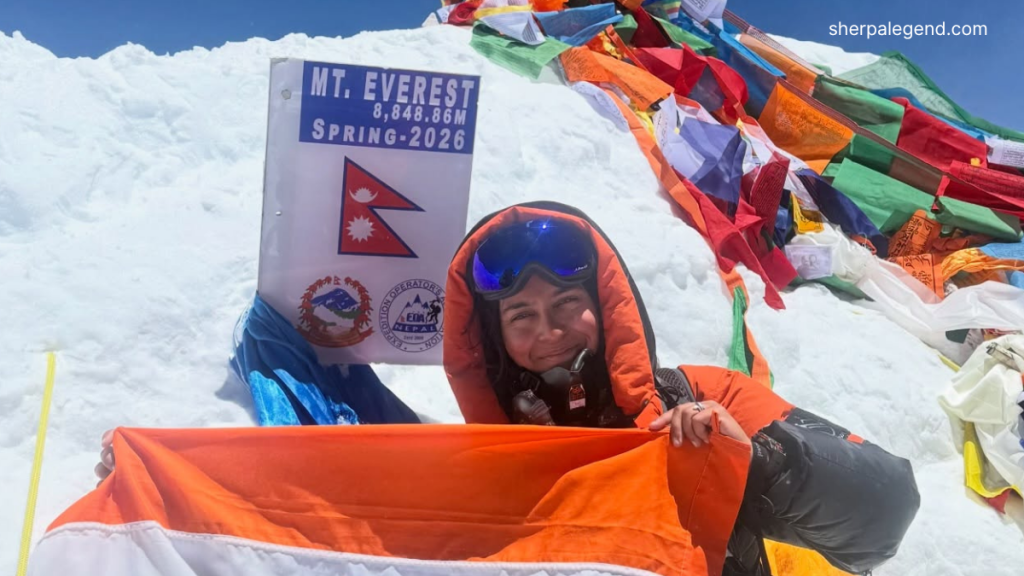
On May 20, 2026, at 11.23 in the morning, after 40 days away from home, she did exactly that. She stood at 8,848 metres, removed her oxygen mask, and could not stop crying.
“The first thing I felt was gratitude,” she said. “I cried on the summit. I wished my parents and sister could witness the moment with me. I had waited five years to stand there, and finally achieving it felt surreal.”
Who is Saanika Shah
Saanika Shah is 22 years old, from Mumbai, and by training she is an actor and a classical dancer, not a mountaineer. She has been learning Bharatanatyam, the classical Indian dance form, since she was four years old. She is also a vegetarian, a detail that would matter a lot more once she reached base camp, where food choices narrow down to almost nothing.
Her parents gave her an unusual head start, even if they didn’t know it at the time. Her father is a businessman and her mother is a nutritionist, and both of them love trekking and running marathons.
They wake up early to train for ultramarathons. Long-distance running and fitness were simply part of family life. Saanika herself was an athlete in school, though she admits she wasn’t naturally driven. “I was also a bit lazy the idea of getting up early to train did not excite me,” she said. “I never imagined that one day I would climb Mount Everest.”
That changed the moment she watched the film in 2021, during the Covid lockdown. “Despite the tragedy, I became deeply fascinated with the world of mountaineering,” she said. She began reaching out to mountaineers, trying to understand how someone actually starts a journey like this.
Why she chose a different path
Most 17- and 18-year-olds in her position heading into a film school, with acting as their focus would have poured every free hour into auditions and building a career. Saanika chose to split her life in two instead, and mountaineering came first.
“I missed out on social life during college. While my friends were hanging out or partying, I would rush for training sessions,” she said. Balancing an acting degree with mountaineering training was, in her words, “equally challenging.” She often found herself exhausted trying to manage rehearsals, academics, expeditions and physical training at the same time. What kept her going, she said, was reminding herself she had “a bigger goal to achieve.”

Her institute, to its credit, worked with her rather than against her. “My teachers understood how passionate I was about mountaineering and often helped me balance training and academics,” she said. Even when expeditions meant missing classes, the college adjusted her attendance. Her yoga teachers taught her breathing techniques that later helped her on the mountain an unexpected link between her acting training and her climbing.
She doesn’t see this as a rejection of the arts. If anything, she believes the two paths will eventually meet. “I have always been inspired by sports films and physically demanding roles. The fact that I am an athlete and an artiste gives me an advantage. I also hope that, one day, I can authentically portray mountaineering stories in cinema because I understand that world deeply.”
Five years of training, one peak at a time
Saanika didn’t go from film school straight to Everest. Between 2021 and 2026, she climbed a series of progressively harder mountains several peaks around 5,000 and 6,000 metres, and one at 7,000 metres purely to build technical skill and physical endurance before attempting the world’s highest mountain.
That 7,000-metre climb, Himlung Himal in Nepal, turned out to be more significant than she initially realised. It was only after reaching base camp that she learned she had become the first Indian woman to climb Himlung Himal. It also gave her, her coach and her parents the confidence that Everest was realistically within reach.
In the final year before her Everest attempt, training became relentless. She woke up at 2 or 3 a.m. daily for strength training, ran 21 to 25 kilometres, went speed-hiking with backpacks weighing 12 to 15 kilograms, and climbed stairs and hit the gym on top of all of it. The single toughest routine, she said, was climbing 500 floors of stairs, which took nearly three hours. “The training was more mental than physical because it taught me consistency and endurance,” she said.
It wasn’t all forward progress. Last year, after already summiting two peaks, she failed on two major expeditions, including an attempt on Mount Aconcagua, the highest mountain in South America. “Those failures were extremely difficult emotionally, but they transformed my mindset and training approach,” she said. Going from that failure to standing on Everest within a single year became, in her words, a huge personal journey.
A dance at Everest Base Camp
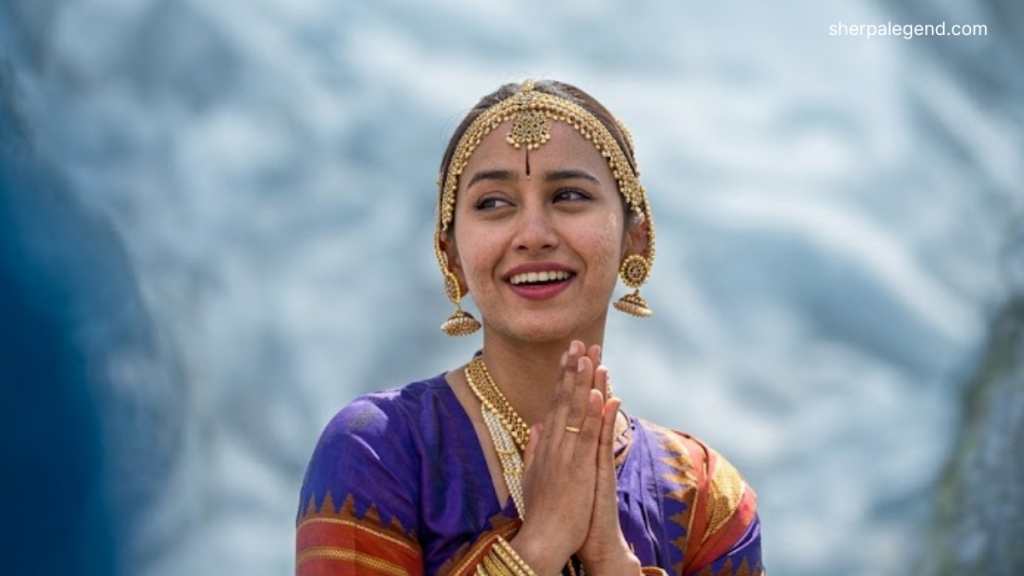
Before her summit push, at Everest Base Camp, roughly 5,300 metres up, Saanika did something few climbers have done: she performed a full Bharatanatyam recital, in costume and jewellery, as an offering to the mountain, which she refers to as Sagarmatha Devi the goddess form of Everest.
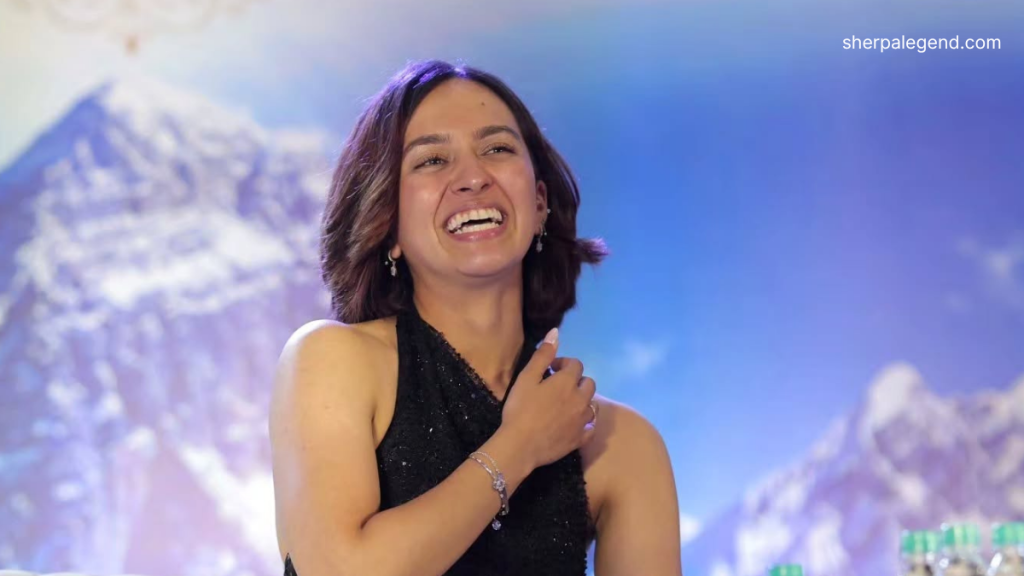
Conditions were brutal for a dance performance. The ground was rocky, not flat. She wore a saree, without socks, in freezing cold. Her hands went numb with cold as she danced, and she worried about falling. The video of the performance spread widely online, and while she received praise, she also faced criticism from some dancers about the technical quality of the performance under those conditions. Her response was simple “It was never about perfection. It was about devotion and emotion.”
The summit push, and 21 hours without stopping
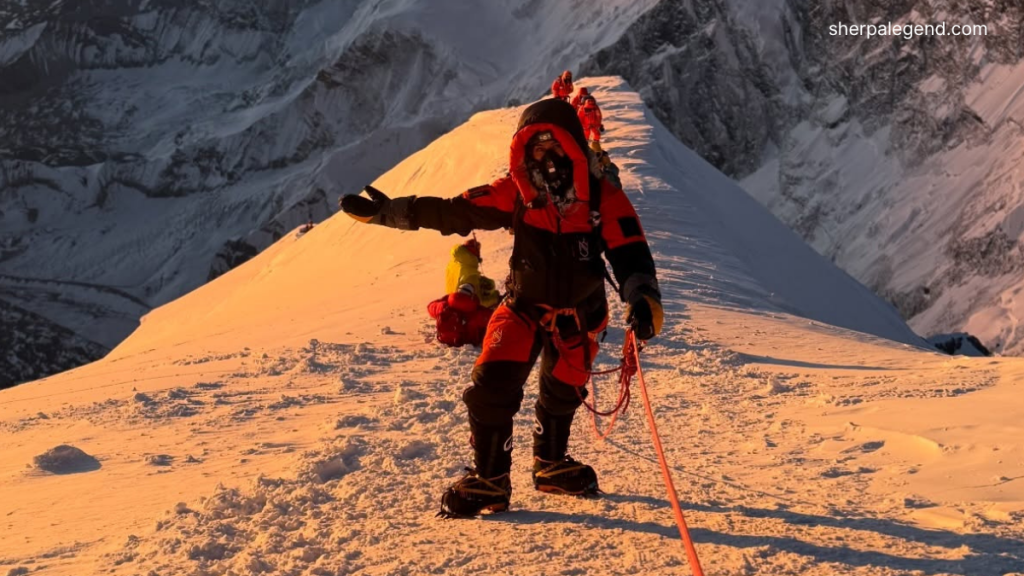
The expedition itself ran 50 days, and the final push to the top was, by any measure, extreme. On the night of May 19, her team reached Camp 4 and barely had time to rest before the decision came to begin the climb to the summit immediately, despite the late hour and a hole in their tent.
From Camp 4, it took nearly 12 hours to reach the top. Near the summit ridge, her team was forced to wait for three hours in temperatures of around minus 40 degrees, stuck behind other climbers at a point called the Hillary Step, just 100 metres below the top.
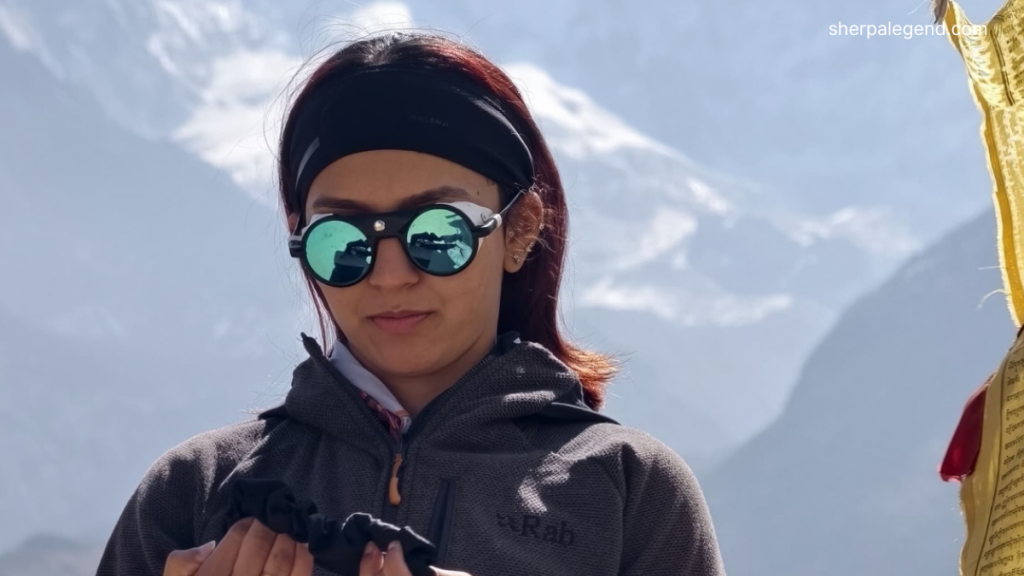
Close to where they waited lay the frozen body of a climber who had died, sitting upright a sight she describes as terrifying. To conserve oxygen during the wait, her team had to reduce their oxygen flow, leaving her sleepy, thirsty and shivering. At one low point, she told her Sherpa she wanted to turn back. He told her “You are so close, Saanika. Be strong for some more time.” She didn’t turn back.
From Camp 4 to the summit and back down again, she was on her feet for 21 continuous hours with no food, no toilet break, and temperatures cold enough to numb her limbs. During the descent, her oxygen mask shifted slightly, and she began losing consciousness.
It was her climbing guide, Lakpa Tenjen Sherpa whom she calls “Lakpa Dai” who acted immediately, removing his own oxygen mask and placing it on her to restore her airflow. “Without Lakpa Sherpa, I would not be standing here safely today,” she later said.
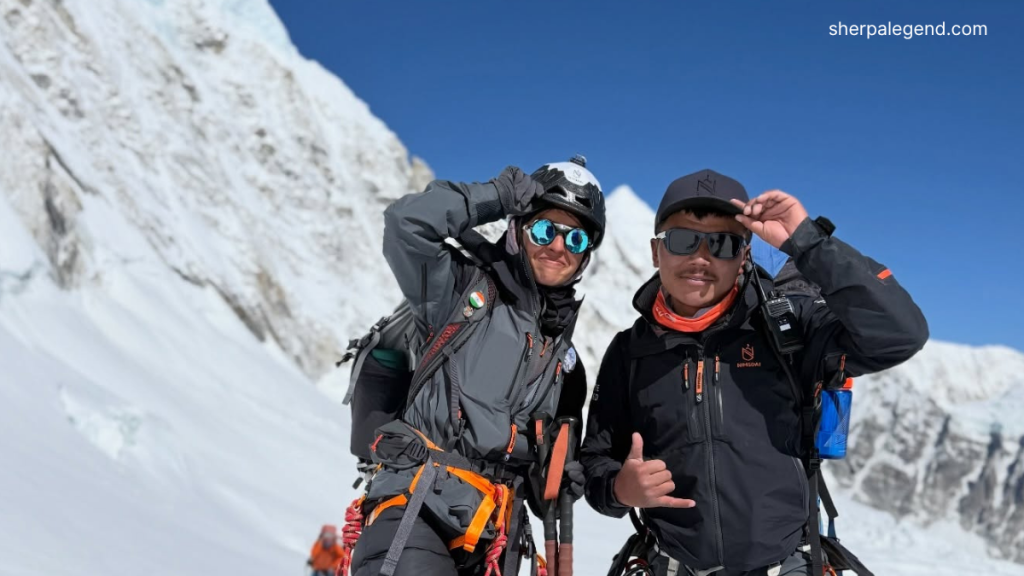
When she finally reached the top, the reaction wasn’t the explosive joy she had imagined for years. “It was a type of peace and calmness and stillness,” she said. She joined her hands in Namaskar, touched her forehead to the ground, and cried for ten minutes, flooded with memories of five years of hardship.
What Everest left behind
Meeting other climbers at base camp, including one who did not survive the descent, changed how Saanika thinks about the mountain and about life. “It made me realise that human life is so fragile,” she said. She now speaks carefully about the mental side of climbing how exhaustion can push people to give up too early, and how “summit fever” can make climbers forget that getting down safely matters just as much as reaching the top.
For now, she’s stepping back from high-altitude climbing to focus on acting, dance and choreography, though she says she still intends to attempt all Seven Summits eventually. Everest, she says, changed her permanently. “Everest made me calmer, more peaceful and more grateful for life,” she said. “Everyone has their own Everest in life. Climb your own Everest with dedication and consistency.”

Great achievement of your life we’re proud of you as an Indian young girl. All power to you and have more success in your future career.
Atul Patel