


In the shadow of the world’s highest peaks, where oxygen thins and danger lurks at every step, there exists a breed of climbers whose names rarely make headlines. They are the unsung heroes of the Himalayas the Sherpa guides who risk everything to help others achieve their dreams.
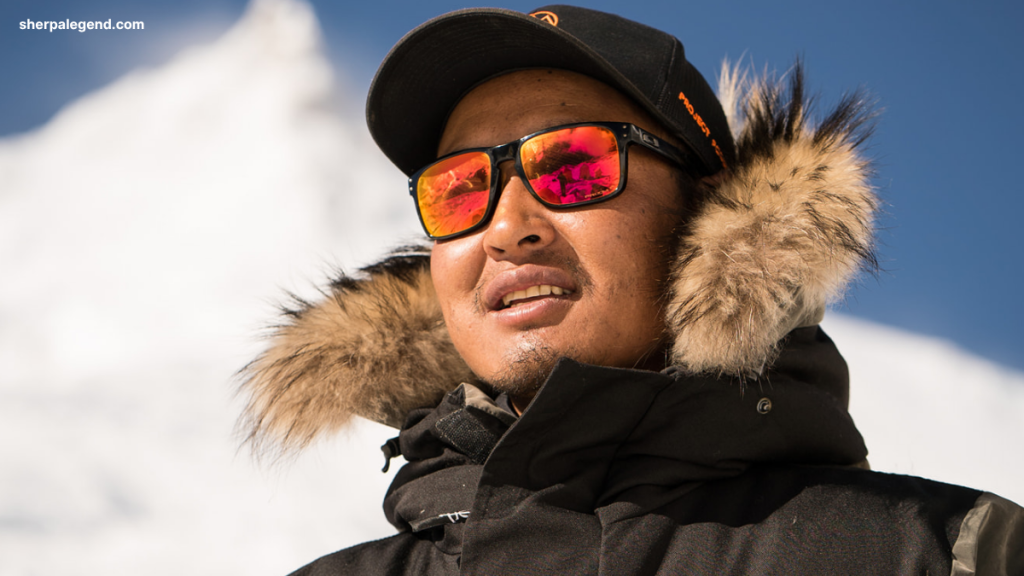
Among them stands Phurba Sonam Sherpa, a man whose exceptional achievements could fill a dozen adventure movies, yet he remains quietly dedicated to his craft, asking for nothing more than to climb, guide, and capture the beauty of the mountains he calls home.
The Boy from Kharikhola
Phurba’s story begins in Kharikhola, a small village in the heart of the Everest region. Like many young Sherpas, he entered the mountaineering world through the kitchen starting as a kitchen boy in 2006 when he was drawn to the climbing industry.
It’s a familiar path in Sherpa communities, where young men watch their elders return from expeditions with stories that ignite dreams of their own mountain adventures.
But for Phurba, the attraction went deeper than stories. There was something about the mountains themselves, about the challenge of guiding others safely through their dangers, that called to him.
He worked his way up from the kitchen to eventually become a guide, each step teaching him more about the mountains that would become his life’s work.
A Harsh Lesson on Manaslu
In 2012, opportunity knocked in the form of a chance to climb Manaslu, the world’s eighth-highest mountain. For many climbers, this would have been a dream come true. For Phurba, it became a nightmare that likely saved his life.
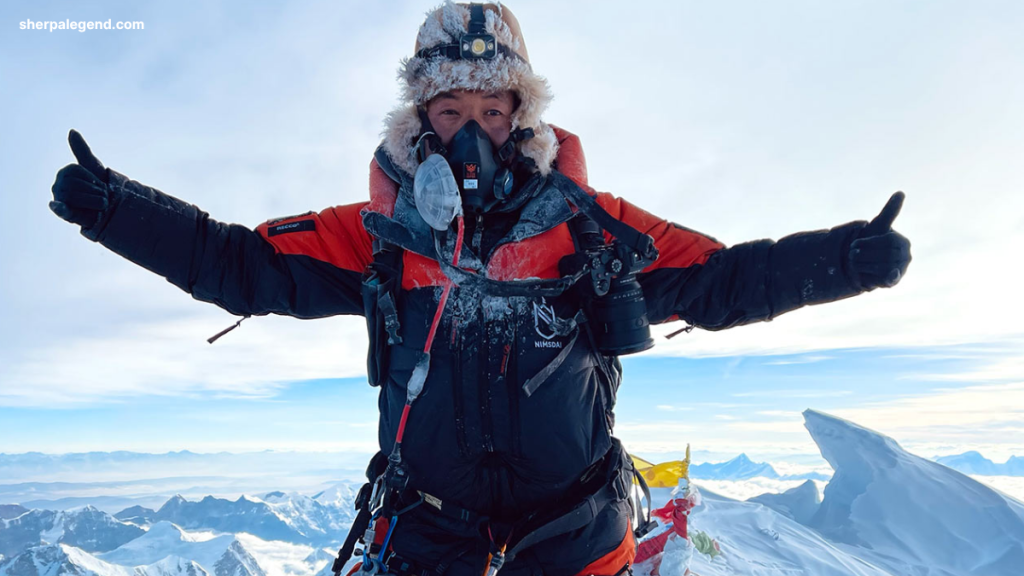
His journey into the world of eight-thousander peaks didn’t begin with glory but with survival. A massive avalanche on Manaslu’s high slopes nearly claimed his life. Scared and shaken, Phurba could have walked away from big mountain climbing forever. Instead, he learned one of the most valuable lessons of his career respect for the mountains comes through proper preparation, not blind ambition.
“Not to rush into big mountains without having a fundamental skill set,” became his guiding principle. Instead of immediately attempting another giant peak, Phurba spent years honing his skills on 6,000 and 7,000-meter mountains.
He took training courses, familiarized himself with different climbing conditions, and slowly mastered the challenging game of high-altitude mountaineering.
This patient approach to learning would serve him well. The mountains, he understood, would always be there. But climbers who rushed without proper preparation often weren’t.
The Professional Years Begin
By 2019, Phurba had gained the courage, skills, and proficiency needed for serious eight-thousander climbing. His breakthrough came when he summited Annapurna alongside Nirmal Purja, marking the beginning of his professional career in big mountain climbing and guiding.
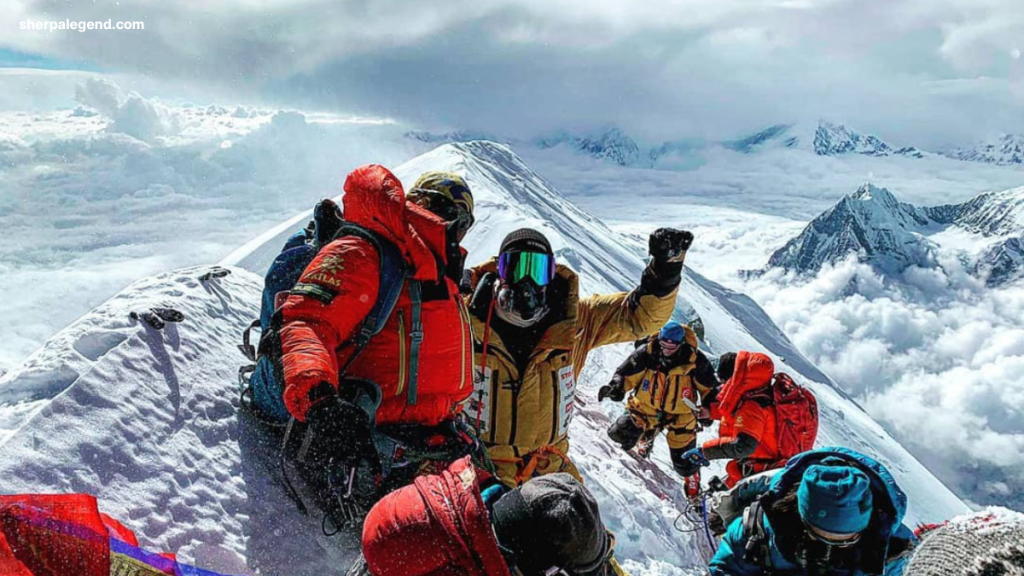
What followed was a remarkable streak of success. Since 2019, Phurba has completed 18 successful ascents of eight-thousand-meter peaks.
The year 2023 alone saw him achieve something extraordinary climbing 11 eight-thousanders within just four months, bringing his total to 13 of the world’s 14 highest peaks.
Today, only one mountain remains on his list Shishapangma. He was scheduled to complete it in autumn 2024, but work called him elsewhere.
His employer sent him to guide a North Face Everest expedition for the Hornbein Couloir ski descent, an expedition that ultimately didn’t happen due to geopolitical tensions. Such is the life of a professional guide you go where you’re needed, when you’re needed, regardless of personal goals.
Phurba remains hopeful he’ll complete Shishapangma next season, joining the exclusive club of climbers who have summited all 14 eight-thousanders a feat that represents the culmination of mountaineering achievement.
Behind the Camera Lens
But Phurba’s talents extend far beyond climbing. He has emerged as one of Nepal’s most skilled high-altitude cinematographers, capturing stunning footage for National Geographic, Seven Summit Treks, and Elite Himalayan Expeditions. His work brings the beauty and danger of the high mountains to audiences around the world.

When asked about his most challenging filming assignment, Phurba doesn’t hesitate K2, the world’s second-highest peak and arguably its most dangerous.
“Filming K2 bottleneck for Anna in 2023 was the scariest experience ever,” he recalls. “The traverse under the serac exposed to constant risk of avalanche, sheer wind, and having to handle heavy gear in one hand at that height had me scared for life. Unfortunately, a big avalanche swept down the serac and almost wiped out the fixed ropes. With a camera in my hand, surviving was a challenge and it’s K2 one misstep and it’s over!”
This blend of technical climbing skill and artistic vision makes Phurba invaluable to expeditions seeking to document their achievements. But as with everything else in his career, he approaches the work with quiet professionalism rather than seeking personal recognition.
When Heroes Save Heroes
Perhaps nothing illustrates Phurba’s character better than his involvement in some of the Himalayas’ most dramatic rescues. These are the moments when the thin veneer of adventure tourism is stripped away, revealing the life-and-death realities of high-altitude climbing.
The 2023 Shishapangma tragedy stands as one of the most horrific mountain disasters in recent memory.
A deadly avalanche swept away several climbers during their summit push, including Anna Gutu and Gina Marie Rzucidlo two American women racing to become the first American woman to complete all 14 eight-thousanders. Also killed were their guides, Tenzin Lama and Mingmar Sherpa, experienced climbers in their own right.
Phurba had been documenting Anna’s eight-thousander journey as her expedition photographer. On that fateful day, a equipment malfunction likely saved his life.
When his oxygen system failed during the summit push, he stopped to change cylinders and rest. Anna and Mingmar continued, taking what they believed was a safer, more direct route to the summit.
Phurba tried to catch up but they had moved too far ahead. Then came the thunderous roar of the avalanche. Had he not stopped to fix his oxygen system, Phurba would almost certainly have been swept away with the others.
Instead of celebrating his narrow escape, Phurba immediately joined the rescue and recovery team. He helped locate the bodies of Anna and Mingmar, bringing closure to families and fellow climbers.
Later, when another of Anna’s guides was found injured at 7,800 meters after being stranded for three days, Phurba was part of the team that carried him down to safety. The climber survived and was eventually evacuated to a hospital in Kathmandu.
Earlier that same spring, Phurba was involved in another dramatic rescue on Everest. A Nepal Army officer had become separated from his climbing Sherpa during a summit push when weather conditions deteriorated rapidly. The officer became stranded at the South Summit at 8,700 meters a deadly situation in Everest’s infamous “death zone.”
The next day, during his own summit push, Phurba spotted the stranded climber. Without hesitation, he and his team diverted from their own goals to conduct the rescue.
They brought the officer down to South Col, from where his original team could evacuate him to medical care. The officer lost some digits to frostbite but survived—a outcome that would have been impossible without Phurba’s intervention.
These rescues highlight a fundamental aspect of Sherpa culture in the mountains the willingness to risk one’s own life to save others, often strangers, with no expectation of recognition or reward.
Breaking Records Quietly
While media attention often focuses on Western climbers and their achievements, Phurba has quietly set records that would be headline news if accomplished by others. He holds the record for completing all five Karakoram eight-thousanders (K2, Nanga Parbat, Gasherbrum I, Broad Peak, and Gasherbrum II) in just 26 days a feat that stands unmatched today.
In another remarkable display of efficiency and skill, he climbed Cho Oyu and Dhaulagiri back-to-back in merely four days. His 2023 season included an incredible run of four summits in just 11 days: Gasherbrum II on July 17, Gasherbrum I on July 21, Broad Peak on July 25, and K2 on July 28.
These aren’t just numbersthey represent an extraordinary combination of physical conditioning, technical skill, mental toughness, and intimate knowledge of high-altitude conditions.
Each of these peaks presents its own unique challenges and dangers. To climb them in such rapid succession requires not just exceptional ability but also careful planning and flawless execution.
Yet when asked about these achievements, Phurba displays the characteristic humility of his community. These are simply the results of doing his job well, year after year.
He climbs because he loves mountains, he guides because he wants others to experience their beauty safely, and he films because he wants to share that beauty with the world.
Philosophy of a Mountain Man
What drives someone to repeatedly risk their life in the world’s most dangerous places? For Phurba, the answer seems to lie in a deep, almost spiritual connection to the mountains themselves.
This isn’t the thrill-seeking of an adrenaline junkie or the ego-driven pursuits of those seeking fame. Instead, it’s the quiet dedication of someone who has found their true calling.
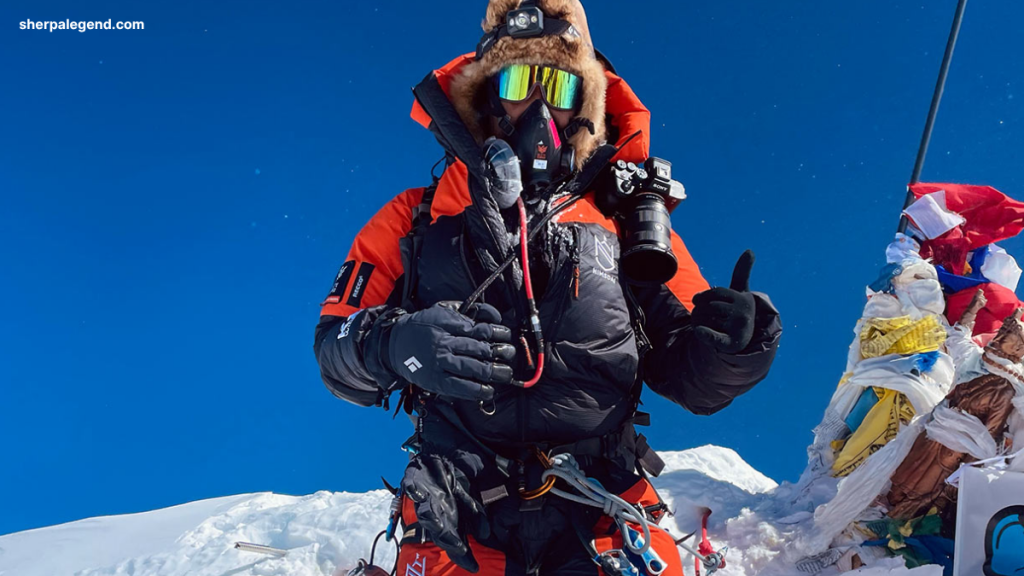
Phurba’s approach to mountaineering reflects a philosophy shaped by both traditional Sherpa culture and hard-earned experience.
The mountains, in his view, demand respect above all else. They are not conquered but visited, not defeated but experienced. This perspective keeps him alive in conditions that have claimed the lives of many others.
His patient approach to skill-building, learned from that early avalanche experience on Manaslu, reflects a mature understanding of what the mountains require. There are no shortcuts to safety at altitude, no substitutes for proper preparation and respect for the environment.
Perhaps most importantly, Phurba understands that mountaineering is ultimately about people. Whether he’s guiding a client to their dream summit, participating in a rescue operation, or documenting an expedition, his focus remains on the human element.
The mountains provide the stage, but the real story is always about the people who dare to venture into their realm.
The Unsung Hero Continues
As this story is being written, Phurba is preparing for another Mountain. He’ll be guiding climbers who dream of standing on the roof of the world, helping them safely navigate the challenges that have defeated so many others. For him, it’s just another season of doing what he loves.
This is perhaps the most remarkable thing about Phurba Sonam Sherpa despite achievements that would make him a celebrity in many other fields, he remains focused on the work itself rather than the recognition it might bring. He climbs, guides, films, and when necessary, rescues, all with the same quiet professionalism that has defined his career.
In a world increasingly obsessed with social media fame and personal branding, Phurba represents something differenta craftsman dedicated to mastering his art, a professional committed to safety and excellence, and a human being willing to risk everything to help others achieve their dreams.
His story is a reminder that some of the most extraordinary achievements happen far from the spotlight, carried out by people who do remarkable things not for recognition but simply because it’s who they are.
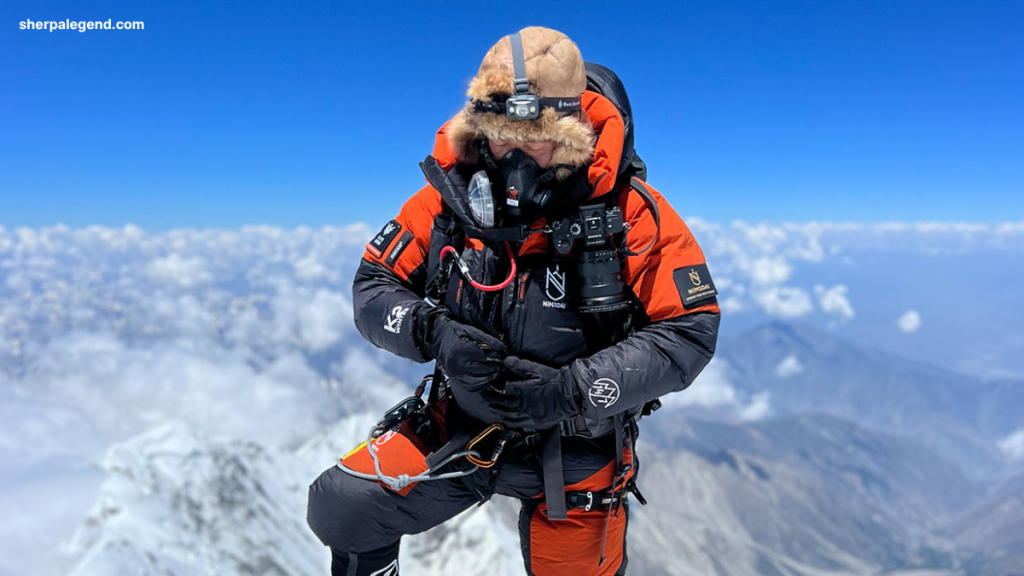
In the high mountains of the Himalayas, where the margin for error is zero and the stakes are life and death, character matters more than charisma, and skill matters more than fame.
Phurba Sonam Sherpa portrays the best of both. He is, in the truest sense, one of the giants of mountaineering a silent giant whose achievements speak louder than words ever could.
The mountains have shaped him, but he has also shaped the experience of countless others who have ventured into their domain.
As he continues his career, one thing remains certain the peaks of the Himalayas have no more dedicated guardian than this quiet man from Kharikhola who found his calling in their heights and has never looked back.
Sherpa Legend is a nonprofit, open-source media platform. None of the material published here is intended for commercial use. All content is shared for educational, cultural, and informational purposes only.
*Images used in the story belong to the original owner.
Sources: Phurba Sonam Sherpa Website, Instagram, Facebook and The Himalayan Times.
