

Pemba Sherpa : Who Climbed Everest with a Transplanted Kidney
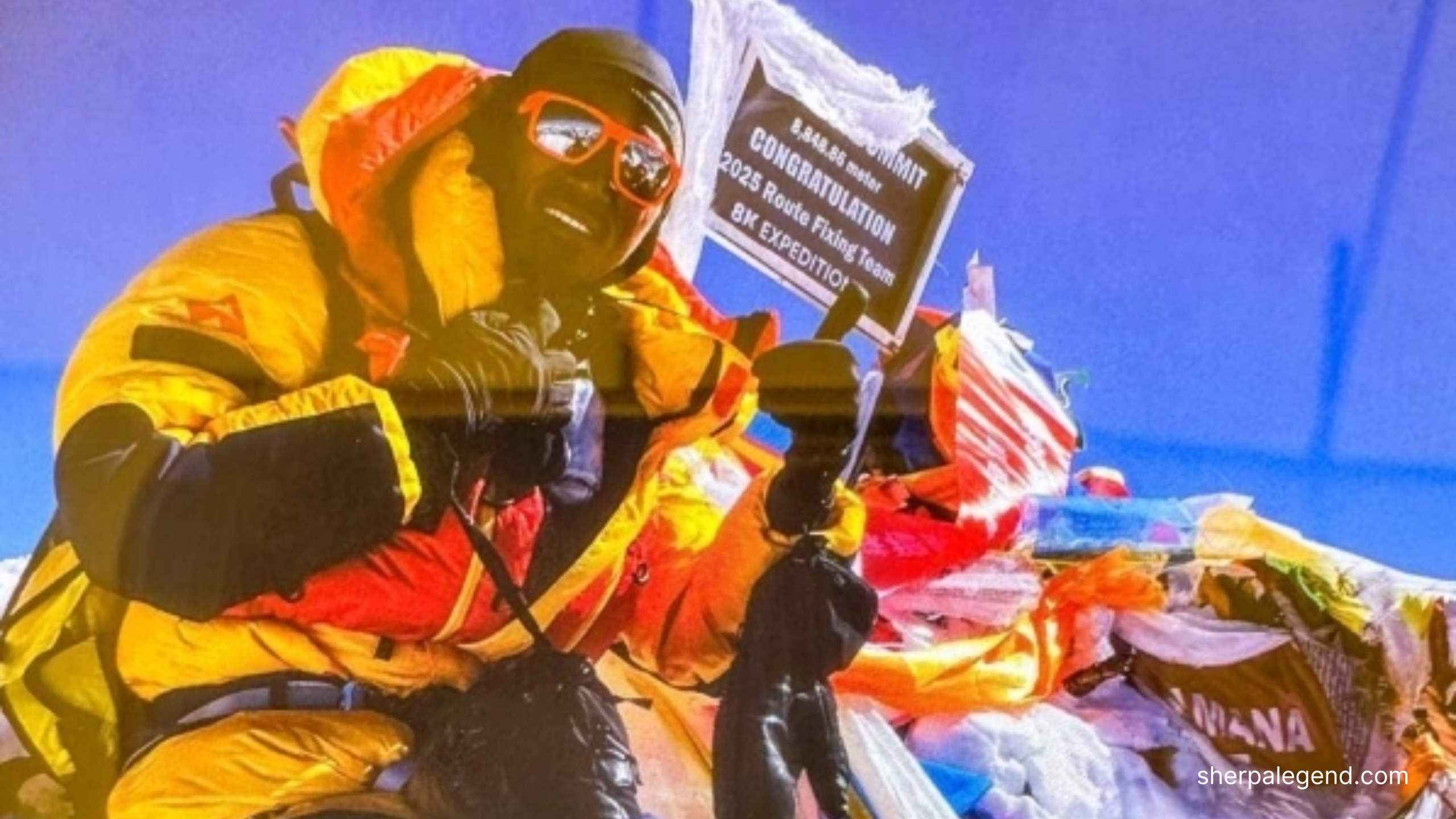
In the early morning hours of May 14, 2024, at exactly 9:30 AM, a 37-year-old pemba stood on top of the world’s highest mountain.
But Pemba Sherpa’s achievement was far more notable than just another successful Everest climb. He had just become the first person with a kidney transplant to ever reach the summit of Mount Everest, proving that even the most challenging health conditions cannot crush the human spirit.
The Early Years From Monastery to the World
Pemba Sherpa’s story begins in the village of Mapya Dudhkoshi Rural Municipality in Solukhumbu district, the same region where Mount Everest towers above the clouds.
Unlike many Sherpas who grow up in the mountaineering world, Pemba took a different path. As a young boy, he studied to become a lama in a monastery, learning the ancient Buddhist traditions alongside his childhood friend Pemba Gyalje Sherpa, who would later become his expedition manager.
“Pemba and I used to study lama together when we were little,” recalls Gyalje. “Later, both of us could not continue our studies.” While Gyalje entered the tourism business, Pemba chose to seek opportunities abroad, a decision that would take him on a journey across continents.
The Journey Abroad Dubai and Japan
Pemba spent five years working in Dubai, followed by another six years in Japan. In Japan, he worked as a Japanese language instructor, building a life far from the towering peaks of his homeland. During this time, he married and had two children, eventually settling in Gokarna, Kathmandu, when he returned to Nepal.
His years abroad were productive and seemingly successful. He had acquired valuable language skills, international work experience, and was providing for his family. But life had other plans for Pemba Sherpa.
The Devastating Diagnosis
When Pemba returned to Nepal during the COVID-19 pandemic in 2020, what should have been a homecoming turned into a nightmare. Medical tests revealed that both of his kidneys had completely failed. The man who had traveled the world and built a career teaching languages was suddenly fighting for his life.
The diagnosis was devastating. Kidney failure means the body cannot filter waste and excess fluid from the blood, a condition that is fatal without treatment. Pemba faced a grim reality: he needed a kidney transplant to survive, and he needed it quickly.
A Father’s Ultimate Gift
In the darkest moment of Pemba’s life, his father, Ang Gyaljen Sherpa, made the ultimate sacrifice. Without hesitation, he donated one of his kidneys to save his son’s life. The transplant surgery took place in 2022 at the Shahid Dharma Bhakta National Transplant Center in Nepal.
The procedure was successful, but the road to recovery was long and challenging. The transplant and recovery process took nearly 30 months. During this time, Pemba had to adjust to a new reality: living with immunosuppressive medications, regular medical check-ups, and the constant awareness that his body now carried his father’s kidney.
From Hospital Bed to Mountain Dreams
Most people would consider surviving a kidney transplant victory enough. But Pemba Sherpa had bigger dreams. As he recovered, he made a promise to the hospital that had saved his life. He would do something exceptional to show the world that kidney transplant recipients could still achieve their dreams.
“I started climbing within two years of my kidney transplant,” Pemba explained. “I fulfilled the promise I made to the hospital that saved my life, risking my life to do so.”
The idea wasn’t just about personal achievement. Pemba wanted to represent the 850 million kidney patients worldwide and prove that medical challenges don’t have to define the limits of what’s possible.
Training for the Impossible
Preparing for Everest with a transplanted kidney required careful planning and exceptional determination. In March 2024, Pemba climbed Lobuche Peak as a test of his abilities. The 6,119-meter mountain served as preparation for the ultimate challenge.
“I thought, ‘If I push myself, I can climb Everest one day,'” he said. The successful climb of Lobuche gave him the confidence that his transplanted kidney could handle the extreme demands of high-altitude mountaineering.
The Historic Climb
On May 14, 2024, Pemba began his final push to the summit. He climbed alongside American mountaineers Michael Rudolph Gutwein II and Saurabh Bhasin, Nepali climber Sajan Dangol, and experienced IFMGA guides. The expedition was organized by Expeditions High Mountain Treks, with support from the Ncell Foundation.
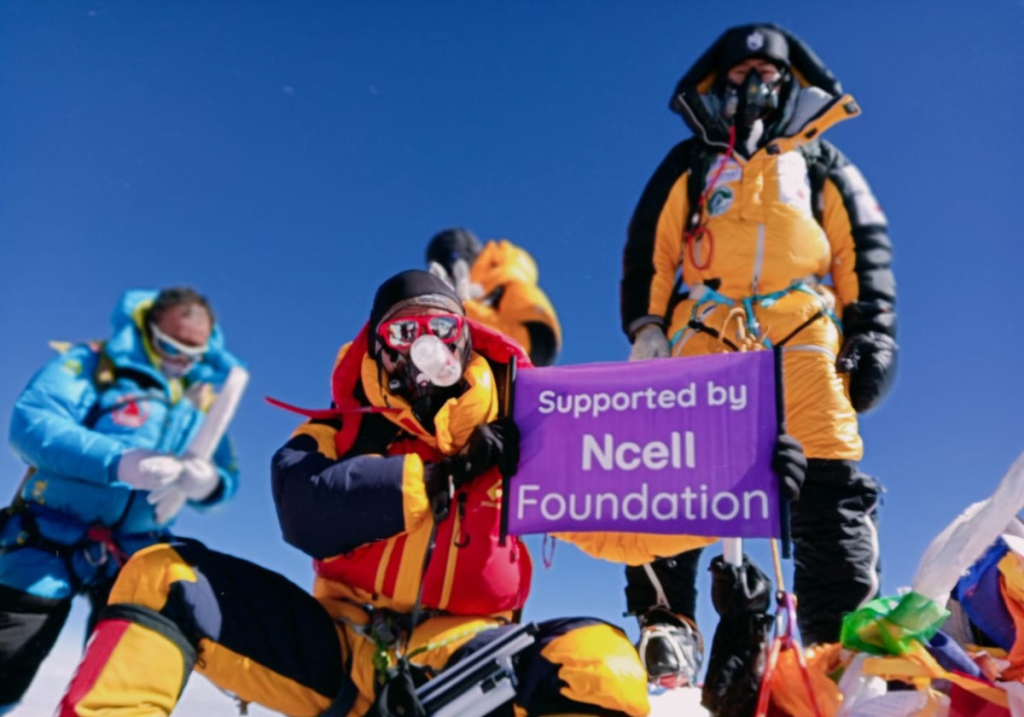
As he climbed higher, Pemba carried more than just his own dreams. He represented millions of people facing physical challenges worldwide. His climb also carried an environmental message about climate change and the melting Himalayas.
When he reached the summit at 9:30 AM, Pemba didn’t just plant a flag or take a selfie. He stood there representing hope for countless others facing seemingly impossible odds.
“I’m standing on the top of the world representing 850 million kidney patients across the globe, to show that nothing is impossible,”
Pemba Sherpa after the climb
Recognition and Impact
Pemba’s achievement quickly gained international attention. He submitted his documentation to Guinness World Records before the climb, and Thaneswar Guragain, the official Guinness representative in Nepal, verified his record as the first kidney transplant recipient to summit Everest.
The Nepal government took notice too. Health and Population Minister Pradeep Paudel honored Pemba and announced plans to appoint him as an ambassador to promote organ transplantation. The minister also pledged to simplify the organ donation process and provide health insurance for mountain porters.
A Message of Hope
Today, Pemba Sherpa lives in Kathmandu with his wife and two children, continuing his work as a Japanese language instructor. But his life has taken on a new dimension as an inspiration to others facing medical challenges.
His story connects with far beyond the mountaineering community. It speaks to anyone who has faced a life-threatening diagnosis, anyone who has received an organ transplant, and anyone who has been told their dreams are impossible.
“I’ve shown that even with medical challenges, you can dream big,” Pemba reflects.
His journey from kidney failure to the world’s highest peak proves that human determination knows no bounds.
Pemba Sherpa’s climb wasn’t just about reaching a summit. It was about reaching beyond the limits that life had seemingly imposed on him, and in doing so, showing the world that with determination, support, and a father’s love, even the impossible becomes possible.
