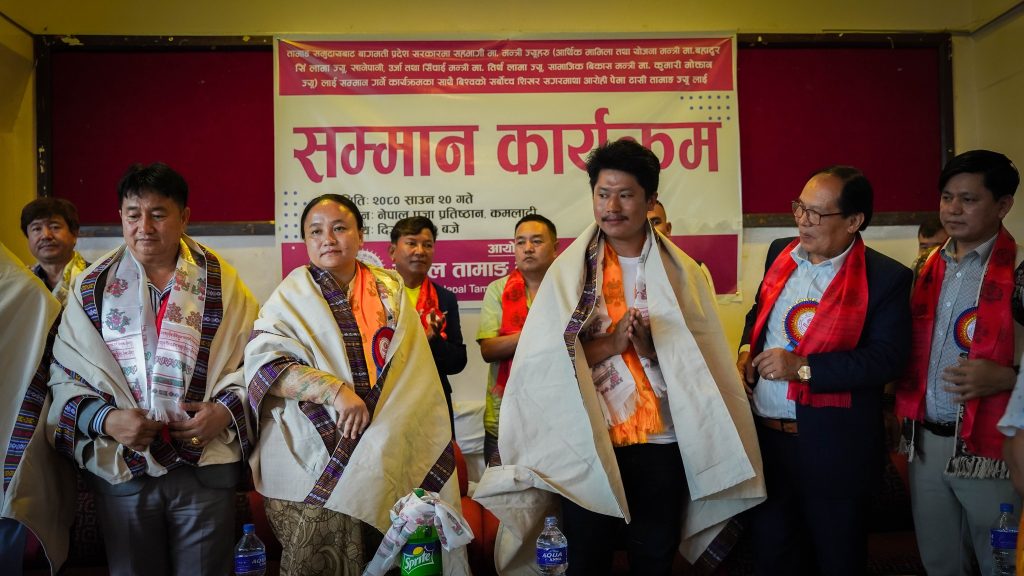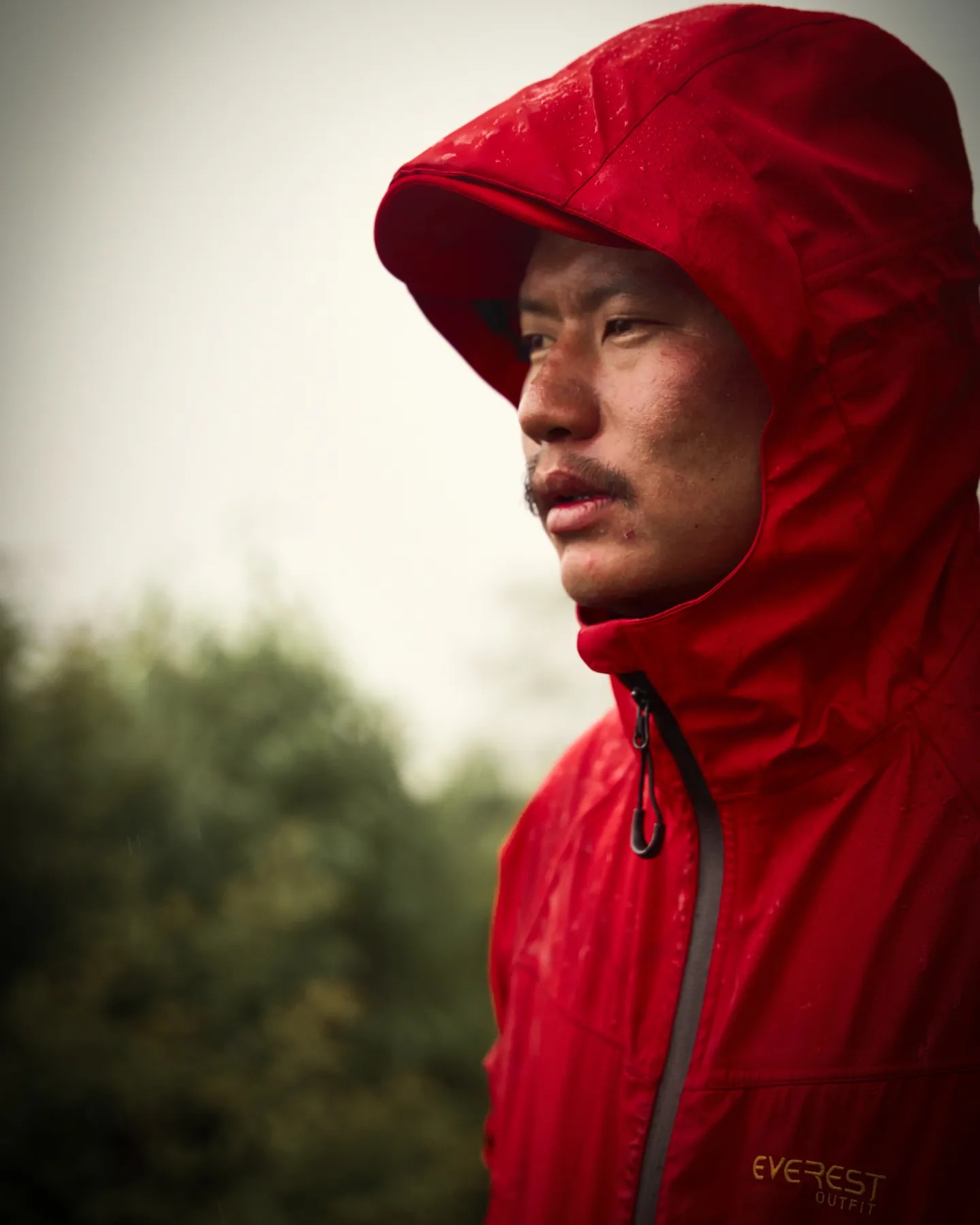

Born in Bhotang, Sindhupalchok, Pema Tasi Tamang grew up surrounded by the majestic Himalayas but faced a life of struggles from an early age. Raised in a challenging environment, he had to navigate hardships, solitude, and financial difficulties, forging his own path toward survival and success.
Despite dropping out of school, Pema turned adversity into ambition, discovering his passion for filmmaking and mountaineering. Starting as an assistant director in Nepali cinema, he worked on over 250 music videos and films, before finding his true calling—capturing the untold stories of the mountains.
His journey into mountaineering was equally unexpected. With the support of Mingma G, he got his first opportunity to attempt Manaslu, marking the beginning of his climbing career. Since then, he has summited Mt. Everest twice (2023 & 2024), filming extreme high-altitude expeditions while embracing the dangers of the mountains.
From surviving near-death experiences on Manaslu to losing Sherpa brothers on Everest, Pema has witnessed both the beauty and brutality of mountaineering. Today, he is one of Nepal’s rising high-altitude filmmakers, dedicated to telling authentic stories of Sherpas, climbers, and the Himalayan spirit. An exclusive interview with Pema Tasi Tamang AKA Sensai Pema Waiba
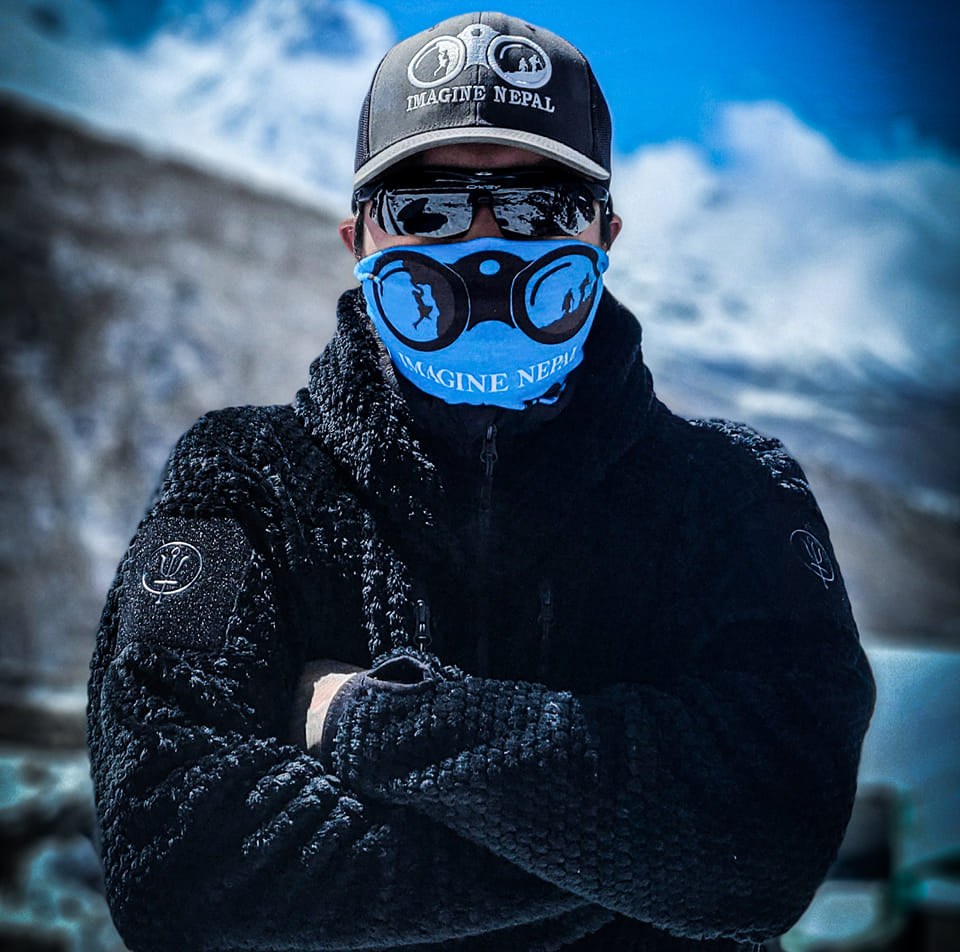
1: Can you tell us about your birthplace, childhood, and family background?
Pema Tasi Tamang AKA (Sensai Pema Waiba): Bhotang is a beautiful and culturally rich village in Sindhupalchok District, Nepal. It lies near the capital Kathmandu, yet it maintains its traditional lifestyle and natural beauty. Located in the Himalayan region, Bhotang is surrounded by majestic mountains, dense forests, and rivers.
The village serves as a gateway to several trekking routes and is close to the Panch Pokhari, Gangchhenpo, Dorje lakpa & Jugal Range. In the past, most people were uneducated, and many had to go abroad for work, especially to Malaysia, Qatar, Kuwat the Gulf countries, or India.
The main sources of livelihood are farming, livestock, and seasonal tourism. People grow crops like maize, wheat, and potatoes, and they raise yaks and chauris in the highlands. In recent years, with the rise of trekking and adventure tourism, Bhotang has gained attention among travelers and filmmakers. In recent years, Bhotang has seen a big transformation, especially in education. Unlike the past, when most people were uneducated, today, many young people are going to school and even pursuing higher studies. Several schools have been established, and students now have better access to education. More parents are encouraging their children to continue their studies instead of going abroad for labor work. Some youth from Bhotang are now studying in Kathmandu and even abroad. After the 2015 earthquake, many houses, schools, and roads were rebuilt.
Technology and social media have helped people connect with the world and learn new skills.
Some locals have started small businesses, tourism ventures, and farming innovations to improve their livelihoods. Even though challenges still exist, Bhotang is changing with more education, opportunities, and hope for the future. I feel proud to see my village grow and evolve.
My family background has not been easy. Even today, some of my family members are working abroad to support themselves and their loved ones.
In the past, most people in my village, including my family, struggled with financial difficulties. Many had no choice but to go abroad for labor work. Even though I come from a challenging background, I always wanted to do something different. I chose a different path filmmaking even when there was little support for it. Life is still not easy, but I believe in hard work, learning, and moving forward. My journey is not just for me it’s also for my family, my people, and my village.
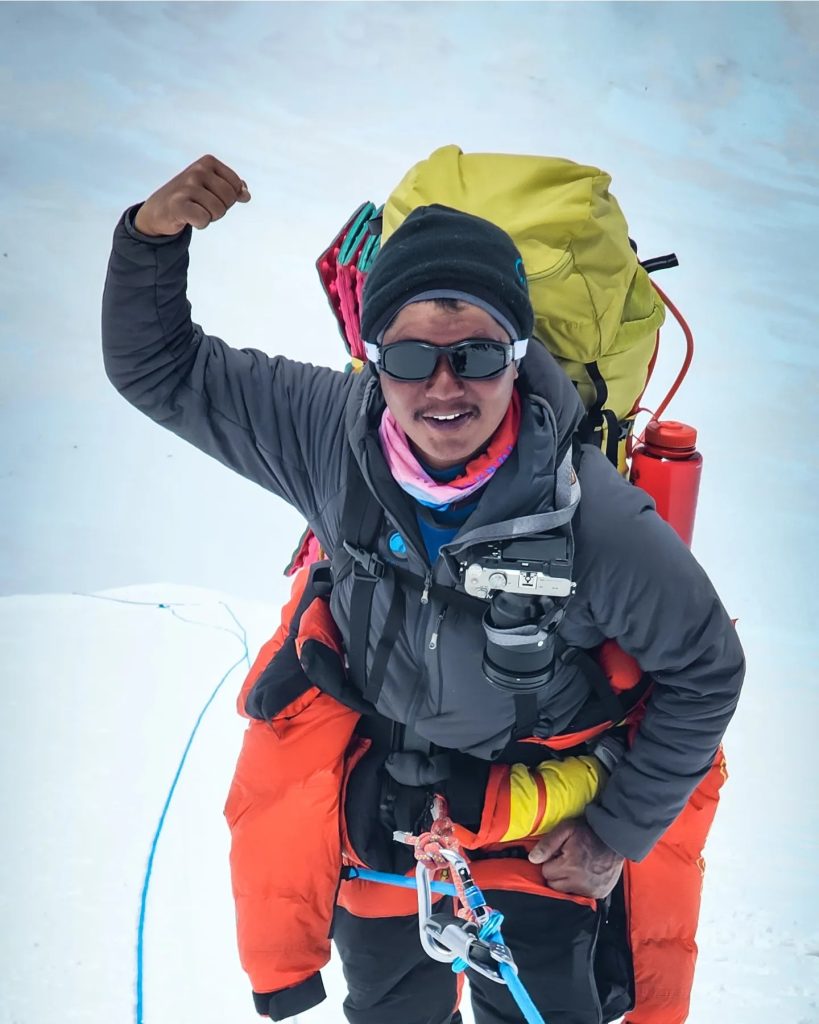
2: What was life like in your village? What challenges did you face, and what dreams did you have as a child?
Pema: I was born in Bhotang, Sindhupalchok, a village near the capital city of Nepal. Back then, most people in my village were uneducated, and many had to go abroad for work.
One of my biggest challenges in life started just 13 months after I was born—my father and mother separated. After that, I was raised in my Mamaghar.
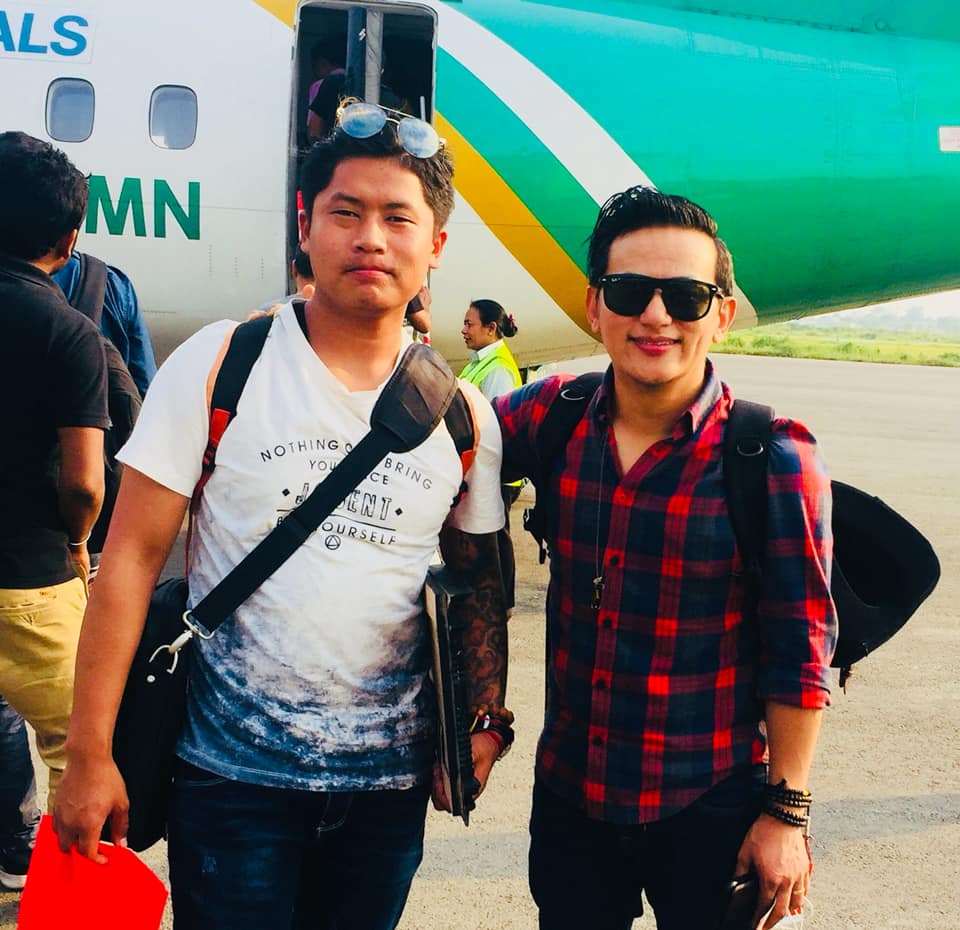
My childhood was a mix of school and hard work. During school vacations, I used to go to Chhauri Goth (yak and chauri). But when I turned 13, due to some family issues, I had to leave my Mamaghar. From then on, I started living alone.
Life became tough—I had to go to school every day, and on Saturdays, I worked to survive.
As a child, I always dreamed of becoming an army officer. But life had a different path for me, leading me toward filmmaking and adventure.
3: Could you share details about your education and training?
Pema: I failed my 10th grade, and due to some government education policies, I never went back to school. Looking back, sometimes I wonder—what if I had continued? If I had passed, maybe I would be doing some regular job today, living a completely different life.
But life had other plans for me. Not going back to school taught me real-life lessons that no classroom ever could. Every struggle, every experience, and every challenge shaped who I am today.
And now, Sherpa legends ask about my journey, I feel grateful. Thank you so much for showing interest in my story—it means a lot. On the film side, I have attended so many workshops. Every experience has shaped my learning and growth.
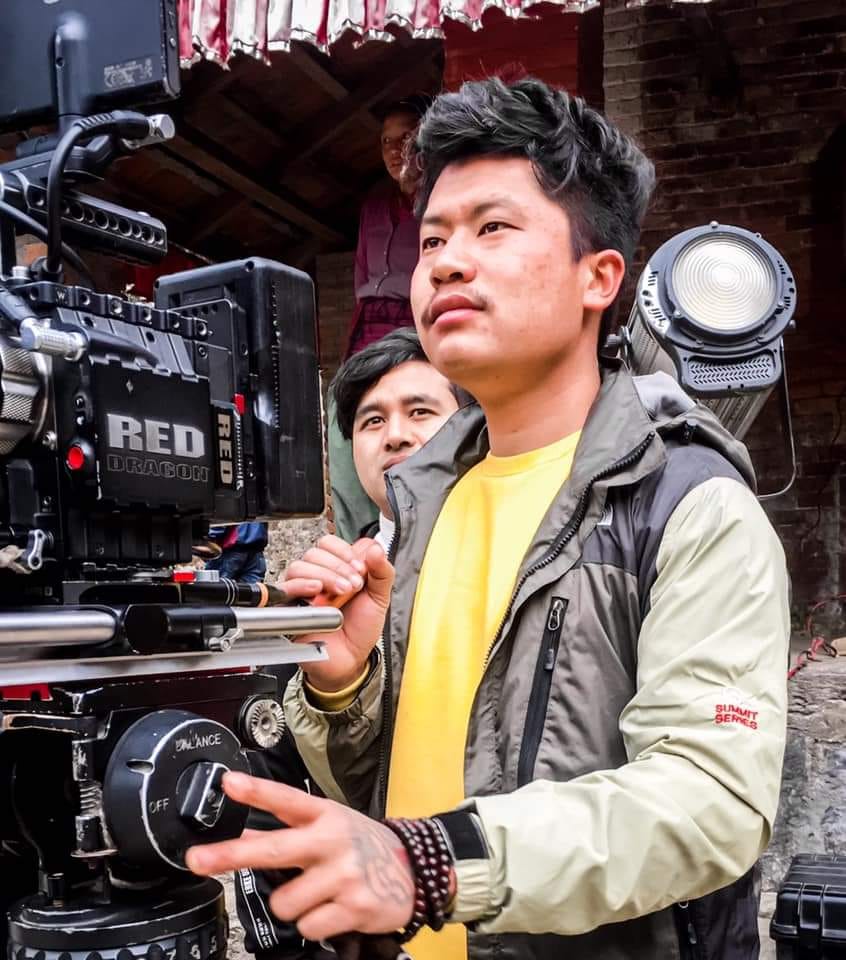
One of the key milestones in my journey was completing a 3-month course in Story Writing and Directing at Reliance Institute, India. This course gave me deeper insights into storytelling, scriptwriting, and the art of direction. On the climbing side, I have completed various trainings, including:
• Introductory Rock Climbing
• High Mountain Rescue
I also had the opportunity to work as the Head Instructor for Nepal’s First UAV (Drone) Training, where I conducted 10-day workshops.
Most recently, just a month ago, I participated in a workshop organized by the Nepal Film Development Board, further expanding my skills.
4: Which was the first mountain you climbed, and how did you get the opportunity?
Pema: The first mountain I attempted to climb was Manaslu, though I didn’t reach the summit.
One day, out of nowhere, I got a message on Instagram from Mingma G Brother. He said,
“Sensai Brother, do you want to go to Manaslu Base?”
Without hesitation, I replied, “Sure, Dai!”
Mingma G then told me, “Okay, come to my office.” I agreed and went to meet him. When we met, he asked me,
“How high have you climbed before?”
I replied, “Just Everest Base Camp (EBC).”
He simply said, “Okay, done! You go to Manaslu top.”
At that moment, I couldn’t believe it. Oh my god! This was my opportunity! I never expected such a chance, but there it was, right in front of me.
That moment changed everything—I knew this was going to be a new adventure in my life.
5: How did you get into filmmaking? Who or what inspired you to pursue this path?
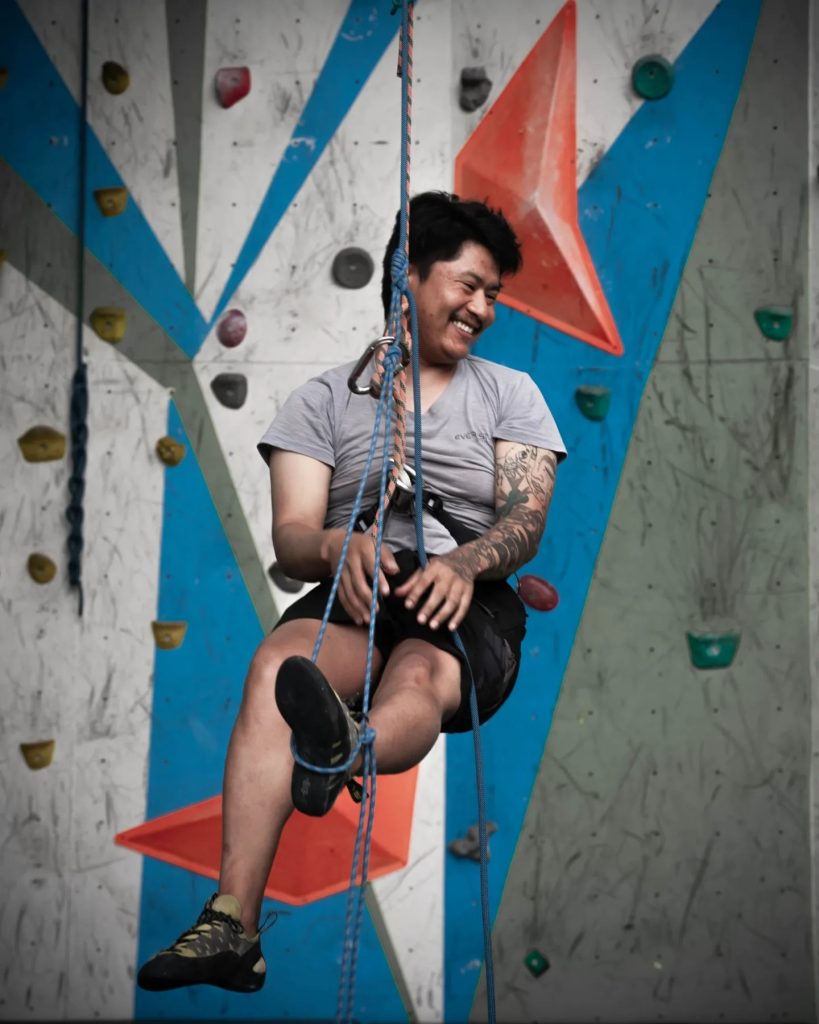
Pema: My filmmaking journey started in 2006/2007 with first movie as supporting role, and my first inspiration was Ngima Chhiring Tamang, who is now a Wada Chairperson. Coming from my aunt deeply connected to the Tamang film industry, I always wanted to do something different in Nepali cinema. In 2012, I got my break as an assistant director in my second movie. For that, I am deeply grateful to Sheena Tamang (my aunt) and Roshan Uncle for their support. By 2016, I took on a new challenge—stepping in front of the camera to play a role as an artist. I wouldn’t say I was inspired by anyone specific, but storytelling was always a part of me. Back in school, I used to write dramas about my village, social issues, and real-life stories. We didn’t just write—we performed these dramas in many places, spreading awareness through storytelling. In 2015, I went to India, where I struggled and learned important lessons about life. I worked on commercial projects in Indian cinema, and that experience made me realize the potential of Nepali cinema. I saw that we had so many stories yet to be told. That’s when I decided—I wanted to come back and work in Nepal. By 2017, I was back in Nepal, fully dedicated to my craft. Between 2017 and 2019, I worked on many projects, including Nepali movies and over 250 music videos. In 2018, I got another major opportunity—I worked on my third movie as a Director of Photography (DOP). That was a big step forward in my technical and creative journey. In 2022, I had one of my most exciting experiences—I worked on Raju Lama’s documentary and music video in the Everest Region as a DOP and Music Video Director. Filming in such an extreme and breathtaking environment was both a challenge and a privilege, and it reinforced my love for storytelling through visuals. But I also noticed a pattern—if we had a good story, there were issues with the artists. If we had great artists, there were technical problems. And no matter what, there were always financial struggles. These challenges taught me valuable lessons about the reality of the Nepali film industry. Even today, I don’t consider myself a professional—I am still working, still learning. But one thing is certain: my passion for storytelling and filmmaking will never stop.
6: Tell us about your Mt. Everest expedition—what were the most memorable moments?
Pema: Summiting Mount Everest twice has been an incredible journey, filled with unforgettable moments and vastly different experiences.
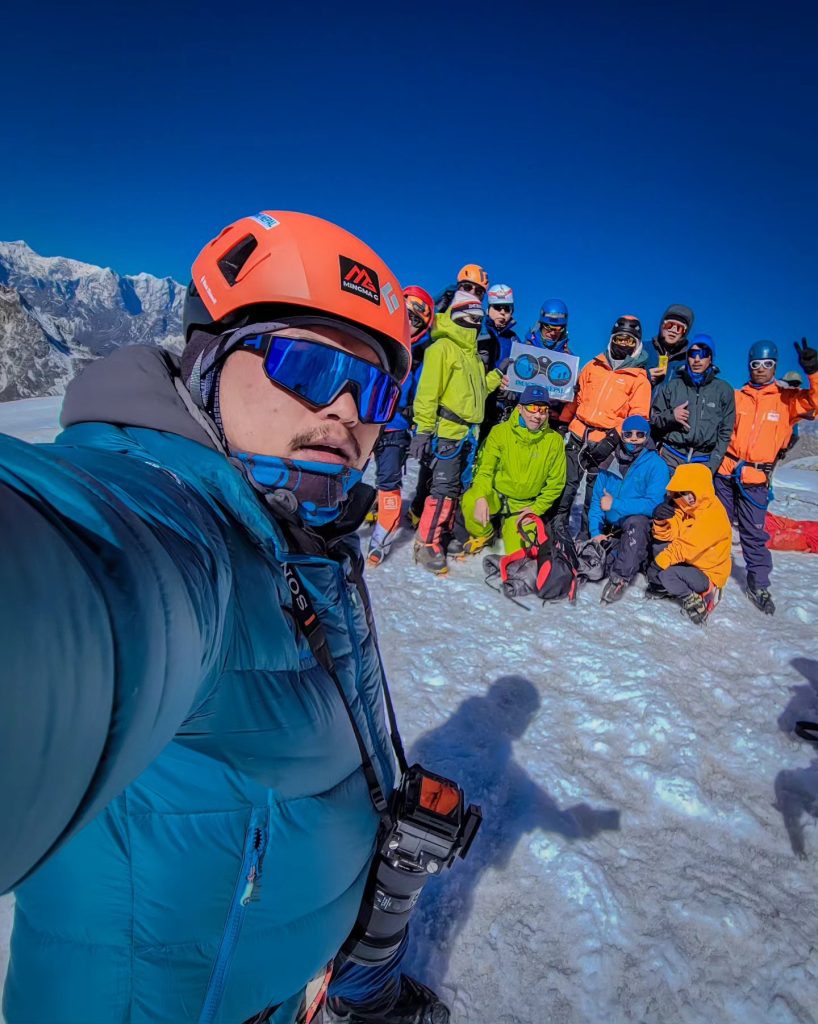
In 2023, my first Everest summit was truly special. When I reached the top, there were only two of us standing on the summit. The silence, the vastness of the Himalayas stretching endlessly around me, and the feeling of being on top of the world in complete solitude was something I will never forget. It was a deeply personal and peaceful moment—just the mountain, the sky, and us.
In 2024, however, the experience was completely different. When I reached the summit, I was met with heavy traffic—so many climbers making their way up and down. It was a stark contrast to my first summit, and it made me realize just how much Everest has changed over the years. Managing the climb in such conditions required extra patience, strategic timing, and caution.
Both summits were incredible in their own ways, teaching me valuable lessons about endurance, adaptability, and respect for the mountain. Everest is not just about reaching the top; it’s about the journey, the challenges, and the memories that stay with you forever.
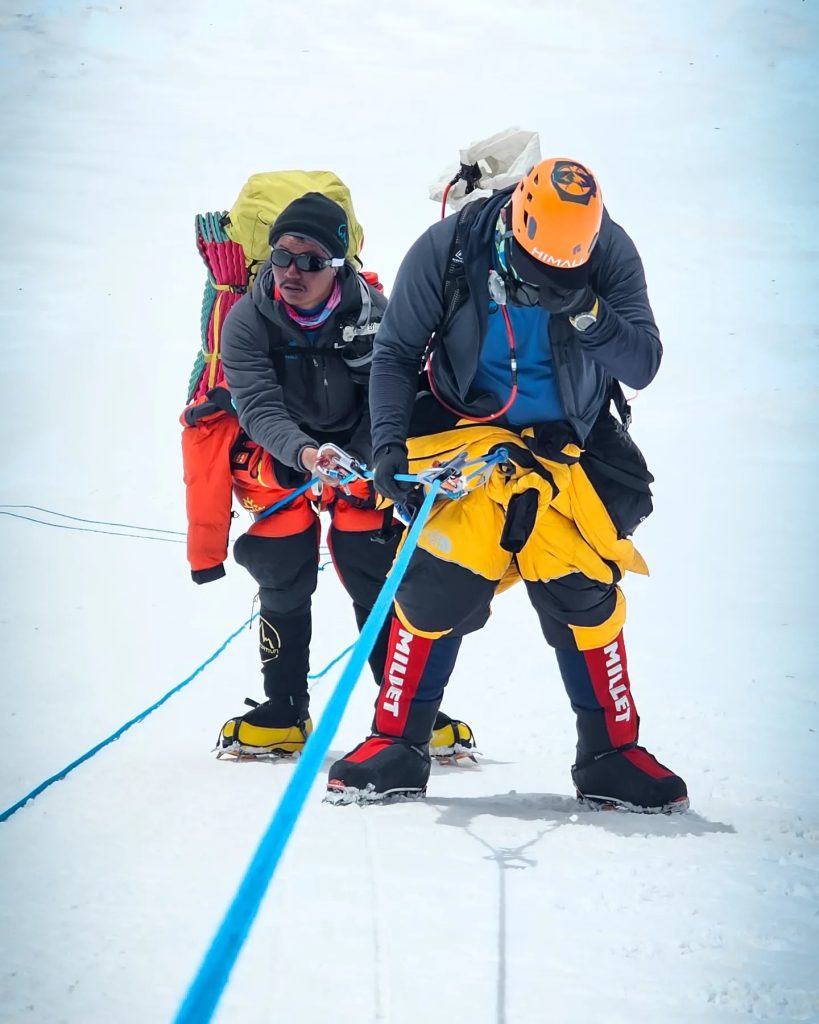
7: Have you ever had a life-threatening experience in the mountains? Have you faced any major accidents?
Pema: I have faced many dangerous moments in the mountains, and some of them are unforgettable. My First Mountain Mingma G brother gave me the opportunity to climb Manaslu. On our second attempt, the weather turned bad. We reached Camp 2, and then it snowed non-stop for 40 hours. We were stuck at Camp 2, and finally, we had to cancel our summit push.
While descending, between Camp 1 and Camp 2, we lost sight of the rope in the snow. At one point, I was hanging for almost 15 minutes, unable to move. When the way finally cleared, I moved forward. Just 2 minutes later, a Sherpa brother fell and was gone.
That moment was terrifying I had just been hanging at the same spot for 15 minutes, and if I had stayed longer, it could have been me.
In 2023, during my Everest climb, I lost three Sherpa brothers. Before they went ahead, I had told them, “Come back safely, brother.” But I never knew those would be my last words to them.
That loss hit me deeply. When you lose someone close to you in the mountains, you truly understand how fragile life is.
These experiences have taught me that mountains are beautiful but unforgiving. Every step is a test of courage, patience, and survival.
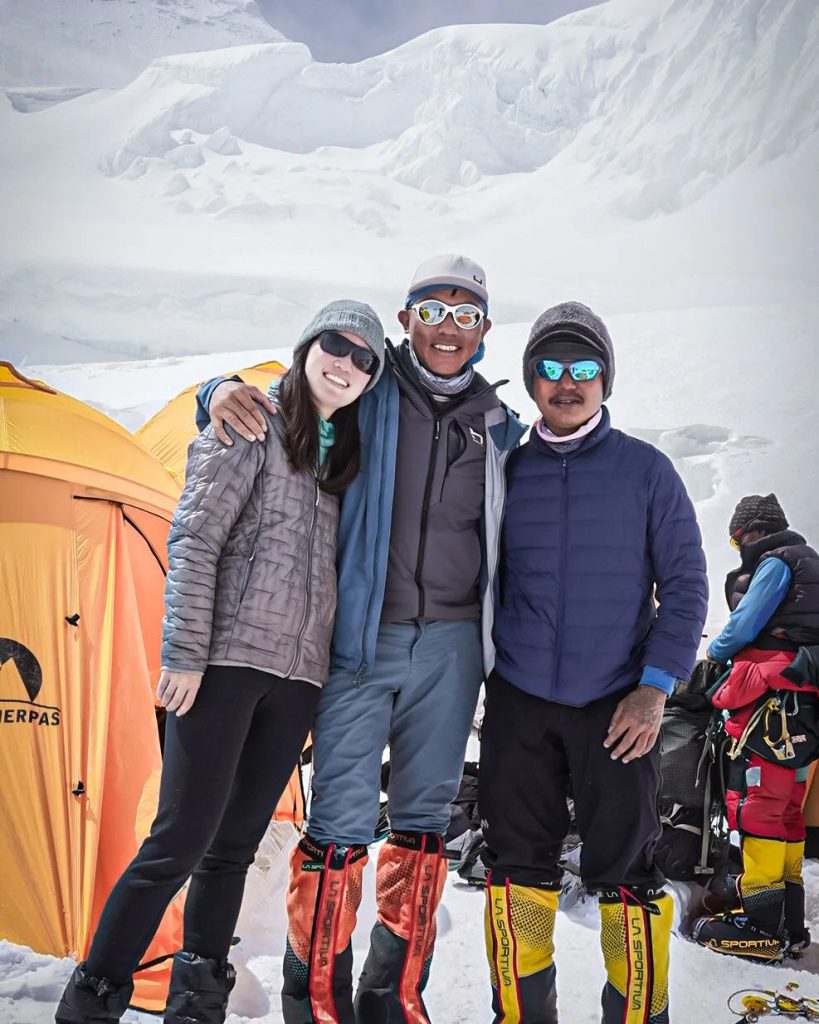
8: Who has been your greatest inspiration, and why?
Pema: My greatest inspiration has been Mingma G, my big brother and my backbone mountain journey. His unwavering support and belief in me have shaped my journey and opened incredible opportunities. In 2022, he gave me the chance to attempt Manaslu, my first 8000er. Although I wasn’t successful at the time, it was a valuable learning experience. With his continued guidance and support, I finally stood on the summit of Manaslu in 2024.
Everest has been another defining chapter in my journey. I successfully summited Everest for the first time in 2023 and again in 2024, pushing my limits and deepening my connection with the mountains. In 2024, I also had the opportunity to summit Shishapangma Tibet China, further strengthening my passion for high-altitude exploration and filmmaking.
My journey in the mountains began in 2022 with Raju Lama (Everest Expedition) during our trek to Everest Base Camp. His deep connection with nature and the mountains inspired me to see these landscapes beyond just their physical challenges but as places of profound beauty and storytelling.
Beyond individuals, I draw immense inspiration from the entire Sherpa community and all climbers who dedicate their lives to the mountains. Their resilience, strength, and spirit drive my passion for storytelling, pushing me to capture and share their incredible journeys with the world.
9: What message would you like to share with aspiring high-altitude filmmakers? We look forward to hearing your story!
Filmmaking in the high Himalayas is not just about capturing breathtaking landscapes—it’s about telling the untold stories of the mountains, the people, and their struggles. The extreme conditions demand patience, discipline, and deep respect for both nature and local communities.
To succeed, prepare well—physically, mentally, and technically. The harsh climate, unpredictable weather, and high altitude can test your endurance. Learn to adapt because nothing goes exactly as planned in the mountains. Equipment can fail, weather can turn, and survival always comes first. Prioritize safety—no film is worth risking lives.
Respect the locals and their culture. Their knowledge of the mountains is invaluable, and their stories deserve to be told with authenticity. Also, protect the environment—leave no trace and be mindful of your impact.
Above all, stay true to your vision. High-altitude filmmaking is challenging, but it offers a unique chance to share stories that inspire and create change. If you are passionate, persistent, and willing to embrace the hardships, the mountains will reward you with moments that few get to experience. Dare to tell the stories that matter.
“Filmmaking and mountaineering have taught me that true strength lies in resilience, patience, and the people who stand by you. Special thanks to Mingma G Dai, the Imagine Nepal family, Raju Lama (Mongolian Heart), and all my Sherpa brothers and sisters who have inspired and supported me on this journey. Your belief in me fuels my passion to tell stories that matter.”