
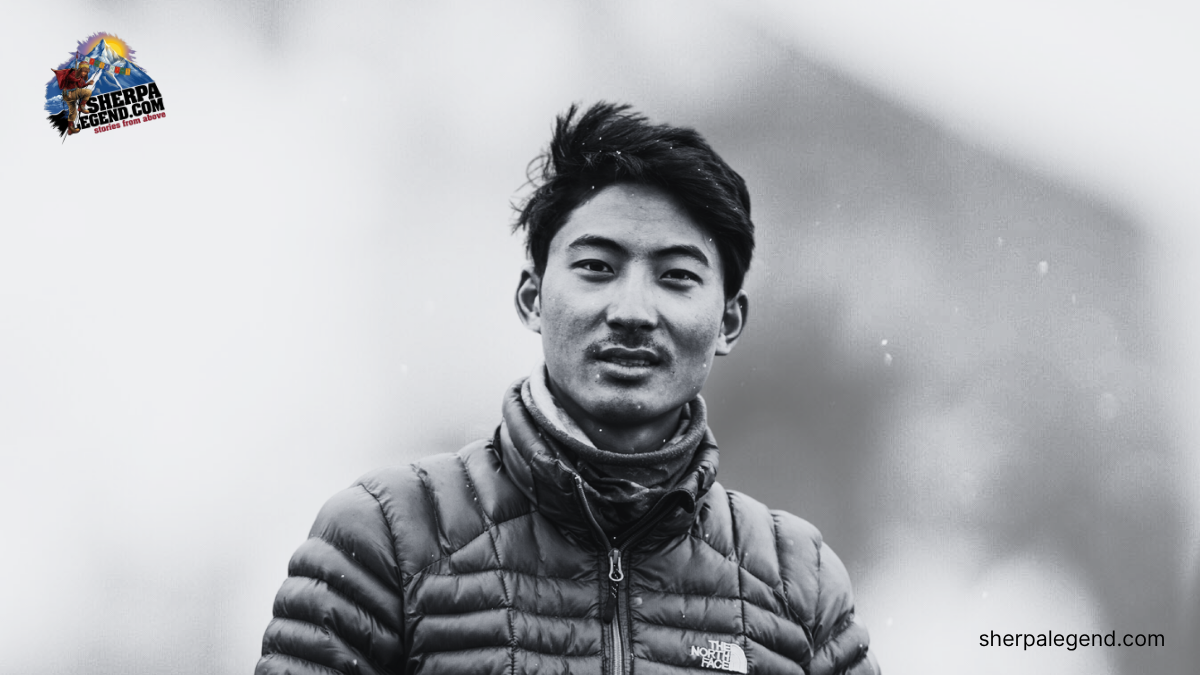

A tribute to the 29-year-old Sankhuwasabha climber who died carrying forward a family’s legacy on Broad Peak
In Talkharka, mornings start early. Before the sun clears the ridge, Nawang Thendu Sherpa would lace up his boots, pack his bag, and walk out toward the mountains. His mother packed him food. His brothers checked his gear. Nobody said much. In this house, leaving for Everest or Makalu was as normal as leaving for the fields.
This is how his village remembers him first, not the avalanche, not the headlines. Just a young man walking the same trail his father and brothers had walked, carrying on something that was never really his to put down.
A Family Built on the Mountains
Nawang was born into a household where mountaineering was not a career choice but an inheritance. His father and three of his brothers had all summited peaks above 8,000 metres, an extraordinary record for a single family from one remote village in Sankhuwasabha. Growing up, Nawang did not need to look far for role models. He saw them at the dinner table, home from Everest or Manaslu, telling their stories quietly, the way people do when the danger is too familiar to dramatize.
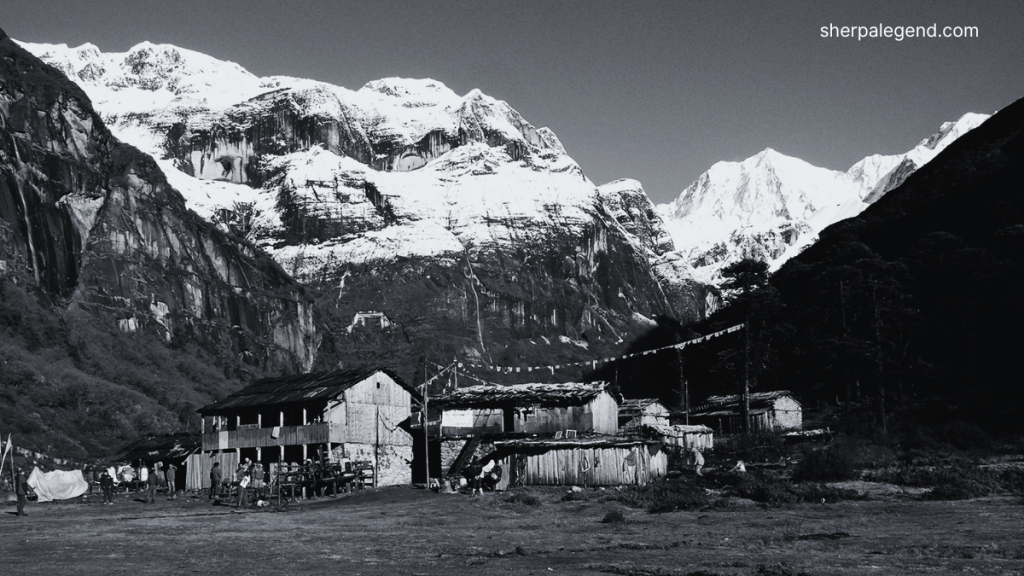
For a child raised in Talkharka, the Himalaya was not a distant, exotic place. It was the horizon he woke up to every day, and it was where his family went to earn their living and their name.
Nawang had been close to the mountains from a very young age, drawn toward them the way children are drawn toward whatever their parents do best. In his case, what his father and brothers did best was climb.
By the time he was in his late twenties, Nawang had already built a résumé that many climbers twice his age would envy. He had summited Everest, Lhotse, Manaslu, Kanchenjunga, Makalu, and Ama Dablam. He first stood on top of Everest in 2022, and returned to Makalu again in 2026, his career rising quickly at the highest and most demanding altitudes on Earth.
How He Started and Rose
Nawang’s professional path began with Seven Summit Treks, where he joined as a high-altitude climber and guide. He earned a reputation quickly, not just for reaching summits but for being dependable in the moments when things went wrong.
On 20 May 2025, he stood on the 8,586-metre summit of Kanchenjunga as part of a Seven Summit Treks support team. Four months later, on 25 September, he was among the Sherpa climbers who reached the 8,163-metre top of Manaslu.
These were not solitary personal achievements. They were the work of a guide whose job was to make sure others made it up and down safely, while quietly adding to his own record along the way.
But Nawang’s story in the mountains was never only about summits. After an avalanche struck Annapurna on 7 April 2025 and swept away two Sherpa guides, Ngima Tashi and Rima Rinje, Nawang joined the search effort, working in dangerous, unstable conditions to try to bring his fellow climbers home. Despite the risk he took on, the two men were never found.
In May 2026, he was called on again. This time, he was one of five rescuers who climbed to around 7,300 metres on Makalu II, also known as Kangchung Tse, to recover the body of a Czech climber, David Roubinek. The team carried him down through difficult weather to a high camp at roughly 6,100 metres. It was dangerous, exhausting work with no summit photo at the end of it, the kind of work that rarely makes headlines but that climbers like Nawang were quietly known for.
This was the shape of his career a young guide from a small mountain village, still building his own list of summits, while also being one of the people other climbers could count on when the mountains turned deadly.
Choosing to Carry the Legacy
Among Nepal’s mountaineering families, there is a pattern that rarely makes it into the newspapers. Many parents who have spent their own lives on the high peaks do not want the same for their children.
They know, better than anyone, what the mountains take. Fathers who have lost partners, brothers, and friends to avalanches and falls often quietly steer their sons and daughters toward safer work, toward school, toward anything that keeps them off the ridgelines and away from the crevasses that nearly took their own lives.
Nawang’s family knew that risk intimately. His father and three brothers had all been to the death zone and back. They understood, in a way outsiders cannot, exactly what it costs to keep climbing year after year. And yet, in that same household, it was Nawang who chose to walk toward the mountains rather than away from them. He was not pushed into this life. By every account, he was drawn to it, inspired from childhood by the very family who knew its dangers best.
In choosing to become a climber, Nawang was choosing to carry something forward, a family identity built peak by peak, rescue by rescue, over years of quiet, dangerous work. He was still young, still unmarried, still early in a career that was only getting started. He had time, it seemed, to keep adding to what his father and brothers had built.
That legacy is now his. Nawang Thendu Sherpa died on 30 July 2026, caught in a massive avalanche that struck his expedition team between Camp II and Camp III on Broad Peak in Pakistan’s Karakoram range. He was one of six Nepali climbers lost in the disaster, alongside Nirmal Purja, Pur Bahadur Gurung, Kili Pemba Sherpa, Nima Sherpa, and Gyaljen Sherpa. He was 29 years old.
He did not get the chance many in his position hope for, to eventually step back from the highest, most dangerous routes once the family name was secure, the way some senior guides do. He was still in the middle of building it when the mountain took him. The son who chose to carry his family’s mountaineering legacy forward is now part of it in a way no one in Talkharka wanted.
How He Is Remembered
News of Nawang’s death reached Talkharka and plunged the village into mourning. Local officials, including the chair of Makalu Rural Municipality, described him as courageous, honest, disciplined, and deeply promising, a young man whose loss was felt as a serious blow not just to his family but to Nepal’s entire mountaineering community.
They pointed out something climbers themselves know well: guides of Nawang’s calibre take years, sometimes a decade or more, to develop. Losing several of them at once, as happened on Broad Peak, set the community back in a way that cannot be quickly repaired.
Colleagues remembered him not only for his summits but for the times he chose to go up the mountain for someone else’s sake, searching for Ngima Tashi and Rima Rinje on Annapurna, carrying David Roubinek’s body down from Makalu II.
Seven Summit Treks and fellow climbers described him as a talented, dependable guide, someone whose short career had already taken him from a remote village in Sankhuwasabha to the summit of Everest and back, several times over.
Nawang Thendu Sherpa leaves behind more than a list of eight-thousanders. He leaves behind the story of a young man who grew up watching his father and brothers walk toward the mountains, and who chose, with open eyes, to walk that same path himself.
He carried his family’s legacy as far as Broad Peak. He is not here to carry it any further, but the name he built in those short, remarkable years will stay with the mountains he climbed, and with the village that is still mourning him.

🥲 Hero