
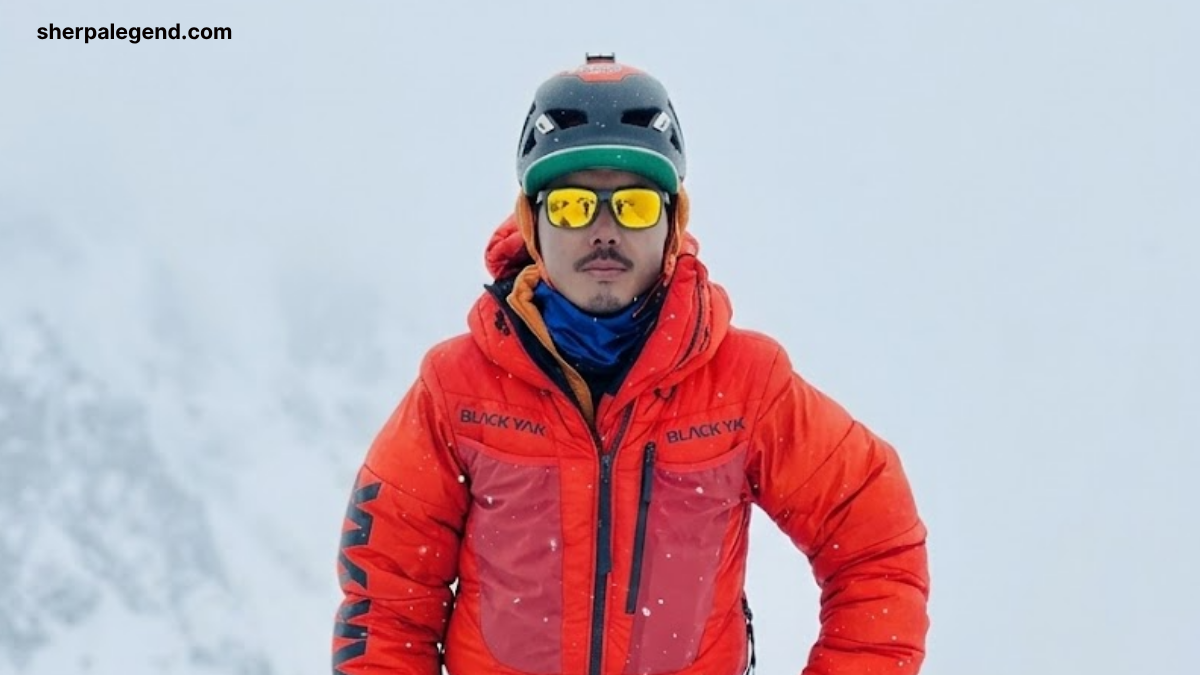

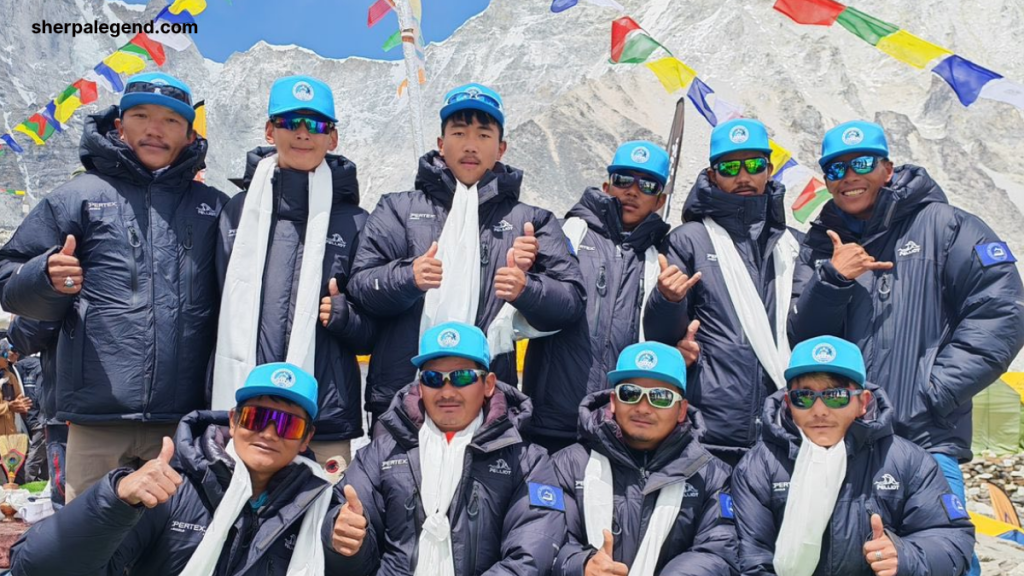
On the morning of May 13, 2026, at around 10:25, a team of eleven Nepali climbers stood at the top of the world completing rope-fixing operations from Camp II to the summit. . At 8,848.86 meters above sea level, they raised the flags of the Government of Nepal, the Department of Tourism, and the Expedition Operators Association Nepal (EOAN).
For most people, reaching the summit of Everest is the achievement of a lifetime. For Mingma Dorchi Sherpa, the man who led that team, it was work. Important, dangerous, and necessary work but work nonetheless.
Mingma Dorchi did not grow up dreaming of magazine covers or sponsorship deals. He grew up in Sankhuwasabha District in eastern Nepal, and like many young men from his community, he started his life in the mountains as a porter, carrying other people’s loads up steep trails for little pay and no recognition.
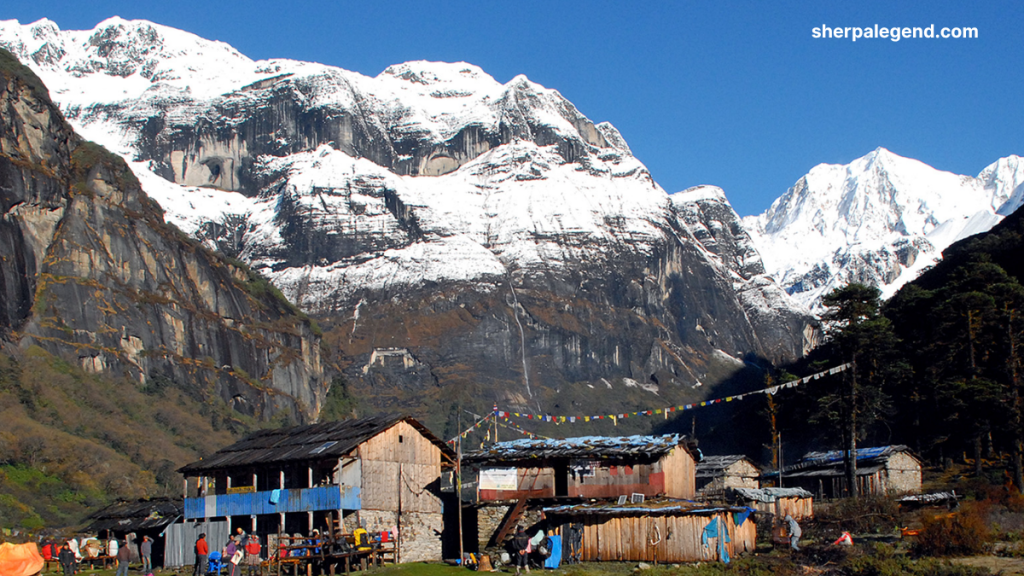
That was where he learned the mountains. Not from a guidebook, not from a course but from years of walking, carrying, watching, and surviving.
By 2009, at the age of 22, he had worked his way up to becoming a climbing guide. From there, he never looked back. Over the years that followed, he summited Mt. Everest seven times, K2 five times, Lhotse five times, Makalu four times, Manaslu four times, Dhaulagiri twice, Ama Dablam twice, Gasherbrum I once, and Broad Peak once all with different international expedition teams.
He was not just along for the climb. He was the one arranging all services above base camp, managing supplies, monitoring the team’s progress, and staying in constant communication with base camp to handle emergencies as they came.
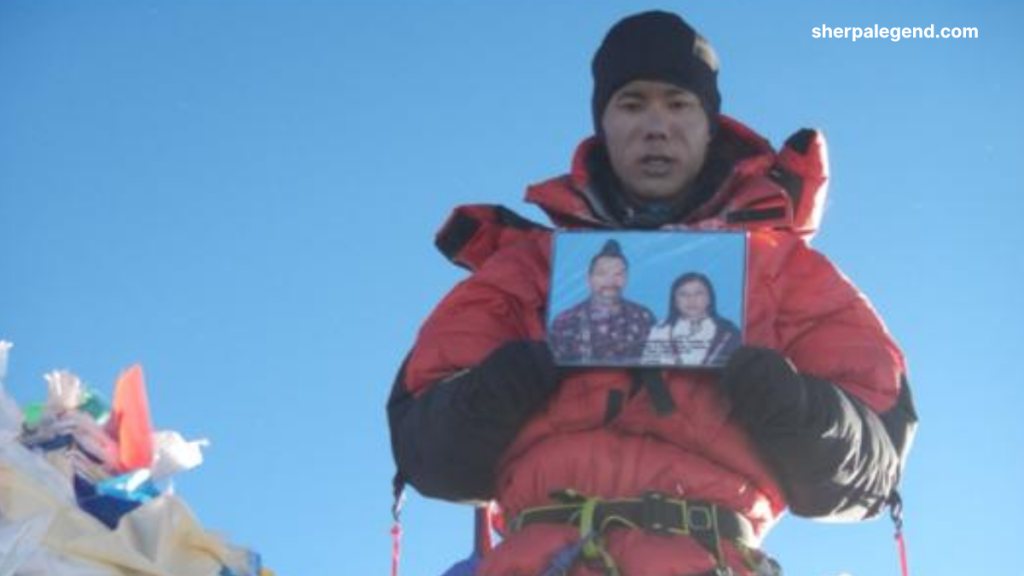
Then came May 27, 2019 the day that put his name in the record books. On that morning, Mingma Dorchi summited both Mt. Everest and Mt. Lhotse in just six hours and one minute, from top to top.
The Guinness World Records confirmed it as the fastest ascent of both peaks ever recorded. It was the kind of achievement that comes from years of building quietly toward something bigger. He had been thinking about it for a while.
“When you climb for a long time, you want to do something memorable,” he said. That record was his answer.
Mingma Dorchi Sherpa
But records are not what define his daily life in the mountains. What defines him is the work that most people never see or think about the rope fixing. Before any climber on Everest can take a single step above Camp II, someone has to go up first and fix the ropes that will keep everyone else alive.
That job, dangerous and thankless as it sounds, is exactly what Mingma Dorchi was assigned to do for the Spring 2026 season by the Expedition Operators Association Nepal.
The season itself was already difficult before it even started. An unstable hanging serac in the Khumbu Icefall had blocked the route well past its normal opening in the first week of April, leaving nearly 490 climbers who had already paid the record high fee of USD 15,000 each for their permits waiting in the Khumbu region after completing their acclimatization rotations.
The pressure was building. The window to summit Everest safely is narrow, and every day of delay made it narrower.
Into those conditions, Mingma Dorchi led his eleven-member team Pam Dorjee Sherpa, Pasang Tashi Sherpa, Lopsang Bhutia, Ming Nurbu Sherpa, Chhomba Tenji Sherpa, Guru Bhote, Mingma Tenje Sherpa, Ming Temba Sherpa, Dendi Sherpa, and Pasang Nurbu Sherpa up the mountain to fix ropes from Camp II all the way to the summit.
Separately, eight Icefall Doctors had already completed the route preparation from Base Camp to Camp II. The Department of Tourism had authorized EOAN to lead the rope-fixing above Camp II for Everest, Lhotse, and Nuptse, and the Sagarmatha Pollution Control Committee to manage the Icefall route below.
When the team reached the summit on the morning of May 13 and raised those flags, it was not a celebration for themselves. It was a signal to the hundreds of climbers waiting below that the road was open.
Rishi Bhandari, General Secretary of EOAN, spoke about what that moment represented.
“Despite extremely difficult weather conditions, high-altitude risks, and challenging mountain conditions, the Nepali Sherpa community has once again demonstrated its courage, professionalism, dedication, and commitment to mountaineering before the world,” he said to The Himalayan Times.
The season that followed was marked by both breakthrough and grief. The death toll across Nepal’s spring climbing season reached five by the time the route opened three on Everest and one each on Makalu and Makalu II. It was a reminder, if one was needed, of what Mingma Dorchi and his team walk into every time they go up the mountain ahead of everyone else.
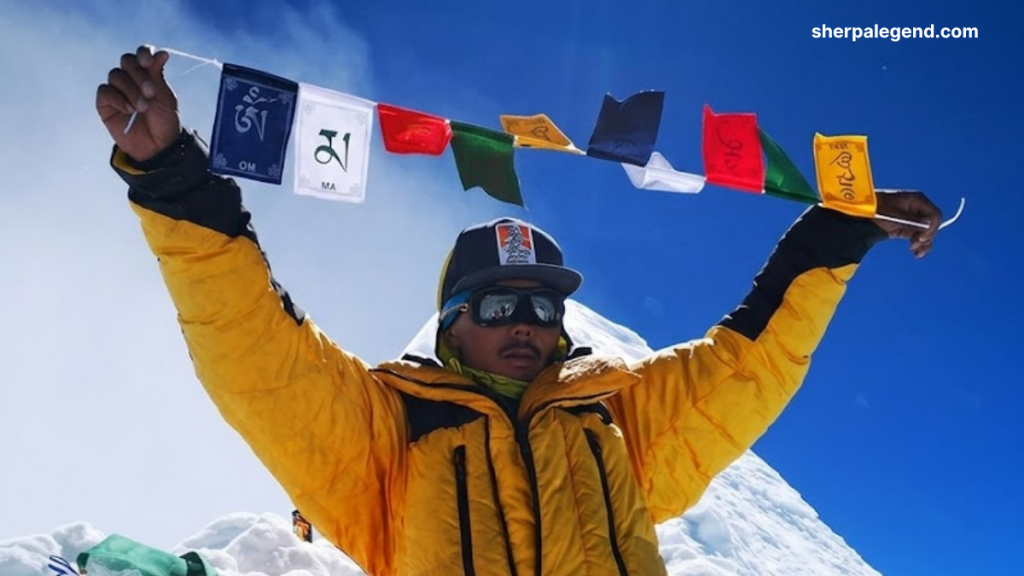
He started as a porter with no name and no fame. He became a Guinness World Record holder. And in 2026, he went back up Everest one more time not for a record, not for glory but to fix the ropes so that others could follow. That, more than any record or summit count, is who Mingma Dorchi Sherpa is.
