
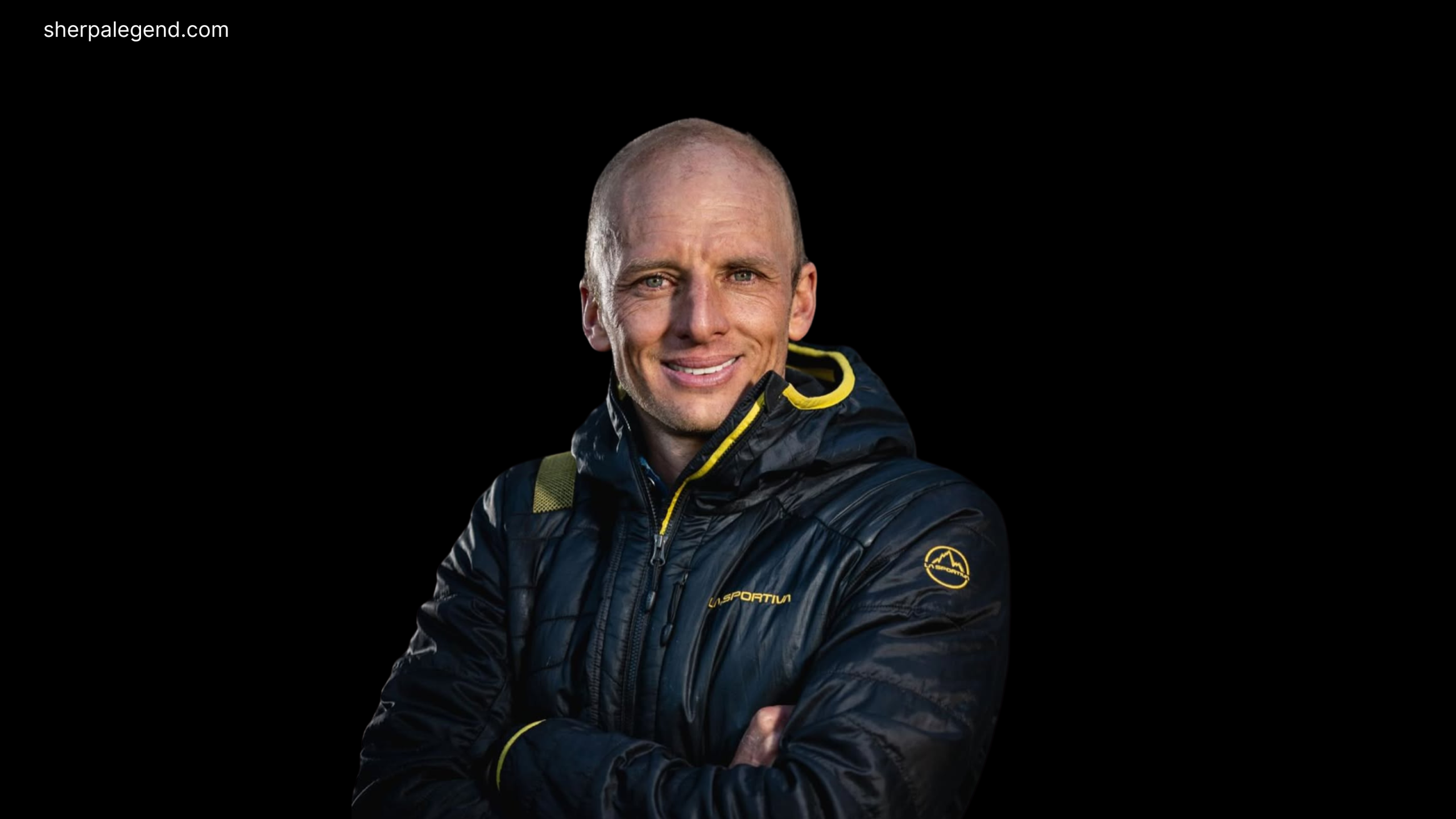

In the rarefied air of the world’s highest peaks, where most climbers move with deliberate caution, Karl Egloff flies.
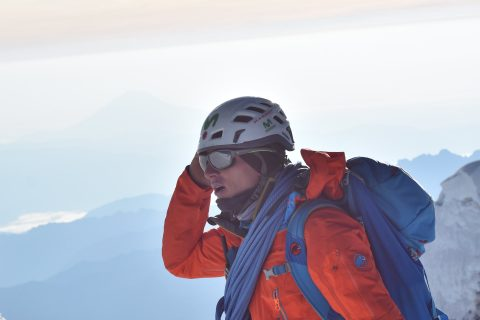
The Swiss-Ecuadorian mountain athlete has redefined what’s possible in high-altitude speed climbing, breaking multiple world records previously thought untouchable. His story is one of heritage, persistence, and a unique connection to the mountains that have shaped his life from childhood.
Mountain Roots
Karl Egloff’s introduction to the vertical world began almost at birth. Born on March 16, 1981, in Ecuador to a Swiss father and Ecuadorian mother, mountaineering runs through his veins.
His father, Charly Egloff, a renowned Swiss mountain guide who settled in Ecuador, became young Karl’s first mentor and gateway to the high Andes.
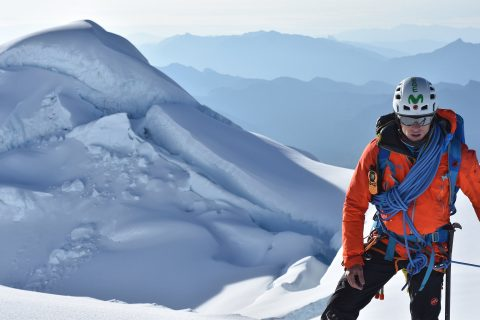
From his earliest days, Karl was immersed in mountain culture often being carried as a baby in his father’s backpack during expeditions. By the remarkable age of 15, he had already summited mountains above 5,000 meters over 250 times and climbed beyond 6,000 meters on more than 30 occasions.
The teenage Egloff began assisting his father with guiding clients through the Ecuadorian Andes, gaining invaluable experience in mountain craft and leadership.
A Detour Through Different Dreams
Despite his early immersion in mountaineering, Egloff’s path to becoming a world-record holder wasn’t direct. At 17, following his mother’s death, he moved to Zürich, Switzerland, to study business administration and serve in the Swiss Army.
During this period, his athletic ambitions focused elsewhere on soccer. He trained with the dream of becoming a professional player, but as happens with many athletic aspirations, injuries and age eventually redirected his focus.
After completing his studies, the 25-year-old Egloff returned to Ecuador and founded his own guiding company, Cumbre Tours. This marked his professional return to the mountains, but still not as the record-setting speed climber the world would later know.
Finding His Stride
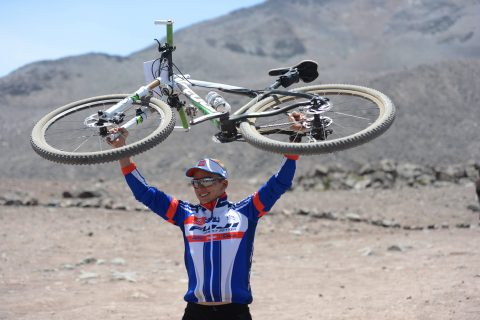
Egloff initially took up mountain biking as a recreational pursuit, but his natural athletic gifts quickly became apparent. What started as a hobby evolved into competitive racing, and within a remarkably short time, he was representing Ecuador in international competitions.
His cycling career yielded impressive results at the national level 70 gold medals though his late entry into the sport limited his technical development for international success.
The important turn toward speed mountaineering came when local guides and porters working alongside Egloff noticed something extraordinary: his speed and endurance at altitude were exceptional, even among professional mountaineers. They began encouraging him to attempt speed records, introducing him to a challenge he hadn’t previously considered.
“Once the porters and guides in Ecuador noticed how fast Egloff moved up the mountains, they started encouraging him to go for the speed records,” the document notes. Remarkably, at that time, he “had never heard of Kilian [Jornet],” the Spanish mountain runner whose records he would later repeatedly break.
By age 30, Egloff shifted his focus toward guiding and altitude training, discovering his true calling in the process. He soon joined Mammut’s International Athlete Team, continuing to guide while primarily focusing on setting speed records for the Seven Summits the highest peaks on each continent.
Breaking Records, Making History
Egloff’s record-breaking campaigns have captured the attention of the mountaineering world, particularly for surpassing times set by Kilian Jornet, widely regarded as one of history’s greatest mountain athletes. His most notable achievements include.
Cotopaxi (Ecuador) Up and down in 1 hour 37 minutes (2012), later improved to 1 hour 36 minutes (2021
Kilimanjaro (Tanzania) Completing the ascent and descent in 6 hours 42 minutes (2014), breaking Jornet’s record
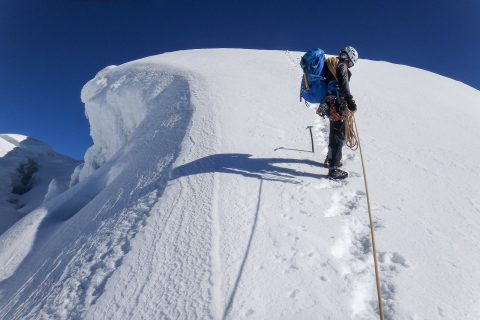
Aconcagua (Argentina) Up and down in 11 hours 52 minutes (2015), nearly an hour faster than Jornet’s record set just two months earlier
Elbrus (Russia) Round trip in 4 hours 20 minutes (2017)
Denali (USA) Up and down in 11 hours 44 minutes (2019), besting Jornet’s record by a single minute and remarkably, Egloff ran and climbed both ways, while Jornet used skis for the descent
Makalu (Nepal) Completing the journey in 17 hours 18 minutes (2022)
His ultimate project is to set speed records on all Seven Summits. As of early 2025, he has completed records on Kilimanjaro, Aconcagua, Elbrus, Denali, and Makalu, with only Carstensz Pyramid (Oceania) and Vinson (Antarctica) remaining on his list.
The Science of Speed
What makes Egloff’s achievements particularly remarkable is the strategic precision behind them. While most climbers take weeks to acclimate and ascend mountains like Denali (typically 16-21 days), Egloff completes the entire journey in mere hours. This requires not just extraordinary physical conditioning but meticulous planning and timing
“It’s a very strategic sport. You have to know where you have to be and at what time to be safe,” Egloff explains. “For example, normally people take 16 to 21 days to climb Denali. I did it in 11 hours. Only certain places on the mountain are safe depending on the time of the day.”
His approach combines the endurance of trail running with technical climbing skills what he describes as “a kind of hybrid sport between mountain climbing and trail running.” Each mountain demands different preparations and techniques “Every mountain is a bit different. For example, Carstensz Pyramid’s a rock-climbing mountain, so you need that training. With mountains like Kilimanjaro, you have to run a marathon with a lot of vertical gain.”
The logistical complexity of speed climbing requires careful coordination with a support team. “You need a team and to have someone who is in a higher camp than where you are. That way, when you are approaching, new gear is already there. You can leave gear behind, eat something and try to move on as fast as possible.”
Philosophical Heights
Despite the intense physical demands and time pressures of speed climbing, Egloff maintains a deeply philosophical connection to the mountains. Where one might assume the rush for records leaves no room for appreciation, he insists the opposite is true.
“A lot of people think there’s no time for respect or appreciation and you don’t see anything beyond your feet. It’s absolutely the opposite,” he says. “Of course, you pass through places you would love to sit down and eat and enjoy and you are always in a hurry and running… But what people don’t know is how many hours you’ve spent training and that this is where everything comes together. When I do an FKT, I really enjoy it even if I’m suffering and speeding up and down. It’s enjoying the moment, enjoying the process.”
For Egloff, the mountains represent more than just athletic challenges—they are home. “There’s freedom out there, like opening your wings like a bird. I feel safer in the mountains than in the city. It’s my place to be. I feel really privileged and humble in the mountains.”
This sense of humility is central to his philosophy: “With these records, humbleness is everything. The mountain is always going to be stronger than you are. That’s what I like. That’s why I do it.”
Confronting Mortalit
The extreme nature of Egloff’s pursuits brings him face-to-face with the fragility of life in ways few experience. High-altitude speed climbing operates within narrow margins of safety, a reality he acknowledges with clear-eyed candor.
“There’s a small line between death and living,” he reflects. “I’ve had to rescue dead bodies from crevasses and take them down the mountain. I’ve lost many colleagues while they were working. You start thinking, ‘Okay, this is serious. This is not just running around the park.'”
His own body bears the marks of this dangerous pursuit: “I’ve had frostbite. I’ve been in the hospital with broken bones. That’s part of the game. As with every single extreme sport, you can fall. You just have to stand up again and try to do it better.”
Yet despite these sobering experiences, Egloff approaches risk with pragmatic respect rather than recklessness. “In an extreme sport, you have to know where the limits are. Some athletes say there are no limits. Of course there are limits,” he says. “There will be a day that you say, ‘I cannot take more time off this record. This is it. It’s probably for someone else, but for me, that’s it.’ This is something I’m aware of.”
Looking Beyond the Summit
Now at 40’s, Egloff recognizes that his record-breaking days won’t continue indefinitely. He has plans for life beyond competitive speed climbing—traveling, spending time with family, and possibly writing a book once he completes his Seven Summits project.
Yet before closing this chapter, he has additional ambitious goals: crossing the Antarctic running, attempting a Fastest Known Time on K2 one of the world’s most dangerous mountains—and most importantly, returning home safely from each adventure.
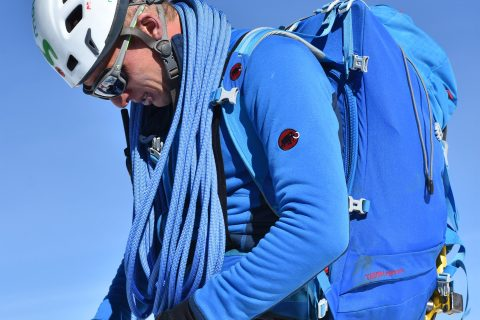
With characteristic humility, he acknowledges the temporary nature of his achievements: “I’m happy. Records are made to be broken.” This recognition doesn’t diminish his accomplishments but rather places them within the broader continuum of human exploration and achievement in the mountains.
Karl Egloff’s legacy extends beyond the impressive times he’s recorded on the world’s highest peaks. Through his extraordinary feats, he has expanded our understanding of human potential at extreme altitudes and demonstrated how the mountains can serve as both athletic arena and spiritual home.
His journey continues to inspire others through his achievements, motivational talks, and commitment to sharing the values of perseverance, discipline, and teamwork values forged in the rarefied air of the world’s highest places.
