
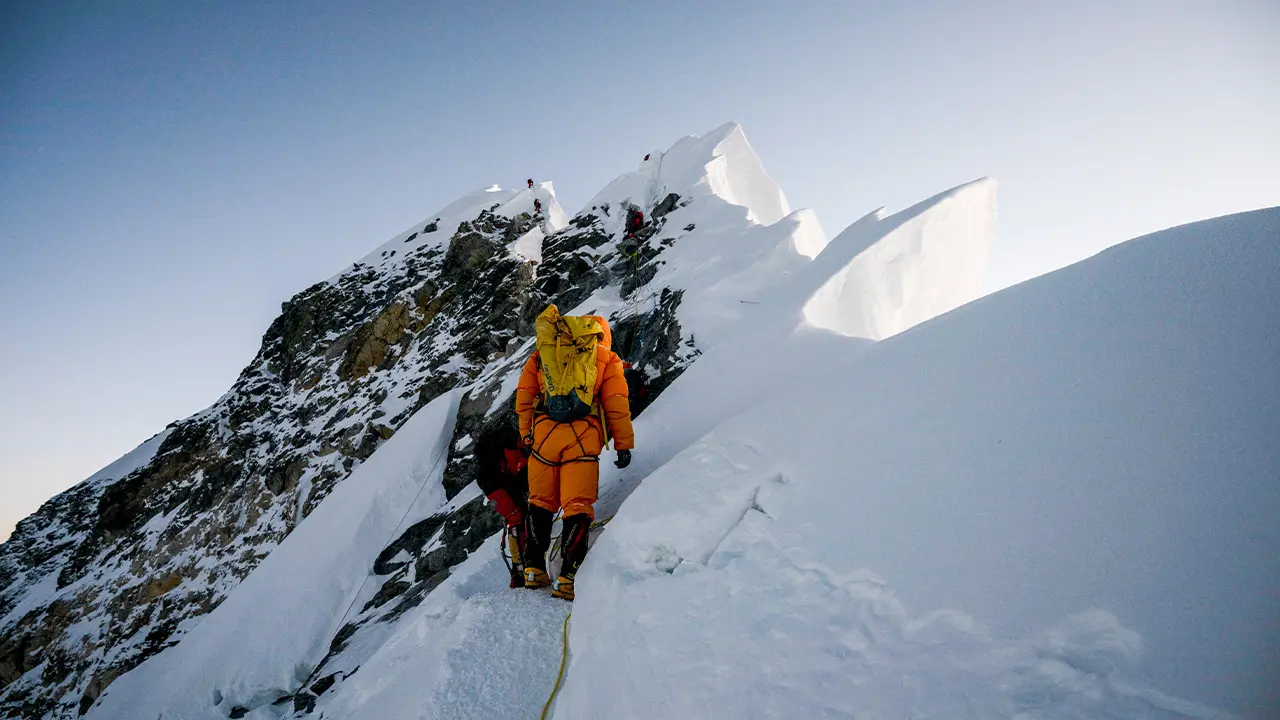

This spring, Mount Everest is seeing more people than it ever has. Nepal issued 492 climbing permits for the 2026 season. When you add guides, Sherpas, and mountain support workers to paying clients, the total number of people active on the mountain crosses 800 to over 1,000.
But getting to the top has not been easy. The season started with delays in the Khumbu Icefall the dangerous glacier section all climbers must cross to reach the higher camps. That pushed back the entire schedule and compressed what was already a tight season into an even narrower window.
The First Leg: Who Got to the Top and What It Means
The route to the summit was fixed on the morning of May 13, when a joint team of 12 high-altitude Sherpas from multiple expedition companies reached the top at 10:25 AM Nepal time. This team, coordinated by the Expedition Operators Association Nepal (EOAN) and Nepal’s Department of Tourism, fixed safety ropes through the “Death Zone” above 26,000 feet the critical work that makes it possible for other climbers to follow.
Shortly after, 16 client climbers from the company Imagine Nepal also reached the summit. Among the first wave were six foreign climbers from China, Norway, and Canada. One of them was Canadian climber Charles-Antoine Lanthier, who summited after surviving stage 4 lymphoma. A married couple from Norway also reached the top together.
But a wave of high winds shut the mountain almost immediately after. From May 13 to May 16, dangerously strong jet stream winds battered the upper slopes, making any summit attempt impossible.
Then, on May 17, the winds eased. And the real action began.
May 17 The First Major Wave:
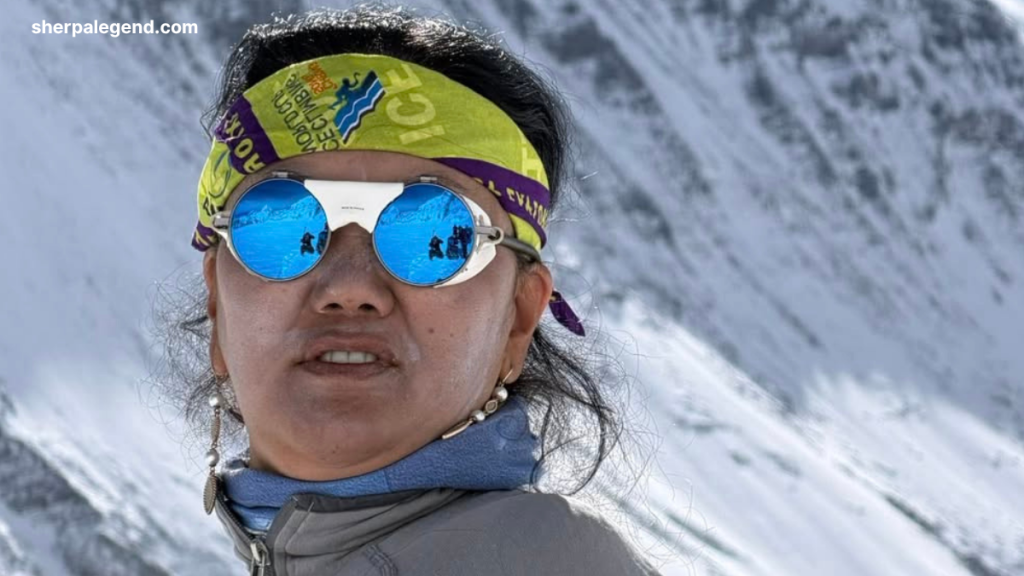
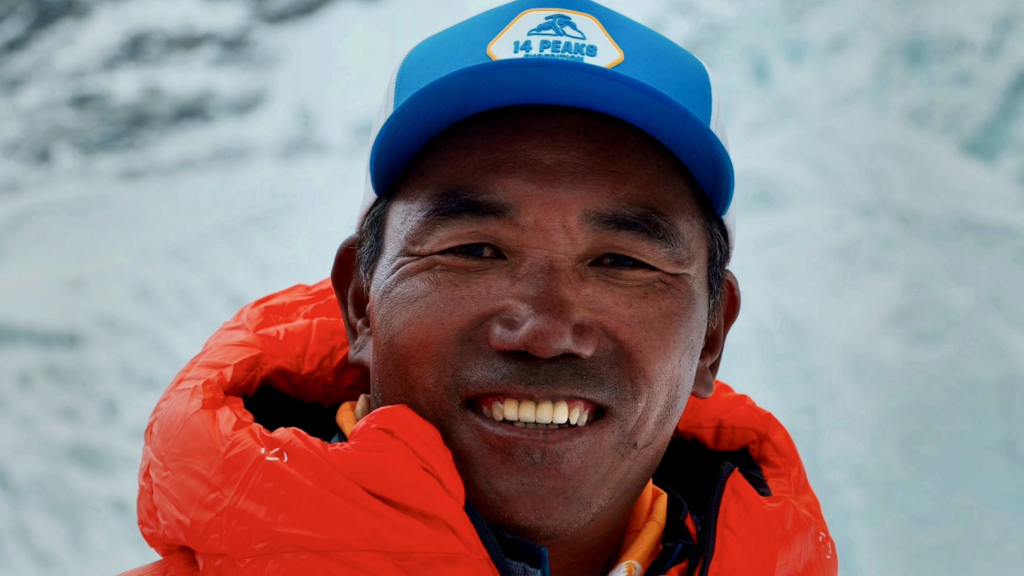
83 climbers reached the top, according to Nepal’s Department of Tourism. Among them were two record-holders. Kami Rita Sherpa, 56, completed his 32nd summit of Everest the most by any person in history while guiding for Seven Summit Treks. Lhakpa Sherpa completed her 11th summit, the women’s all-time record. She too was guiding a client at the time. On the same day, Norwegian climber Kristin Harila climbed the adjacent peak Nuptse the first leg of her “Everest Triple Crown” attempt (Nuptse, Lhotse, and Everest), all without supplemental oxygen.
May 18 The Second Big Day
Another approximately 84 climbers reached the top in clear skies and calm winds. Climbing the Seven Summits put 24 people on the summit. Seven Summit Treks got 22 to the top. 14 Peaks Expeditions also sent 24 climbers up. Among those who summited on May 18 was Pa Dawa Sherpa, who reached the top for the 30th time making him second only to Kami Rita on the all-time list.
In total, roughly 86 or more climbers had summited as of May 17–18, with that number rising as May 18 reports came in.
These early summits matter for a simple reason: with hundreds more climbers still waiting, and the monsoon approaching, every day of good weather is precious. The teams that moved fast secured their place on the summit before the crowds and before the weather turns.
Who Is Still in the Queue and How Big Is It
The number of climbers still waiting to attempt the summit is enormous. Seven Summit Treks alone has roughly 180 climbers clients and support staff still in the queue. Teams from 14 Peaks, 8K Expeditions, Ascent Himalaya, CTSS, Madison Mountaineering, and many others are either at Camp 2, Camp 3, or staging at Base Camp. Some teams are deliberately waiting for a later, less crowded window. Madison Mountaineering, for example, chose to hold off until around May 25 to avoid the worst of the rush.
Guide and mountaineer James McManus described the approach of patient teams as “sheep watch” waiting for the main crowd to go first, then heading up a day or two later when the route is quieter. When hundreds of climbers all push for the summit on the same day, the route gets jammed. Queues form on the fixed ropes. People slow down. At altitude, waiting in a queue costs energy and oxygen and can be dangerous.
The concern among expedition leaders is real: if everyone targets the same weather days, the bottlenecks could be severe and potentially life-threatening.
The Weather Picture: Tight, Uncertain, and Getting Worse
The first weather window opened briefly around May 13, then slammed shut. The second window the one currently being used began around May 17–18 and is expected to remain viable through at least May 19–21, possibly May 22. Meteorologist Marc de Keyser of Weather 4 Expeditions pointed to May 19–20 as potentially the best summit days, with May 21–22 also looking reasonable but subject to change.
The problem is what comes after.
The monsoon from the Bay of Bengal is on its way. It typically arrives in the Nepal Himalayas in late May or early June, bringing heavy snowfall, thick clouds, avalanche risk, and dangerous instability. An early or strong monsoon arrival would close the mountain entirely and leave hundreds of climbers without a summit chance.
Weather forecasters are watching carefully. There are no major typhoons forming right now, but conditions at altitude are dynamic and can shift quickly. The window between now and when the monsoon arrives is measured in days, not weeks.
Other Stories From the Mountain
It has not all been summits and records. The 2026 season has already seen three deaths. A 20-year-old Sherpa named Phura Gyalzen Sherpa grandson of the legendary Ang Rita Sherpa, who climbed Everest ten times without oxygen fell on the Lhotse Face on May 11 and died. Two other Nepali mountain workers died from medical events near Base Camp earlier in the season.
There was also a dramatic survival story: three climbers from Altipro Adventures — two guides and a client summited on May 14 just before the high winds hit. On their descent they went missing. By midnight, Base Camp feared the worst. After a 30-hour ordeal in the Death Zone, the three finally reached Camp 4. One was reportedly suffering from frostbite.
On May 18, a Nepali woman climbing with 8K Expeditions fell roughly 65 feet into a crevasse near Camp 2 and had to be extracted by rescue helicopter. Pilot Bibek Khaka of Altitude Air flew her to Base Camp just before sunset.
There was also a remarkable ski descent: Polish mountaineer Bartek Ziemski climbed Lhotse alone on May 12 no Sherpa, no fixed ropes, no supplemental oxygen summited, strapped on his skis, and descended all the way to Base Camp. He is the first person to ski Lhotse without oxygen.
And cargo drones returned to action. Nepali company Airlift Technology, which was flying gear and oxygen canisters from Base Camp up to Camp 1 on a massive DJI Flycart UAV, had its permit revoked by the government on May 1 for unexplained reasons. It was reinstated on May 6 and the drones have been flying again since May 9, running about 20 flights a day to clear a backlog.
The next few days are critical. Hundreds of climbers are moving up the mountain right now toward the upper camps. The weather window appears to be holding, but it is not guaranteed. The monsoon is advancing. Time is short.
The 2026 Everest season is a record-breaking one in permits, in summits, in the sheer number of people on the mountain. Whether it ends in triumph or tragedy for the hundreds still waiting will depend, as it always does on Everest, on what the sky decides to do.
