
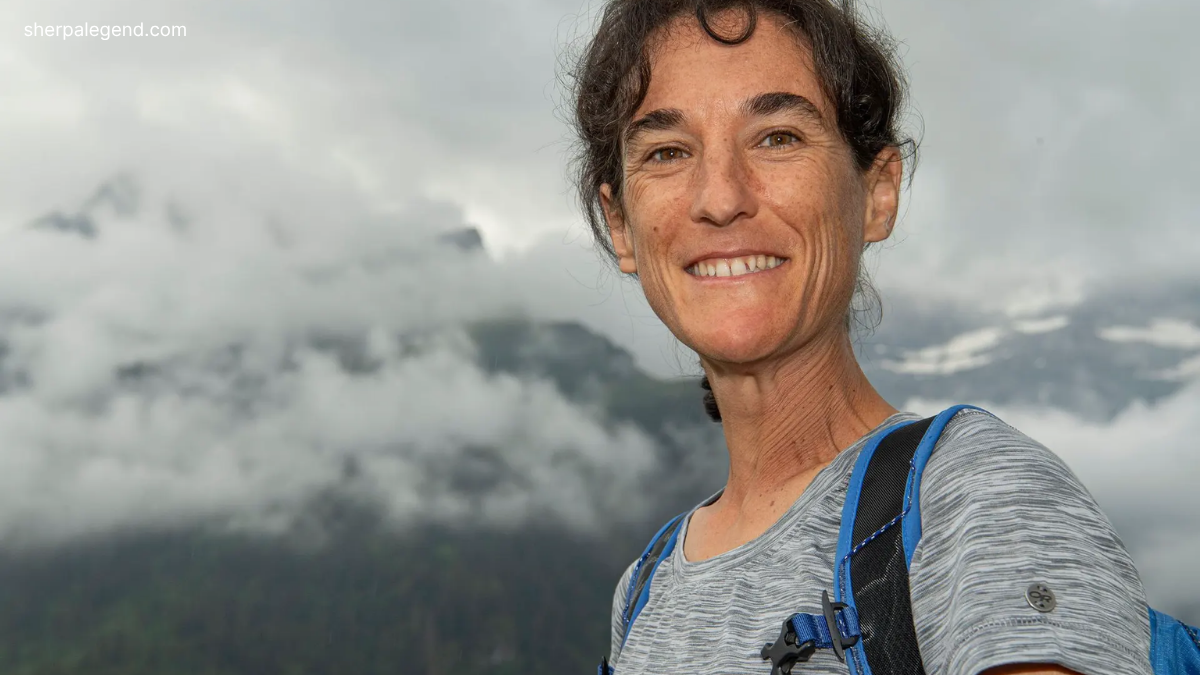

In the unforgiving world of high-altitude mountaineering, where death stalks every summit and survival often depends on split-second decisions, few stories are as harrowing or inspiring as that of Elisabeth Revol.
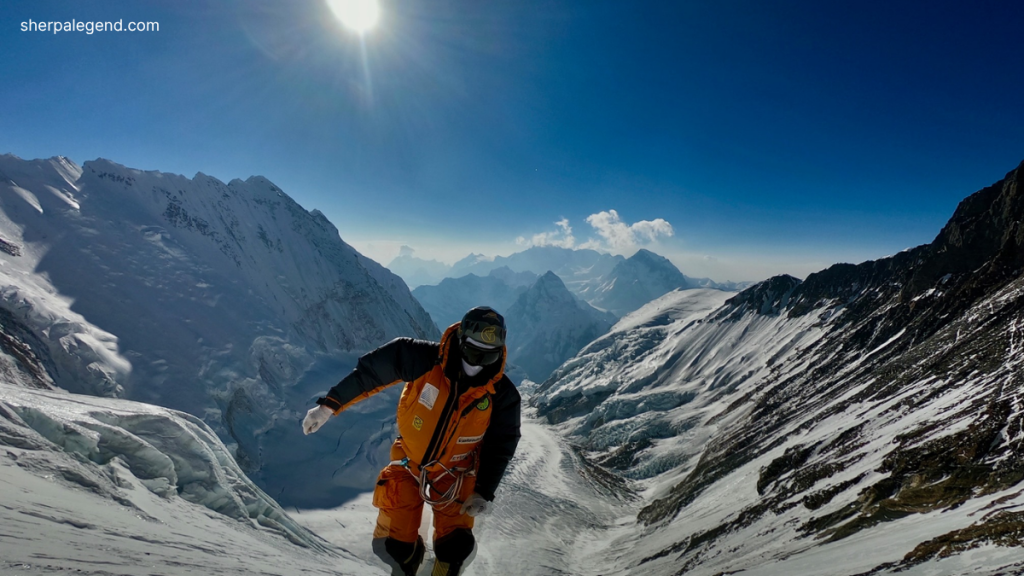
Known as “the woman who survived the Killer Mountain,” this French mountaineer’s life changed forever on a frigid January evening in 2018, when mountain turned to tragedy on Pakistan’s deadly Nanga Parbat.
Early Life and Introduction to Mountains
Born on April 29, 1979, in Crest, a small town in the Drôme region of southeastern France, Elisabeth Revol discovered her calling among the peaks.
Her parents, recognizing their daughter’s adventurous spirit, introduced her to mountaineering in the Ecrins massif, a stunning range in the French Alps. Unlike many elite climbers who start as children, Revol didn’t begin climbing until she was 19, while pursuing her studies in sports science.
“From a very young age, thanks to my parents, I discovered the fascinating world of mountains and dreamed of climbing the highest peaks in the world,” Revol recalls. “Seeing what was above or behind them has always intrigued me! However, this world seemed impossible, until the day I dared to take the plunge and go on an expedition!”
Initially a gymnast, Revol transitioned to climbing and mountaineering during her university years studying sports. She would later become a physical education teacher, balancing her professional life with increasingly ambitious climbing expeditions. Her philosophy was simple yet profound: pursue your dreams with sincerity and humility, no matter how ambitious they might be.
Building Experience in the Alps
From 2000 to 2010, Revol cut her teeth on some of the most challenging routes in the Alps. She climbed legendary faces that have claimed countless lives: the North Face of the Drus, the North Face of the Grandes Jorasses, the Eiger, and the Matterhorn. These weren’t casual weekend climbs but serious mountaineering objectives that demanded technical skill, physical endurance, and mental fortitude.
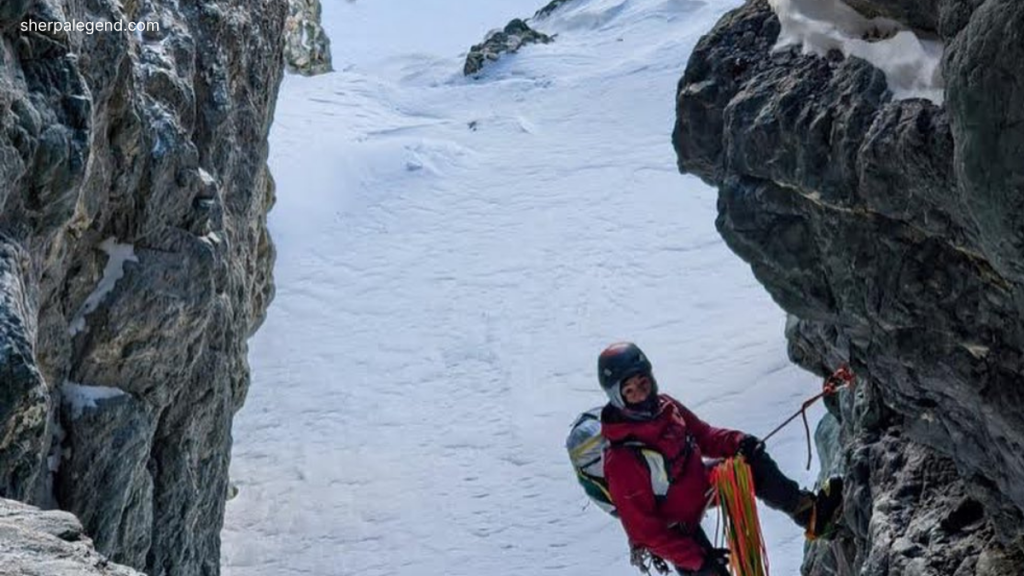
Her Alpine apprenticeship taught her the fundamentals of survival in extreme conditions lessons that would prove crucial in the Himalayas. She learned to read weather patterns, manage risk, and most importantly, when to turn back. These skills, honed on the familiar peaks of Europe, prepared her for the ultimate test: the world’s highest mountains.
First Steps into the Himalayas
In 2006, Revol ventured beyond Europe for the first time, joining an expedition to Bolivia’s Illampu massif as part of a young mountaineers’ excellence team. The following year, she started on her first Nepalese expedition, climbing Pharilapcha, a 6,017-meter peak where she achieved both the first ascent and traverse.
But it was 2008 that truly announced Revol’s arrival on the international mountaineering scene. In Pakistan, she accomplished something extraordinary: a solo ascent of three massive peaks in the Karakoram range – Broad Peak, Gasherbrum I, and Gasherbrum II – all within 16 days and without supplemental oxygen. This feat was made even more remarkable by the fact that her original climbing partner, Antoine Girard, had fallen ill, forcing her to continue alone.
“I love the versatility of climbs,” Revol explains. “Each outing is a source of experience and enrichment that helps me become more and more aware of who I am.”
Tragedy on Annapurna
Success in the mountains often comes at a price, and Revol learned this harsh lesson in 2009. Attempting Annapurna with Czech climber Martin Minarik, the expedition began promisingly. After several failed attempts via the traditional Bonnington route, the pair reached Annapurna’s East Summit via a challenging 7-kilometer ridge.
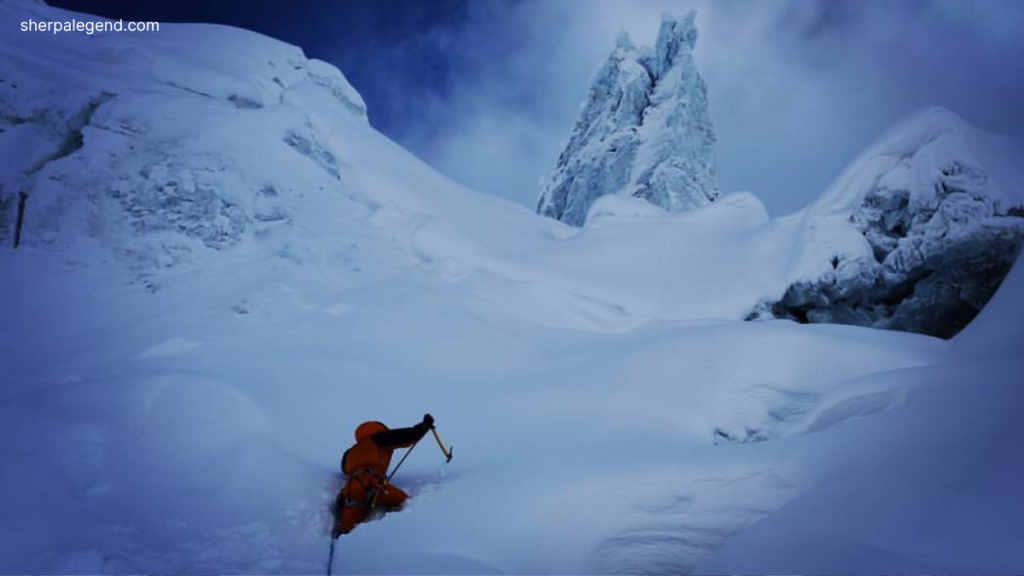
However, deteriorating weather forced them to retreat. During the descent, the two climbers became separated in poor visibility above 7,000 meters. Revol continued down alone, eventually reaching the village of Manang after spending a night in a crevasse around 6,000 meters. Despite extensive helicopter and ground searches, Minarik was never found.
The loss of her climbing partner devastated Revol. “The impact on my psyche was so devastating that I decided to stop climbing for the next four years,” she admits. She channeled her energy into adventure racing, participating in the 2012 Adventure Racing World Championships in France, which combined navigation, trekking, mountain biking, paddling, and climbing.
The Obsession with Nanga Parbat
By 2013, the mountains called again. Revol returned to high-altitude climbing, but this time with a specific target: Nanga Parbat, Pakistan’s “Killer Mountain.” Standing 8,125 meters tall and notorious for its deadly weather and exposure, Nanga Parbat had claimed at least 31 lives even before Hermann Buhl’s first ascent in 1953.
“At first, I thought climbing it in the winter was impossible,” Revol recalls. “But I soon gathered that climbing during this time is extreme adventure – the peak of what could be achieved in the mountains. This idea captivated me.”
Her first winter attempt came in 2013 with Italian climber Daniele Nardi. In 2015, she partnered with Polish mountaineer Tomasz Mackiewicz, who had already made six unsuccessful winter attempts on the mountain. Despite reaching 7,800 meters, bad weather forced them back.
Their partnership, though successful in terms of safety and mutual respect, was built on contrasting approaches. “Though we had contrasting approaches to climbing when it came to certain aspects, Tomek was the strongest partner for Nanga Parbat,” Revol explains. “We often surpassed our limits but always respected the other person, leaving them free to experience whatever it was that they were looking for.”
The Summit and the Nightmare
January 25, 2018, marked both the pinnacle of Revol’s career and the beginning of her worst nightmare. After 10 hours of climbing from their summit camp, she and Mackiewicz finally stood atop Nanga Parbat at 5:15 PM. They had achieved the second-ever winter ascent of the mountain, and Revol became the first woman to summit Nanga Parbat in winter.
But celebration turned to horror when Mackiewicz suddenly announced: “Eli, what’s happening with my eyes? Eli, I can’t see your head torch any more; you’re a blur!”
The Polish climber had developed snow blindness, severe frostbite, and was bleeding from his mouth and nose. Unable to walk or communicate properly, he was in critical condition. Revol’s excitement “quickly turned into fear,” and she entered survival mode, placing Mackiewicz’s hand on her shoulder to guide him down.
“From rejoicing at the summit, we had now switched to survival mode,” she remembers. “When I look back at that moment, it hurts me that Tomek wasn’t able to see the summit that he wanted so much.”
The Descent and Rescue
A Polish team attempting nearby K2, including renowned climbers Denis Urubko and Adam Bielecki, abandoned their own expedition to mount a rescue. On January 27, they were dropped by Pakistani military helicopter at 4,900 meters and climbed through the night, reaching Revol at 6,026 meters.
When rescued, Revol weighed just 45 kilograms and suffered severe frostbite to her hands and left foot. Mackiewicz, stranded higher on the mountain, could not be reached due to the continuing storm. He died on Nanga Parbat.
The psychological toll was severe. Revol sank into depression and frequently contemplated suicide. “Truth was – he was dead and I was alive. And even this life that I was given was a nagging torture. I was torn apart, an unbearable feeling of emptiness. The guilt just wouldn’t leave me, maybe it never will.”
Finding Redemption
Recovery came slowly, through therapy, the support of friends, and eventually, a return to the mountains. In May 2019, just over a year after the Nanga Parbat tragedy, Revol achieved another remarkable feat: she climbed Mount Everest using supplemental oxygen and then ascended neighboring Lhotse the following day.
“In 2019, Revol found her release after climbing Everest and Lhotse in a couple of days. It was the closure she needed after all that she had endured since losing Tomek.”
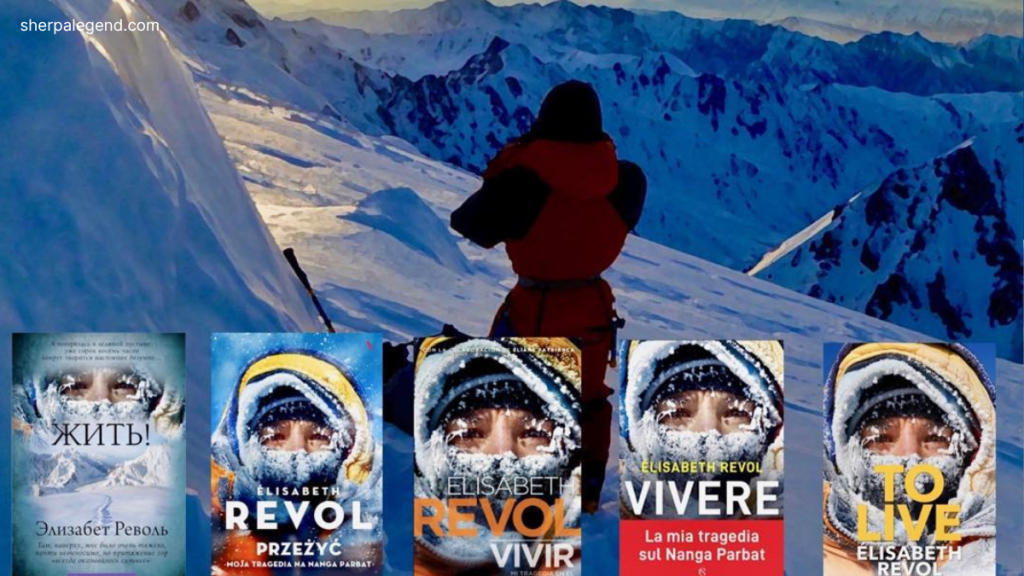
Writing also became therapeutic. Her 2019 memoir “Vivre” (To Live), later translated as “To Live: Fighting for Life on the Killer Mountain,” provided a deeply personal account of the Nanga Parbat expedition and its aftermath.
Today, Elisabeth Revol continues to climb, though with a changed perspective on risk and motivation. The tragedy forced her to reassess what drives mountaineers in an era of social media and performance pressure.
“The big issue is that society has caught up with climbers,” she observes. “Now there’s a focus on performance and media attention. Society’s flaws are spilling over into the mountains. Social media plays a role in the risks we take and how far we push ourselves.”
Her approach now emphasizes autonomy and connection with nature over records and recognition. “During expeditions, I look to disconnect from society and reconnect with nature. In a form of autonomy, where no one carries my gear.”
The memory of Tomasz Mackiewicz remains a positive force in her life. “His life philosophy, his dreamy nature – he was totally disconnected from the world. He changed so much in my life. He’s the reason I continue to evolve and question my beliefs.”
Her experience serves as a reminder that in the world’s most extreme environments, the line between triumph and disaster can be razor-thin. Yet it also shows the human capacity to endure, learn, and find meaning even in the darkest moments.
“I owe my life to him,” Revol says of Mackiewicz, “for, had he not descended as low as he did in those freezing conditions, I would have been with him on the mountain today.”
In surviving the Killer Mountain, Elisabeth Revol didn’t just save her own life – she emerged with a deeper understanding of what it means to live, to climb, and to honor those who don’t return from the world’s highest places.
