

I finished The Last First: Winter K2 with admiration and an uncomfortable feeling. The footage is remarkable. The story is serious and sad. But something sat wrong with me, and it took a while to say what it was.
What happens when a team’s achievement is retold through the controversy around one person? The achievement gets smaller. The people standing beside him fade out. We remember the argument and forget the climb.
My point is this that the film is powerful, but its framing leaves the other Sherpa summiteers almost invisible.
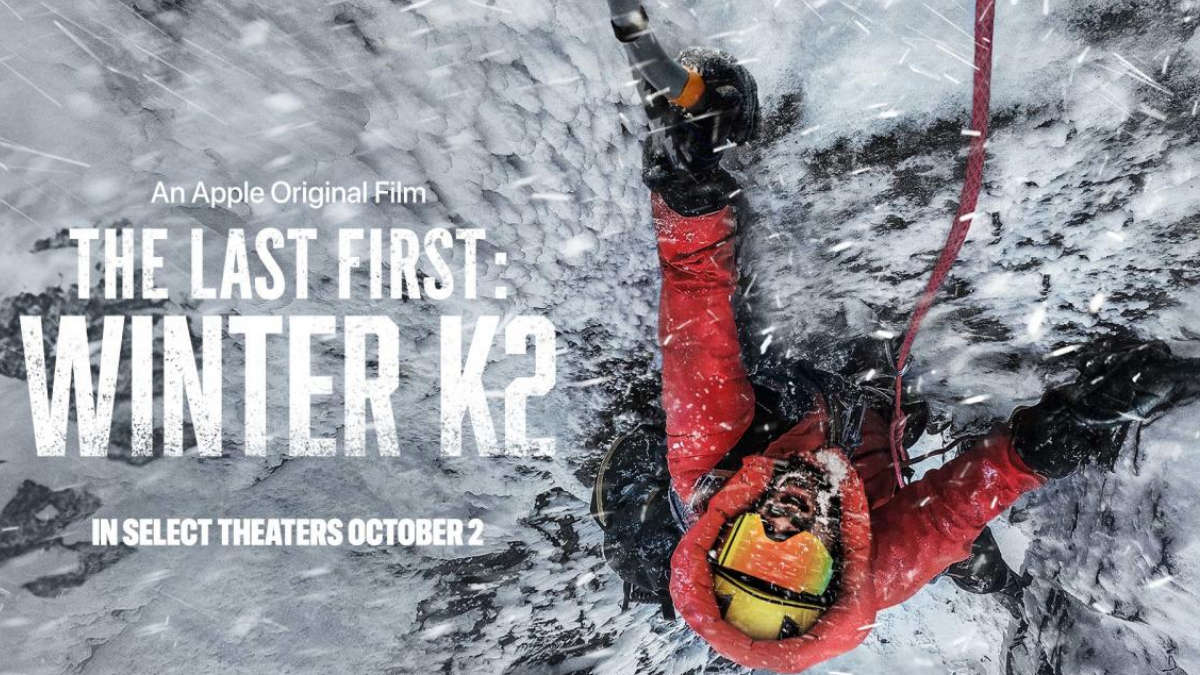
The Last First: Winter K2 is directed by Amir Bar-Lev and streams on Apple TV. It follows John Snorri and Ali and Sajid Sadpara, who were the first team to reach K2 Base Camp, in early December 2020. They had the mountain almost to themselves. Then the Nepali teams arrived, along with the large expedition, and a quiet camp turned into a crowded tent city.
Credit first. The footage is strong, the access is real, and Bar-Lev asks hard questions about ego, money and the commercialisation of big mountains. Those questions needed to be asked. I am not arguing that this is a bad film. It is not.
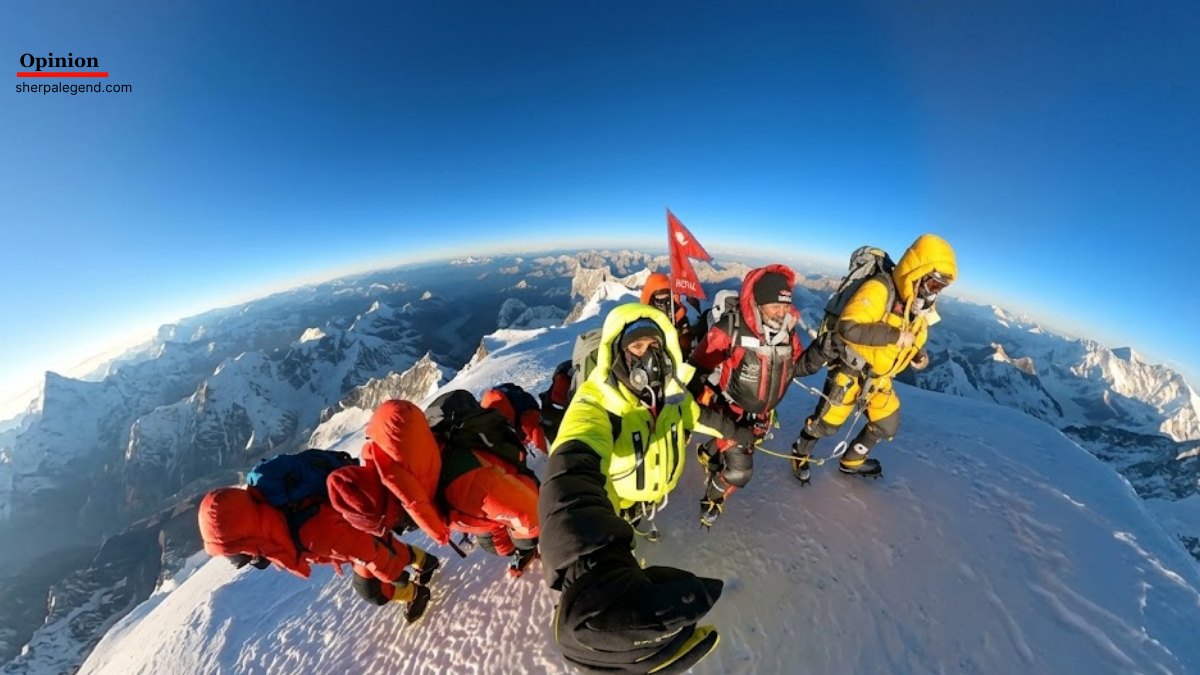
So who were the ten? In Nims’s group Mingma David Sherpa, Mingma Tenzi Sherpa, Gelje Sherpa, Pem Chhiri Sherpa, Dawa Temba Sherpa, and Nirmal “Nims” Purja himself. In Mingma Gyalje “Mingma G” Sherpa’s group Mingma G, Kili Pemba Sherpa and Dawa Tenjing Sherpa. From Seven Summit Treks: Sona Sherpa.
These were high-altitude professionals with years of experience. They did not start as one team. In late December 2020, Mingma G’s group was fixing rope higher on the mountain and ran short.
Nims’s team met them and supplied more. The groups decided to go together as one all-Nepali effort, and Sona joined them. On January 16, 2021, they stopped roughly ten metres below the summit and then walked to the top together, singing Nepal’s national anthem.
That choice was deliberate. No one wanted to be “the first.” Ten climbers turned what could have been one person’s record into a shared achievement. That is the part of the story I wanted the film to hold on to.
This is the opposite of a group of helpers following a leader. It is ten professionals deciding, together, how their own climb would end. The higher ropes that made summit day possible were fixed by the united Nepali team, and they left those ropes in place.
For decades, Sherpas have fixed ropes, carried loads and set up camps while other people took the credit. Yet not one of the fourteen 8,000-metre peaks had a Nepali winter first. K2 was the last chance to change that.
Mingma G said openly, before the expedition, that this was about Nepal’s pride. It was not a secret plan. National pride was a stated goal, and I do not see anything shameful in it.
Ambition was also not unique to the Nepali side. Every team on that mountain wanted the “last first.” The Sadparas, Snorri, the commercial groups and the Nepalis were all there for the same prize. If the summit mattered to everyone, then it is fair to ask why only one group’s ambition feels like a problem.
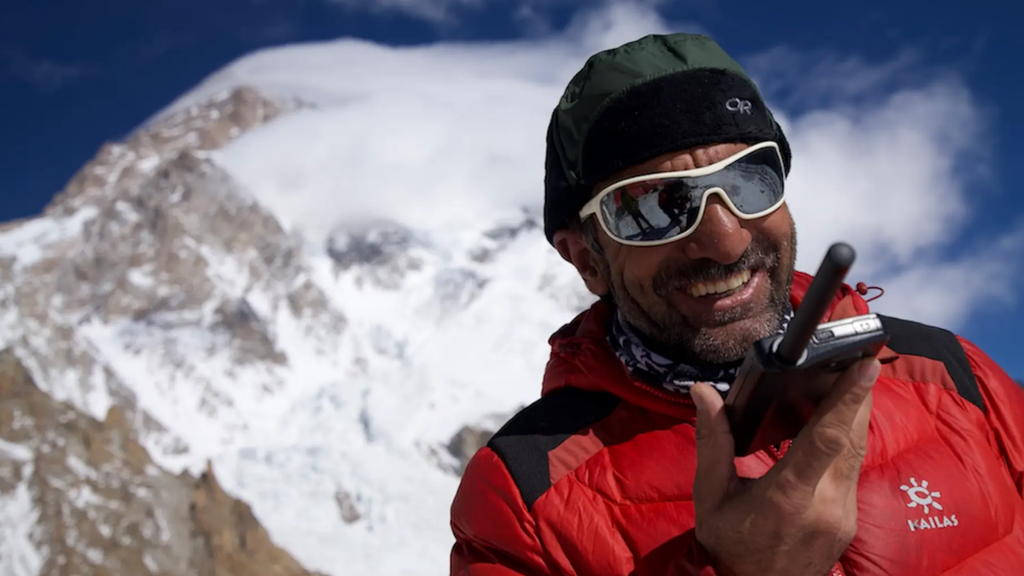
Bar-Lev himself notes that an old “gentleman’s code” long pushed Sherpas into the role of support for other people’s glory. Treating K2 as a sporting contest, as the Nepali teams did, can be read as treachery or as overdue assertion. I read it as the second. Either way, it was a climb, and a hard one.
In my reading, the emotional centre of the film is Snorri and the Sadparas. We spend the most time with their preparation, their family stakes and their sense of being overtaken. That is a fair choice for a filmmaker to make.
But the Nepali summit comes quickly. Then the film moves on to tension and tragedy. The team is mostly called “Nims and his Sherpas.” Nims gets the screen time, the interviews and a fully drawn personality. The other nine receive little attention as individuals. In my reading, they get very little story of their own.
Nims’s statements about ending the pattern of a “white person’s name” on winter firsts are in the film, and the historical point is there. But in my reading it feels secondary to the personal sense of being beaten.
The Nepali presence is also shown mostly through competition, secrecy and betrayal. We see the arrival of a strong, well-resourced group, the decision to move on a weather window, and the disappointment of those left behind.
We see far less of the work the Nepali climbers did fixing the higher ropes, drawing on years of experience, staying united across three groups. When one side has the diaries, the family footage and the interviews, the other side looks flatter by comparison.
I want to be fair to the film. It shows that the rumour of the Nepali team cutting the fixed ropes was false. The ropes stayed. Bar-Lev has said he looked into the serious allegations against the Nepali team and found no merit in them. He says he wanted “gray area,” not heroes and villains.
Even so, what a film shows and what viewers take away can be different. The rumour is cleared up, but it has already done its work by then. Many viewers came away with a negative picture of Nims and the Nepali climbers.
Audience discussions show many of them judging the group as one, which means the ten are being judged together on the strength of one man’s most controversial moments. That is the gap between what the film shows and what it leaves behind.
I should also say what I am not arguing. The film does not pin the February deaths on the Nepali team, and I will not argue against something it does not claim.
Ali Sadpara, John Snorri and Juan Pablo Mohr disappeared on February 5, 2021, after Sajid turned back near the Bottleneck. That push was independent of the January climb. Five climbers died that season, and the film treats it with the seriousness it deserves.
Nims deserves fair treatment, which includes criticism. His private remarks about keeping foreigners behind the Nepali team, and even pulling up ropes, were ugly. I will not defend them. National pride does not excuse reckless words.
But one man’s words should not become the verdict on ten climbers. Mingma G, Kili Pemba, Dawa Tenjing, Sona and the five Sherpas of Nims’s group did not say those words. And the team’s own business and identity came after the summit. Their later success was earned. It was not handed to them by one person.
There is one more person to look atthe filmmaker Elia Saikaly. He is a Canadian high-altitude filmmaker and climber. His career began in 2005, when he filmed Dr. Sean Egan on Everest, and Egan died on that expedition. He later summited K2 himself in 2021. In the film he follows Ali Sadpara’s team, and he is given a lot of authority to criticise Nepali side.
His criticism of commercialisation deserves attention. But his own career grew inside expedition culture, and he arrived on K2 with a camera and a story to tell.
Some viewers argue that he came midway through the season, when many were ready to go home, and that his push, along with pressure from Pakistani officials who wanted a historic result from Ali, kept the summit attempt going.
Some go further and say that without him the February push, and this documentary, would not have happened. The film suggests this pressure was there. These are viewers’ opinions, and I cannot say what was decided inside each tent. But the point stands everyone in this film had a stake, yet only the Nepali team’s ambition is treated as a problem.
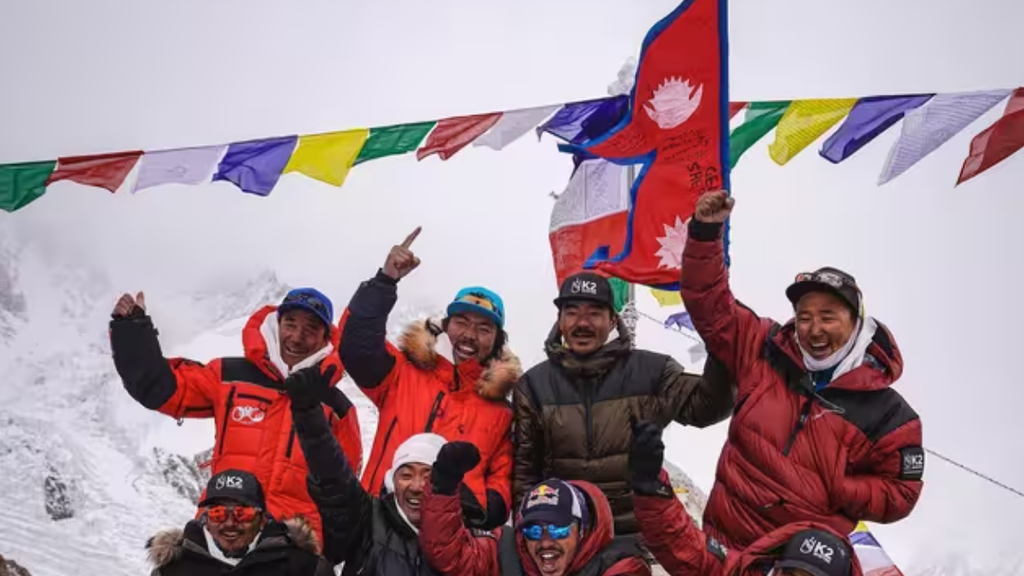
The Nepali side’s own documentary is expected, according to Mingma David Sherpa. Until it arrives, a film’s framing is not the full record. Reviews and viewers have described the Nepali success as feeling like an afterthought, and the people who lived it described it differently at the time, as unity and shared effort. We should watch The Last First as one crafted perspective among several, and keep listening for the voices it did not centre.
I also want to appreciate what this documentary does well. It shows a son’s journey to find his father. Sajid Sadpara saw his father go up the mountain in front of his own eyes, and his father did not return. Sajid went back to K2 that summer to search for him. That grief runs through the film and it is told with care.
The Nepali team, in the same season, did what it did for its country. Both stories are true, and both deserve to be told fully.
The ten were climbers in their own right, not people standing behind Nims. K2 was climbed in winter by a team, and history should remember the team too.
The film is worth watching. The footage is strong and the access is real. It asks hard questions about ego, money and the commercialisation of big mountains, and those questions needed asking.
Bar-Lev was not on K2 when these events happened. He built this story years later from a large archive and competing memories. He has every right to question ego, nationalism, commercialisation and bad judgment, and those are the right questions. But a filmmaker who chooses what to show also chooses who gets remembered, and that carries a duty to give context.
So here is the question I think the film does not ask strongly enough. Why is Nepali ambition treated as troubling, when ambition was the reason almost everyone was on K2?
The Nepali team was open about its goal. Mingma G said before the expedition that this was Nepal’s last chance to change the history of winter firsts. Everyone else on that mountain wanted the same prize. The disappointment at base camp after the summit shows that the record mattered to all of them. If that is true, the same standard should apply to every team. When it falls on only one side, the film stops being a study of ambition and starts to feel like a case being argued.
They stopped just below the top so that no one would be “the first.” They may have been competitive. They may have made mistakes. Nims may have said things that deserve criticism. But they did not steal the first winter ascent of K2. They climbed it.
For generations, Himalayan climbers helped other people become heroes. On January 16, 2021, ten Nepali climbers decided that this time they would carry the ropes, take the risks and write their own names into history. They may have been competitive. They may have made mistakes. Nims may have said things that deserve criticism. But they did not steal the first winter ascent of K2. They climbed it. No documentary should make that feel smaller than it was.
