
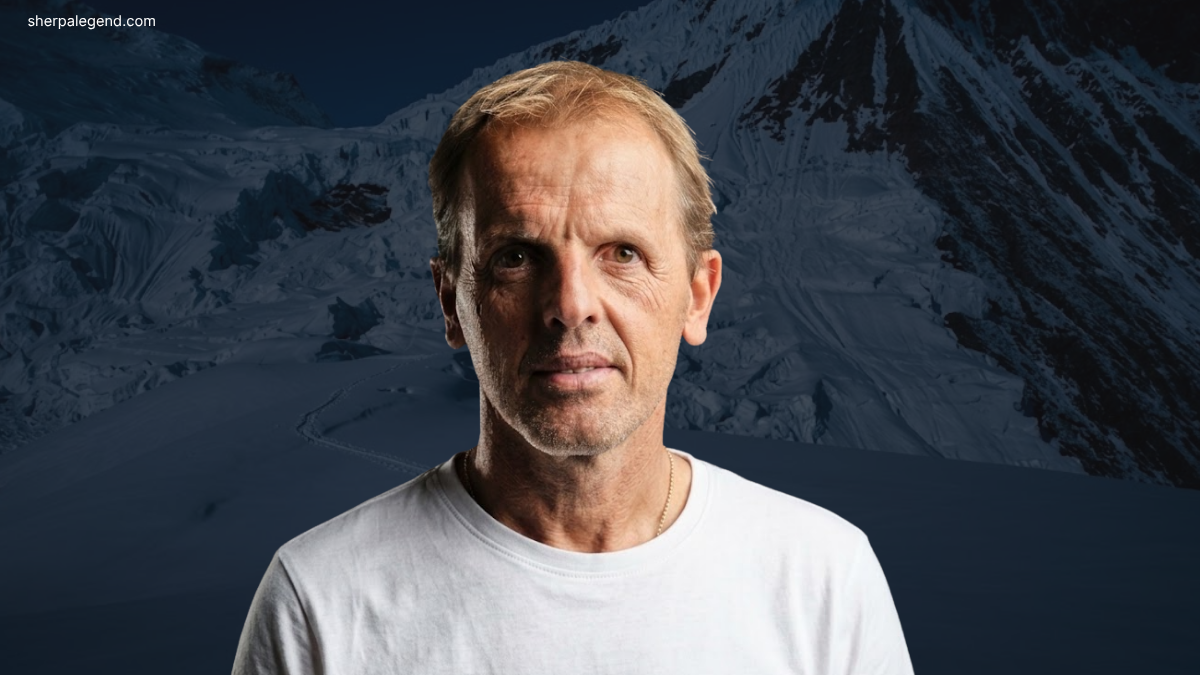

At around 6,800 meters on the flank of Manaslu, Simone Moro was alone. No supplemental oxygen. No partner roped in beside him. No guide. He had climbed to Camp 3 under his own power, the way he insists on doing everything on this mountain, and he had planned to sleep there and push higher in the morning.
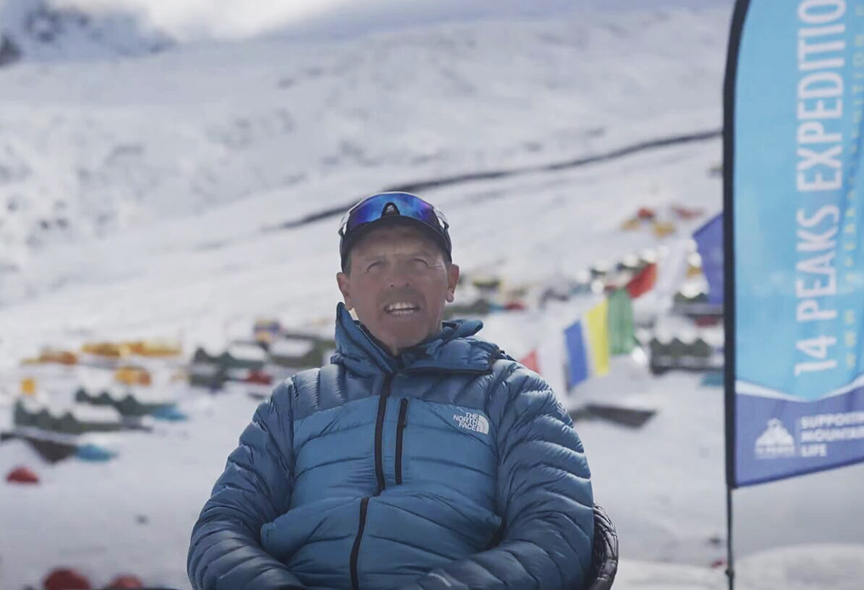
He didn’t. He looked at the slope above him, at the snow loading onto it, at the sky that was about to open up over half of Nepal, and he turned around.
That single decision to stop climbing while he still could is the whole story. Not the storm. Not the mountain. The decision.
This wasn’t his winter attempt. That one is still to come. What follows is the story of the season he spent instead getting to know Manaslu well enough, he hopes, to eventually survive it.
A Man Who Knows Exactly What He’s Giving Up
Simone Moro is 58 years old, Italian, and by most measures one of the most accomplished high-altitude climbers alive. He is the only person to have made four first winter ascents of an 8,000-meter peak Shishapangma in 2005, Makalu in 2009, Gasherbrum II in 2011, and Nanga Parbat in 2016.
He has stood on Everest’s summit four times, once via a solo traverse from south side to north. Across three decades of expeditions in the Himalaya and the Karakoram, he has reached the top of eight of the world’s fourteen mountains higher than 8,000 meters.
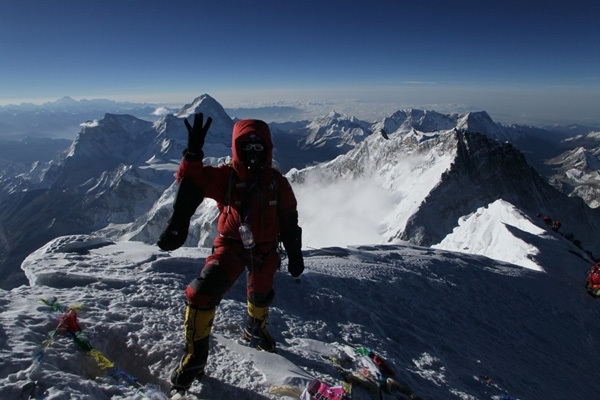
A quick translation for anyone who hasn’t spent time around this world an “8,000er” is one of the 14 mountains on Earth taller than 8,000 meters, all in the Himalaya or the Karakoram range, and climbing one in true winter after the solstice, in the coldest, windiest, most unstable months is considered the hardest version of the hardest kind of mountaineering there is.
The point of laying out Moro’s résumé this early is simple when a climber with this record walks away from a mountain, it is not because he lacks the skill or the nerve to keep going. It’s because he has decided, again, that continuing isn’t worth what it would cost.
The Mountain That Won’t Let Him In
Of all the giants Moro has climbed, one has never let him finish Manaslu, the world’s eighth-highest peak at 8,163 meters. He has never summited it in any season, winter or otherwise. Over roughly a decade of trying, he has spent close to two years of his life at or around its base camps.
He doesn’t talk about it like a checklist item. He talks about it like a relationship. “I’ve spent almost two years of my life at this mountain,” he has said. “I want a sincere relationship with it, without shortcuts.”
That word sincere is doing a lot of work. It’s the reason he hasn’t simply climbed Manaslu the easier way, with oxygen, fixed ropes, and a guided team, the way thousands of paying clients summit it every year. He wants a specific, harder version of the mountain to say yes to him. So far, it hasn’t.
The Rules He Won’t Break, Even to Win
Part of why Moro keeps failing on Manaslu is that he makes the failing possible. He has boxed himself in with a strict personal rulebook, and he refuses to loosen it even after a decade of coming up short.
First: it has to be real winter. Moro starts his attempts only after December 21, the astronomical start of winter, not December 1, the meteorological marker some climbers use to claim an easier, milder “winter” ascent. He calls those early starts “discounted” winter a shortcut dressed up as the real thing. He has said openly that if he counted the milder version, he could have claimed several more winter 8,000er summits by now.
Second: it has to be alpine style. That means self-sufficient no bottled oxygen, no ropes fixed in advance by someone else’s team, no supply camps left behind from earlier in the same season for him to lean on. If the mountain is going to be climbed, he wants to be the one who climbs it, not the systems built around it.
Those two rules together explain almost everything about why this story keeps repeating. He isn’t just trying to get up Manaslu. He’s trying to get up it on the hardest terms he can set for himself, in the hardest window of the year, with nothing to fall back on. Failure isn’t a surprise under those conditions. It’s the expected outcome most years which makes the rare success worth having.
A Decade of Coming Back
The record of attempts reads like a losing streak, but it’s a losing streak with a spine to it every season, he came back.
2014–15: His first real attempt, alongside Tamara Lunger. Bad weather and unstable snow shut it down.
2018–19: With Pemba Gyalje Sherpa, he got to around 6,400 meters before heavy snowfall and avalanche danger made going higher indefensible.
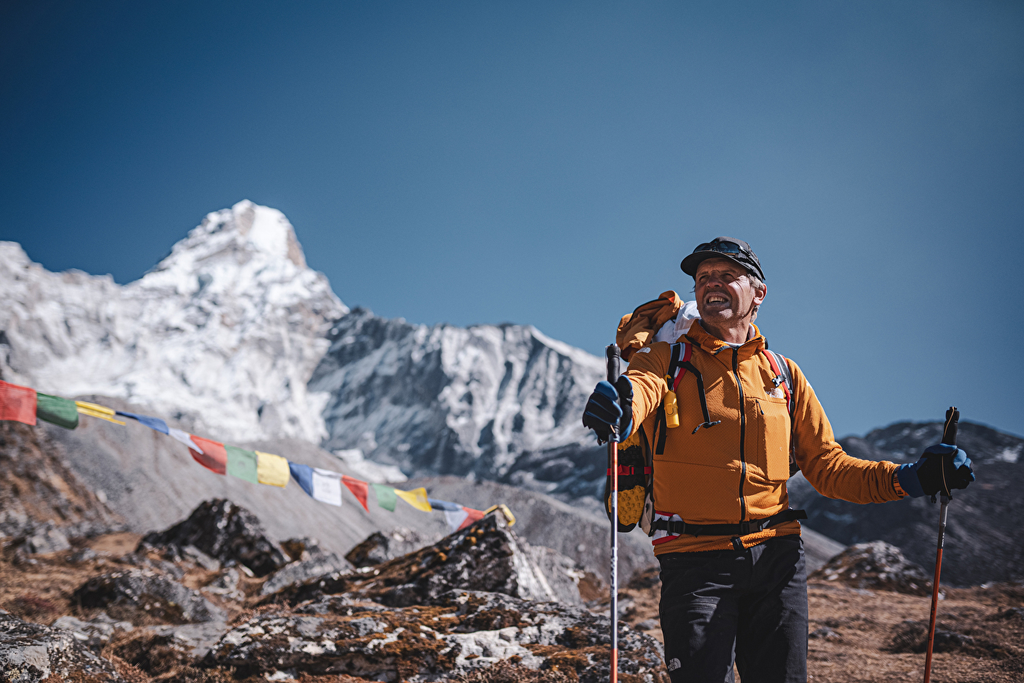
2020–21 through 2022–23: Three more winters, sharing base camp and resources with Alex Txikon’s team and others. Weather stopped him each time. In one of those seasons, health problems kept him out of the final push altogether, and Txikon’s better-supported group summited without him.
2024–25: His sixth attempt, with Nima Rinji Sherpa and Oswald Pereira, built around a pure alpine-style push. Cancelled outright before it really began forecasters were calling for winds up to 150 kilometers an hour, roughly hurricane strength, scouring the upper mountain.
2025–26: His seventh attempt, again with Nima Rinji Sherpa. This one didn’t end with a weather call. While acclimatizing on nearby Mera Peak in mid-December 2025, Moro suffered a heart attack related to a blood clot. He was evacuated, treated, and recovered but the winter attempt was over before it started.
Getting Smarter, Not Softer
Six months is not a long time to come back from a heart attack at altitude. Moro used it to finish something else first in June 2026 he climbed Denali, in Alaska, completing his personal Seven Summits one of the classic milestones in mountaineering, the tallest peak on each continent.
Then he went back to Manaslu. But this time, in autumn, not winter and not to summit.
This Was Never a Summit Attempt
It’s worth saying plainly, because it’s easy for a casual reader to assume otherwise Moro’s autumn 2026 trip to Manaslu was not his eighth winter push, and it wasn’t a failed one either. It was a reconnaissance climb a deliberate, lower-stakes trip to study the mountain in friendlier conditions before he ever tries to summit it in true winter again.
What he was actually doing at Camp 3 was homework. He was learning the mountain’s shape its crevasse patterns, how the route behaves under real snow load, where the danger actually sits the kind of close, patient study that the brutal winter window never gives him time to do safely.
Seen that way, the two decisions that make up this story climbing up to Camp 3, and then turning back aren’t a success followed by a retreat. They’re both wins, measured against what he actually came to do. He got the information. Then the storm made staying pointless, so he left.
What Actually Happened on the Mountain
The autumn season at Manaslu started badly and got worse. Heavy rain and snow settled over base camp early, avalanche danger climbed, and commercial expedition teams the guided groups that make up most of the traffic on this mountain began postponing their own summit pushes. The season’s first real weather window closed without a single climber reaching the top.
Then came the number that made the danger concrete. A weather system was forming over the Bay of Bengal, already named Arnab in case it strengthened into a cyclone. Forecasters expected it could dump 400 to 600 millimeters of rain across parts of Nepal over four days, from September 23 to 27. For scale that region’s entire average rainfall for a whole year is roughly 500 millimeters. In other words, the mountains were about to get a year’s worth of rain, or more, in less than a week.
“My Autumn Expedition Manaslu 2026 Is Over”
Moro climbed independently to Camp 3 and settled in, ready to go higher the next day. Then he looked at the mountain and didn’t like what he saw. He went back down to base camp and called Karl Gabl, one of the most respected mountain meteorologists in the world, the forecaster climbers on 8,000ers have relied on for decades precisely because his readings of Himalayan weather are treated as close to gospel at that altitude.
Gabl told him heavy snowfall was coming between September 24 and 28, with at least two meters of fresh snow expected on major mountains across Nepal, from west to east. Moro shared the forecast with other teams at base camp, and it matched what other forecasts were showing too.
He posted a photo of Manaslu from one of his old winter expeditions and wrote “I took one photo of Manaslu from my winter expeditions archive to say that my autumn expedition Manaslu 2026 is over.
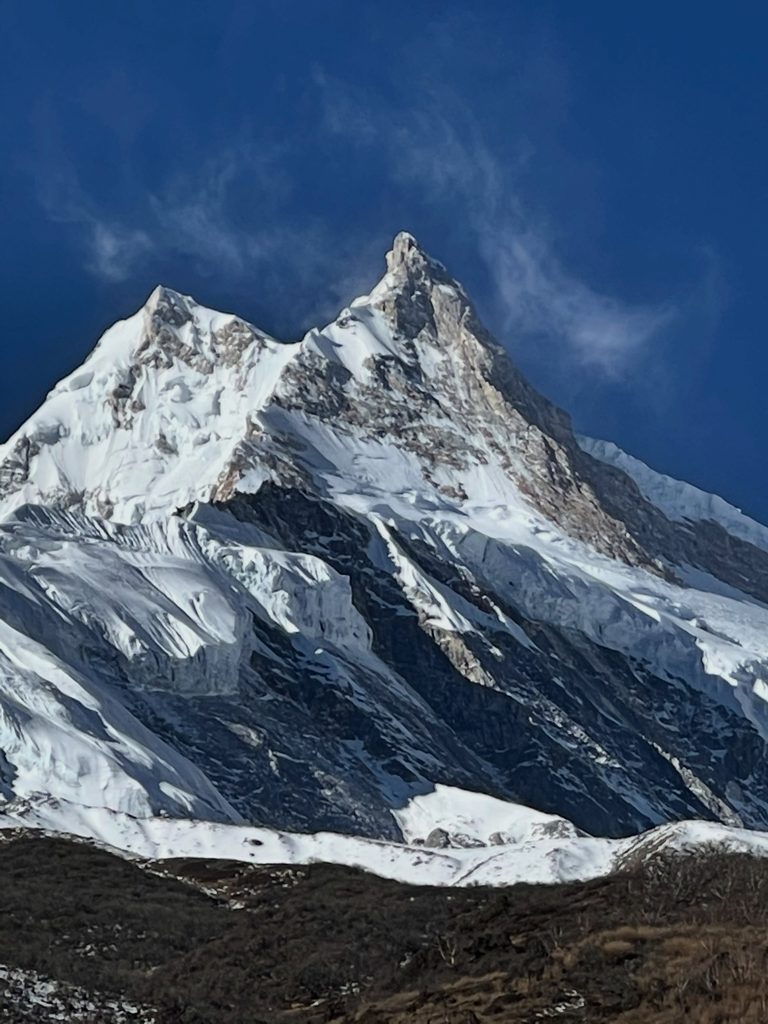
Then he explained why, at length, in his own voice and it’s worth letting him say it without much interruption:
“So the message was clear for those who want to listen, understand and follow the evidence… I decided to set an example in leaving the BC as one of the first despite ‘fame.’ I could climb fast, with no O2 and with no partner or guide, but not in an evident Russian roulette situation. It is always time to learn – to teach-how to fail, also to give up if needed to survive and become a potential ‘long term winner.’
Those without fear, humility, without heavy failures and lack of nature respect, usually get a very short, maybe intensive, life, story, success. To fight to remain alive, and just postpone the success, is the only way to continue to dream and work for it.
The obsession has to remain to survive your own ego, and not to fall in the summit-success trap. Mountains, like our destiny, are unpredictable, but we can’t only blame bad luck when something goes wrong, especially when evidence or a reliable forecast are giving us clear messages. Life is too nice to be wasted in a competition for a few minutes of very ‘expensive’ glory.
A solid career and mountain history are not written by medals or records gained at all cost, but by an entire life of experiences and right decisions taken at the right time, with the ability to wait, and also to lose. This is what composes your credibility a list of necessary failures alternating with great successes, beyond any official ranking.”
Every Angle: Ego, Weather, Risk, and What’s Changing
Moro’s own framing is the clearest this wasn’t defeat, it was a choice, and the choice was survival over ego. But there’s more than one way to look at what happened on Manaslu this September.
There’s the community’s stake in it. Other teams were at base camp facing the same forecast, some of them commercial operations under real pressure to deliver a summit for paying clients a very different calculus than an independent climber with nothing to prove to a client roster. Moro leaving first, publicly, was as much a signal to the rest of the mountain as it was a personal decision.
There’s the weather itself. Karl Gabl’s word carries the weight it does because forecasting at this altitude is genuinely a matter of life and death, and because decades of climbers have watched his calls hold up when it mattered most. At 8,000 meters, a good forecast isn’t a convenience. It’s closer to the only reliable early-warning system a climber has.
There’s the bigger climate question hanging over all of it, and it deserves one careful paragraph rather than a dramatic one extreme, fast-forming, high-volume rain events like the Arnab system are the kind of thing scientists studying the region have flagged as a pattern worth watching in a warming climate, though attributing any single storm to climate change isn’t something a single storm can prove on its own.
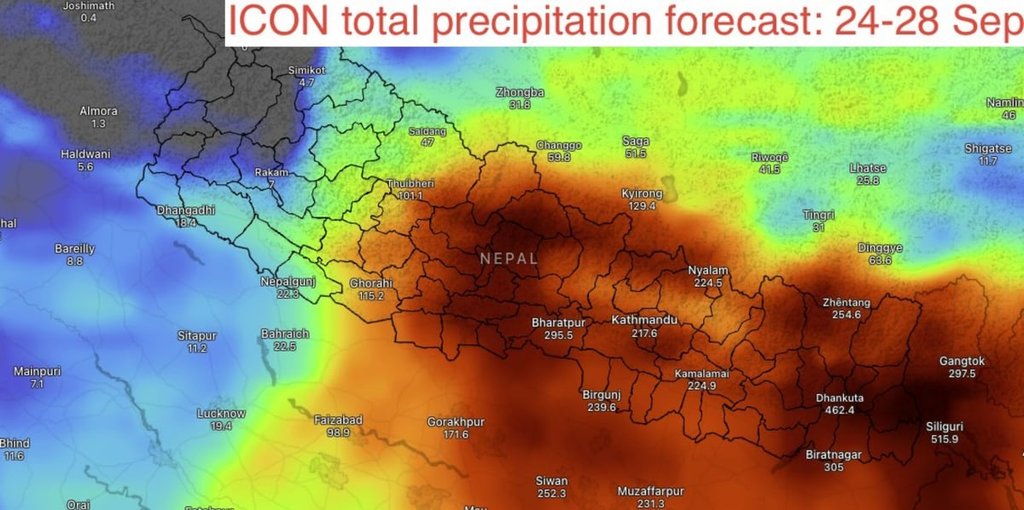
What’s fair to say is that a system dumping close to a year’s rain in under a week is an extreme event by any historical measure for the region, whatever combination of causes produced it.
And there’s the question some readers will ask no matter how the story is framed why does a man who nearly lost his life on this mountain six months ago keep going back? The obsession critique is fair to raise. But the more honest answer, based on Moro’s own account of himself, is closer to the opposite the discipline is the point. Anyone can keep climbing when it’s dangerous. What’s rare is climbing back down, in public, ahead of almost everyone else, when your reputation would let you stay.
The Chapter Still Open
Manaslu remains what it has been for a decade Simone Moro’s unfinished business. He now knows its shape a little better its crevasses, its moods in weather that isn’t actively trying to kill him and that knowledge is the one thing this season’s trip was built to produce. The real attempt, the one measured against his own strict rules, after the solstice, without oxygen, without help, is still ahead of him.
He has said before that it isn’t a summit he’s chasing so much as an honest relationship with one specific mountain. “I want a sincere relationship with it,” he said, “without shortcuts.” Ten attempts, one heart attack, and nearly two years of his life in, that relationship is still going. It just isn’t finished yet.
Editorial Apology:
We mistakenly stated that “No one else has more than one” first winter ascent of an 8,000-meter peak. This was an error, and we sincerely apologize for the inaccuracy. With due respect to all the climbers involved, while Moro holds the record with four (Shishapangma, Makalu, Gasherbrum II, and Nanga Parbat), several others have also achieved multiple firsts: Jerzy Kukuczka, Krzysztof Wielicki, and Maciej Berbeka each have three, while Denis Urubko and Adam Bielecki each have two. We regret any confusion caused and are glad to correct the record.