
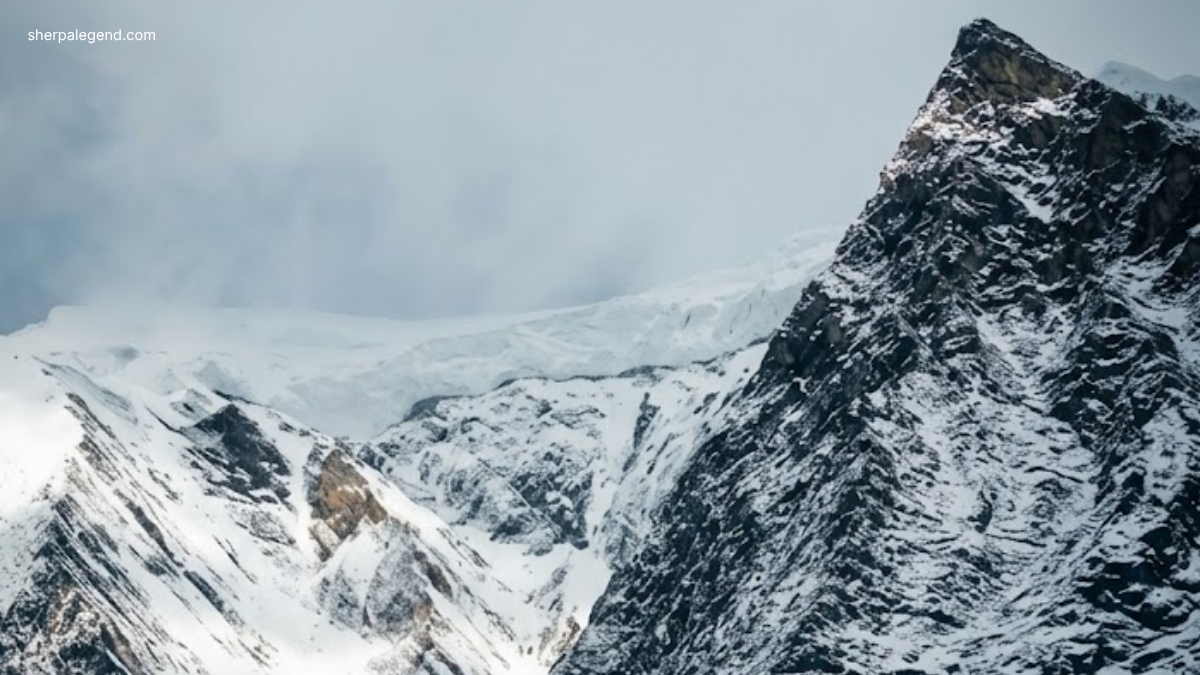

Manaslu and Dhaulagiri are about 105 km apart, both in Gandaki Province. This autumn, the scene at each is very different.
Manaslu (8,163 m) has most of the attention. It has around 480 foreign permits, repeated snowfall, avalanches and recent deaths at Camp 3. Dhaulagiri (8,167 m) is taller and tougher, and it is far quieter. Roughly 15 to 16 climbers are at its Base Camp. A storm has kept them from moving higher, the fixed ropes are under snow, and teams are waiting for October.
Same province, same season, two different pictures on the ground. A low-pressure system over the Bay of Bengal is now forecast to bring heavy rain across Nepal, and it will affect both.
Who is on the mountain
The Department of Tourism’s data for September 18, 2026 lists 34 permitted climbers on Dhaulagiri, 24 men and 10 women, grouped into four teams.
The operators on the mountain are 8K Expeditions, 7 Summits, 14 Peaks, 14 Summits, Altitude, Elite Exped and Pioneer Adventure. That is seven names, more than four teams would suggest. The source data does not explain the difference, and it is not resolved here.
Teams at Base Camp say the Sherpa support is about one Sherpa per climber, with some climbers having two.
The numbers are modest for an 8,000-metre peak in autumn. In autumn 2025, the Department of Tourism permitted 24 foreign climbers on Dhaulagiri, reported as 17 men and 7 women across three expedition groups. The 2026 figure is higher, though the two counts may not be measured the same way, since the 2025 number covers foreign climbers only.
Base Camp: storm, snow and a sunny morning
Conditions have not been good. Fixed ropes have been placed up to Camp 2, but they are now covered in snow. Climbers are not expected to move higher until the storm passes, and many avalanches have been reported in the area.
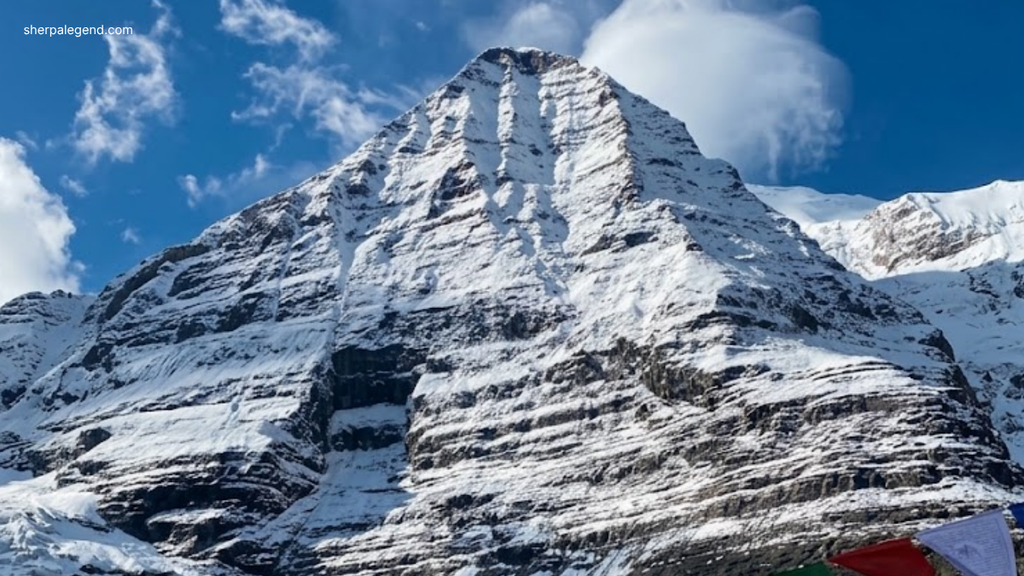
This morning, Base Camp looked sunny. That is according to a conversation with Xenia Xantha, who is eyeing a summit of Dhaulagiri.
The camp is very quiet compared with Manaslu’s. Only a few people are around. With about 15 to 16 climbers at Base Camp, and Manaslu’s field counted in the hundreds, “extremely quiet” is how the situation was described.
Where things stand on the mountain
Most climbers have not finished their acclimatization rotations. Some have gone up to Camp 1, and very few have gone beyond it. The storm has limited movement further.
Camp 2 is the highest camp reached, but the camps have not been properly established because of the storm and snow.
There is no confirmed summit window. Based on the current situation, mid-to-late October could be realistic. Teams are prepared to stay at Base Camp and wait for a suitable weather window, since most climbers still need more time to acclimatize.
The bigger weather system
Nepali meteorologists have forecast possible heavy rainfall across the country from September 24 to 28. Meteorologist Binod Pokharel, after studying several forecasting models, said rain could affect areas from eastern Nepal to the far west. He said September 25 and 26 could be particularly heavy.
The forecast is tied to a low-pressure system developing over the Bay of Bengal and Andaman Sea, which could move toward Nepal. The models do not agree on where it will hit hardest. The American model suggests prolonged rain across eastern and western Nepal. The European model points to a stronger chance of heavy rain in western Nepal, including potentially Gandaki. Several models also show a significant chance of heavy rain in Lumbini Province.
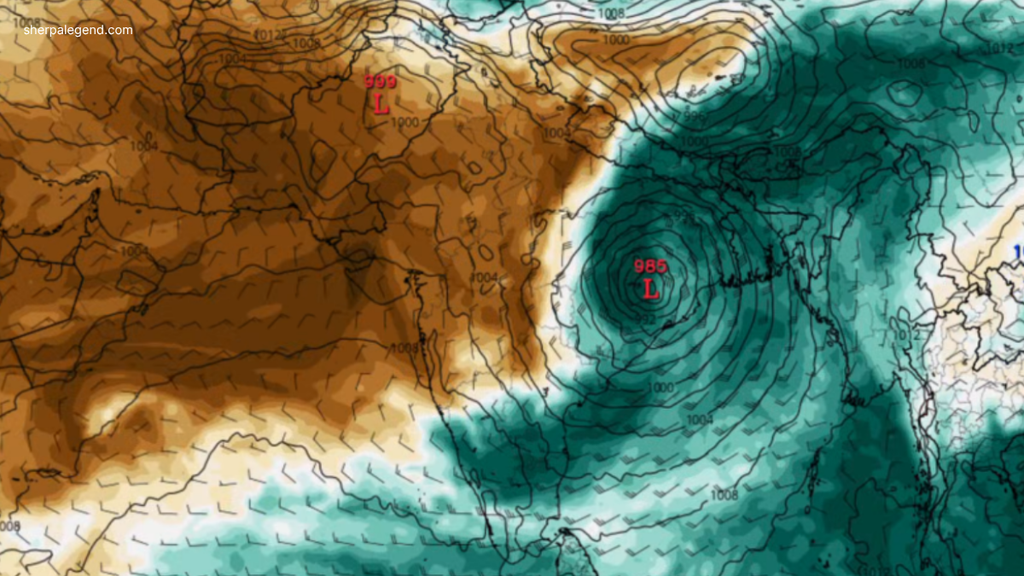
Some scenarios project up to about 500 mm of accumulated rain over four to five days in some areas. Meteorologists stress that this is a total across the period, not a one-day figure. Rojan Lamichhane of the Department of Hydrology and Meteorology (DHM) said the system is still developing and that it is too early to say where the heaviest rain will fall or how much Nepal will get. The department is monitoring it and is expected to issue more detailed forecasts as the dates approach.
Ground that is already saturated raises the risk of floods and landslides at lower elevations. Higher up, the same system means new snow.
What it means for Dhaulagiri
New snow would raise avalanche risk on the route. It could delay rope-fixing and early rotations, and it would make the already serious technical climbing harder.
Approach trails, some already affected by earlier monsoon damage, could see further disruption from rain and landslides at lower elevations. Base Camp is likely to turn wetter and colder for a while, with precipitation falling as snow higher up.
The small field does have one advantage. With far fewer people on the mountain, teams have more flexibility to wait out the system. Manaslu’s much larger field does not have the same room. Any delay there creates bottlenecks and more risk once a window opens.
Why Dhaulagiri stays quiet while Manaslu fills
Manaslu is widely marketed as one of the more approachable 8,000-metre peaks for commercial teams. Its standard route is relatively straightforward by high-altitude standards, though still serious, with established fixed ropes and camps that suit large guided groups. Autumn is its main commercial season. This year Tibet is closed, which has diverted climbers who might otherwise have gone to Cho Oyu or Shishapangma.
Dhaulagiri’s standard Northeast Ridge is steeper, more technical and more avalanche-prone, with sustained mixed climbing, steep ice and greater exposure. Autumn attempts are less common than in spring, and the autumn window is shorter and less reliable. The mountain draws smaller, more experienced teams and climbers who want solitude or a harder objective.
Outlook
Late-September summit windows look compromised or high-risk on both mountains. Early-to-mid October may stay unsettled as the monsoon exits and leftover moisture clears. The clearer, colder post-monsoon weather that usually supports autumn summits is more likely from mid-to-late October, provided the incoming system does not leave a dangerously unstable snowpack.
Teams and operators will be watching mountain-specific forecasts closely, since high-altitude models often differ from lowland rain projections. Safety will come before rushing an early window, especially given the recent avalanche activity on Manaslu.
