
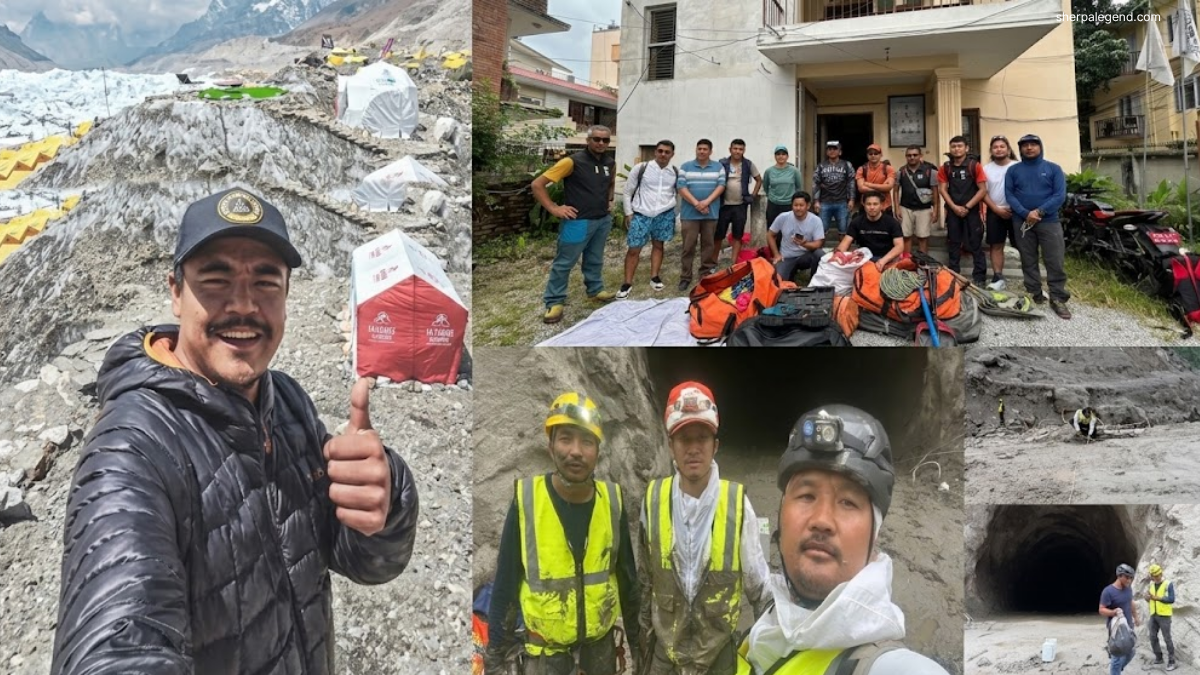

The flood did not only sweep away roads, bridges and homes in northern Nepal. It separated people from the outside world.
Foreign tourists were in the affected region. So were the Nepali guides, porters and support workers who travelled with them. Hydropower workers were inside tunnels when the disaster struck. Villages were cut off, roads disappeared beneath mud and debris, and in some places, the normal routes used by rescuers simply no longer existed.
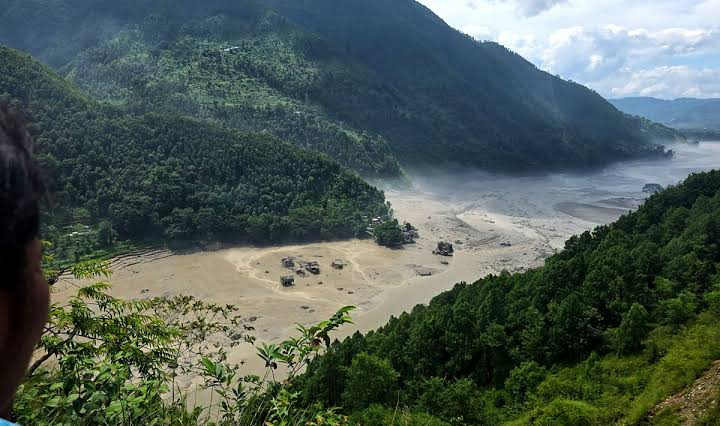
As of September 3, around 590 foreign nationals from 34 countries were still reported missing. Among them were Nepali nationals who had been accompanying tourists, including trekking and rafting guides, porters and support staff. Official figures cited in the disaster response also put the number of missing hydropower workers at at least 639, with many believed to be trapped inside damaged, mud-filled tunnel systems along the Bhotekoshi and Trishuli rivers.
The scale of the disaster created a difficult question what happens when the people who need rescuing are trapped in places ordinary rescue teams cannot easily reach?
In Nepal, the answer increasingly involved people who normally work in another kind of extreme terrain.
They are Mountain guides.
The same community that spends its seasons moving climbers through steep Himalayan terrain, fixing ropes and working with helicopters was called into the flood zone. Nepal formally mobilised specialised mountain guides and technical equipment after the country’s mountain guiding community repeatedly urged authorities to use their skills in the response. The Nepal Mountaineering Association also coordinated rescue teams in support of the Nepal Army and other government agencies.
For these guides, the environment was different, but many of the problems were familiar.
They knew ropes. They knew anchors. They knew how to move through steep and unstable ground. Many were trained to work around helicopters and to operate in remote areas where mistakes can quickly become dangerous.
Mountains had taught them how to reach places where there is no easy path. Now the flood was asking them to do the same thing.
The Disaster Below the Surface
Some of the most difficult rescue operations were unfolding underground.
Hydropower projects across the Bhotekoshi and Trishuli corridors became some of the most challenging locations in the response. Tunnels were blocked by mud, rocks and debris, while rescuers had to determine whether people were still trapped inside.
At the Mailung Khola, aspiring IFMGA mountain guide Jenjen Lama joined a mission to search for people believed to be trapped inside the A-1 tunnel.
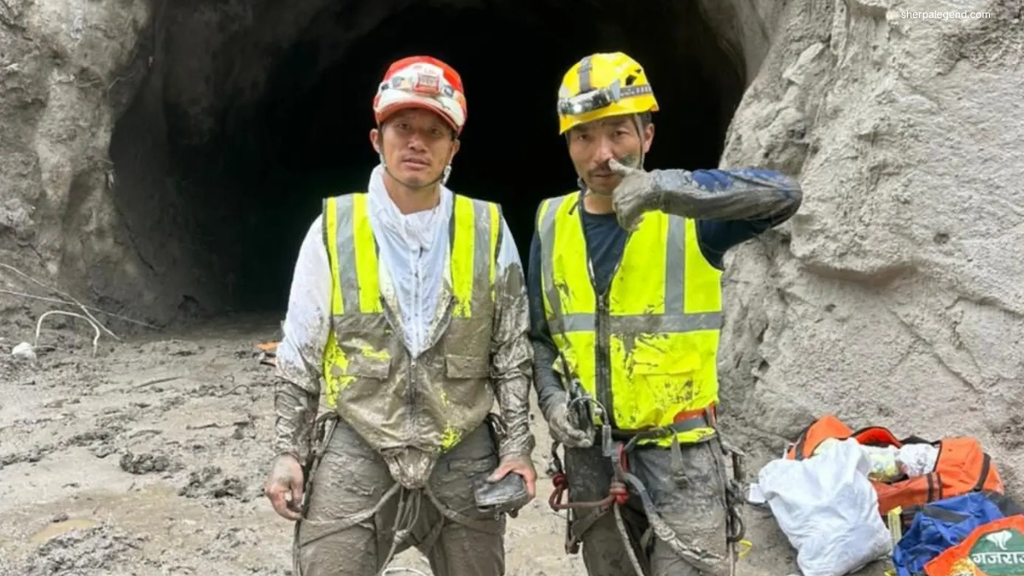
Getting to the tunnel was itself a struggle.
“Using a fixed-line system with anchors, we progressed about 120 meters, but found no signs of life,” Lama said. “Looking ahead, we saw the tunnel was completely blocked by mud and debris, so we had to turn back.”
According to local people, more than 200 people could potentially have been trapped inside that tunnel, including Nepali and foreign nationals. Clearing the enormous rocks and debris with heavy machinery became the immediate priority before rescuers could continue deeper inside.
It was a reminder that technical ability has limits.
A rope could get rescuers to the entrance. An anchor could secure their movement. But no mountain technique alone could remove a wall of mud and rock sealing a tunnel. That required another kind of rescue operation one involving excavators, drilling equipment, ventilation and specialised tunnel teams.
And so the response became a combination of skills.
When Mountain Skills Met a Flood
The mountaineers were not replacing the Army, police or engineers. They became another specialised layer of a much larger rescue effort.
The Nepal Army, Nepal Police and Armed Police Force were working alongside hydropower personnel and international tunnel-rescue teams. Indian, Chinese and Korean technical teams were also involved at different tunnel sites, bringing equipment such as thermal cameras, deep-drilling machinery and air-pumping systems.
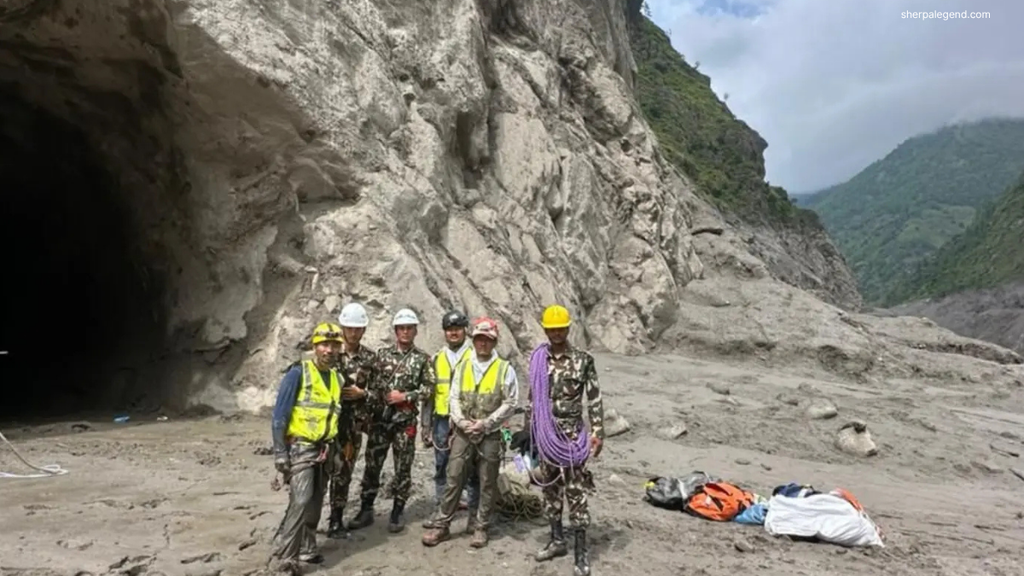
Mountain guides brought something different. They brought experience moving people through difficult terrain.
According to Seven Summit Treks, mountaineers spend years training in rope work, navigation and moving people to safety in difficult and unpredictable environments. That preparation can become useful far beyond the mountains when people need to be searched for or moved through complex terrain.
The Nepal National Mountain Guide Association’s teams included IFMGA guides, aspiring guides, a longline rescue specialist and a drone operator. Some were deployed by helicopter, while others travelled by vehicle toward the affected areas.
For a community accustomed to looking upward at some of the world’s highest peaks, the direction of the search had changed.
They were now looking into tunnels, across landslides and toward villages isolated by water.
Jenjen Lama Had Already Seen One Disaster
For Jenjen Lama, the flood response came after a traumatic summer. Only weeks earlier, he had been involved in the aftermath of the Broad Peak avalanche that killed 10 people. He witnessed the avalanche from neighbouring K2 while working as a guide.
Back in Nepal, he volunteered for the flood rescue. At Chilime Hydropower, his team was assigned to search for six people believed to be trapped inside a tunnel.
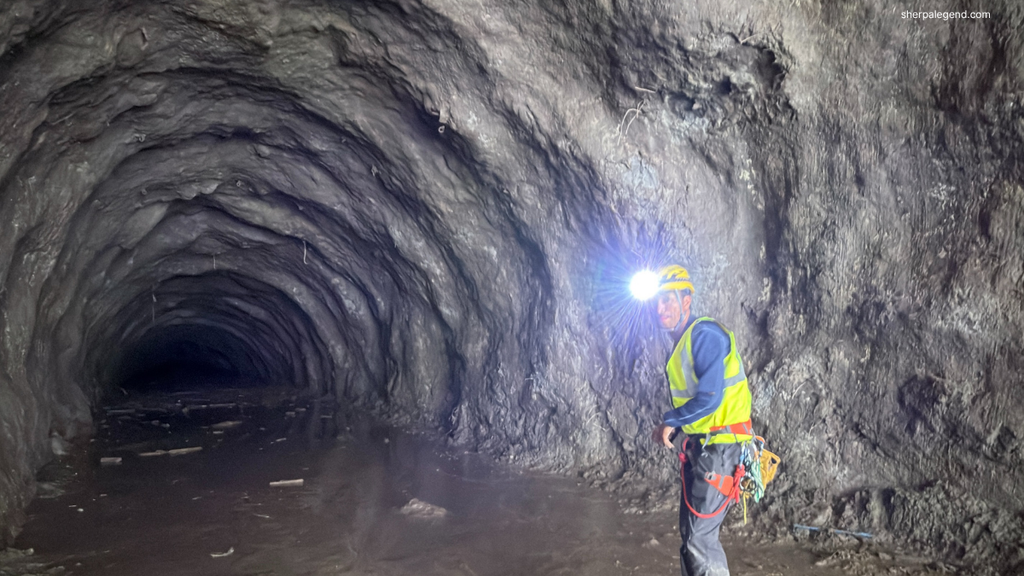
They established a fixed-line system and anchors and moved approximately 120 metres into the tunnel.
Then the way forward disappeared.Mud and debris had completely blocked the passage. They turned back.
The mission showed both the value and the limits of technical rescue: mountain guides could reach difficult places, but the scale of the destruction meant that heavy machinery and tunnel specialists were still essential.
Other mountain guides were sent toward the Trishuli A tunnel, where they were able to carry out a successful rescue, according to Lama.
Jenjen and Manish are only two faces of a much larger response. Multiple IMFGA mountain guides and aspirant guides were deployed across helicopter and vehicle teams, including Pemba Wangchu Sherpa, Dorji Sherpa, Sabin Thakuri, Ashish Gurung, Dawa Singhi Hyolmo, Sandesh Sherpa, Dawa Jangbu Sherpa, Chhiring Sherpa, Man Raj Gurung, Chiring Sherpa, Sajan Ghale, Lukme Tamang and Kusang Sherpa, among others.
For many of them, this meant putting aside work that would normally have taken them back into the mountains. Some had clients arriving for expeditions on Manaslu, Himlung and Ama Dablam.
Instead, they went toward the disaster zone.
The Mountaineer in the Sky
The mountain community’s contribution was not limited to ropes. Manish Maharjan, a Nepali filmmaker, mountaineer and professional drone pilot, was working from the front lines with search drones around the entrances of heavily blocked hydropower tunnels.
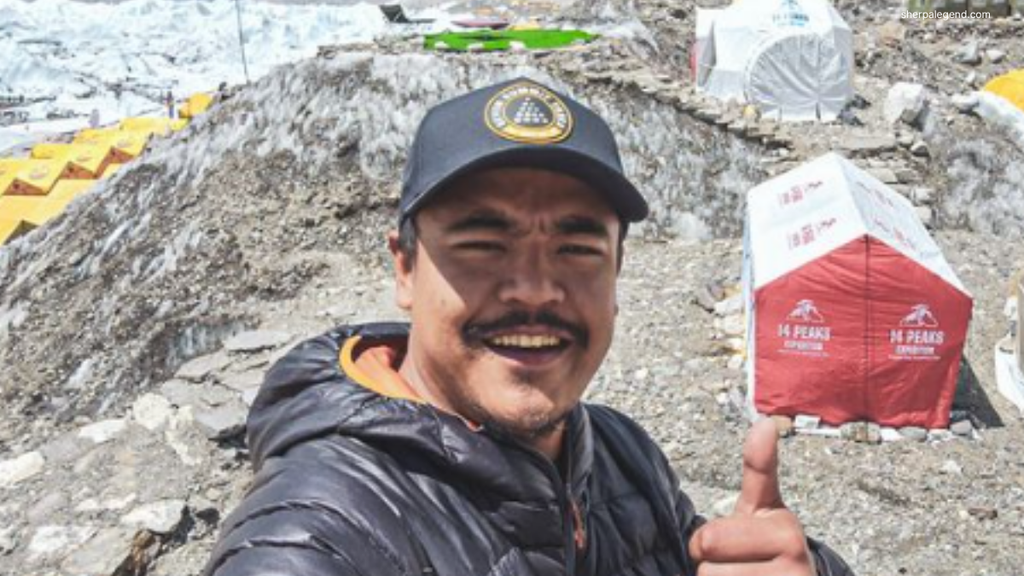
His equipment included drones with zoom cameras, thermal imaging and loudspeakers.
The drones provided something rescuers desperately needed in a disaster where roads, slopes and tunnels could not always be safely reached: another set of eyes.
Maharjan said he had been involved from the second day of the disaster, initially flying search operations around the Timure and Ghatta Khola areas before being assigned to tunnel searches.
The loudspeakers added another possibility. Drones could be used to call out to people stranded in isolated areas, or even play music in an attempt to establish contact.
For Maharjan, years spent working at high altitude had prepared him in ways that extended beyond climbing.
He said mountain experience had taught him survival, communication and resource management. Even something as simple as managing a drone’s battery in a disaster had parallels with operating in the mountains, where resources and power are limited and every calculation matters.
The mountain had taught him to work with what he had. The flood demanded exactly that.
A Rescue Too Large for One Team
Across the affected region, the rescue effort became a patchwork of specialised knowledge.
At Chilime and Langtang, Indian tunnel-rescue specialists worked alongside Nepali teams. At Upper Trishuli 3A, Chinese specialists worked with Nepali rescuers. At Upper Trishuli 3B, Army personnel and hydropower technical experts worked with excavators and a specialised search-and-rescue team. In Haku, Nepali Army and hydropower personnel re-entered a tunnel to continue searching. Korean tunnel specialists were also working with Nepali teams at Upper Trishuli 1.
The mountain guides were part of that larger network.They were not there because a rope could solve every problem.They were there because the disaster had created places where experience with steep terrain, technical movement, navigation and difficult access could make a difference.
And above the ground, helicopters became another critical link.Captain Priya Adhikari, identified in the material as Nepal’s first female helicopter rescue pilot, flew around 100 rescue missions in a week
From helicopters to tunnels, from drones to fixed lines, the response increasingly depended on people who knew how to work where normal infrastructure had failed.
The Other Side of the Rescue
There is another reason the involvement of Nepal’s mountain community carries particular weight.
Some of the people they were searching for came from the same world.The disaster did not only threaten foreign tourists. It also took aim at the Nepali workers who make travel through the Himalayas possible guides, porters and support staff.
At least 164 Nepali nationals accompanying tourists were listed among the missing as of September 3.
That means Nepal’s mountain community was responding to a disaster that had struck close to its own professional world.
The people who normally guide others through the country’s mountains were now searching for people who had entered those same remote regions for work, travel or adventure.
A Different Kind of Mountain Work
Nepal’s mountain guides are usually associated with the highest places on Earth.They are seen fixing ropes above the clouds, carrying equipment toward high camps, guiding climbers through dangerous terrain and helping people descend safely from places where a mistake can be fatal.
But the flood revealed another side of that profession.The skills developed in the mountains do not belong only to the mountains.
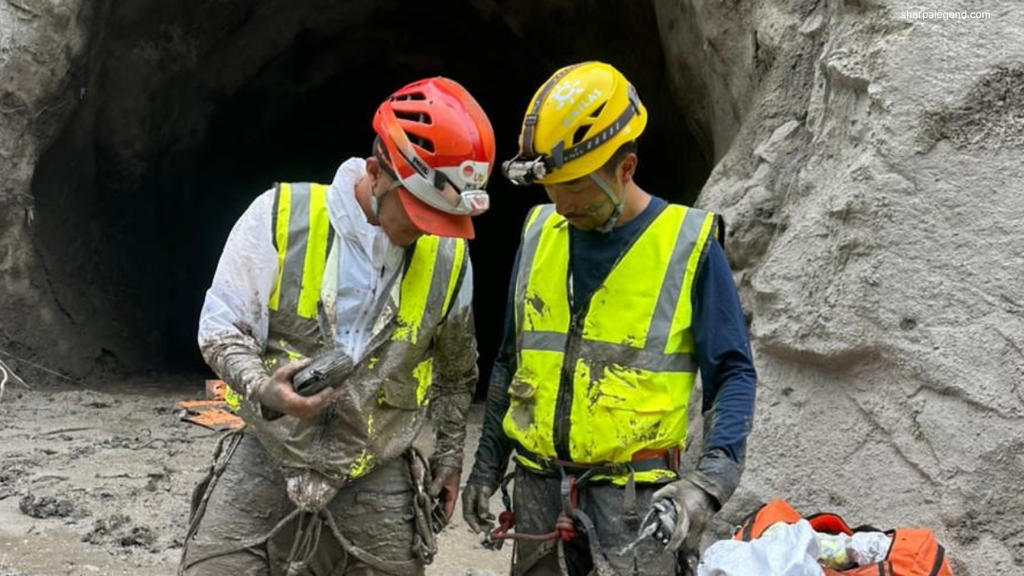
Rope systems can become rescue systems.Navigation can become disaster response.Drone operations can become search operations.Helicopter experience can become evacuation support.
The ability to remain calm in an isolated and unpredictable environment can become useful when an entire landscape has suddenly changed.
The flood did not turn mountain guides into rescuers.They already were.
It simply placed them in a different landscape.
And as Nepal continues searching for those still missing, their role is a reminder that disaster response is rarely the work of one organisation or one profession.
Soldiers bring manpower and coordination. Police and emergency agencies bring operational capacity. Engineers understand the damaged infrastructure. International tunnel teams bring specialised technology. Local communities know the terrain. Helicopter crews connect isolated areas. Drone operators provide eyes where people cannot safely go.
And the mountaineering community brings something Nepal has spent decades developing in its highest places the ability to move toward danger when the path disappears.
The same people Nepal sends into the world’s highest mountains are now using those skills to reach people trapped in some of the country’s worst flood-hit terrain.
The mountains trained them for difficult places.This time, they were not climbing toward a summit. They were trying to bring people home.
A note on the numbers
The missing-persons figures in this account are current as of September 3. The count of foreign nationals comes from a Ministry of Foreign Affairs briefing held that day;the count of missing hydropower workers is attributed to NDRRMA. Both figures were still being updated as search operations continued. Whether this rescue represents the first large-scale, formal mobilisation of professional mountain guides for a disaster of this kind has not been independently verified.
Mountain guides did not rescue everyone in the flood zone, and no evidence supports crediting any single group with the outcome of the operation. What the record does support is that mountain guides, drone operators and helicopter pilots became one part — a specialised part — of a much larger rescue effort involving many agencies and hundreds of people.
