
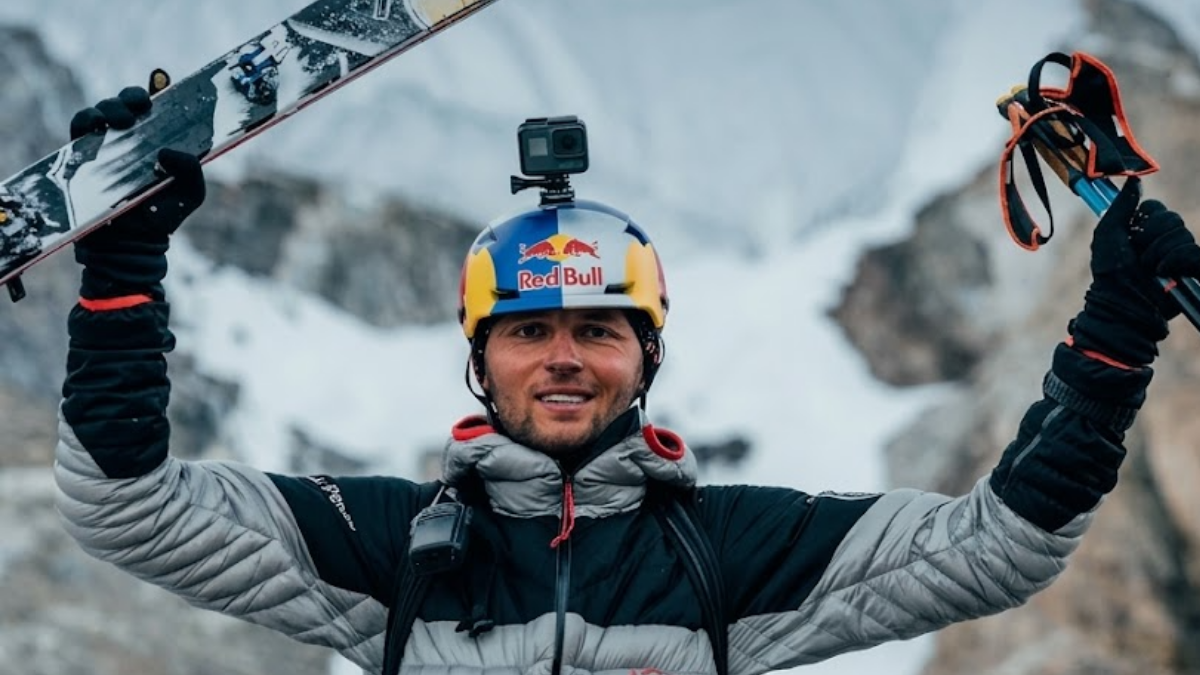

Andrzej Bargiel stood on top of Nanga Parbat and could not fill his lungs. At 8,126 meters there is barely a third of the oxygen his body needed, and he had climbed the whole way without a bottle of it strapped to his back. It was June 28, 2026. He stayed on the summit for 45 minutes, catching his breath, looking down the mountain he was about to ski.
Forty-five minutes is a long time to stand still at that altitude. Most climbers who reach the top of an 8,000-meter peak without bottled oxygen want to get back down as fast as they can. Bargiel used the time differently reading the line he was about to ski.
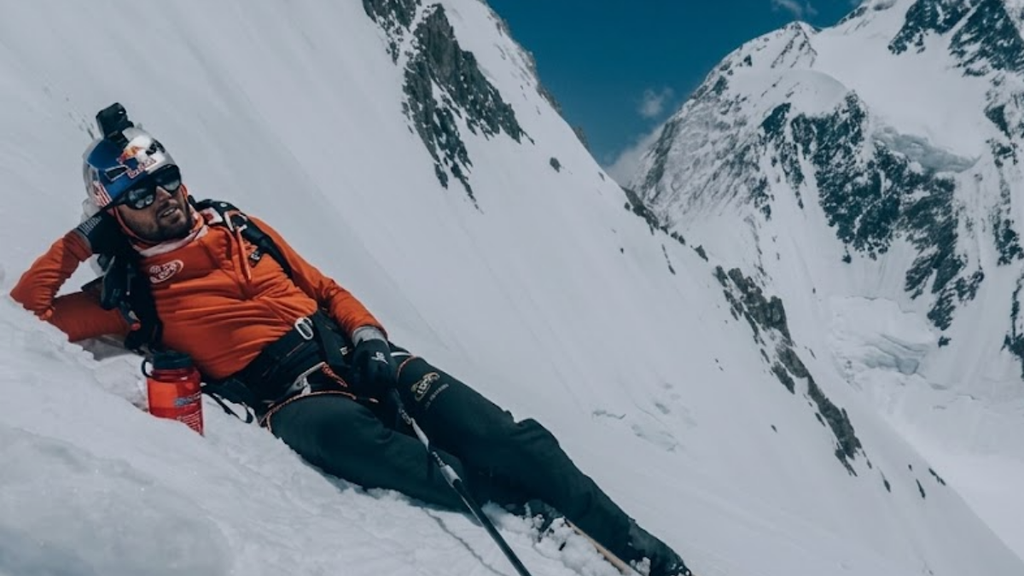
No one had ever skied Nanga Parbat clean. Every climber who had tried before him had, at some point, taken the skis off rappelled past a cliff, walked a rocky stretch, broken the line. Bargiel meant to ski the entire mountain in one unbroken run, all the way back down to the snowline.
He clicked into his skis. Below him was nearly 3,700 vertical meters of ice, rock, and history.
Who Is Andrzej Bargiel
Bargiel is the ninth of eleven children, raised in a mountain village in southern Poland. In a family that size, in that kind of place, the mountains aren’t scenery they’re just where you grow up. He was skiing by age 9, young enough that it’s hard to separate the skill from the person.
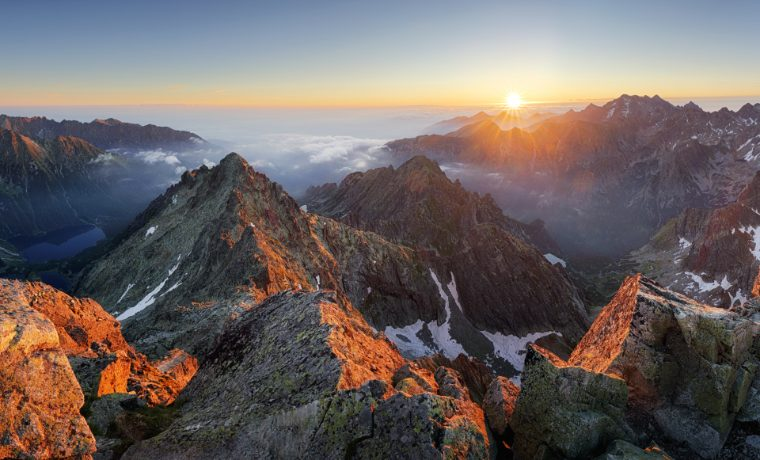
His older brother, Grzesiek, works as a mountain rescuer, and that world shaped Andrzej early. Growing up around someone whose job is pulling people out of trouble on steep terrain teaches a particular kind of respect for the mountain not fear exactly, but an understanding that it doesn’t forgive carelessness.
That discipline was part of growing up for Bargiel, not something he found later.
He built a serious résumé before he ever touched an 8,000-meter peak a speed record on Mount Elbrus, the Snow Leopard award, and three Polish ski mountaineering championships. By the time he turned to the Himalaya and Karakoram, he was already one of the most complete ski mountaineers in the world someone who could climb at altitude and ski technical terrain at an elite level, a rarer combination than it sounds.
Hic Sunt Leones The Idea Behind It All
Bargiel calls his life’s project Hic Sunt Leones Latin for “here are lions,” the phrase old mapmakers wrote across the blank, unexplored parts of a map to mark unknown danger.
It’s a fitting name for what he does. Skiing an 8,000-meter peak clean is still, in a real sense, uncharted territory there’s no map for it, no established line, just whatever the mountain happens to offer that season.
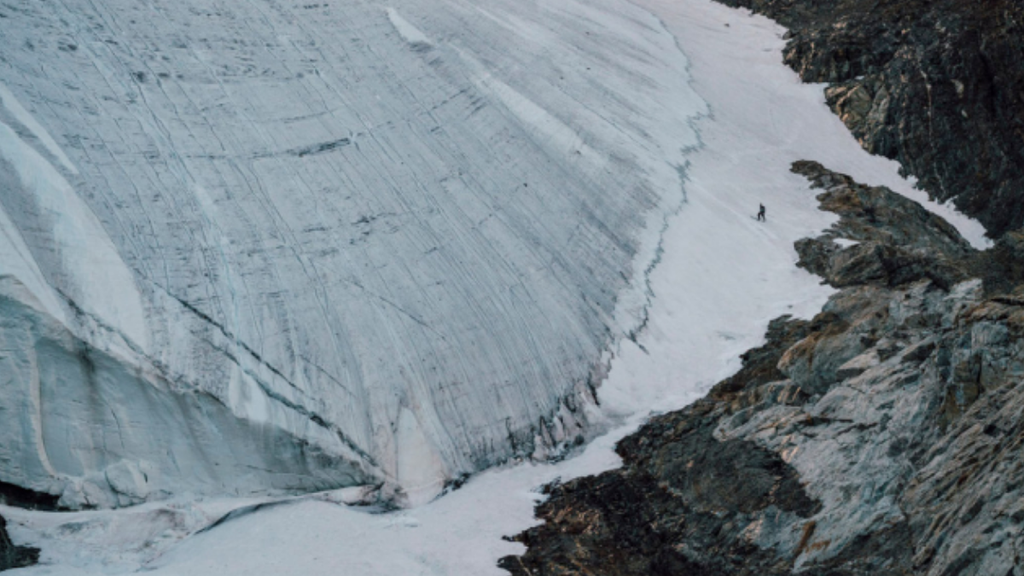
Photo: Marek Ogień / Red Bull Content Pool
It is also his rulebook. Climb without bottled oxygen. Ski down in one continuous line, not a broken one. Move light and fast instead of relying on siege-style expeditions with fixed camps and stockpiled supplies.
Three simple rules, and each one removes a safety net that most expeditions rely on.
A continuous ski descent means skiing the whole route from summit to base without taking the skis off no rappelling past obstacles, no walking sections on foot.
Most ski mountaineers cheat some part of that on an 8,000-meter peak, because the terrain often forces it: a cliff band, a rocky outcrop, a stretch of ice too thin or too broken to hold an edge. Take the skis off for even a few meters and, by Bargiel’s own standard, the line is broken. He refuses to break it.
Combined with climbing without extra oxygen which most 8,000-meter climbers use to help their bodies function in the “death zone” above 8,000 meters, where the air is too thin to sustain human life for long it makes his version of the sport the hardest version there is.
No oxygen means his body works harder for less. No fixed camps means less shelter if something goes wrong. No broken line means no shortcuts around the worst terrain. It’s the difference between doing the sport and doing the hardest possible version of it, on purpose, every time.
Building the Résumé
Bargiel assembled this project one mountain at a time, over 13 years. It started in 2013 on Shishapangma, with the first Polish ski descent of an 8,000-meter peak. In 2014 he set speed records on Manaslu, and in 2015 he skied the first complete descent of Broad Peak, without oxygen.
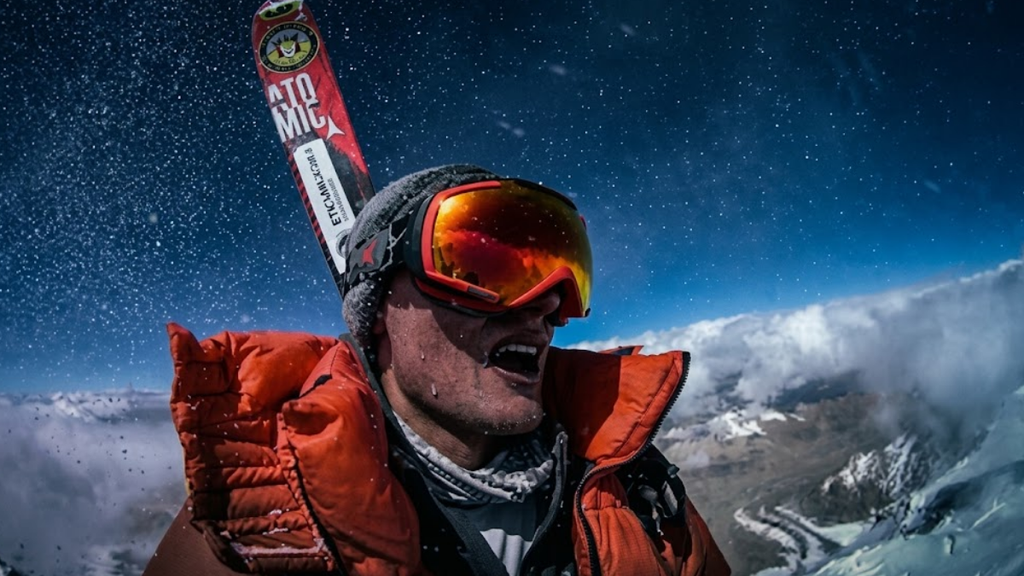
Photo courtesy: andrzejbargiel.com
Then came K2 in 2018 the descent that made him famous worldwide, about 7 hours and roughly 3,400 vertical meters, skied without oxygen.
In 2023 he completed Gasherbrum II and Gasherbrum I, finishing all four of the Karakoram’s giant peaks, and in 2025 he skied Everest, the first complete no-oxygen descent from summit to base camp.
Each of these was, in its own way, a piece of a puzzle. Shishapangma proved the concept was possible.
Broad Peak showed he could do a complete descent without oxygen. K2 showed he could handle one of the most dangerous descents on Earth and come out the other side in a single afternoon.
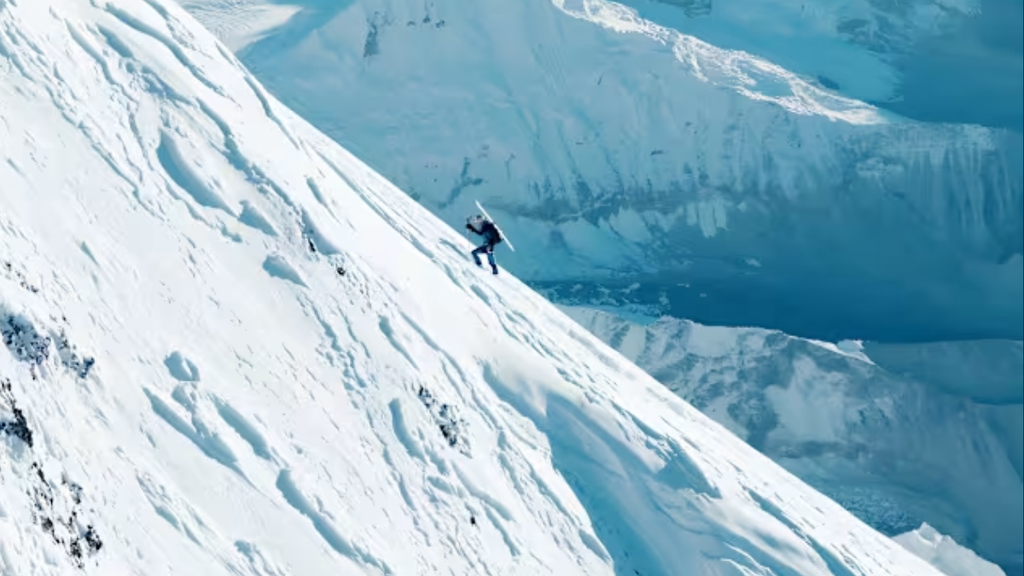
© Bartłomiej Bargiel / Red Bull Content Pool
Everest showed the no-oxygen, summit-to-base-camp version was repeatable on the tallest mountain of all. Nanga Parbat, in Pakistan, was the piece he still needed the one mountain in that group that had never let anyone finish the line.
Why Nanga Parbat Was the Hard One
Nanga Parbat is nicknamed the “Killer Mountain,” and skiers had been trying and failing to ski it clean for decades. That nickname isn’t marketing. It’s the mountain’s reputation among the people who actually go there, earned over a long history of attempts that didn’t go the way climbers hoped.
In the 1990s and 2000s, climbers Kammerlander and Wellig both attempted it and came up short. In 2019, Langenstein and Duperier got close, but took their skis off about 50 meters below the summit close enough to see the top from where the line broke.
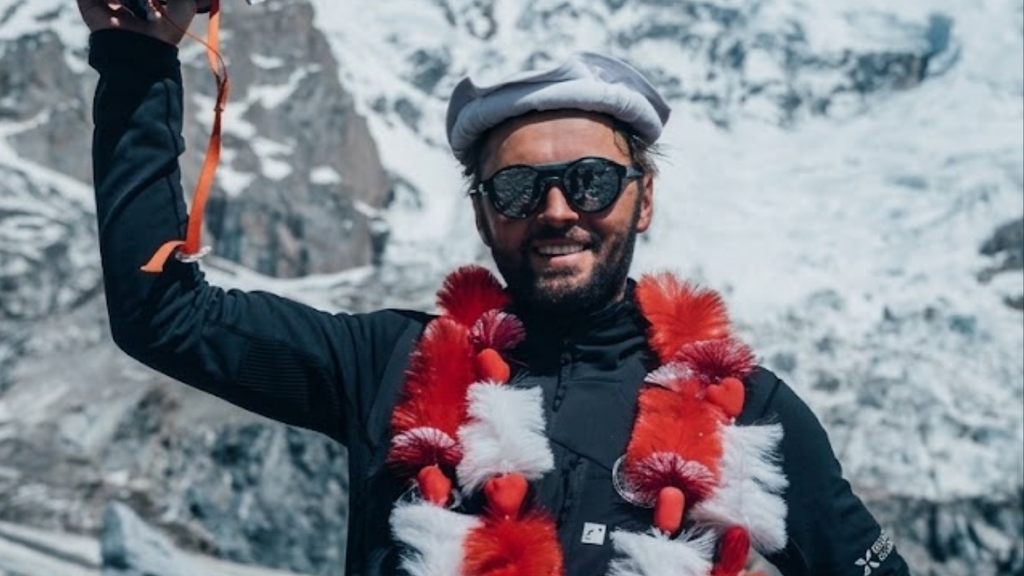
In 2025, Bargiel himself made an attempt with climbing partner Göttler that got closer still, but it wasn’t continuous either they had to rappel in places and walk rocky sections on foot.
Every one of those attempts left a gap between where the skis came off and the true summit fifty meters here, a rappel there, small distances that made the difference between an impressive descent and a complete one.
That gap was exactly what Bargiel went back to finish. He’d already stood on it once, in 2025, and walked away knowing precisely what was left to solve.
The Descent, Minute by Minute
The biggest obstacle on the mountain was a serac barrier a wall of unstable, house-sized blocks of glacial ice that had forced every previous skier off their skis. It’s the kind of feature that doesn’t hold still seracs shift and calve without warning, which is exactly why past attempts had chosen to rappel around it rather than ski through it.
Bargiel’s team had scouted it in advance, studying the ice and looking for a line that might actually hold, and getting through it clean meant reading that ice correctly under real pressure, with no room to second-guess a turn once he’d committed to it.
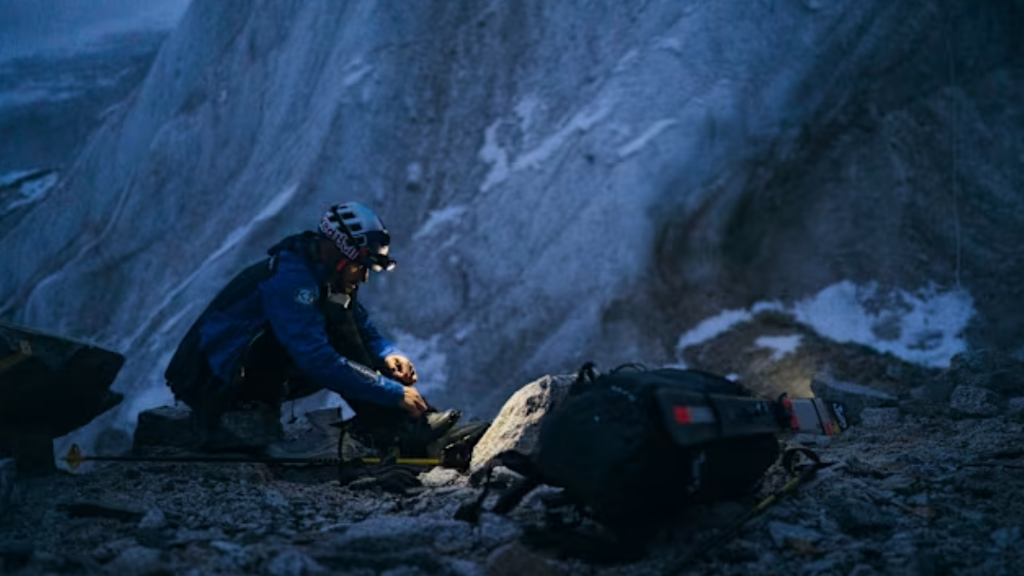
© Bartłomiej Pawlikowski / Red Bull Content Pool
His teammate Gołąb later described the decision-making in that stretch as some of the most complex he had ever seen on a mountain not a small thing to say from someone who has spent years around demanding terrain. It suggests the barrier wasn’t just physically hard, but a puzzle that had to be solved in real time, with everything that had come before riding on getting it right.
From the summit, Bargiel skied down through that barrier and kept going nearly 3,700 vertical meters in total, without ever taking his skis off.
He spent roughly two hours above 8,000 meters, in the death zone, before dropping low enough to breathe easier. Two hours doesn’t sound long, but it’s two hours of a body running on borrowed time, making split-second turns on a mountain that had never let anyone finish this exact line before.
He finished the run below Camp I at 3 p.m., the same day he’d set out summit to safety, in one afternoon.
What It Means Now That It’s Done
With Nanga Parbat, Bargiel became the first person ever to climb and ski all five of Pakistan’s 8,000-meter peaks without bottled oxygen. Five for five. It’s the kind of number that fits neatly into a headline, but it flattens what actually got him there more than a decade of mountains, each one a test run for the next.
He has said this project took years in the making, and it shows 13 years from that first descent in Shishapangma to this one.
Hic Sunt Leones was never really a checklist, even though it now reads like one from the outside five peaks, five checkmarks, done. It was a way of asking what’s still unmapped, and skiing straight into it, one mountain at a time.
The mountain is finished. The philosophy, by his own account, is not.
Cameras were rolling for this expedition too Red Bull has turned each of Bargiel’s previous peaks into a film, and this one is expected to get the same treatment. As of now, though, that telling isn’t finished either.
Expeditions on this scale don’t come cheap informal estimates for a project like this run anywhere from $150,000 to $400,000 or more, though that figure isn’t confirmed and should be treated as a rough sense of scale rather than a fact.
Support for the climb came from a team around Bargiel that included Gołąb and Załuski, a film crew documenting the attempt, logistics partner Seven Summit Treks, sponsor Red Bull, and several Polish corporate sponsors.
