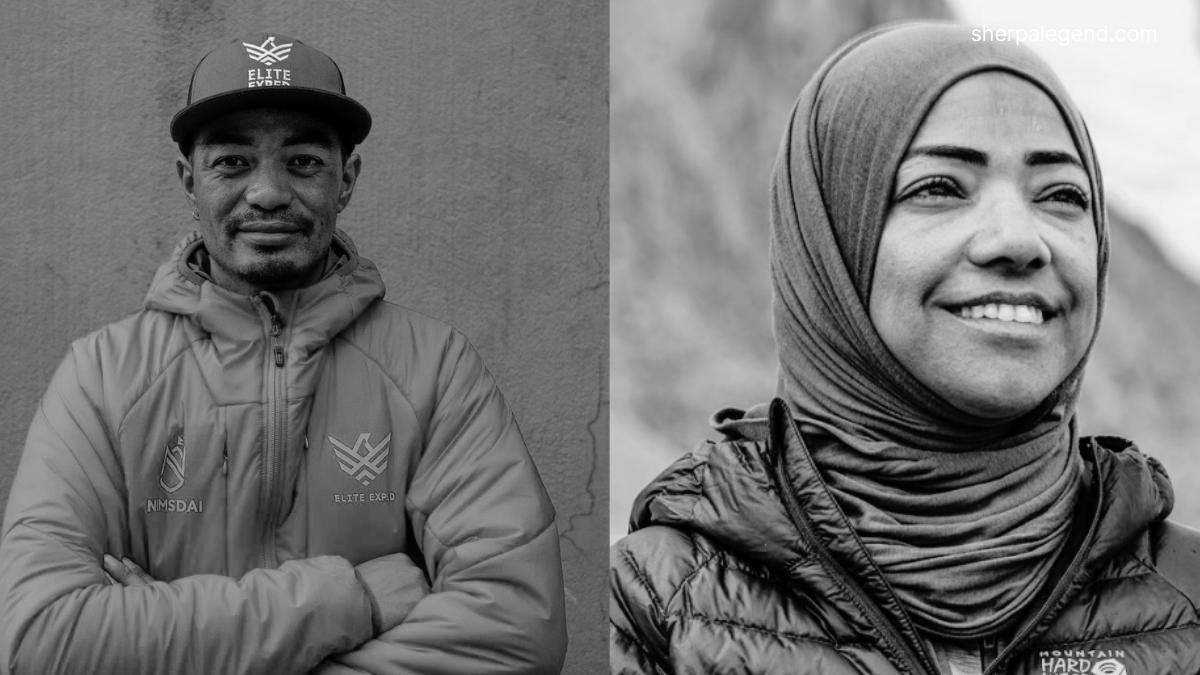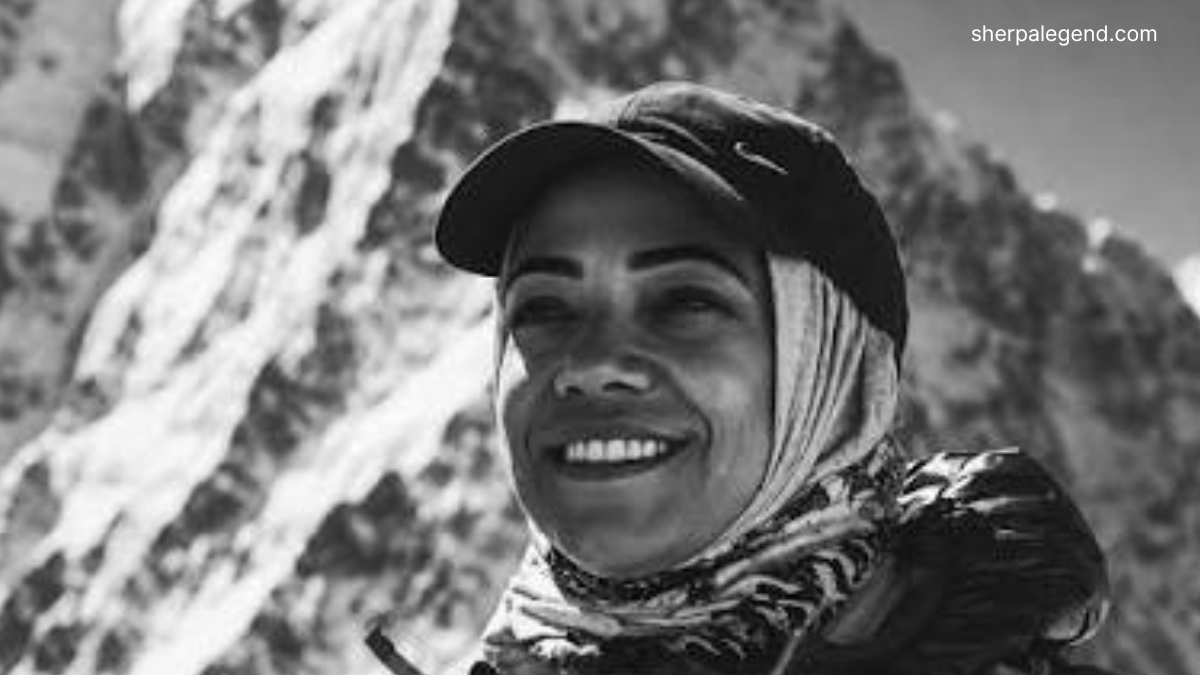

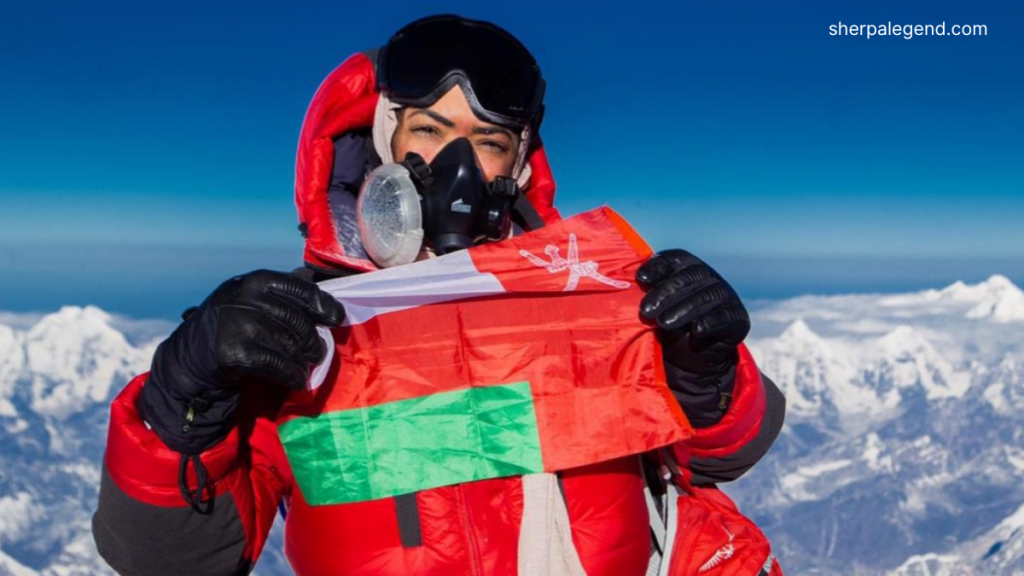
There is a photograph of her that people across Oman and beyond kept sharing after she was lost. She is standing in snow, in hijab, against a wall of ice, smiling the way she always smiled.
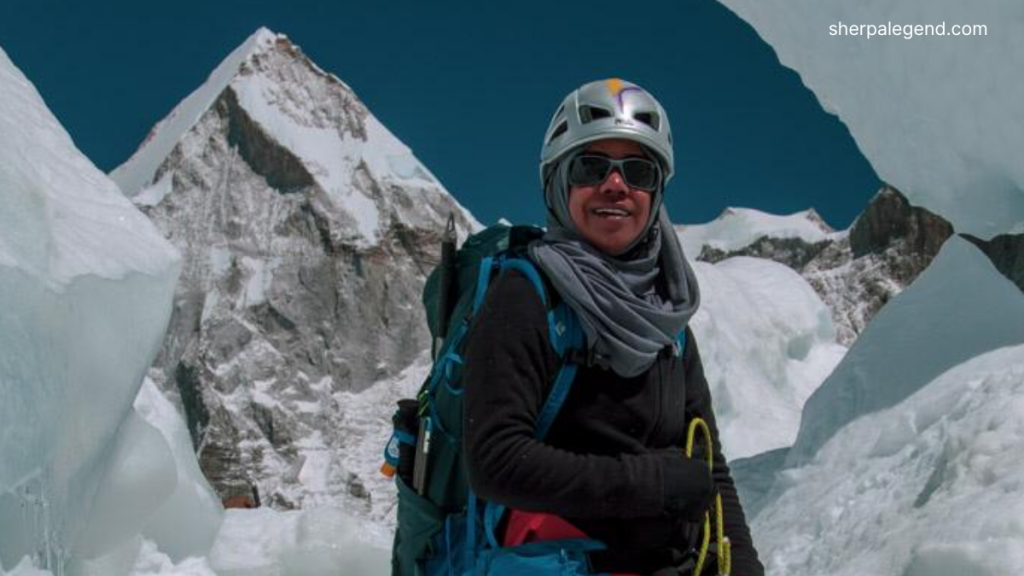
Nobody who knew her as a young woman would have guessed that this was where her life was headed. Nadhira Al Harthy did not grow up dreaming of Everest. She found the mountains almost by accident, and then she never really came back down.
How She Found the Mountains
It started with a work trip she almost didn’t think twice about. In 2015, as part of an educational program, Al Harthy traveled with a group of Omani students to Mount Kilimanjaro. She was there as a mentor, not a climber. The students were taking environmental measurements. She was simply along to guide them.
She never reached the top. Altitude sickness turned her back. But something about that mountain got under her skin. A woman who had always preferred cities to wilderness came home changed, moved in a way she later described as almost spiritual. She did not act on it right away. She went back to her ordinary life. But the mountain had planted something in her that would not stay quiet.
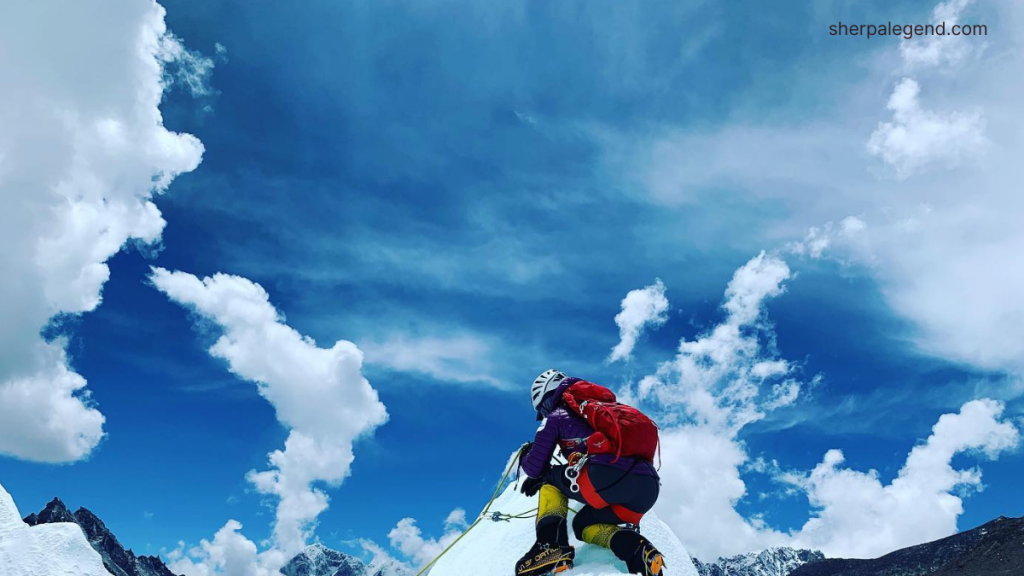
Two years later, in 2017, she met Khalid al-Siyabi, the engineer who in 2010 had become the first Omani ever to summit Mount Everest. He was telling the story of his climb at a Ministry event. Listening to him was enough. That evening, she decided she would climb Everest herself.
She asked him to teach her everything: the equipment, the training, how to prepare a body and a mind for the highest point on Earth. He agreed, and for two years he became her mentor and coach. She trained in secret. Running, hiking, rock climbing, canyoning, building endurance in Oman’s Al Hajar mountains.
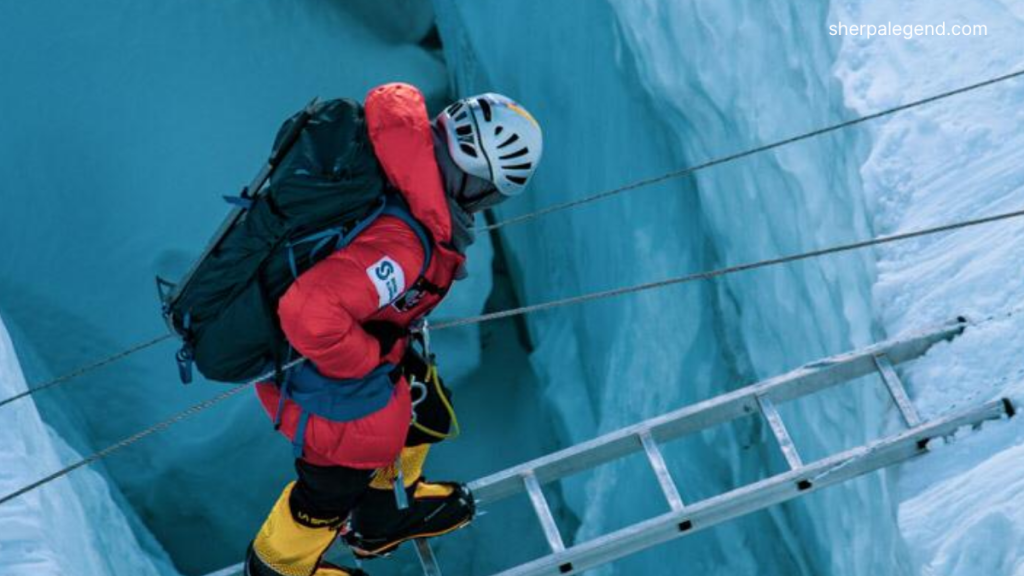
For almost two years, even her own family did not know what she was preparing for. She only told them the truth two months before she left for Nepal — partly out of respect for them, and partly because she did not want to be talked out of it before she had proven to herself that she could do it.
It was not an easy road. In 2018 she attempted Ama Dablam and failed to reach the top. The failure did not break her. It hardened her.
In 2019, she joined an all-Arab women’s climbing team, with members from Oman, Saudi Arabia, and Lebanon. They trekked to Everest Base Camp, spent 45 days acclimatizing, and made their final push. On May 23, 2019, Nadhira Al Harthy reached the top of the world.
The date was not a coincidence — it was the exact anniversary of her mentor’s own summit in 2010. Around that same period, Khalid al-Siyabi passed away from a stroke. She honored him the only way a climber can. She left his name at the summit, carrying him, in a sense, to the top a second time.
She never let the achievement become about her alone. “I did not aim to be the first Omani woman to reach the summit of Mount Everest,” she said afterward. “But after this success, I praised and thanked God, as this achievement is national and not personal.”
The Mark She Left
Everest was never the end point for her. In 2021 she became the first Arab woman to summit Ama Dablam, the same peak that had defeated her three years earlier, and later that year she reached the top of Manaslu. In 2022 she summited K2, becoming the first Omani ever to do so. She added the Matterhorn in 2023 and Nanga Parbat, nicknamed “Killer Mountain,” in 2024 — a record that made her the first Omani woman to climb four peaks above 8,000 meters.
But her real impact was never only in the summits. It was in what she proved, and who she proved it to. In Omani and Gulf media she became known as the “Omani ice queen,” a nickname built on the image of a woman in hijab standing against walls of ice, doing something almost nobody from her country, and few women anywhere in the Arab world, had done before her.
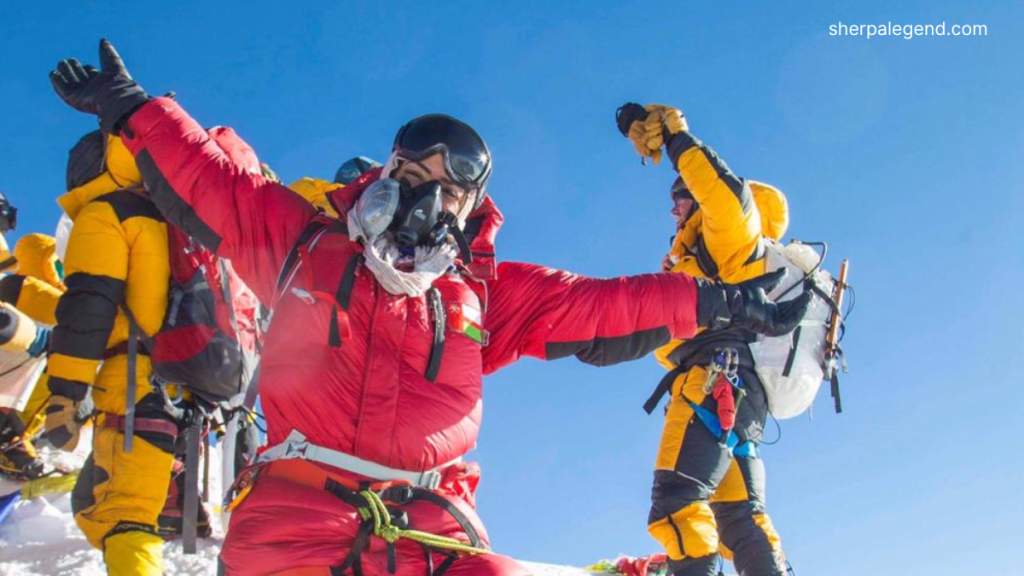
She challenged two assumptions at once — that mountaineering was not for Arab women, and that it was not for people who start in their late thirties with no outdoor background. She was direct about it whenever she was asked. “Yes, indeed, women have great endurance in such tasks,” she said, “and we, as a team of four women, proved our ability to climb and reach the summit, even though the majority doubted our ability. Women’s endurance is very great, whether physically, mentally, or intellectually.”
She refused to let her identity be treated as a limitation. “Your nationality doesn’t matter, neither does your gender or your circumstance,” she said. “My hijab was never an obstacle for me. I believe the only obstacles we face are challenges that come from a weakness we have within. If we work on strengthening our minds, we can do anything.”
She spent much of her time afterward mentoring young people, staying close to environmental and youth programs, and telling anyone who would listen that an ordinary life did not have to stay ordinary. “Despite the daily work, they should not forget their ambitions,” she told young Omanis, “and should find something that develops their skills, motivates them, and gives them the motivation and reason to wake up every day confident that they are able to accomplish something the country can be proud of.”
That was the shift she made, quietly, for an entire generation of women in Oman and across the region. Not through slogans, but by simply doing the thing, and then going back to help the next woman do it too.
On July 30, 2026, Al Harthy’s ten-member team was caught in an avalanche on Broad Peak. She and the other nine climbers, including Nepali mountaineer Nirmal Purja, died in the disaster.
How She Is Remembered
The tributes that followed came mostly from the women who had climbed beside her, and nearly all of them described the same person: humble, positive, kind, determined, an inspiration who never once chased the spotlight.
Nelly Attar, the UAE-based Saudi-Lebanese climber and the first Arab woman to summit K2, was a close friend and climbing partner. She called Al Harthy the best kind of person — strong yet kind and humble, someone who kept smiling and spreading positivity even in the harshest conditions. Attar said climbing would never feel the same without her, and that she had been a beacon of light and strength.
Mona Shahab, a Saudi climber and her Everest teammate, remembered her calming, grounding presence on the mountain, the way she could steady a whole team just by being there.
Others who paid tribute — Manal Rostom, the Egyptian Everest climber, along with friends like Laila Al Hadhrami, Amy Subaey, and Shatha Al Ghafri — remembered her as a role model who carried faith, ambition, and quiet strength together, without letting any one of them crowd out the others. They remembered her for the small things too: the voice notes of encouragement she sent other climbers, the way she made these peaks feel reachable simply by having reached them herself.
Omani institutions, including the country’s Olympic Committee, paid tribute as well, recognizing her work with the Oman School Sports Federation. National media and the Omani public mourned her widely, as a pioneer and as one of their own.
Nadhira Al Harthy’s mountains were never really about ice and altitude. They were about proving, to herself first and then to everyone watching, that a woman who came to climbing late, and by accident, could still reach as high as anyone.
She is remembered not for the records alone, but for the way she carried other people up with her, in spirit if not in body — a mentor to the ones who came before her memory, and to the ones who will come after it.
She is no more with us now, and that loss is not small. The mountaineering community lost one of its own. The Arab world lost a woman who had shown it what was possible.
There will be no more mentorship calls from her, no more voice notes of encouragement sent down to climbers still finding their footing, no more of that calm presence that steadied a whole team just by being there. But she leaves something behind that no avalanche can take.
Somewhere out there are a thousand women who will remember her name the way she once remembered Khalid al-Siyabi’s, and who will go on to do for someone else what he once did for her. She cannot mentor them in person anymore. But she does not have to. She already showed them how.