
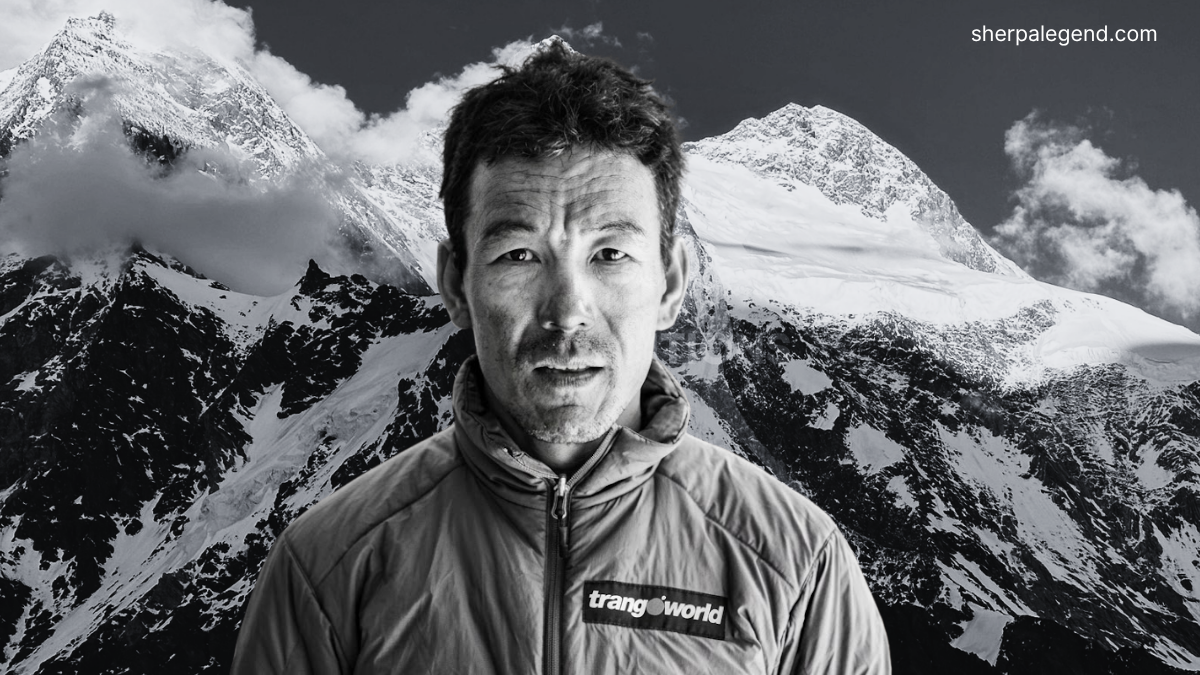

Gyaljen “Gyalu” Sherpa (1978–2026) — Sherpa Legend Tribute
It was May 2025, high on Kanchenjunga, and Gyalu Sherpa was doing what he had always done — working. While the mountaineering world would later marvel at what he was accomplishing, Gyalu himself was simply focused on the task in front of him: getting his clients up and down the world’s third-highest mountain, safely, one more time.
He summited on May 10. He summited again on May 19. Then again on May 25. Three times, in a single season, on one of the most dangerous eight-thousanders on earth. By the time Guinness World Records confirmed it as official, Gyalu had already moved on to the next job, the next client, the next mountain.
There was no victory tour. He didn’t know how to market himself on social media, and he didn’t try to learn. He was a guide from a village in Okhaldhunga who did his work the way he always had — simply, quietly, and well.
That quietness is, in many ways, the story of Gyalu Sherpa’s life. He set one of the most remarkable records in modern Himalayan climbing, and much of the world never learned his name until the day he was gone.
A Life Rooted in the Hills of Okhaldhunga
Gyaljen Sherpa — known to everyone as Gyalu — was born in 1978 in Khijidemba, a village in Nepal’s Okhaldhunga district. Long before he was recognized as a world-record holder, long before his name appeared in expedition reports alongside the biggest names in mountaineering, he was simply a young man from the hills, working seasonally as a porter.
Climbing, for him, was not something that arrived suddenly. It was something he grew into over years of carrying loads, walking trails, and slowly becoming part of a world that would eventually define his life.
It took until 2015 for Gyalu to formally begin his professional climbing career. By then, he had already spent years close to the mountains, in the background, doing the unglamorous work that keeps every expedition moving. When he finally stepped into the role of climbing guide, he brought with him something that cannot be taught quickly: patience, endurance, and an intimate understanding of what the mountains demand.
He would go on to become a father, a brother, a member of a community in Khijidemba that watched him leave for the mountains season after season — and that would, in time, mourn him as one of their own.
The Climbing Journey
Once Gyalu began climbing professionally, his resume grew quickly and quietly. Working as a guide with Seven Summit Treks, he took clients up some of the most demanding peaks in the Himalayas: Mera Peak, Lobuche, Himlung Himal, Cholatse, Lenin Peak, Manaslu, Kanchenjunga, and Mount Everest — which he summited multiple times over the course of his career.
Records with the Himalayan Database trace a steady rise through the ranks of Nepal’s elite high-altitude workforce. In 2019, he summited Manaslu. In 2021, he returned to the same mountain. In 2022, he stood on top of both Lhotse and Everest in a single season. In 2023, he was back on Manaslu again. And in 2024, he summited Everest and Lhotse once more — each climb made with supplemental oxygen, each one logged, quietly, as just another expedition.
Colleagues who climbed with him describe a guide who was competent, dependable, and humble someone whose professionalism, sense of teamwork, and calm temperament earned deep respect, even in the most difficult and dangerous conditions high-altitude climbing can produce.
Then came 2025, and Kanchenjunga. At 8,586 meters, Kanchenjunga is widely regarded by elite climbers as one of the most difficult and dangerous of the world’s fourteen eight-thousanders — a mountain with brutally long summit days spent in the “death zone,” technical ridgelines and ice slopes far more demanding than Everest’s standard route, constant avalanche and serac danger, unpredictable weather, and far less infrastructure or rescue support than climbers find on Everest.
Guiding clients safely up and down that mountain once in a season would be an achievement. Gyalu did it three times — on May 10, May 19, and May 25 — and Guinness World Records recognized it as an official world record.
Early in 2026, he added yet another Everest summit to his record, continuing to climb the world’s highest peak even as he carried the achievement of Kanchenjunga behind him.
How He Is Remembered
Despite the scale of what he had accomplished, Gyalu never became a public name in the way some of his mountaineering peers did. He was, as those who knew the industry put it, one of the many quiet figures whose courage and dedication make Himalayan expeditions possible in the first place — rarely in the headlines, always on the mountain. It was only in death that his name reached a wider audience.
On the morning of July 30, 2026, a massive avalanche swept down the slopes of Broad Peak, an 8,051-meter mountain in Pakistan, between Camp 2 and Camp 3. Gyalu was there as part of an Expedition team. The avalanche killed all ten members of the team. Among those lost was Nirmal Purja — Nimsdai — along with several other Nepali climbers whose combined experience represented decades of expertise built at the highest altitudes on earth. It was one of the most concentrated single-day losses of accomplished high-altitude climbers that Nepal’s mountaineering community has ever suffered.
For a country that has built much of its international reputation on the skill and endurance of its Sherpa guides, the loss went far beyond ten individual lives. It took with it an entire generation’s worth of technical knowledge, leadership, and hard-won record-breaking achievement — the kind that cannot simply be replaced.
Khijidemba lost a father. A brother. A quiet pride of the village, someone who never sought recognition but earned it anyway, one difficult climb at a time.
The mountaineering community lost a guide who represented its best qualities: skill without ego, endurance without complaint, and a devotion to the mountains that asked for nothing in return.
Gyalu Sherpa’s name may not have been widely known before July 2026. But his record on Kanchenjunga, his decade of expeditions across the Himalayas, and the trust he earned from every client and colleague who climbed with him leave behind a legacy that will continue to shape the mountaineering community — and inspire the generations of climbers who follow the trails he once carried loads on, as a young man from Okhaldhunga who simply wanted to climb.
Om Mani Padme Hum
Prayers and strength to the families ane entire village of Khijidemba

That was the most beautiful and heartbreaking tribute to a man I never knew existed until a disaster took him from this earth. My deepest condolences to his family and community.