
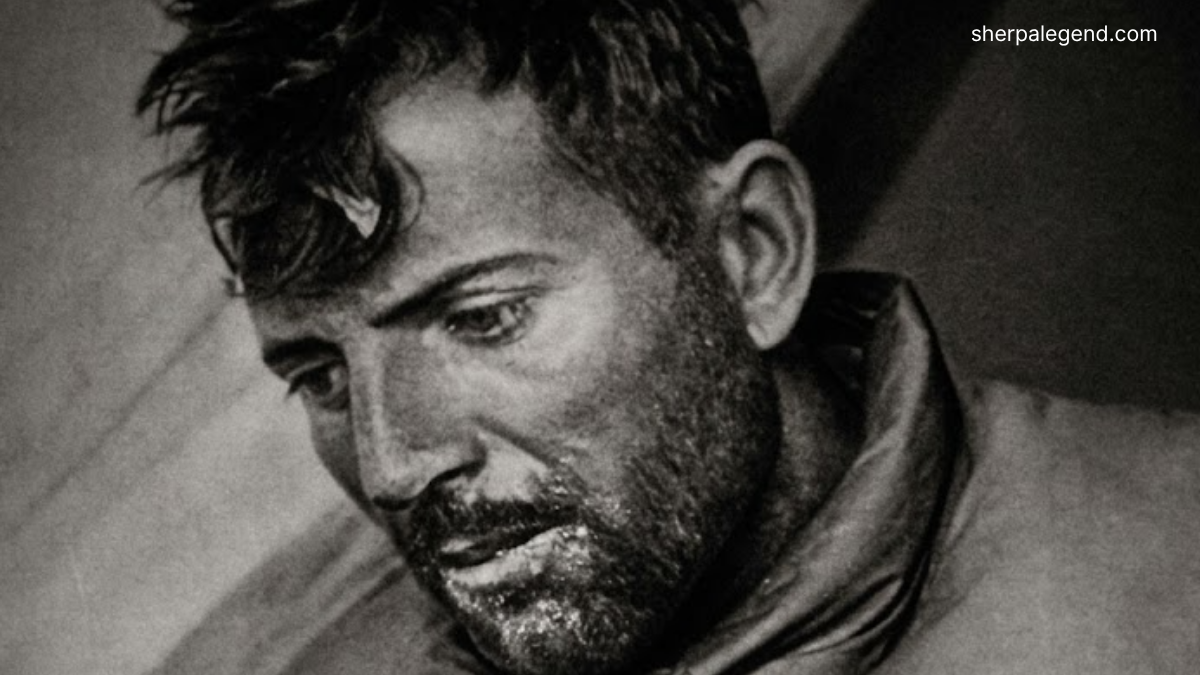

June 3, 1950. Two p.m. The wind on Annapurna I never stops. It comes off the ice like a blade, and at 8,091 meters there is barely enough air to keep a man’s mind clear.
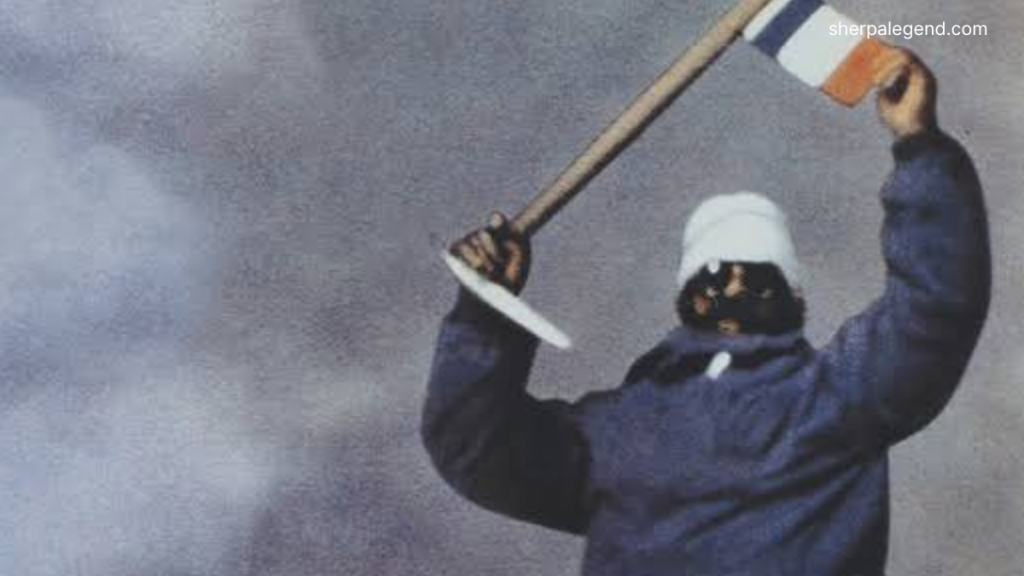
Maurice Herzog stood there anyway, next to his climbing partner Louis Lachenal, on a summit no human being had ever reached. Not this summit. Not any summit this high. Annapurna was the tallest mountain ever climbed by anyone, anywhere, and it had happened without bottled oxygen, without a single earlier attempt on this exact route, on the first real try.
Herzog reached into his coat and pulled out a small French flag tied to his ice axe. He lifted it into the wind. For a moment, frozen and half-blind from the altitude, he felt something close to ecstasy. He would later say the feeling was almost religious, as if he had stepped outside his own body.
Lachenal was thinking about something else. He was thinking about his feet, which he could no longer feel, and about the fact that they still had to get back down.
That single afternoon holds almost everything you need to know about Maurice Herzog. The glory. The flag. The nation wrapped around his shoulders like a coat. And, quietly, standing right next to him, a partner already paying a price that history would remember very differently for each of them.
The Price of the Flag
The way down nearly killed both men.
Herzog lost his gloves on the descent. His hands froze solid. Lachenal’s feet, already numb, froze too. A storm rolled in. The team became separated, then found each other again in the middle of nowhere, stumbling and snow-blind.
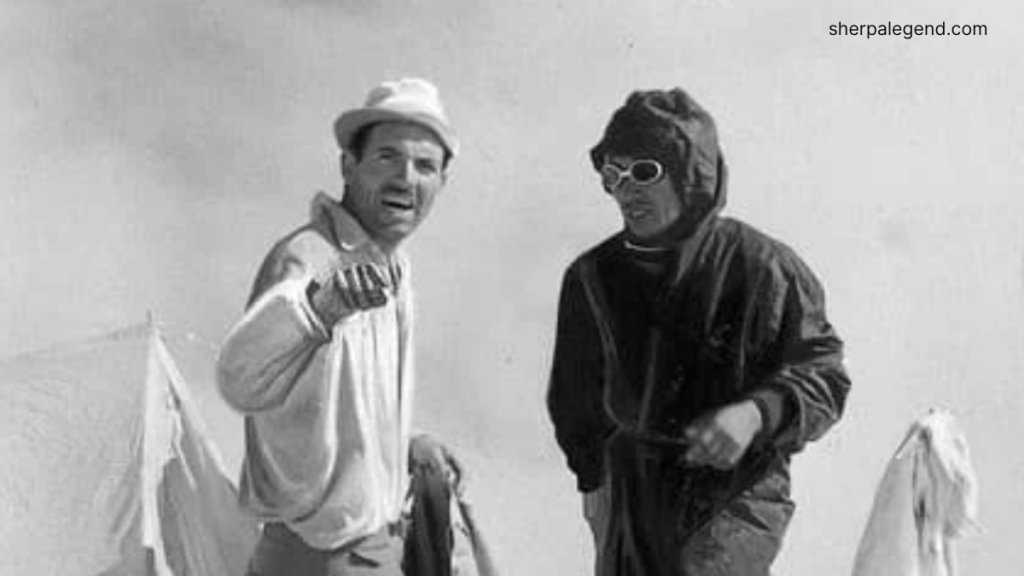
Teammates Lionel Terray and Gaston Rébuffat left their own tent in brutal weather to search for them and physically dragged them back to camp, in some of the most heroic rescue climbing of the century.
The expedition doctor, Jacques Oudot, had to perform amputations in the field, with the tools he had, as the two men slowly made their way home. By the time Herzog reached Paris, he had lost every finger and every toe.
He would spend nearly a year recovering in a hospital bed. It was in that bed, unable to hold a pen for long, that he dictated his account of the climb to someone willing to write it down for him. The book was called Annapurna.
He said something later that captures the strange bargain he had made with the mountain he had lost his fingers and toes, but he felt he had gained something bigger in return. Without that climb, he said, he would never have had the life that came after.
That sentence turned out to be exactly true in ways he could not have predicted, and in ways his family would spend decades arguing about.
Coming Home a Hero
France in 1950 was a country still trying to stand back up. The war had ended only five years earlier. The occupation, the collaboration, the shame and the resistance, all of it was still raw. France did not just want a mountaineer. It wanted proof that French greatness had survived.
Herzog gave the country exactly that. He came home with his hands wrapped in bandages and his face still handsome enough to look like a film star, and Paris Match ran that photograph of him holding the flag on the mountaintop, and it went around the world.
He became, almost overnight, one of the most famous Frenchmen alive. People compared him to Charles Lindbergh. People compared him to Robert Redford. A writer of the time said he was one of the only French people whose name was known on every continent.
His book became one of the best-selling mountaineering books ever written, translated into roughly forty languages and selling somewhere around eleven or twelve million copies.
It is still, decades later, considered required reading for anyone who loves mountains. Its final line, about there being other Annapurnas in the lives of men, became a kind of national motto for facing hardship with dignity.
Herzog himself said something telling about why the country embraced him so completely. He said that they had climbed with the whole nation in their hearts, that their achievement had to belong to France, not just to a small team of climbers. That was not just modesty. It was strategy, whether he meant it that way or not. He was offering the public exactly the story they needed to hear.
From the Mountain to the Ministry
Most men who nearly die on a mountain go home and try to live quietly. Herzog did the opposite. He used Annapurna as a launching pad, and he never really came back down.
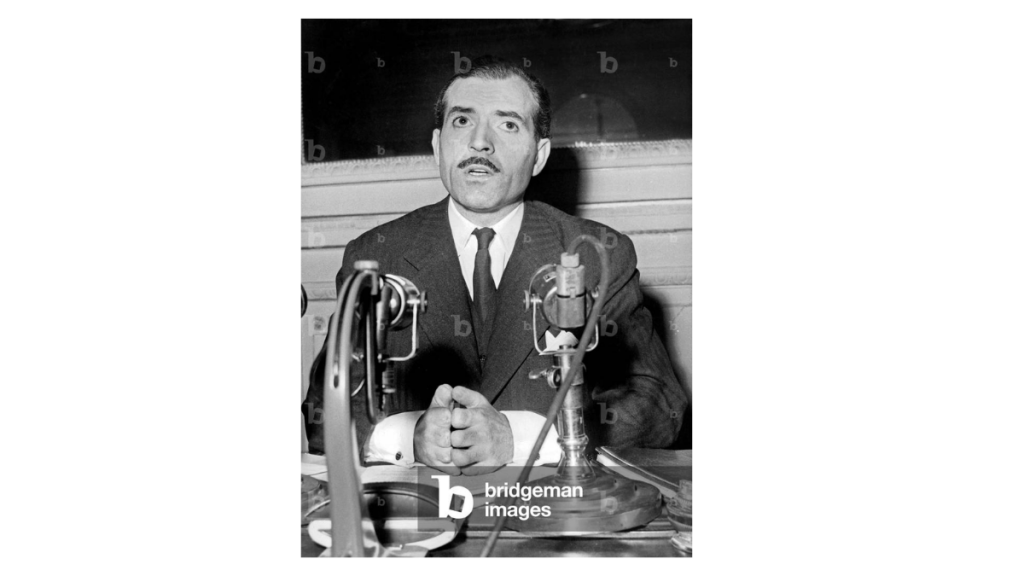
He first took a director’s role at a tire company, Kléber-Colombes. Then, in 1958, the new government under Charles de Gaulle went looking for public figures who could inspire a new generation of French youth. Herzog was an obvious choice.
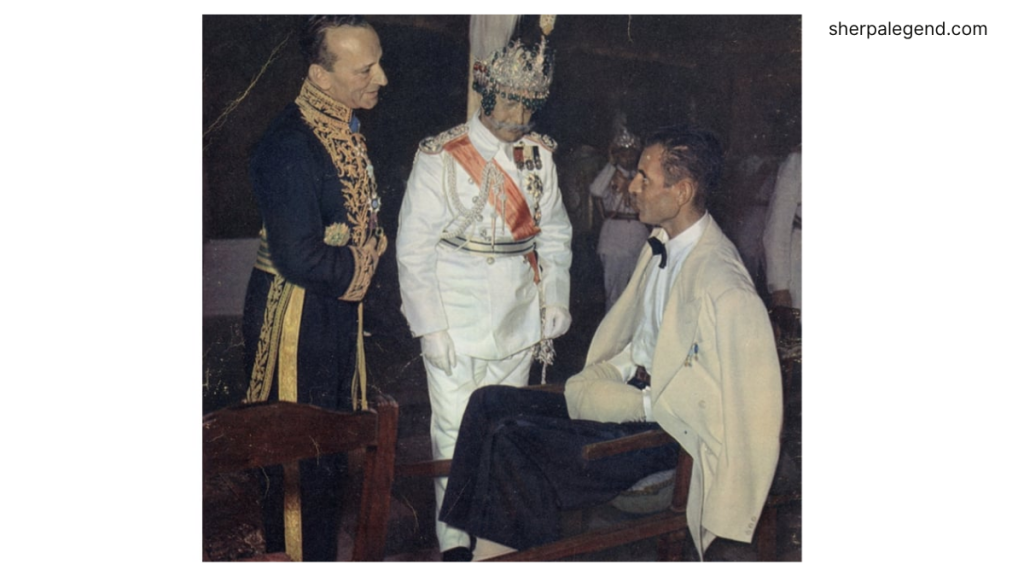
He became France’s first High Commissioner for Youth and Sports, later Secretary of State for Youth and Sports, a post he held for roughly eight years. In that role he helped modernize sports facilities and youth programs across the country. He also served as a member of parliament for Haute-Savoie, and from 1968 to 1977 he was mayor of Chamonix, the alpine town at the foot of Mont Blanc where his family had once kept a chalet.
He joined the International Olympic Committee in 1970 and stayed connected to it, later as an honorary member, until his death. He sat on the boards of several companies, including one tied to the Mont Blanc Tunnel. He received France’s highest honor, the Grand Cross of the Legion of Honour.
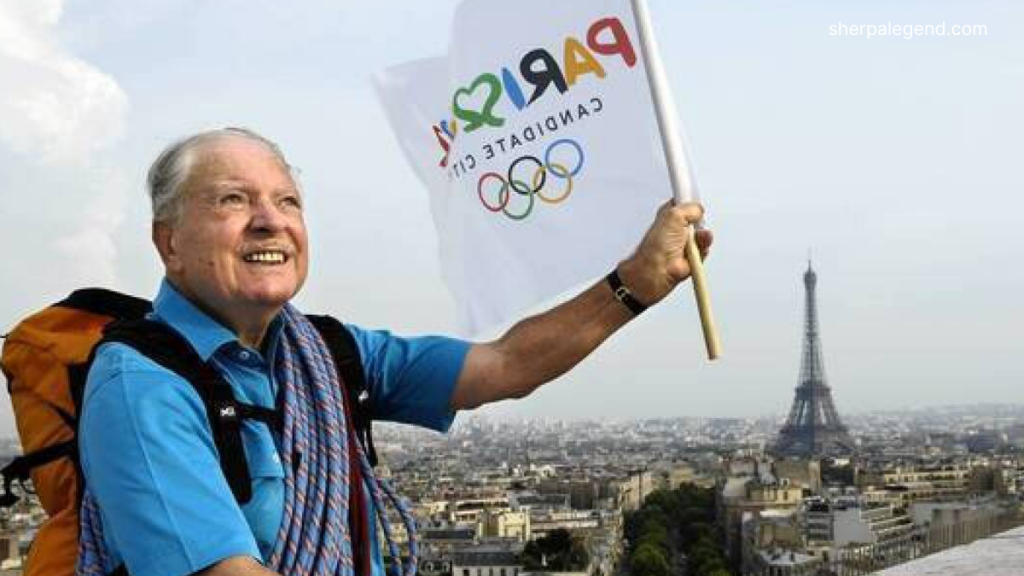
In other words, the door he opened on Annapurna did not just lead to the world’s tallest peaks. It led straight into the heart of French government, French sport, and French business. Herzog understood something that very few adventurers manage to understand: that a myth, handled correctly, can become a career.
The Cracks in the Statue
For decades, that was the whole story. Hero climbs mountain, hero loses fingers, hero serves his country. It was clean, and France liked it clean.
Then the cracks started to show.
The first real one appeared in 1996, when the complete, unedited diaries of Louis Lachenal were finally published under the title Carnets du vertige, or Notebooks of Vertigo. Lachenal had died in a skiing accident back in 1955, only a few years after Annapurna, and his diaries had first been published shortly after his death but in a heavily edited form. Herzog and his circle had reportedly removed or rewritten passages that did not flatter Herzog. When the full text finally came out decades later, a very different picture of the summit day emerged.
In Herzog’s own book, Lachenal is described as the one who nearly turned back near the top, needing Herzog’s persuasion to keep going. Lachenal’s own diary told a different story. He said he had continued mainly because he was convinced Herzog, so determined to reach the top, would die if left to go on alone.
He described the climb not as some grand mission for the glory of France, but as a simple matter of loyalty between two men on the same rope. He said Herzog seemed almost in a trance, lit up from within, while he himself stayed focused on staying alive. He was frustrated, later, watching Herzog build a career on a story that had cost him his own toes and had not been told quite fairly.
Gaston Rébuffat, another of the elite Chamonix guides on the team, reportedly felt the same discomfort. He disliked the nationalist framing of the whole expedition and the way it seemed to build a cult around a single leader. Where Herzog was thinking about France, the guides said, they were simply thinking about the mountain.
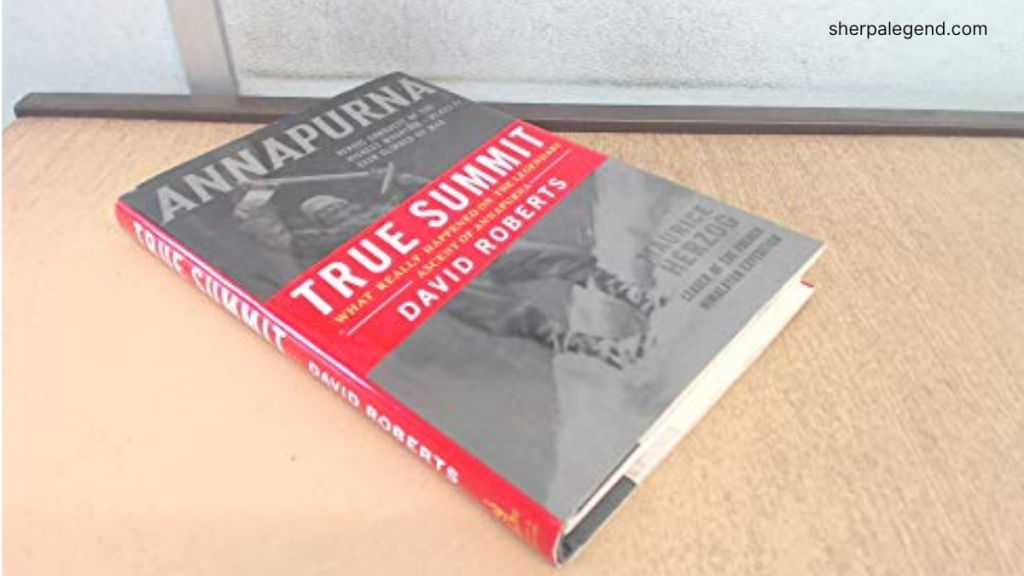
In 2000, the American writer David Roberts added fuel to this with his book True Summit, which argued that Herzog had controlled the official narrative for years, even reportedly using contracts to limit what teammates could publish about the climb themselves.
A Daughter’s Verdict
If the guides’ quiet frustration chipped at the statue, his own daughter took a hammer to it.
In 2012, the same year her father died, Félicité Herzog published a book about him with a bitterly ironic title: A Hero. It was framed as a novel, but everyone understood it as a memoir. In it, she described her father as distant, self-obsessed, and unfaithful, a man who had built a public monument to himself while failing almost completely as a parent. She used harsh language calling him a liar and describing him as unable to see past his own myth. She connected his relentless self-promotion to real damage inside the family, including her own brother’s struggles.

Her book did not deny that the ascent of Annapurna happened, or that it was extraordinary. What she challenged was the man behind the achievement, and the cost of maintaining his legend for sixty years.
Herzog, for his part, never really backed down. Until his death in 2012 at the age of 93, he stood by his version of events. He acknowledged, in a general way, that fame had turned him into something of a media creation, but he dismissed most of the specific controversies as manufactured, mostly for the sake of selling more books. He continued, to the end, to describe Annapurna as a shared French success that he was proud to have led.
What Actually Happened on the Mountain
Strip away the politics and the family drama, and the physical facts of June 3, 1950 remain completely undisputed. Two men reached a summit higher than any human had ever stood on. They did it without oxygen.
They did it on the first real attempt, on a mountain that had barely been explored. It was, and still is, the only 8,000-meter peak ever climbed successfully on its very first expedition attempt. Within ten years of that day, climbers had summited every one of the fourteen mountains on Earth over 8,000 meters. Herzog’s climb did not just open a door. It kicked one down.
What historians now argue about is not whether the achievement was real, but who deserves credit for which parts of it, and how honestly that credit was distributed afterward.
Most modern climbers and historians land in a similar place: the 1950 expedition was a genuine team effort, carried out by some of the finest mountain guides France had, and Herzog, while an ambitious and capable amateur climber rather than the most technically skilled member of the group, provided the leadership, the vision, and crucially the storytelling that turned a French mountaineering trip into a national legend.
Even climbers who respected him, like the legendary Reinhold Messner, defended the achievement itself against what they saw as overcorrection. Others, like the American alpinist Steve House, felt Herzog’s version of events, full of battle language and national mission, belonged to an older and less honest way of talking about climbing, one focused more on conquest than on the truth of the experience.
Two Annapurnas
Maurice Herzog spent his whole life standing on top of two different mountains at once.
One was real 8,091 meters of ice and rock in Nepal, climbed in genuinely brutal conditions, at a real cost of his own fingers and toes. Nobody, not Lachenal’s diaries, not his daughter’s book, not any historian, has ever seriously disputed that the climb happened or that it was extraordinary.
The other mountain was the one he built afterward, out of a bestselling book, a national hunger for heroes, and his own considerable talent for shaping a story. That mountain was made of glory, ministries, mayoral office, and Olympic committee seats. It was also, according to people who loved him and people who climbed beside him, built partly on other people’s silence.
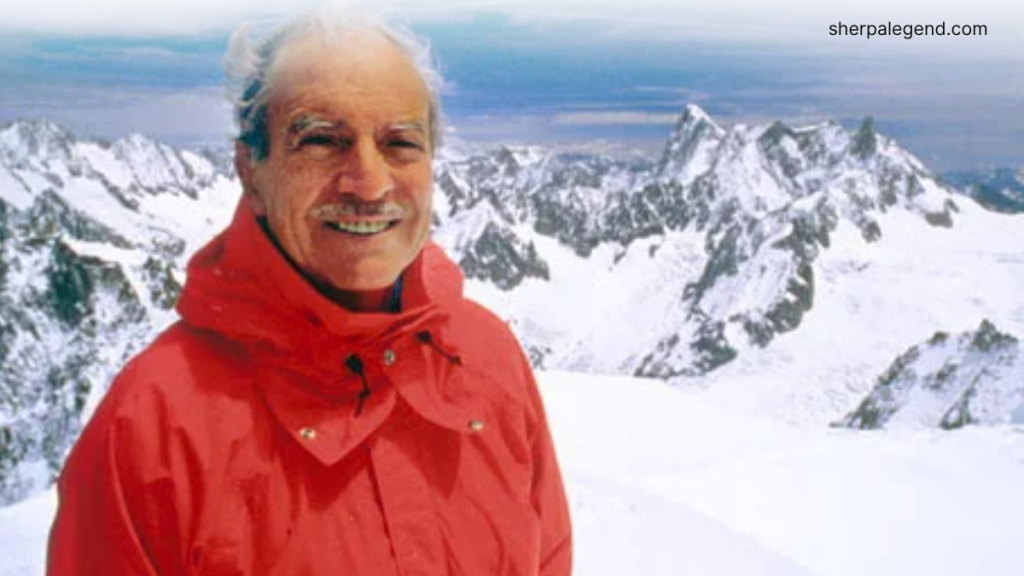
Herzog never really came down off either mountain. He rode the first one to the second for the rest of his life, and by the time he died in 2012, both had begun to erode a little not enough to collapse the legend entirely, but enough that French readers now understand him differently than the generation that first saw that photograph of the flag on Paris Match’s cover.
He is still, and probably always will be, one of the defining figures of twentieth-century mountaineering. He is also, now, understood as a man who knew exactly what a good story was worth, and who may have paid other people’s contributions to keep his own story whole.
Both things are true. Neither one cancels the other out. That, in the end, may be the most honest way to remember Maurice Herzog not as a pure hero and not as a pure fraud, but as a man who, having lost his fingers on top of the world, spent the rest of his life making absolutely sure nobody forgot it.
