
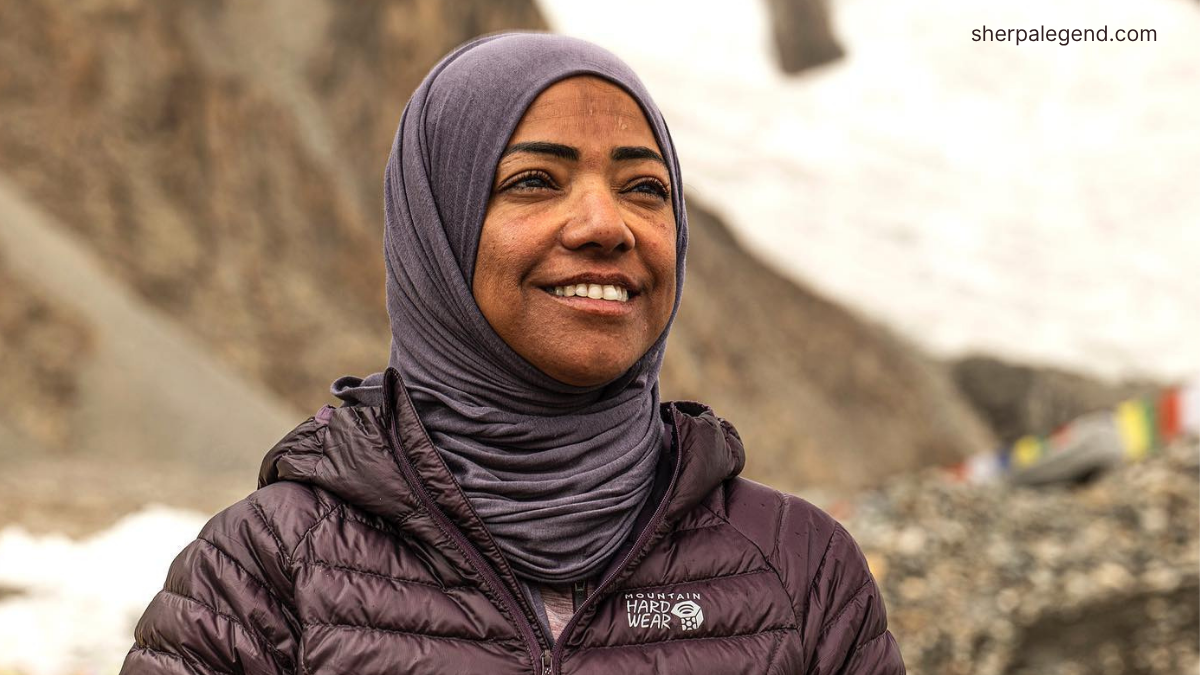

For most of her life, Nadhira Al Harthy’s world was made of classrooms, ministry meetings, and paperwork. She was a geography teacher. Then a curriculum developer. Then a government administrator working on citizenship programs at Oman’s Ministry of Education. She liked city life. She was not, by her own account, an outdoors person.
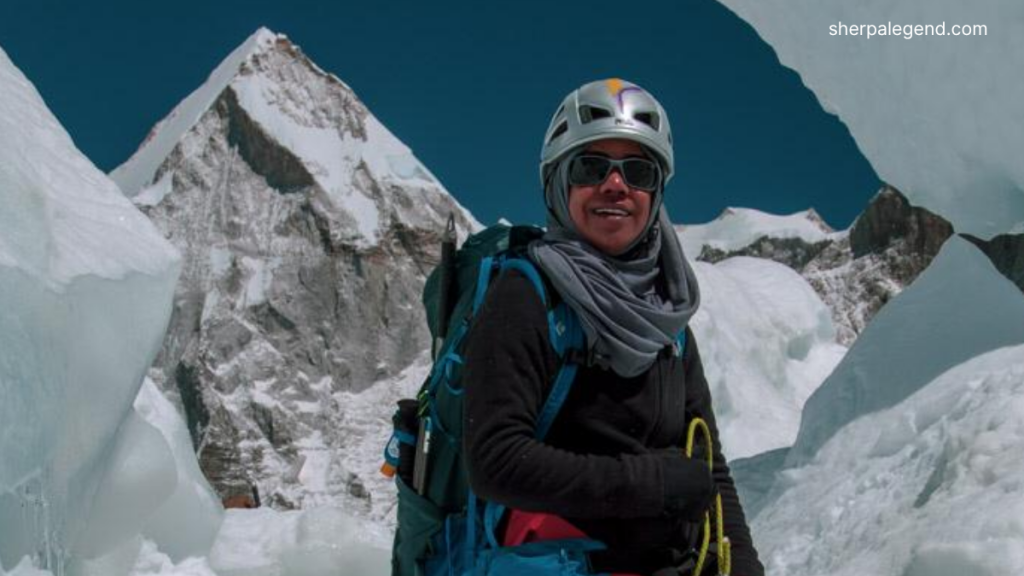
Today, she is something else entirely the first Omani woman to stand on top of Mount Everest, the first Omani to summit K2, and one of the most recognized mountaineers in the Arab world.
The Omani press has given her a nickname that captures the surprise of her story the “Omani ice queen.” But behind the nickname is a much simpler tale a woman in her late thirties who stepped onto a mountain almost by accident, and never really came back down.
An Ordinary Life, Until It Wasn’t
Al Harthy was born in Muscat, and she grew up the way most people around her grew up in a large, traditional family, with a life mapped out along familiar lines.
She earned a bachelor’s degree in Social Studies from the College of Education in Rustaq, then a master’s degree in Geographic Studies from Sultan Qaboos University. She spent four years teaching geography before moving into Oman’s civil service, eventually becoming Director of the Citizenship Department at the Ministry of Education.
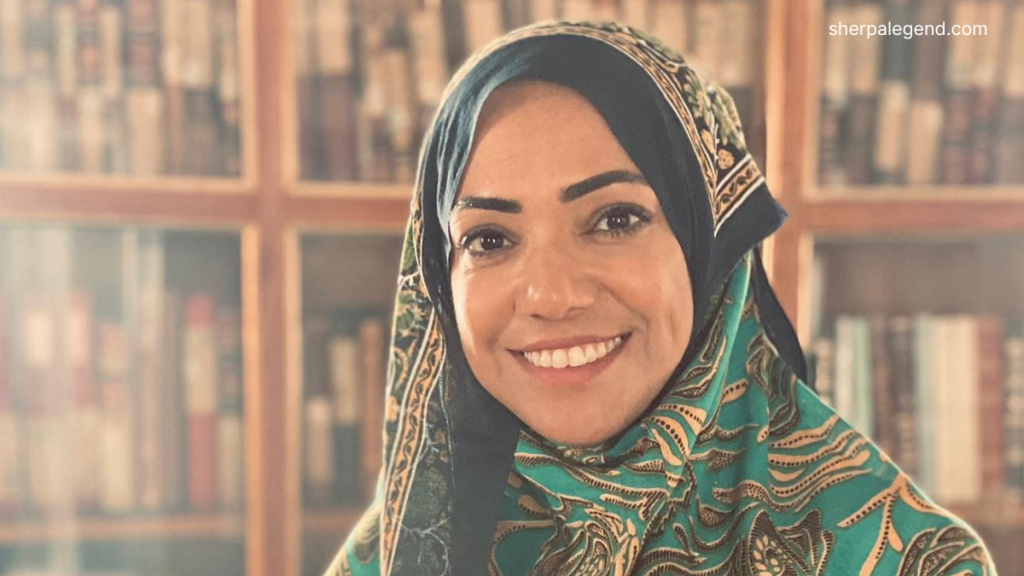
Later, she took on the role of General Director Deputy at the Oman Scouts and Guides Organization, and she serves as the country coordinator of the GLOBE Program in Oman, a role focused on environmental education.
In other words, she built a conventional, respectable career office hours, family life, the occasional trip to the gym. Nothing in that résumé suggests a future world-class climber. That is exactly the point of her story.
“Growing up in a large traditional family, my journey to becoming a mountaineer was not an expected path,” Al Harthy has said of her own life. “It was only later in life that I discovered my true passion for adventure. I am still that small village girl who embraced her inner adventurous spirit.”
The Trip That Changed Everything
The turning point did not come from a personal dream of climbing. It came from work.
In 2015, as part of a Ministry of Education project connected to the GLOBE Program, Al Harthy traveled with a group of Omani students to Mount Kilimanjaro, the tallest mountain in Africa. The goal was educational students were there to take environmental measurements as part of a global science initiative, not to chase a summit. Al Harthy went along in her role as an administrator and mentor, not as a climber.
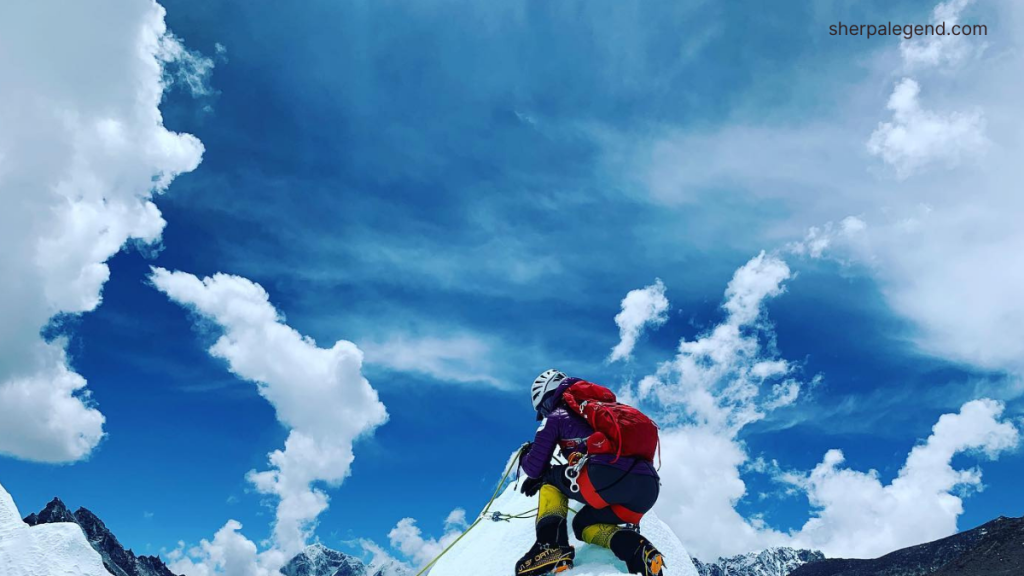
She never reached the top. Altitude sickness forced her to turn back. But something about the mountain got under her skin. She had spent her life preferring cities to wilderness, yet here she was, deeply affected by the climb moved, she has said, on a level that felt almost spiritual. She did not act on the feeling right away. She went home, back to her ministry job, back to ordinary life. But the mountain had planted something.
A Chance Meeting, and a Promise to Herself
Two years later, in 2017, Al Harthy met a man who would change the direction of her life Khalid al-Siyabi, an engineer who in 2010 had become the first Omani ever to summit Mount Everest. They met at a Ministry event, where al-Siyabi was telling the story of his Everest climb so it could be included in a school textbook.
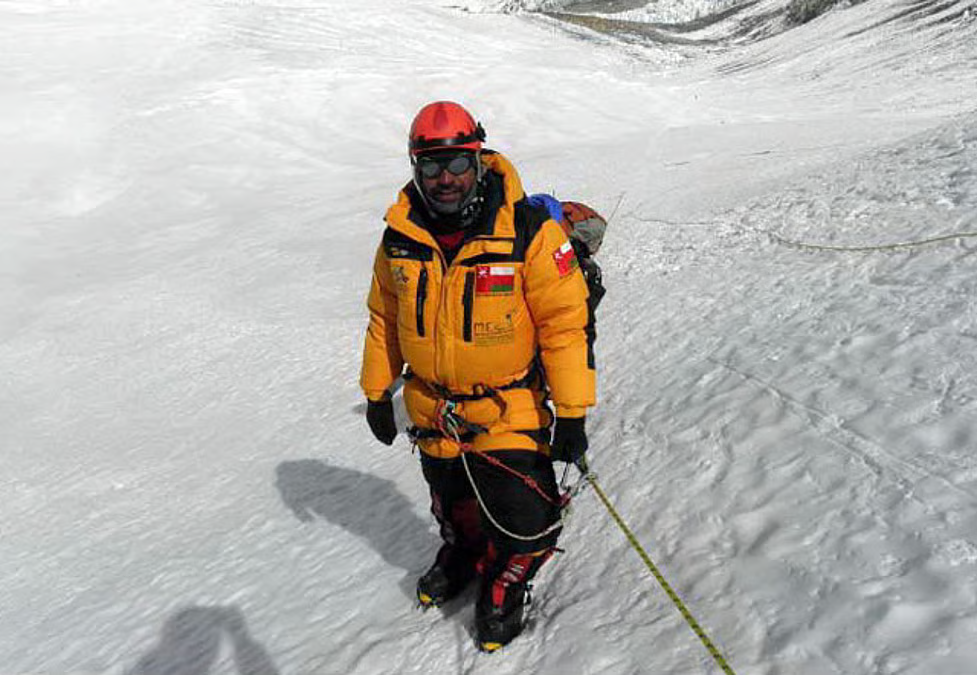
By her own account, listening to him talk was enough. That evening, she decided she would climb Everest herself.
She asked al-Siyabi to teach her what equipment she would need, what training was required, how to prepare her body and mind for the highest point on Earth.
He agreed, and for the next two years he became her mentor and coach. Al Harthy began training seriously for the first time: running, hiking, rock climbing, canyoning, building her endurance in Oman’s rugged Al Hajar mountains, and even attempting demanding ultra-distance trail races such as the Oman by UTMB.
She kept the goal almost entirely secret. For about two years, even her own family did not know what she was training for. She only told them the truth two months before she was due to leave for Nepal partly out of respect for them, and partly because she did not want to be talked out of it before she had proven to herself that she could do it.
The training was brutal, and it had to fit around a full-time government job. In 2018, she attempted Ama Dablam, a striking and technical peak in the Everest region, and failed to reach the top. Rather than breaking her resolve, the failure hardened it.
The Climb, and a Debt Repaid
In 2019, Al Harthy joined an all-Arab women’s climbing team, made up of climbers from Oman, Saudi Arabia, and Lebanon. Their expedition followed the classic route flying into Kathmandu, then to Lukla home to what is often called the most dangerous airport in the world followed by a ten-day trek to Everest Base Camp. There, the team spent 45 days living in tents, training, acclimatizing, and waiting for a safe weather window, before a final seven-day push to the summit.
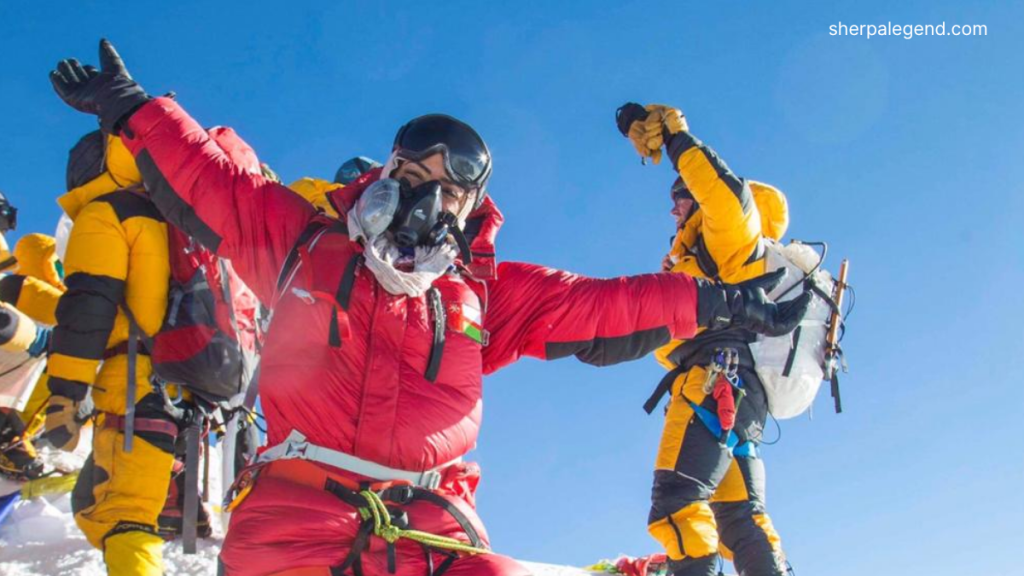
On May 23, 2019, Nadhira Al Harthy reached the top of the world. The date was not a coincidence to her it was the exact anniversary of her mentor Khalid al-Siyabi’s own summit in 2010.
There was heartbreak folded into the summit. Around that same period, al-Siyabi passed away from a stroke. Al Harthy honored him in the most direct way a climber can she left his name at the summit of Everest, carrying him, in a sense, to the top a second time.
She has been careful, in interviews, not to frame the climb as a personal trophy. “I did not aim to be the first Omani woman to reach the summit of Mount Everest, and I did not have any information about the statistics on this matter,” she has said. “But after this success, I praised and thanked God, as this achievement is national and not personal.”
Life at 8,000 Meters and What It Costs
Al Harthy has spoken candidly about how physically and mentally demanding high-altitude climbing is, and how little it resembles ordinary life. Living for weeks in a tent at Everest Base Camp means stripping life down to its basics: thin air, low oxygen, extreme cold, and a body that has to be given time to adjust or risk serious illness.
“Living in a tent means that you will live with very basic necessities of life that you must get used to during that period,” she has explained. “A person is used to a certain type of life, and suddenly he lives in a completely different environment with very simple things. But all of this is bearable if we hold fast to our dream.”
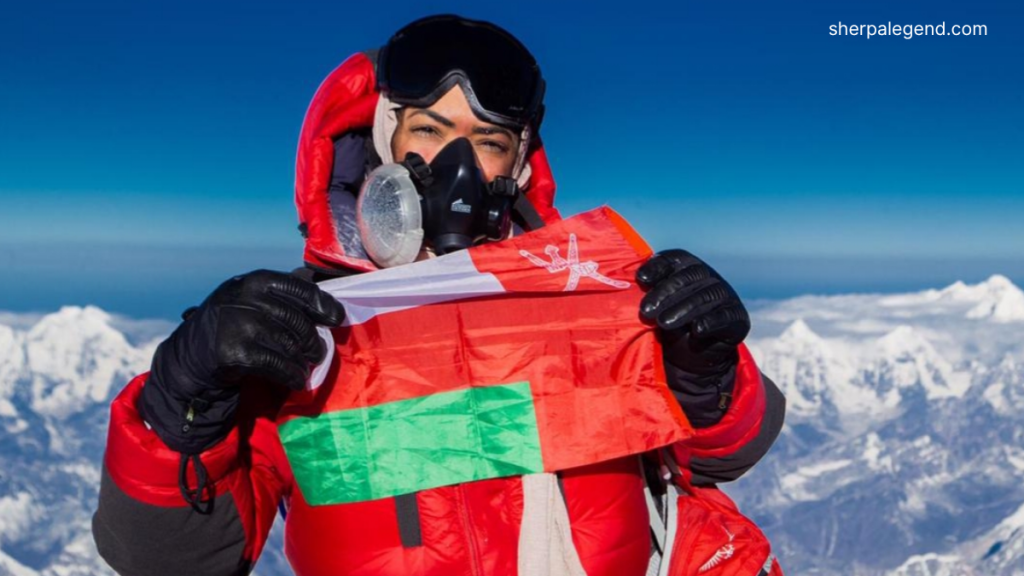
Mountaineering at this level is also an expensive pursuit permits, guides, equipment, logistics, and insurance can add up to enormous sums. Some sponsors contributed to her early expeditions, but Al Harthy has said that most of the cost came out of her own pocket, on top of the training time she had to carve out around her government career.
She has also pushed back firmly against the idea that women are less suited to extreme endurance sports. Asked whether women have greater endurance than men for this kind of challenge, she did not hesitate: “Yes, indeed, women have great endurance in such tasks, and we, as a team of four women, proved our ability to climb and reach the summit, even though the majority doubted our ability. Women’s endurance is very great, whether physically, mentally, or intellectually.”
Everest Was Only the Beginning
Rather than treating Everest as a finish line, Al Harthy kept climbing. In 2021, she became the first Arab woman to summit Ama Dablam the same mountain that had defeated her in 2018 and later that year she reached the top of Manaslu, the world’s eighth-highest peak. In 2022, she summited K2, the notoriously difficult and dangerous second-highest mountain on Earth, becoming the first Omani ever to do so. She added the Matterhorn in Switzerland in 2023, and Nanga Parbat nicknamed “Killer Mountain” for its brutal history in 2024.
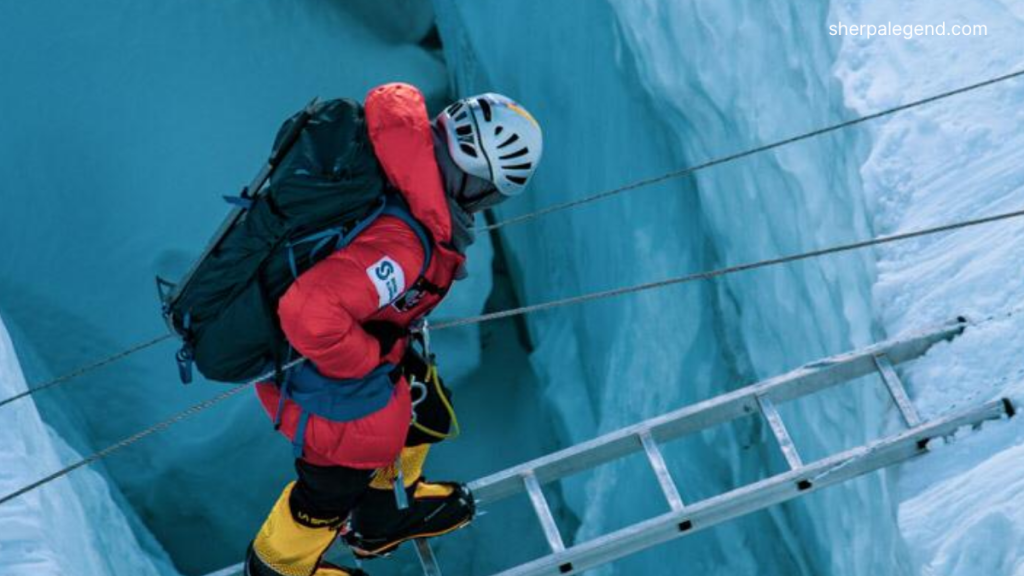
Taken together, that record makes her the first Omani woman to climb four peaks above 8,000 meters, a tier of mountaineering reserved for a small number of climbers worldwide.
Why They Call Her the “Ice Queen”
In Omani and Gulf media, Al Harthy is now routinely described as the “Omani ice queen,” a nickname that plays on both her frozen, high-altitude conquests and the striking image of an Omani woman often photographed in hijab against walls of ice and snow doing something almost nobody from her country, and few women anywhere in the Arab world, had done before her.
She is held up as a pioneer who challenges assumptions on two fronts at once that mountaineering is not for Arab women, and that it is not for people who start in their late thirties with no outdoor background. Supporters point to her humility and her focus on mentoring the next generation including her continued work with young people through the Oman Scouts and Guides Organization and the GLOBE Program — as much as to her summits.
Al Harthy herself rejects the idea that anything about her identity should have held her back.
“Your nationality doesn’t matter, neither does your gender or your circumstance,” she has said. “My hijab was never an obstacle for me. I believe the only obstacles we face are challenges that come from a weakness we have within. If we work on strengthening our minds, we can do anything.”
Her family, by her own account, was initially wary of a hobby they saw as dangerous and unfamiliar. Over time, as her ambitions became achievements, that worry turned into support and pride. She has thanked them publicly, along with Omani media, “for its interest in and follow-up on the achievements of Omani youth.”
A Message for Anyone Who Feels Too Late, or Too Ordinary
Ask Al Harthy what drives her, and the answer is rarely about records. She talks instead about self-discovery, mental resilience, and the idea borrowed from author Todd Henry of not “dying empty,” of giving away everything you have to give rather than holding potential back. Faith, she says, gives her strength on the mountain. So does the camaraderie of climbing alongside others chasing the same impossible goal.
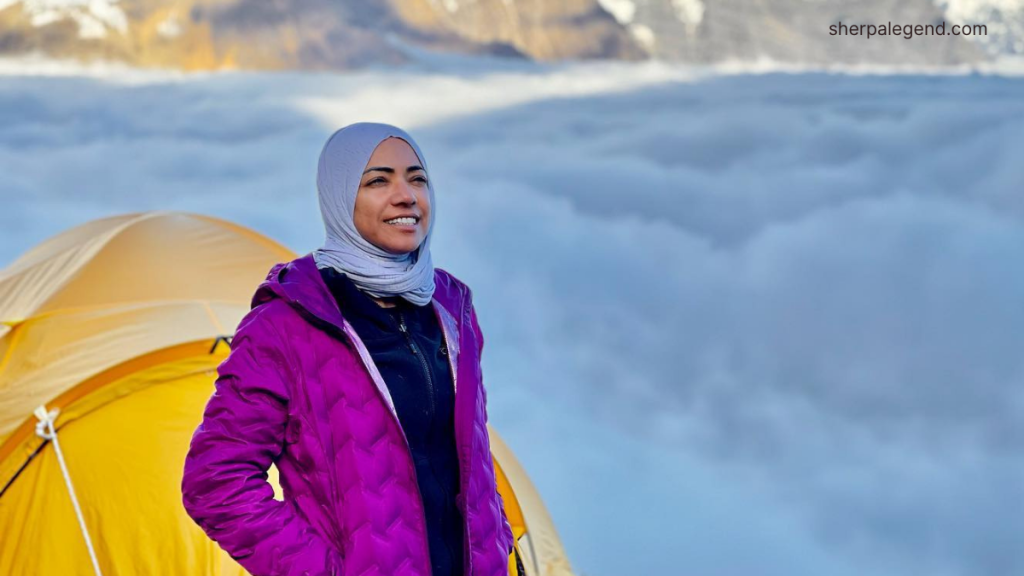
Her advice to young Omanis is simple and practical find a goal, even a modest one, and don’t let the routine of daily life smother it.
“Despite the daily work, they should not forget their ambitions,” she has said, “and should find something that develops their skills, motivates them, and gives them the motivation and reason to wake up every day confident that they are able to accomplish something the country can be proud of.”
It is easy to see why her story has struck a chord at home, even if she remains less internationally famous than some other Arab women climbers.
She did not grow up dreaming of Everest. She did not come from a mountaineering family, or start young, or make climbing her full-time identity. She built her name quietly, around a government desk job, in secret from her own family for two years, carrying the memory of a mentor who did not live to see how far his encouragement would take her.
Nadhira Al Harthy’s mountains were never really about ice and altitude alone. They were about proving to herself first, and then to everyone watching that an ordinary life can still make room for an extraordinary one.
