
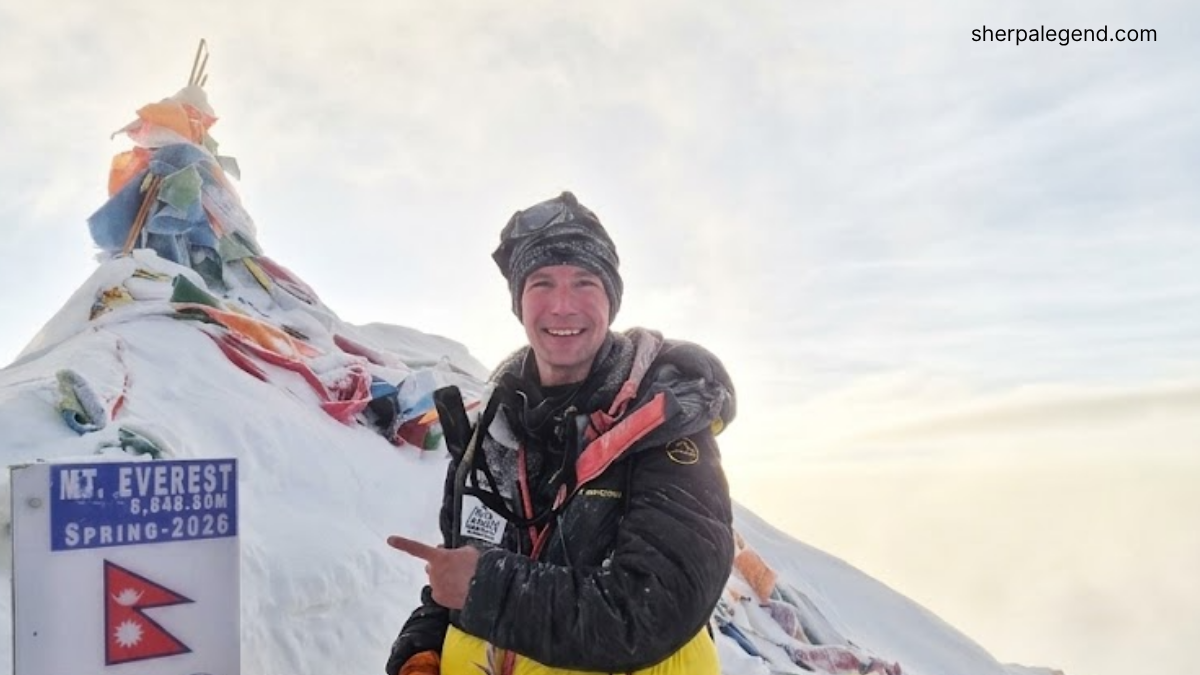

Tyler Andrews ran to the top of the world in under ten hours breaking a record that had stood for 23 years
On the night of May 27, 2026, Tyler Andrews stepped out of Everest Base Camp at 7:11 PM. The mountain was dark. The air was thin. He had been here before too many times, and each time he had come back without the one thing he came for.
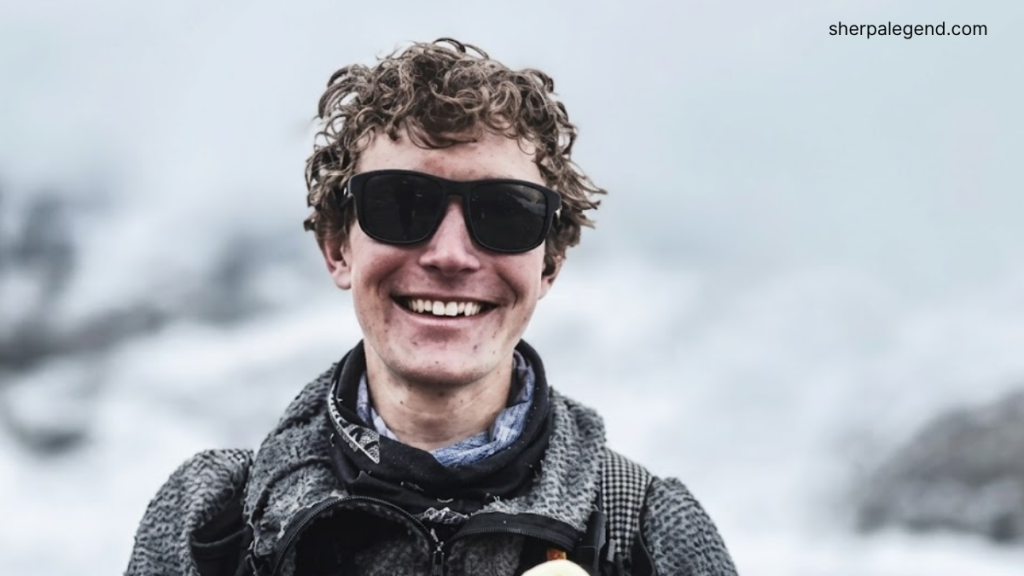
This time, at 5:06 in the morning on May 28, he stood on the summit of Mount Everest. He had climbed from Base Camp at 5,320 metres to the top of the world at 8,848 metres in 9 hours, 55 minutes, and 43 seconds.
A record that had held for 23 years was gone.
Who Is Tyler Andrews
Tyler Andrews is a 36-year-old professional ultrarunner and high-altitude speed climber from Concord, Massachusetts.
He was not a prodigy. As a high school runner, he could run a 5K in around 18 minutes decent, not exceptional. But over the years, he built himself into one of the most relentless endurance athletes in the world. He won a silver medal at the 2016 IAU 50km World Championships. He won the 2019 USATF 50 Mile National Championship. He qualified for the Olympic Marathon Trials. He has set over 100 Fastest Known Time records on trails and mountains across five continents Kilimanjaro, Aconcagua, Mount Fuji, Manaslu, Ama Dablam, and more.
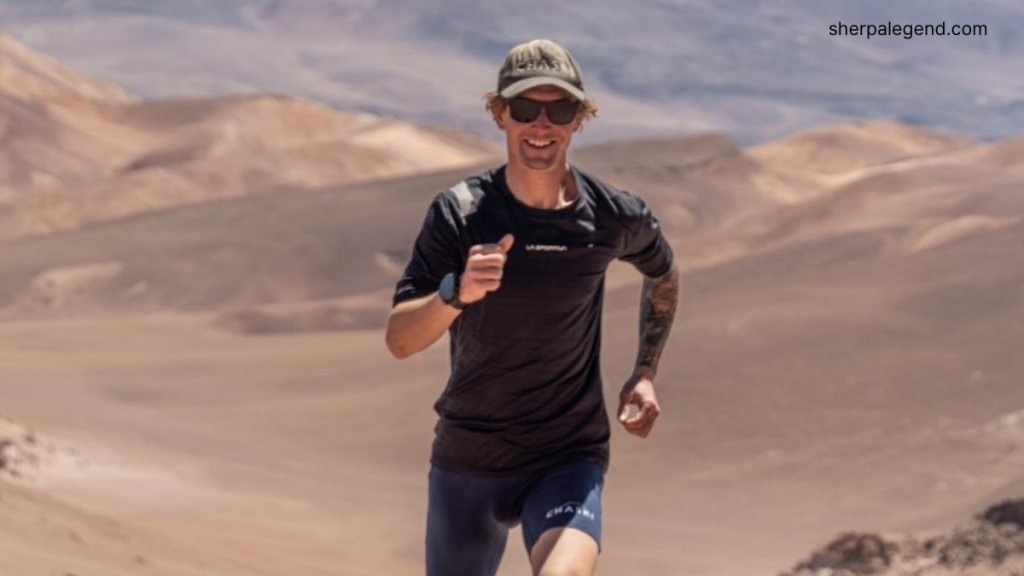
He is also a survivor. As a child, Andrews was diagnosed with aplastic anemia, a condition where the bone marrow stops producing enough blood cells. He recovered, and the experience left him with a particular relationship to the body and what it can endure.
He co-founded the Chaski Foundation, which supports young athletes in places like Ecuador and Nepal. His Everest climb raised funds for the foundation.
The Record He Was Chasing
The oxygen-assisted speed record on Everest from Base Camp to the summit via the Southeast Ridge had been set in 2003 by Nepali climber Lhakpa Gelu Sherpa. His time was 10 hours, 56 minutes, and 46 seconds. It was an extraordinary achievement that almost no one came close to in the two decades that followed.
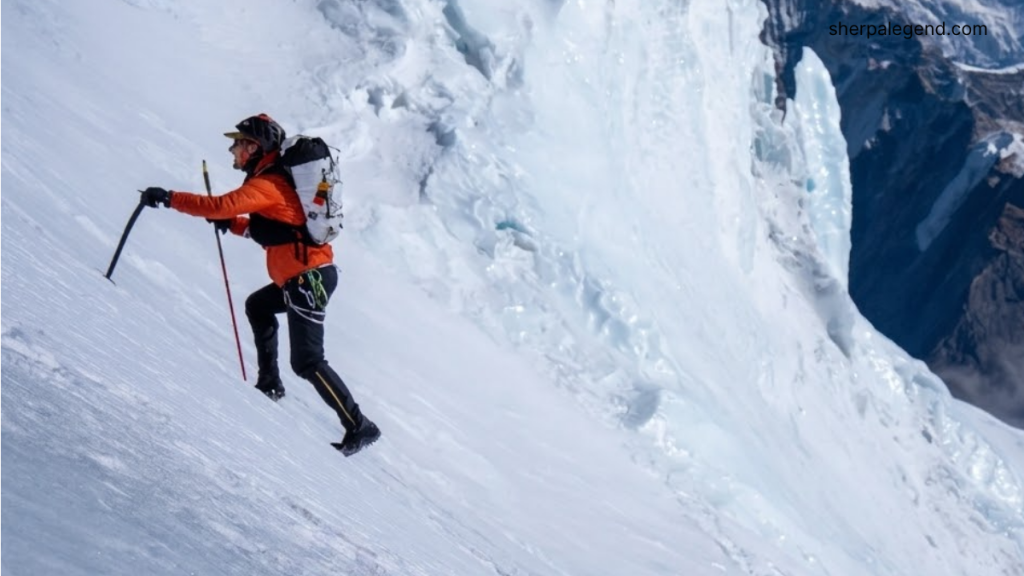
The record stood untouched not because no one tried, but because Everest almost never cooperates. The weather windows are narrow. The logistics are brutal. The mountain is unpredictable. The crowds on the fixed ropes can slow everything down. And then there is the altitude itself above 8,000 metres, the human body is slowly shutting down whether you feel it or not.
Andrews shattered that record by over an hour.
Seven Attempts Over Three Seasons
The Everest speed record was not a sudden ambition for Andrews. He had been working toward it for almost six years. He made seven attempts over multiple seasons, most of them without supplemental oxygen, which is an even harder and distinct challenge.
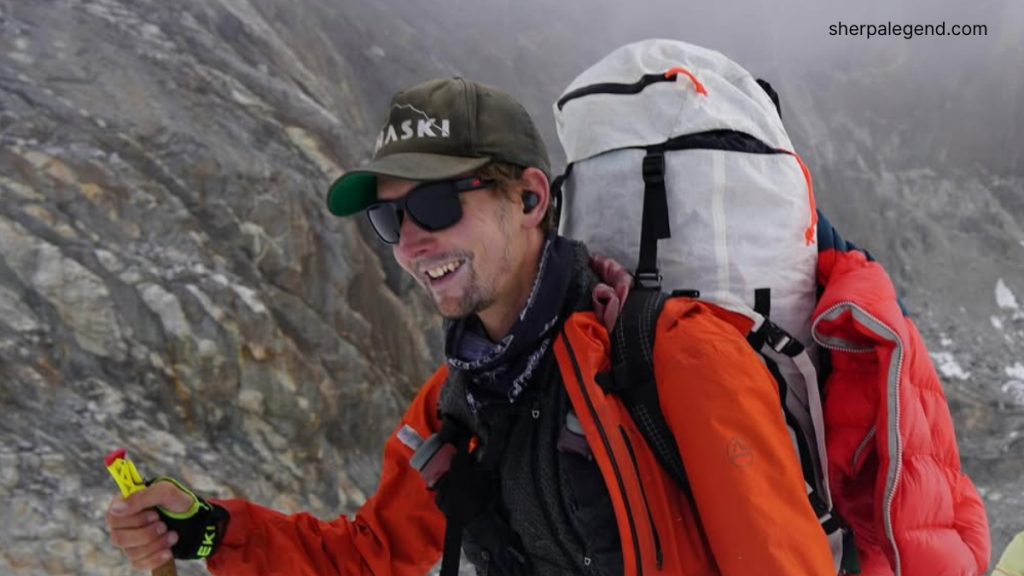
The attempts came with their own stories of heartbreak. In one season, he fell into a crevasse. In another attempt during the 2026 season itself, he came within 400 metres of the summit before he had to turn back. Four hundred metres. On Everest, that is close enough to feel it and far enough to walk back down with nothing.
He kept returning.
In his own words after the record:”This was the hardest thing I’ve ever done, mentally and physically. I’ve been preparing for this for almost six years, seven attempts over three seasons. I had no doubt that I was in the best physical shape of my life. But you don’t just need to be super fit, you need cooperation from the mountain, the weather, the crowds. Everything has to align.”
The Climb
Andrews started moving at 7:11 PM on May 27. He used supplemental oxygen after Camp 2, which sits at around 6,400 metres on the Southeast Ridge route. From that point, he moved through the upper mountain in conditions that allowed him to keep going.
He reached the summit at 5:06 AM on May 28. The total time for the ascent was 9 hours, 55 minutes, and 43 seconds.
He did not stop at the summit. He turned around and came back down, reaching Base Camp again in a total round-trip time of 16 hours and 32 minutes. The previous best for the round trip was approximately 18 hours and 30 minutes. He broke that too.
The speed of the descent matters beyond the record. The faster a climber moves through the death zone the area above 8,000 metres where oxygen levels are so low that the body cannot survive for long the less damage the body sustains. Every extra hour up there carries real cost.
What It Means
Andrews’ record represents something specific about where endurance sport and mountaineering are meeting. He trained for this climb the way he trains for ultramarathons with threshold workouts, VO2 max sessions, data-driven recovery. He brought the tools of professional running to the world’s highest peak and showed that they translate.
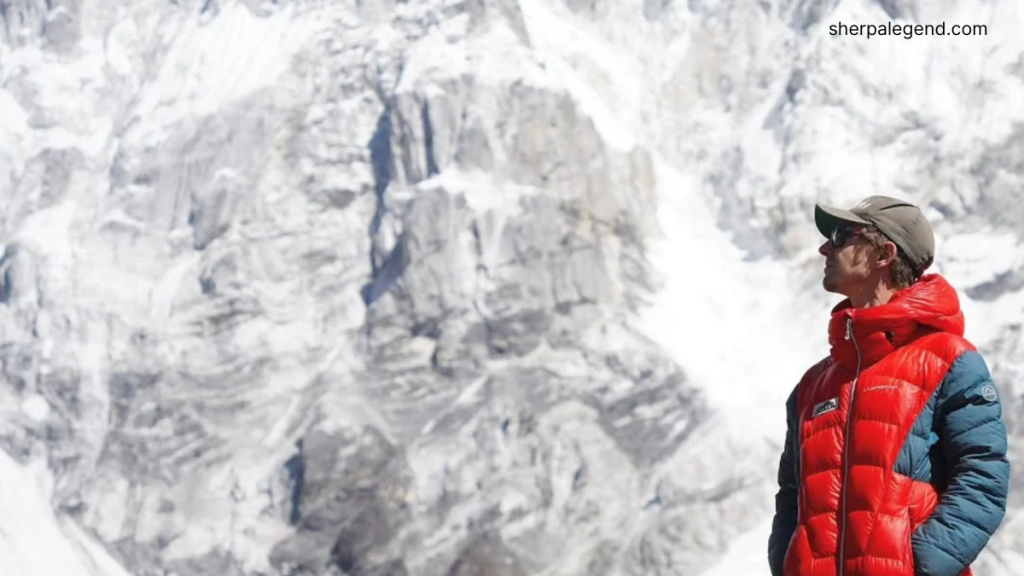
The Base Camp to summit record is considered one of the most prestigious benchmarks in high-altitude mountaineering because it demands both technical skill and extreme aerobic fitness. It is not a simple race up a trail. It involves technical terrain, fixed ropes, extreme cold, and the management of hypoxia at altitudes where most people can barely stand still.
That the record had gone untouched for 23 years says something about how difficult it is to break.
Some in the traditional mountaineering world note, fairly, that this is an oxygen-assisted effort on an established route during a commercial season different from the no-oxygen category, which Andrews himself sees as a separate and still-unfinished goal. He has said he would like to attempt the no-oxygen record in the future.
But the celebrations have been widespread from running media, adventure journalists, and the mountaineering community recognising that what Andrews did on May 28 was the result of years of preparation, repeated failure, and an unusually stubborn belief that the mountain would eventually say yes.
After the Summit
Coming down from the summit, Andrews posted
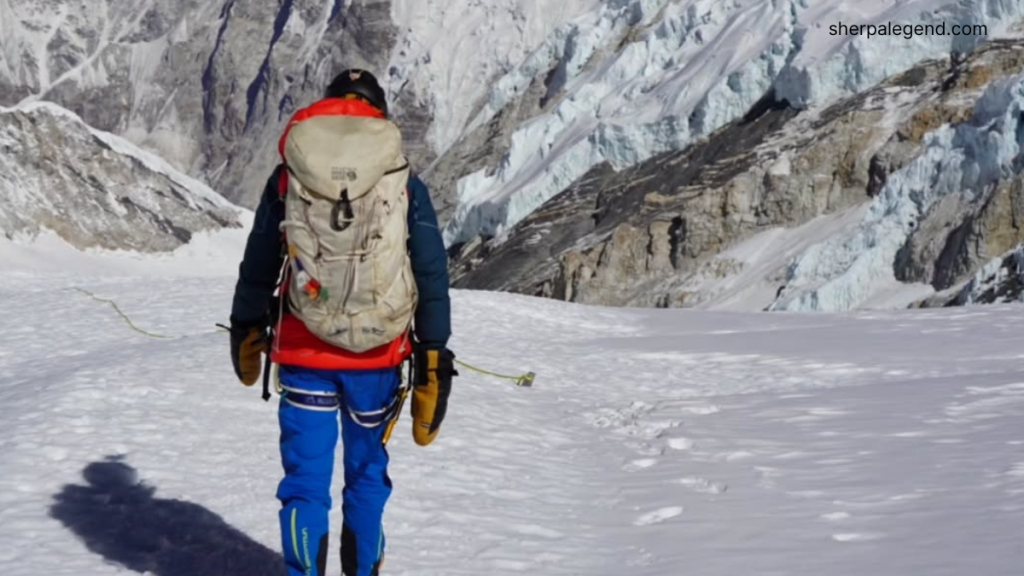
“So, so grateful to Apu Sagarmatha, Chomolungma, Everest for allowing me safe and speedy passage to the top of the world and down safely. So grateful as well to the team of amazing humans who helped me get there.”
Andrews
He said he plans to take a break from Everest for now. After six years of coming back to the same mountain, that seems fair.
The record is his. The mountain finally said yes.
