
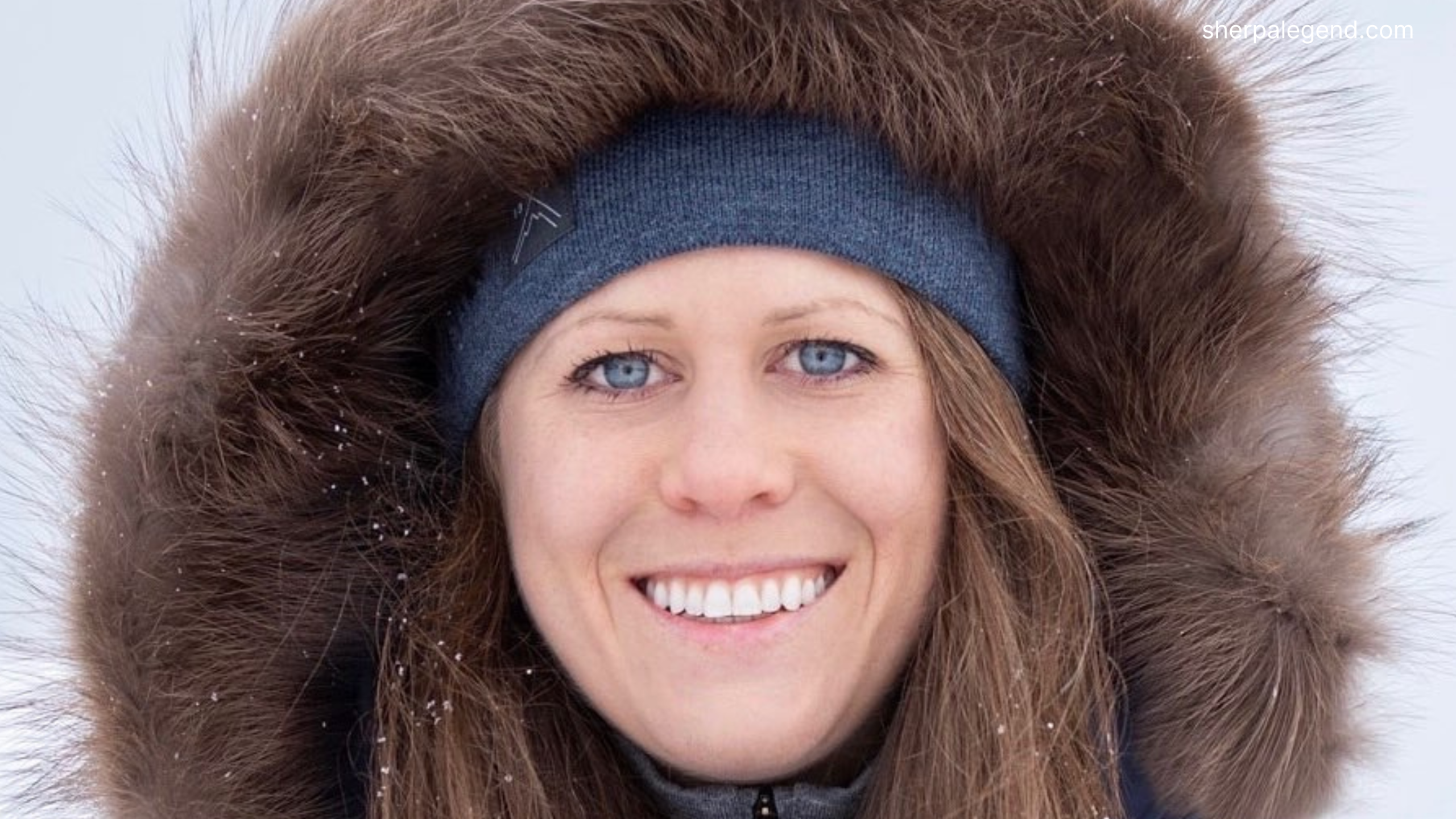

Anja Blacha : The German Woman Rewriting Mountain Records
In a world where most people discover their passions early in life, Anja Blacha’s story stands as a reflection to the power of late-blooming curiosity.
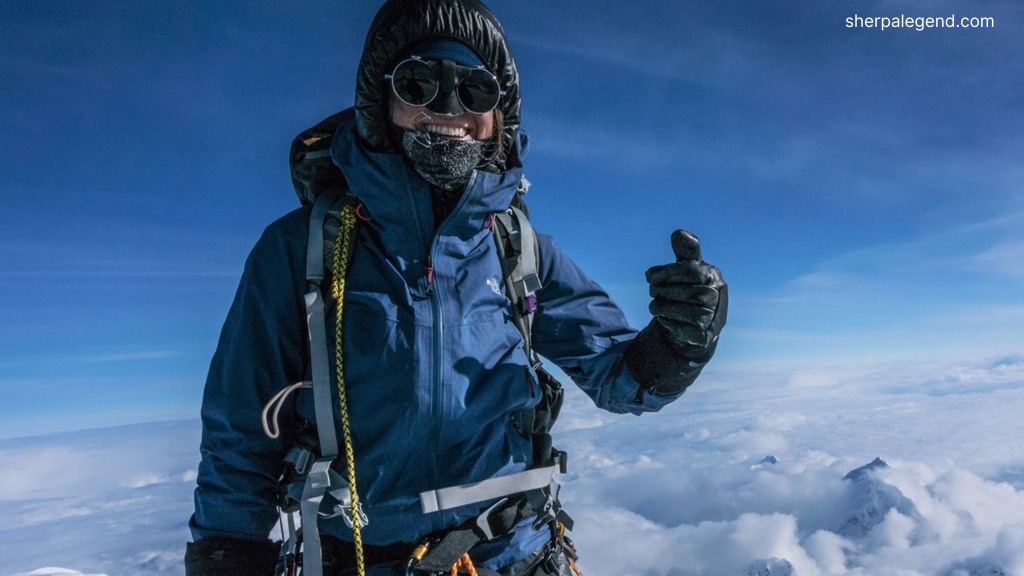
At 35, this German mountaineer has rewritten the record books not just with her climbing achievements, but with her unique approach to extreme adventure one guided by philosophy rather than fame, preparation over publicity, and personal growth over competition.
The Unlikely Beginning
Growing up in Bielefeld, Germany, Anja Blacha knew nothing about mountains. Her childhood holidays meant beach trips or city breaks typical experiences for a girl from the flat surroundings of northern Germany.
While other mountaineers might trace their passion back to family hiking trips or childhood rock climbing, Blacha’s introduction to the vertical world came at 23, almost by accident.
“I grew up not knowing anything about mountains,” she reflects. “The first time I actually saw some proper mountains was in 2013, when I was 23 years old.”
That moment came during a backpacking trip to Argentina, where she decided to climb Aconcagua, South America’s highest peak. It wasn’t a calculated decision born from years of preparation it was simple curiosity meeting opportunity.
This late start would prove to be an unexpected advantage. “In a way, it helped that I didn’t know much about mountains back then,” Blacha explains. “Because I was not expecting so much in terms of what it had to be like. There was no kind of pressure, and also no feeling of ‘what if I’m not good enough?’ Instead, I just went by the requirements the mountain guide put forward. Can I tick those boxes? And if I can, why not do it?”
That first summit sparked something profound. “I think that was the moment where I was like, I really want to experience this again and again and again.”
The Academic Foundation
What sets Blacha apart from many extreme athletes is her intellectual foundation.
She holds a Bachelor’s degree in Business Administration from the University of Mannheim and a Master’s in Philosophy from Birkbeck, University of London.
This combination of practical business skills and philosophical thinking would prove crucial in shaping both her approach to expeditions and her understanding of why she pursues them.
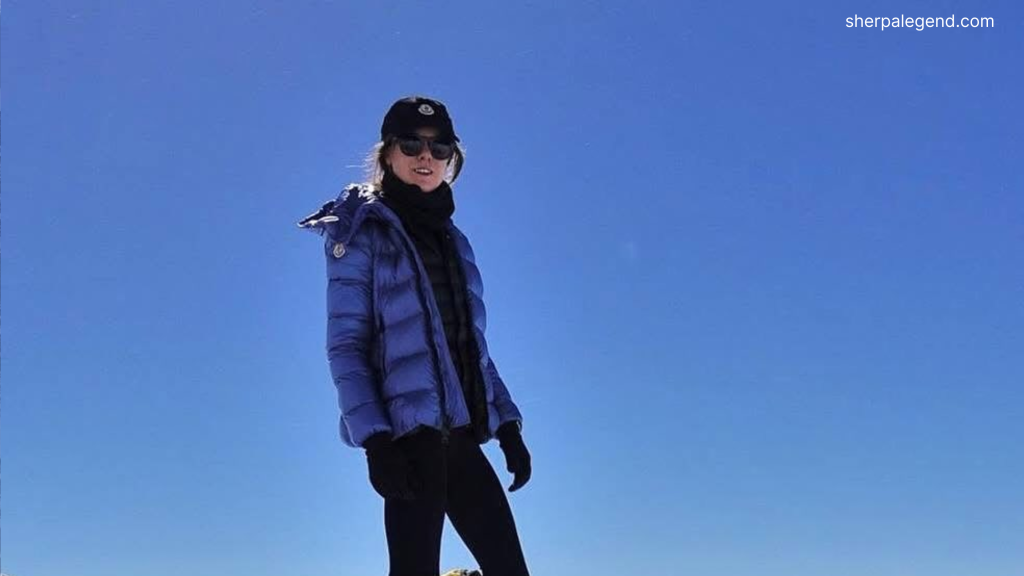
Her corporate career in telecommunications and project management provides the financial independence that allows her to fund her own expeditions a point of pride for someone who values self-reliance above all else. But it’s her philosophical education that gives her adventures their deeper meaning.
Drawing from the Greek concept of “eudaimonia” the art of living well according to one’s virtues and capabilities Blacha approaches mountaineering not as a conquest but as a form of self-actualization. “Rather than defining my goals based on records, I like to let curiosity guide my way,” she says. “Following my interests, and living up to my values, virtues, capabilities. The art of striving well. Eudaimonia.”
Breaking Barriers, Setting Records
Despite her philosophical approach, Blacha’s achievements are undeniably impressive.
In 2017, she became the youngest German woman to climb Mount Everest and the youngest German overall to complete the Seven Summits the highest peak on each continent. What makes this even more remarkable is that she accomplished this feat in less than three years, with a 100% first-time success rate.
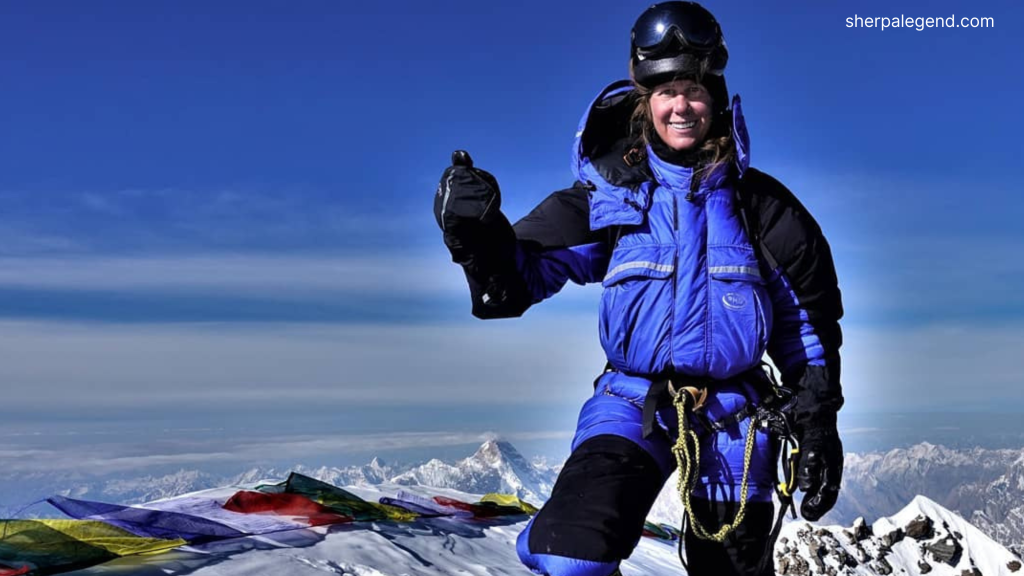
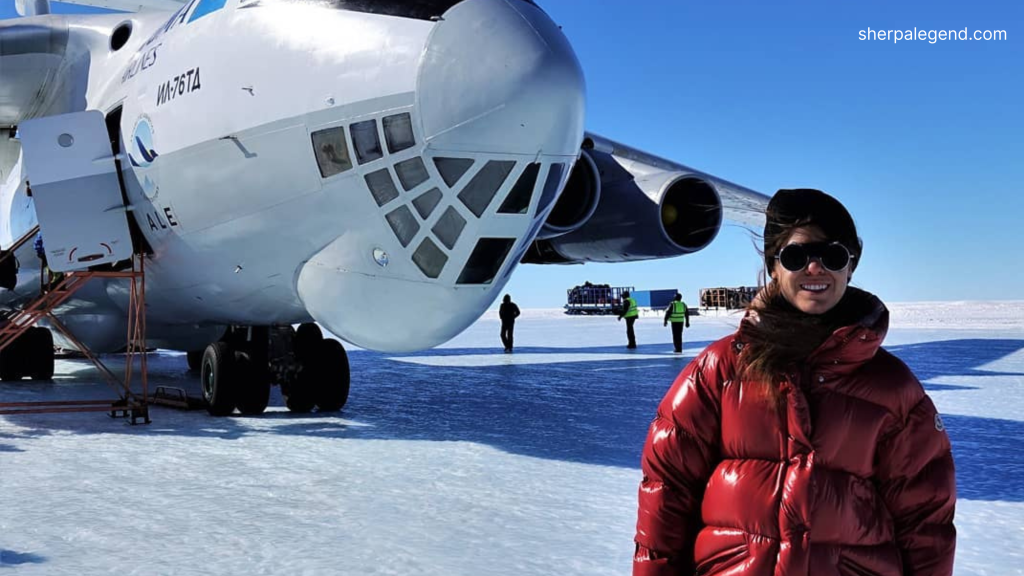
But her record-breaking didn’t stop there. In 2019, she became the first German woman to summit K2, one of the world’s most dangerous mountains. In 2020, she set a world record as the first woman to ski solo and unsupported from the Antarctic coast to the South Pole, pulling a sled nearly 1,400 kilometers across the ice.
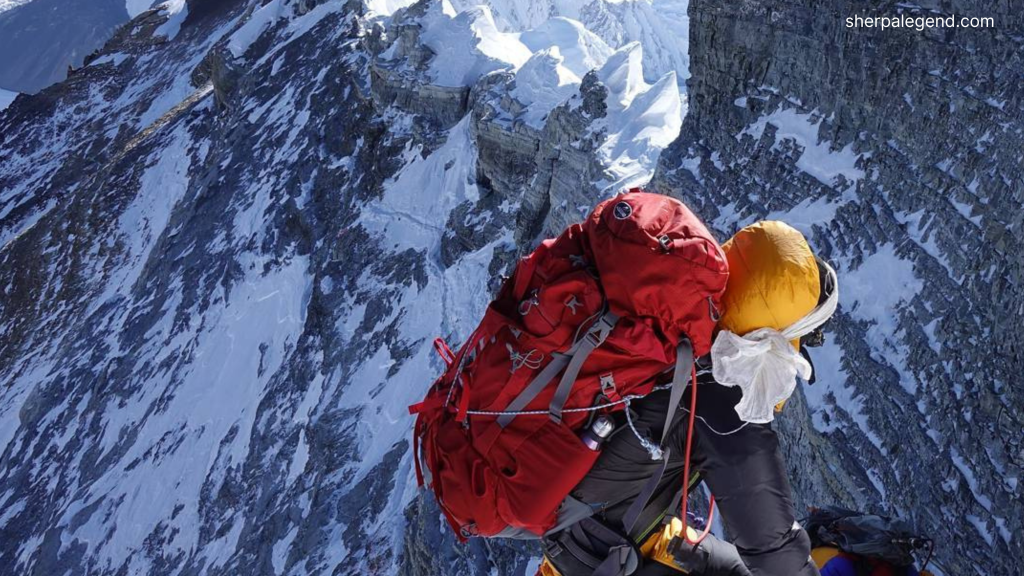
Perhaps most impressively, she has summited twelve of the world’s fourteen 8,000-meter peaks, twelve of them without supplemental oxygen a feat that puts her among an elite group of climbers worldwide. In May 2025, she summited Mount Everest without oxygen or Sherpa support, joining the ranks of the very few women globally to achieve this dangerous milestone.
The Philosophy of Preparation
For Blacha, the expedition begins long before she sets foot on the mountain. Her approach to preparation is almost obsessive, rooted in the belief that success in extreme environments depends on making critical decisions before you’re under pressure.
“On polar expeditions, where I am alone from day one, preparation accounts for 80 percent of the work,” she explains. “From the moment I leave, I only have 20 percent left to do. At that point, it’s just a matter of completing the task with determination.”
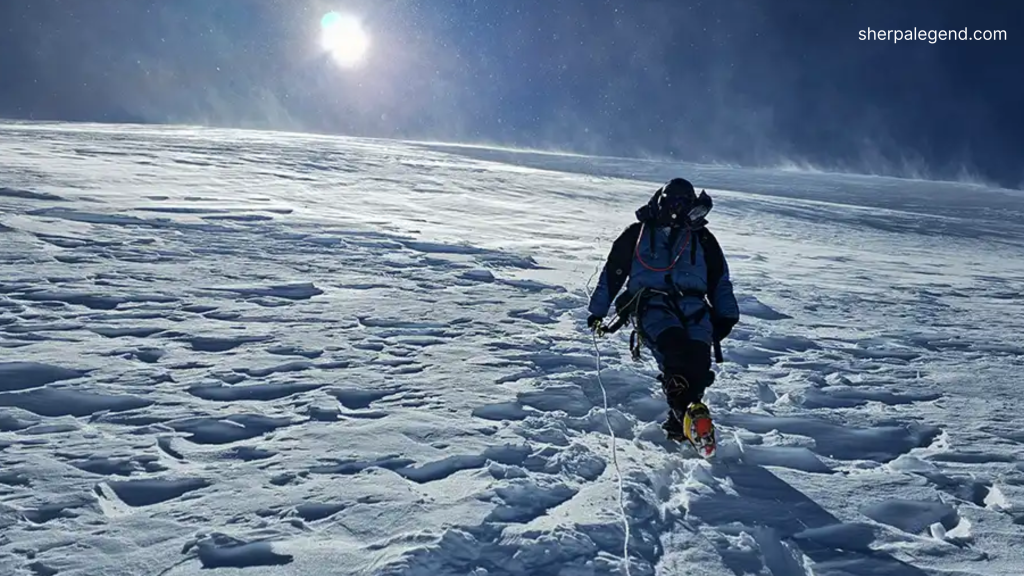
This preparation extends to the smallest details. During her Antarctic expedition, she had to carry food and fuel for 66 days the equivalent of 576 chocolate bars. Rather than packing them all together, she divided them into 66 individual daily rations. “If I had put all that food in one bag and set off, I would not have known how much I could eat each day,” she says.
This meticulous approach serves a deeper purpose. “We all make about 20-25 thousand decisions a day. If I travel to an extreme environment like Antarctica or Mount Everest, most of these decisions have to be made in advance.” By removing routine decision-making from the equation, she frees up mental capacity to handle the unexpected challenges that inevitably arise.
The Mental Game
While Blacha’s physical achievements are remarkable, she highlights that high-altitude mountaineering is fundamentally a mental challenge.
Describing her experience on Broad Peak, her first 8,000-meter summit without oxygen, she captures the essence of what climbers face “On summit day, that feeling was like having to keep walking in a straight line after feeling like you hadn’t slept for maybe two nights in a row and having had a bottle of wine. That’s how it feels when you’re not properly acclimatized, walking at high altitude.”
The mental challenge isn’t just about enduring physical discomfort it’s about making life-or-death decisions under extreme stress. “Death comes close every year,” she acknowledges soberly. “Even just looking back at my footage from last summer, there are people I’ve met or had short encounters with that are no longer with us. And that list of people is growing every year.”
This reality requires what Blacha calls “summit fever” awareness the ability to turn back when conditions demand it, even when the goal seems within reach. “I think it takes a lot of mental strength and a lot of self-confidence to say, ‘No, today’s not the day,'” she explains. “Because at that moment when you’re saying no, you’re still okay. So you will always wonder, ‘but maybe it could have worked out.'”
Beyond Competition
One of the most refreshing aspects of Blacha’s approach is her rejection of mountaineering as competition, particularly among women. In a field where records and “firsts” often drive media attention, she maintains that her achievements are about personal growth rather than rivalry.
“I don’t have a bucket list of projects or goals to tick off,” she says. “I guess it’s more about creating new experiences, learning, developing myself. The main goal for me is to pursue a life well lived—the art of using my potential. I guess that’s a journey that will never end.”
This philosophy extends to her view of other climbers’ achievements. She sees her successes as potentially inspiring others but not as victories over competitors. Her focus remains internal—testing her own limits and capabilities rather than comparing herself to others.
The Balance of Extremes
Despite her extreme pursuits, Blacha values balance in her life. She doesn’t see herself as solely an adventurer but as someone who moves between different worlds.
“I actually love the balance,” she explains. “I think if I was just in the bubble of explorers and expeditioners, I wouldn’t be happy. I like to step into that world, but then to step out of that world again and be in the world of business and city life.”
This balance isn’t just personal preference it’s practical necessity. Her corporate career funds her expeditions, but it also provides intellectual stimulation and social connection that pure adventure might not offer. The contrast between her office life and mountain life creates a dynamic that energizes both aspects of her existence.
Innovation and Adaptation
Blacha’s approach to mountaineering is constantly evolving. She studies what previous expeditioners have done but adapts their methods to her own strengths and limitations. “The people who did these expeditions before me were physically very different from me,” she notes. “If I compared myself to them, I might as well give up. Then I look for my own special superpowers.”
For her, innovation means minimizing pack weight to compensate for less physical strength, or leveraging her network to draw on others’ experience. It’s about finding creative solutions rather than simply following established routes.
Environmental Consciousness
As someone who has witnessed firsthand the effects of climate change in polar regions and high mountains, Blacha brings an environmental perspective to her adventures.
She draws direct connections between individual actions and environmental impact: “If I know that the CO2 emissions from a flight from Germany to Spain melts two square meters of Arctic ice, I think twice about flying if I want to keep walking on ice in the future.”
Her suggestion for making environmental impact more tangible dividing annual CO2 emissions into daily “portions” the way she rationed food in Antarctica reflects her practical approach to complex problems.
The Continuing Journey
With Twelve of the world’s fourteen highest peaks under her belt, Blacha is positioned to potentially become the first German woman to climb all 8,000-meter summits. But true to her philosophy, she doesn’t frame her future in terms of records to be broken.
“I suppose it’s safe to say that I am going to do some more polar and mountain expeditions in the future,” she says. “But ultimately, the main goal for me is to pursue a life well lived, the art of striving well, the art of using my potential. I guess that’s a journey that will never end.”
The Larger Message
Anja Blacha’s story connects beyond the mountaineering community because it challenges conventional notions of how and when we discover our passions.
Her late start in the mountains, combined with her philosophical approach and emphasis on self-reliance, offers a different model for pursuing extreme goals.
She shows that world-class achievement doesn’t require early specialization or single-minded focus. Instead, it can emerge from curiosity, careful preparation, and a willingness to test one’s limits. Her success as both a business professional and record-breaking adventurer shows that it’s possible to excel in multiple domains without sacrificing either.
Perhaps most importantly, her emphasis on the journey over the destination, on personal growth over external recognition, provides a refreshing counterpoint to our achievement-obsessed culture.
In a world where extreme sports are often reduced to social media highlights and sponsorship deals, Blacha’s approach reminds us that the most meaningful adventures are ultimately internal journeys of self-discovery that happen to take place on the world’s highest peaks and most remote locations.
As she continues to push boundaries while maintaining her philosophical grounding, Anja Blacha stands as proof that the most extraordinary lives often begin with a simple question “Why not?” Her story continues to unfold, guided not by external expectations but by an internal compass pointing toward growth, challenge, and the endless pursuit of human potential.
